Matox News

Truth Over Trends, always!

Trump limits refugee admissions to 7,500 to prioritize national security and sovereignty

Washington’s New Refugee Admission Limits and Its Impacts on International Relations

President Donald Trump’s administration has announced a significant reduction in the number of refugees permitted into the United States, capping the intake at 7,500 for the upcoming fiscal year—a stark contrast to the 125,000 set during the previous administration of President Joe Biden. This decision, delivered via an official notice, has raised eyebrows across global diplomatic circles, not least because no explicit reasons were provided apart from vague references to “humanitarian concerns or national interest.” It marks a continuing trend from Trump’s early days in office, including the suspension of the US Refugee Admissions Program (USRAP) in January 2025, which aimed at prioritizing national security and public safety.

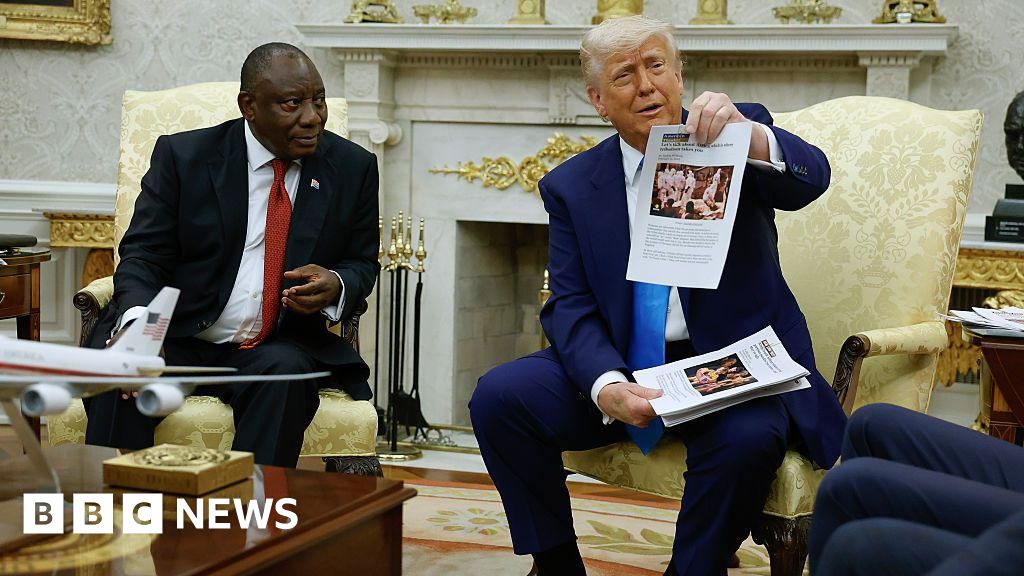
The focus of this new policy appears to favor white South Africans, primarily Afrikaners, with a sizable portion of the quotas allocated to victims of what the White House describes as “illegal or unjust discrimination” in South Africa. During a meeting in May, Trump sharply criticized South African President Cyril Ramaphosa, accusing his government of persecuting white farmers and showcasing disturbing images of burial sites representing murdered farmers—all scenes later clarified to be from protests material dating back to 2020. The White House’s overt regard for these victims underscored an overarching shift in U.S. refugee policy, apparently influenced by geopolitical and ideological considerations.

Geopolitical Impact and Rising International Tensions

Global analysts and historical experts have expressed concern that such selective refugee policies threaten the longstanding credibility of U.S. humanitarian commitments. Krish O’Mara Vignarajah, CEO of Global Refuge, contended that the decision “lowers our moral standing,” especially during a time when crises persist in Afghanistan, Venezuela, Sudan, and beyond. Critics argue that by focusing heavily on a specific demographic, the United States risks alienating its allies and betraying its reputation as a defender of human rights. Meanwhile, accusations of unfair treatment and discrimination against other persecuted groups have surfaced, suggesting a dangerous shift away from the country’s traditional openness.

Furthermore, this policy comes with serious geopolitical ramifications. As the U.S. tightens its refugee admissions, other nations are watching closely, questioning American values and leadership. Some analysts interpret this move as a sign of Trump’s broader desire to reshape U.S. foreign relations—favoring nationalist policies that prioritize domestic security over international cooperation. The impact is palpable: allies in Europe and Africa are now reconsidering their own approaches to asylum and diplomatic engagement. Historically, shifts in refugee policy have often prefigured more profound geopolitical realignments, and experts warn that the current trend could contribute to a fracturing of international consensus on humanitarian obligations.

Societal and Cultural Consequences: A Turning Point in U.S. Policy

As the policy unfolds, the consequences extend beyond diplomacy—deepening societal divisions in the U.S. itself. Immigration advocates have criticized the move as a betrayal of American values, arguing it discriminates against vulnerable populations and undermines the moral foundations of the nation. Critics further point out that this narrowed focus risks fueling policy shifts that favor ethnonational interests at the expense of universal human rights. The decision is emblematic of a broader ideological clash over identity, security, and what it means to be a nation of immigrants in a rapidly changing world.

Meanwhile, the undercurrent of international skepticism grows stronger. As a major power, the U.S. has long wielded influence over global norms surrounding refugees and human rights. With recent decisions seemingly departing from this tradition, the global community stands at a crossroads, watching whether the United States will uphold its commitments or retreat into a more insular approach. The unfolding story remains a dramatic chapter in the larger narrative of a world grappling with new realities—where decisions on refugee intake are less about compassion and more about geopolitical leverage. Indeed, the yet-to-be-written pages of history continue to turn, leaving the world uncertain if the U.S. will remain the beacon of hope it once was or drift into a new era of nationalist retrenchment.

Seoul eyes OK for Google, Apple’s high-res map plans—tech reach meets city limits

South Korea Weighs High-Resolution Map Data Export—A New Battlefield for Tech Giants

South Korea is at a pivotal crossroads in its approach to geospatial data sovereignty, with tech giants like Google and Apple vying for approval to export high-resolution maps outside the country. The decision, anticipated around November 11, could significantly alter the landscape for digital innovation, national security, and business strategy in Asia’s high-tech hub. Governments worldwide are increasingly scrutinizing the use and export of detailed geospatial information, viewing it as a double-edged sword—crucial for technological progress but a potential security threat.

The controversy centers on the export of 1:5,000 scale maps—maps that reveal street-level detail far more granular than traditional maps. These detailed datasets hold immense value for localized services, giving market leaders like Google and Apple a substantial edge in competitive navigation and augmented reality platforms. However, the sensitivities surrounding such information stem from concerns over national security, especially given South Korea’s ongoing conflict with North Korea. Lawmakers and security officials highlight the risks of exposing military sites and strategic assets if detailed maps are made accessible outside the country’s strict regulatory framework.

This regulatory tug-of-war underscores a broader trend of nations asserting digital sovereignty, with South Korea’s Geospatial Information Management Act serving as a key legal pillar. Since its enactment in the 1970s, the law has imposed rigorous controls on foreign access to geographical data, requiring government approval—often multiple layers of review—before allowing any export or transfer. Notably, Google’s previous requests for access have been rejected—in 2011 and 2016—unless the company committed to locating local data centers and obscuring sensitive sites. While Google has reportedly taken steps to blur military and security sites, it continues to seek permission for exporting high-res map data, which could drive its competitive advantage globally.

Disruption is imminent, with Apple making parallel moves to expand its high-resolution mapping footprint. In June, Apple submitted a request to export detailed map data, following a prior rejection in 2023. Notably, Apple’s strategy diverges by leveraging local servers, granting them increased flexibility and potentially quicker compliance with South Korean security requirements. The company is also reportedly exploring partnerships with local satellite data providers like T Map, owned by SK Telecom, to adhere to regulatory mandates while enriching its map quality. In this rapidly evolving landscape, the implications for market dominance and technological innovation are profound: local competitors such as Naver and Kakao continue to leverage high-detail maps, whose capabilities threaten to displace global players if regulatory hurdles are navigated successfully.

Recent international precedents highlight the strategic importance of geospatial data for national security and technological leadership. Governments have demanded the deactivation of real-time traffic or live mapping features in conflict zones—such as Israel and Ukraine—demonstrating the sensitive nature of live geo-information. Experts such as MIT’s Dr. Elizabeth Bell and cybersecurity analysts emphasize that controlling geospatial data is not just about privacy but about maintaining competitive advantage and sovereignty in the era of disruptive innovation. Companies like Google and Apple are navigating a digital battleground where every map update or data request could reshape their global market position.

Looking ahead, the South Korean decision will serve as a benchmark for other nations grappling with geo-security and innovation policies. The push-and-pull between openness and security reflects a broader geopolitical shift—where digital infrastructure becomes a key component of national strength. As industry leaders and policymakers grapple with these issues, the urgency to innovate responsibly while safeguarding sovereignty will only intensify, demanding agility, strategic foresight, and uncompromising adherence to emerging regulatory standards. The future of geospatial technology hinges on how countries and corporations balance these conflicting priorities—an unmistakable sign that we are entering a new era of digital sovereignty and technological disruption.

China Launches First Talent Visa as U.S. H-1B Limits Climb

China’s New Visa Program Signals Strategic Push for Global Tech Talent

In a bold move demonstrating disruption and modernization, China has launched the K visa initiative, explicitly designed to attract young STEM professionals from top universities worldwide. The policy, unveiled amid rising youth unemployment and mounting international competition for technical talent, marks a strategic shift in China’s approach to fostering innovation-driven growth. While it echoes the US’s H-1B system on the surface, China underscores that its program primarily aims to facilitate international exchange and cooperation rather than simply staffing its industries.

The launch of the K visa signifies more than just a talent acquisition effort; it symbolizes a broader industry disruption—particularly in the global race for next-generation technologies. Industry analysts suggest this move could recalibrate the balance of technological innovation, positioning China as an increasingly attractive hub for scientific research and development. Experts like Gartner and MIT researchers warn that this could accelerate China’s ascent as a dominant player in AI, biotech, and quantum computing—areas crucial for future economic dominance. The implications for business leaders are clear: companies aiming to stay ahead must now consider China not just as a manufacturing powerhouse but as a key innovator and partner in STEM collaborations.

Disruption and Industry Shifts

The K visa’s arrival has generated a complex landscape of competitive disruption and geopolitical tension. While President Trump’s policies have tightened visa restrictions in the US, China’s more open stance is reshaping the global talent pipeline, creating a market shift that could favor Chinese innovation hubs over traditional Western centers. This move is part of a broader agenda to diminish reliance on foreign talent—yet paradoxically, it leverages international expertise to bolster domestic capabilities. It signals a paradigm shift: nations are now competing not just through tariffs or economic sanctions but via **human capital and technological collaboration**.

  • Enhanced pathways for foreign STEM professionals to study, work, and innovate in China
  • Potential acceleration of China’s leadership in emerging tech sectors
  • Intensified competition with Western nations for top-tier talent pools
  • Risks of social backlash and nationalistic resistance, indicating complex political undercurrents

However, industry insiders warn that the program’s success hinges on carefully balancing international openness with nationalism, as social media buzz reveals resistance rooted in fears of job displacement and cultural marginalization. Critics highlight that the backlash, often tinged with nationalist rhetoric, could hamper China’s efforts to establish a sustainable innovative ecosystem. Still, the Chinese government remains committed to this strategic push, signaling a clear message to the global tech community: the quest for technological supremacy is now fought on human resource fronts.

Looking Ahead: Urgency in the Tech Race

This evolving scenario places the global tech landscape at a tipping point. As Peter Thiel and other visionary investors emphasize, the future belongs to those who can attract and mobilize talent at scale. Countries that succeed in doing so—whether through policies like China’s K visa or similar initiatives—will set the tone for decades to come. The window for Western nations to innovate proactively and foster open yet strategic talent pipelines is closing fast. The pursuit of disruption and frontier innovation demands action now, as the fusion of talent and technology becomes the defining arena of global power.

In this high-stakes environment, staying ahead requires not only technological breakthroughs but also innovation in talent acquisition and mobility strategies. The race for supremacy in the tech economy is accelerating, and the nations that recognize this shift earliest will shape the future landscape of global influence and prosperity. The time to act is now—disrupt or be left behind.

Youth-led clients challenge economic limits

The global economy is currently navigating a crucial phase marked by significant shifts in market dynamics and policy strategies. As nations grapple with post-pandemic recovery, inflationary pressures, and geopolitical uncertainties, investors and policymakers alike are recalibrating their approaches to sustain growth and stability. Key industry leaders and economists warn that the upcoming months could see a pivot from traditional growth models toward more resilient and adaptive frameworks, underscoring the vital importance of strategic foresight in shaping economic trajectories.

Major markets such as Wall Street and Frankfurt are exhibiting varied responses to rising inflation and fluctuating commodity prices. Recent data indicates an ongoing struggle with inflationary pressures, which have prompted central banks globally to adopt tighter monetary policies. According to preliminary reports from the International Monetary Fund, inflation across advanced economies is expected to remain elevated through mid-2023, risking a pattern of stagflation that could threaten longstanding economic stability. This environment presents both risks and opportunities for investors: while higher interest rates may depress short-term equity returns, they also signal the potential for more sustainable long-term growth once inflation is tamed.

Furthermore, technological innovation remains a game-changer amidst these economic upheavals. Countries investing heavily in digital infrastructure and green energy are positioned to capitalize on emerging opportunities, potentially reshaping the global supply chain and labor markets. Analysts from think tanks such as Cato Institute emphasize that the policy consequences of sustained inflation and geopolitical tensions could accelerate the trend toward protectionism and economic nationalism. These shifts threaten to fragment global trade networks, demanding strategic responses from multinational corporations and sovereign states alike.

Looking ahead, economic forecasts by leading experts suggest that the economy will remain a dynamic stage for power struggle and innovation. The resilience of emerging markets and the strategic moves of key players like China and the United States will largely determine the pace of recovery. It is evident that the future of global economics hinges on the ability of nations to adapt swiftly to the evolving landscape. As economic indicators oscillate and policies tighten, the pulse of these developments underscores that we stand at the cusp of a new era—where economic resilience and strategic foresight will be the currencies that define the 21st century’s balance of power.

Social Media Auto Publish Powered By : XYZScripts.com