

Revolutionary Discoveries in DNA Repair Reveal the Secret to Naked Mole Rats’ Unprecedented Longevity
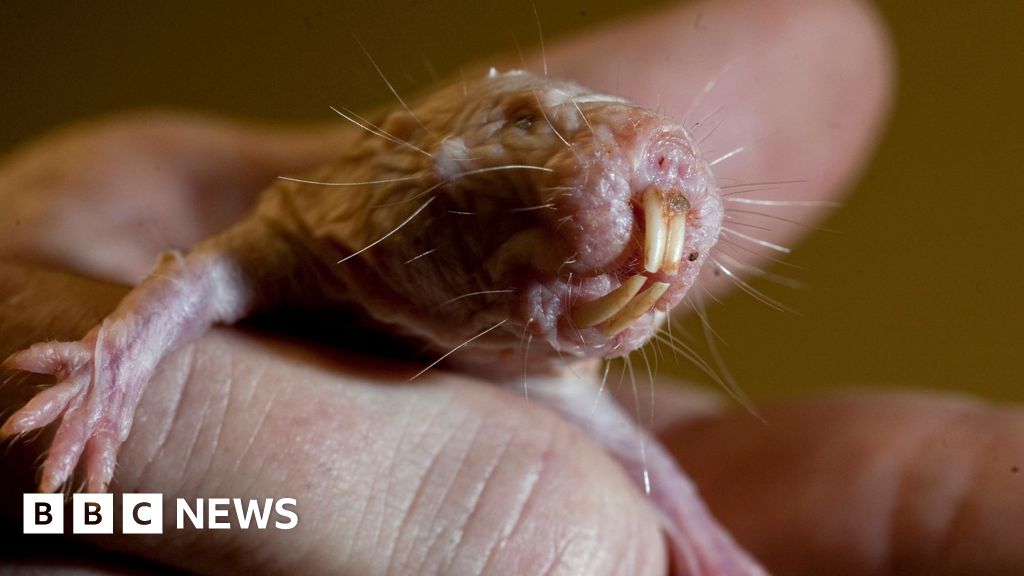
In a groundbreaking scientific breakthrough, researchers from Tonji University in Shanghai have uncovered the genetic secrets behind the remarkable lifespan of naked mole rats. These subterranean creatures, living up to nearly 40 years — a lifespan extraordinary for their size and species — have long puzzled biologists. Unlike common rodents such as mice, which generally live only about three years, naked mole rats demonstrate resistance not just to aging, but also to a suite of age-related diseases including cancer, neurological deterioration, and arthritis. The new study, published in Science, could shift the paradigm of aging research, highlighting a novel DNA repair mechanism that may pave the way for revolutionary therapies aimed at extending human healthspan.
The research zeroed in on a specific protein involved in cellular DNA damage detection and repair. In most animals, including humans, this protein—identified as c-GAS—disrupts DNA repair processes, which can contribute to aging and age-related pathologies. However, in naked mole rats, the same protein acts in an opposite manner, bolstering DNA repair instead of hindering it. This divergence has prompted scientists, including Professor Gabriel Balmus at the University of Cambridge, to explore how such a genetic rewiring could have evolved. The findings suggest that these rodents have effectively reprogrammed a fundamental molecular pathway—an evolutionary feat that might hold keys to extending healthy human lifespans.
Unraveling the Geopolitical Implications of Longevity Research
This discovery is more than a mere biological curiosity; it carries profound geopolitical impact. As nations across the globe grapple with aging populations and rising healthcare costs, the pursuit of regenerative medicine and longevity therapies has become a strategic priority. China’s leadership in this research underscores the shift of scientific dominance towards Asian powers, aiming to leap ahead in biotechnologies that could redefine global health policies. Meanwhile, Western institutions such as Cambridge contribute critical insights that may accelerate translational applications. How this knowledge is harnessed will determine future power dynamics, economic competitiveness, and societal structures.
Furthermore, experts emphasize that these advances could influence international relations, if nations compete to develop and control emerging therapies. Efforts to reverse age, initially a purely biomedical pursuit, are increasingly intertwined with geopolitics—potentially shifting the balance of global influence. Controlled access and ethical considerations surrounding life-extension technologies will demand careful diplomacy, especially given the possibility of extending human longevity far beyond current boundaries. History warns that early breakthroughs often spark conflicts over intellectual property and access; this time, the stakes include the very longevity of human civilization itself.
The Broader Evolutionary and Ethical Questions
Scientists like Professor Balmus point out that naked mole rats may be an evolutionary anomaly—a biological outlier, rewiring ancient pathways to achieve near-immortality. This raises fundamental questions: Can humans replicate this biological feat? And if so, at what expense? Historians and ethicists warn of the deep societal ripple effects. If humans could harness such genetic alterations or develop drugs inspired by these findings, it could revolutionize notions of aging, death, and the meaning of life itself. Yet, the potential for misuse—such as extending life for the wealthy or creating a new form of biological inequality—must be critically examined.
Additionally, the discovery fuels an ongoing debate among international organizations about the moral and ecological implications of significantly extended lifespans. Would societies evolve to embrace extended youth, or would demographic shifts trigger unforeseen crises? As history has often demonstrated, technological progress must be accompanied by philosophical reflection to navigate its full impact. With the window to such transformative discoveries opening wider, humanity faces a pivotal choice: to continue unlocking nature’s secrets or to confront the profound responsibility that comes with eternal life—an unsettled chapter in the ongoing saga of human evolution.
As these revelations unfold, the story of the naked mole rat reminds us that the future of human health and longevity is still being written. The delicate balance of life and death, once thought immutable, now teeters on the edge of a scientific revolution—one that might ultimately determine our species’ place in history. Will this be humanity’s greatest leap forward, or the dawn of unintended consequences? Only time will reveal where the pages of this unfolding narrative will lead, leaving the world’s gaze fixed on a horizon where the boundaries of life itself are being redefined.




