
Matox News

Truth Over Trends, always!

Daughter claims Brigitte Macron’s life worsened amid cyber-bullying backlash

In an era where social media and digital spaces have become arenas for political and personal battles, the recent court proceedings in France highlight the devastating consequences of targeted misinformation and sexist cyber-bullying. Brigitte Macron, wife of President Emmanuel Macron, has been subjected to relentless conspiracy theories claiming she is a transgender woman—an unfounded narrative fueling a broader cycle of harassment and societal division. The testimony of her daughter, Tiphaine Auzière, revealed that these relentless attacks have taken a toll on her mother’s health, illustrating how psychosocial violence can ripple through the highest echelons of society, affecting not only the individuals targeted but their families and communities.

  • The trial has seen ten defendants, ranging from political figures to internet personalities, accused of spreading baseless claims about Mrs. Macron’s gender and sexuality.
  • The accusations extend beyond mere defamation: some respondents, such as the controversial US influencer Candace Owens, plan to extend these claims internationally, escalating the issue into a transatlantic confrontation.
  • Legal actions and the presentation of scientific and photographic evidence indicate a shift towards addressing such cyber-hostility in formal judicial settings.

The geopolitical impact of this case extends far beyond the courtroom. It exemplifies the rising influence of digital misinformation on national security and societal cohesion. Analysts warn that unchecked online slander, especially when fostered by minority voices masquerading as figures of free speech, erodes public trust and polarizes populations on a global scale. Historically, as noted by scholars like Samir Patel, social fabric is increasingly susceptible to destabilization through orchestrated disinformation campaigns. The incendiary claims circulating about Mrs. Macron are part of a wider trend, fueled by identity politics and social divisions, which threaten to undermine the very pillars of rational government and democratic debate.

Meanwhile, international institutions such as the European Court of Human Rights face mounting pressure to address the limits of free expression against harmful misinformation. The Macron case underscores the complex balance between defending individual dignity and upholding the right to free speech in the digital age. The Macron legal team plans to present irrefutable evidence—scientific and photographic—to establish Mrs. Macron’s biological gender, planning to escalate their case to U.S. courts if necessary. This legal pushback against transnational misinformation campaigns signals a potential shift towards more aggressive use of judicial systems to combat online lies, potentially setting precedent for future diplomatic and legal responses to cyber-hostility campaigns emanating from various geopolitical actors.

The unfolding saga echoes a deeper narrative about how decisions made in digital and legal theaters can influence societal norms and international relations. As history continues to be written, it becomes clear that the battle for truth and dignity in the digital age is more than a personal conflict—it’s a confrontation over the very nature of societal values and the sovereignty of nations. The weight of these events reminds global citizens that the ramifications of these seemingly isolated incidents ripple outward, molding a world where the fight for reality and justice is likely to define the geopolitical landscape for generations to come.
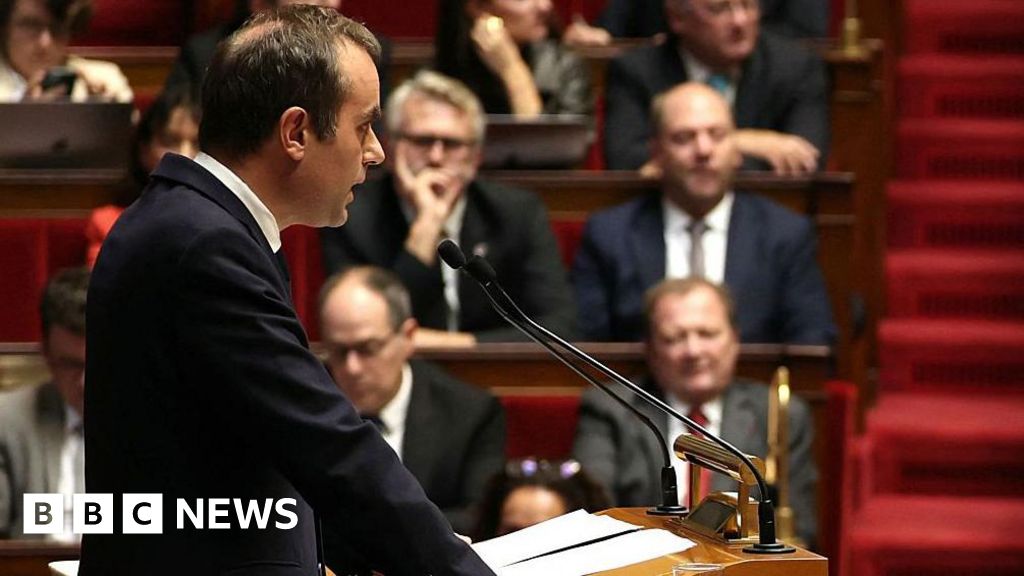

French PM Supports Suspending Macron's Pension Reform to Save Government
French PM Supports Suspending Macron’s Pension Reform to Save Government

In a dramatic turn of events, France finds itself at a crossroads as Prime Minister Sébastien Lecornu signals a potential halt to the contentious 2023 pension reforms. These reforms, which sought to increase the retirement age from 62 to 64, were heralded as a cornerstone of President Emmanuel Macron’s second term, symbolizing his push for economic modernization amid staunch opposition. However, recent political instability threatens to unravel Macron’s agenda, raising questions about the future trajectory of French domestic policy and its ripple effects across Europe and beyond.

The move to suspend the reforms, announced by Lecornu amidst looming votes of no-confidence, underscores the fragile consensus within France’s political landscape. With the government’s survival hanging in the balance, opposition parties—particularly the far-left and far-right—are pressing for parliamentary elections, demanding a fundamental reset to the nation’s leadership. The Socialists, signaling a willingness to cooperate, insist that any support hinges on a *full and immediate suspension* of the pension changes—a stance that puts Macron’s reforms in direct jeopardy. As analysts highlight, this standoff is more than mere policy disagreement; it reflects a broader crisis of legitimacy and public trust, with some framing it as a symbolic ‘wound on democracy.’

This domestic turmoil occurs amidst the broader context of Europe’s economic challenges. France’s looming €3.4 trillion debt—representing roughly 114% of its GDP—positions it dangerously close to the edge of fiscal stability, with debts rivaling those of Greece and Italy. The austerity measures necessary to fund such debt are politically sensitive, especially when paired with social discontent. According to prominent European financial analysts, the potential suspension of pension reforms and the ensuing economic concessions could further strain the nation’s budget, with Lecornu estimating a €400 million deficit cost in 2026 and a staggering €1.8 billion loss in 2027. These figures underscore the delicate balancing act faced by the government and highlight the geopolitical impact of fiscal policy decisions—decisions that will define France’s stability in a multipolar world.

Beyond France’s borders, the repercussions of this political upheaval reverberate across Europe and the transatlantic alliance. European institutions, watching a key member state teeter, are concerned about the erosion of policy continuity and stability. The scenario echoes historic moments of crisis during Europe’s debt struggles, where internal political fragility threatened the cohesion of the eurozone. Meanwhile, international organizations such as the IMF and the European Central Bank have issued warnings that prolonged instability in France could hinder economic recovery and strategic cooperation. As vaunted historians and geopolitical strategists reflect, these events are a vivid illustration of how fragile the fabric of democracy can be—even in nations that see themselves as pillars of stability. With France’s future hanging in the balance, the unfolding crisis is no less than a testament to the fierce contest between tradition and reform, sovereignty and supranational influence.

Ultimately, the coming days may well be remembered as a pivotal chapter in the history of Europe, a moment when the continent’s enduring power was challenged by internal discord and external pressures. Will France emerge from this crisis with renewed resolve or succumb to the weight of its accumulated fears? As the nation grapples with its destiny, it leaves the world watching, uncertain if this is the dawn of a new era or the death knell of a proud republic in flux—an unfolding drama etched into the annals of history.

Social Media Auto Publish Powered By : XYZScripts.com


