Matox News

Truth Over Trends, always!

Why is Trump Posturing Against Maduro? The Tensions Rise in US-Venezuela Clash

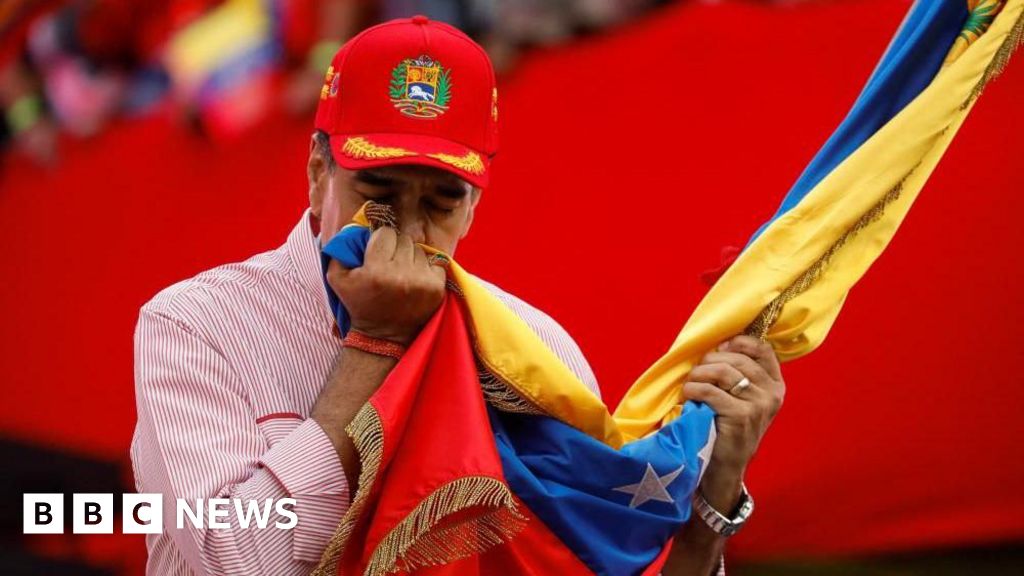
In a dramatic turn of events that echoes the turbulent history of Latin America, the United States has heightened its military and diplomatic pressure on Venezuela. Under the leadership of President Nicolás Maduro, the nation has become a focal point for international contention, with the U.S. asserting it is engaged in a campaign aimed at destabilization and regime change. The escalation includes the deployment of 15,000 troops and a formidable fleet of aircraft carriers, guided-missile destroyers, and amphibious ships to the Caribbean—an operation the Pentagon claims is the largest in the region since the 1989 invasion of Panama. Analysts warn that these military movements are not merely about fighting drug trafficking but could signal a shift toward overt intervention in the country’s sovereignty, raising profound concerns about regional stability.

The core of this crisis lies in the disputed electoral process. Since Maduro’s government declared victory in the 2024 presidential election—despite widespread opposition claims of electoral fraud—many nations, including the United States, have refused to recognize his legitimacy. Instead, the opposition candidate, Edmundo González, has been recognized as the true winner by multiple Western governments, sparking a deepening divide within Venezuelan society. Maduro’s firm grip on military, judicial, and legislative institutions has effectively rendered the electoral results a matter of internal power struggle rather than democratic legitimacy. Historically, leaders who maintain control over key institutions amid contested elections tend to entrench authoritarian rule—an alarming trend that international watchdogs are closely scrutinizing.

The geopolitical impact of America’s aggressive stance on Venezuela extends far beyond the continent. Diplomatic observers, including Harvard-based political analysts, warn that U.S. actions are part of a broader strategy to assert dominance over Latin America and control precious oil reserves. The recent deployment of warships has been justified by claims of combating drug trafficking, but critics argue the real intention is to weaken Maduro’s regime. The Biden administration, continuing the hardline policies, accuses Maduro of running criminal drug networks—notably the so-called Cartel de los Soles—which it claims the Venezuelan president himself leads. However, independent investigations suggest these groups are loosely organized and primarily consist of corrupt officials using Venezuela as a transit hub for illicit narcotics—not a hierarchical cartel. United Nations analysts have raised alarms that these strikes, which have claimed over 80 lives in recent operations at sea, could constitute unlawful attacks against civilians, blurring the line between counter-narcotics and warfare.

The possible escalation into direct military intervention raises urgent questions about sovereignty and regional security. With President Trump allegedly giving Maduro a one-week ultimatum to step down during a high-stakes phone call, the tension has reached a dangerous threshold. Though the White House has refused to explicitly confirm plans for ground invasion, military experts warn that the scale and scope of the U.S. deployment are inconsistent with a mere counternarcotics operation. The rhetoric from Washington suggests that options—ranging from land strikes to naval blockades—are “on the table,” creating a volatile atmosphere that risks rekindling Cold War-era conflicts in one of the world’s most resource-rich yet politically fractured regions.

As history continues to unfold beneath the ominous shadow of war, the fate of Venezuela remains uncertain, its sovereignty hanging by a thread. The world watches as the weight of history presses down—either toward a new chapter of intervention, or a hard-won lesson in the limits of power. In an era where the decisions made today will ripple through generations, the question persists: will the cries of a nation seeking sovereignty be drowned by the drums of imperial ambition, or will the voices of resistance finally carve a path toward genuine liberty? Only time will tell, but the storm that gathers over Latin America may yet reshape the global order itself, etching this perilous moment into the annals of history.
Maduro Signals Openness to Direct Talks Amid Rising US Pressure

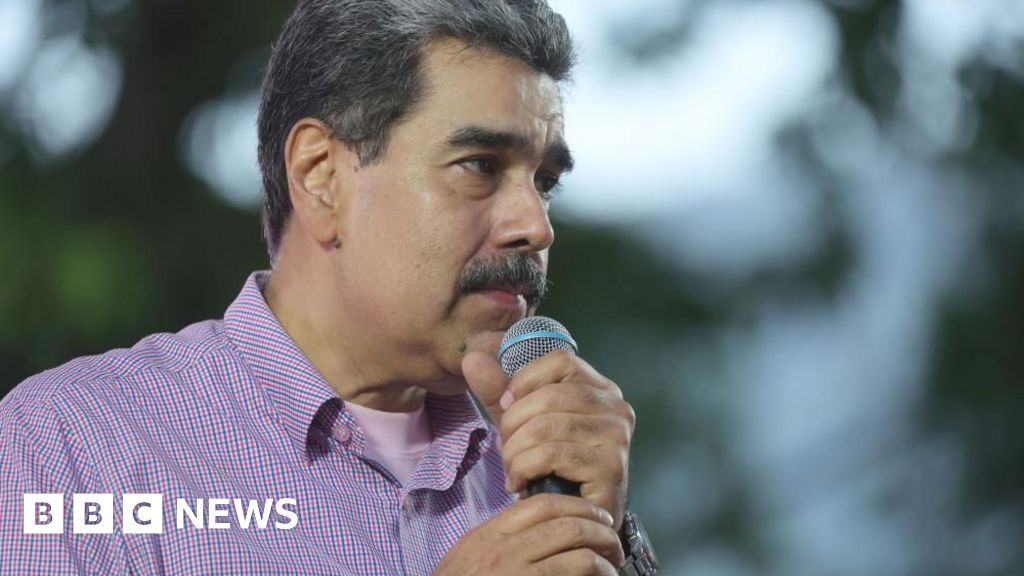
In an unmistakable sign of the escalating crisis in Venezuela, the country’s leader, Nicolás Maduro, has publicly expressed willingness to engage in direct talks with representatives of the Trump administration. This development comes amid intensifying international pressure, while Washington’s rhetoric and military maneuvers suggest a broader strategic aim beyond mere diplomacy. Just hours before Maduro’s announcement, President Donald Trump had not ruled out deploying ground forces to the South American nation, igniting fears of an outright conflict. The United States, through its actions and statements, appears to be pushing toward a decisive intervention—yet the question remains: is this for regime change or strategic control over Venezuela’s vast oil reserves?

The US government’s aggressive policies have shown few signs of backing down. Since Trump’s second term began, Washington has doubled its bounty on Maduro, offering up to $50 million for information leading to his capture, and launched a counternarcotics operation targeting vessels crossing Caribbean waters. These strikes, conducted under the guise of removing “narcoterrorists,” have resulted in over 80 fatalities, igniting a debate about their legality and effectiveness. Critics, including legal experts and international analysts, argue that no concrete evidence has been provided linking these vessels to drug trafficking. The strikes, primarily in the Caribbean and Pacific, underscore a broader strategy: to sow chaos within Venezuela’s borders and weaken Maduro’s hold on power. Meanwhile, the presence of the US Navy’s largest aircraft carrier, the USS Gerald Ford, signals that Washington’s military posture may be more than a bluff; some interpret it as a veiled threat to remove Maduro forcibly.

Simultaneously, diplomatic signals fluctuate. Trump’s contradictory statements—initially denying the possibility of war, then leaving open the option of military action—are read as a warning to Maduro: enter negotiations or face harsher measures. The State Department’s decision to delay labeling the alleged Venezuelan drug cartel, Cartel de los Soles, as a Foreign Terrorist Organization until late November, appears to be a calculated move. Experts suggest that this delay is a strategic ultimatum: engage in dialogue or face intensified sanctions and military pressure. The designation, if enacted, would criminalize any American support for the cartel, bolstering the US’s legal basis for further action. As President Trump wavers, some analysts see this as part of a broader tactic—an attempt to reinforce the narrative that Maduro’s regime is a significant threat to regional stability and US security.

Within Venezuela, Maduro’s approach openly contrasts with US escalation. The leader, who has once even sung in English during public addresses, is calling for dialogue and peace. Addressing the American people directly, he underscores his readiness for face-to-face talks—yet, past negotiations mediated by the Vatican and Norway have collapsed. Meanwhile, opposition figure and Nobel laureate María Corina Machado is actively urging the military to defect, framing Maduro’s regime as a “criminal structure” responsible for “crimes against humanity.” Her “freedom manifesto” highlights the stakes—an impending epoch where “our natural rights will prevail,” but only if Venezuelans unite against what she describes as a dictatorial tyranny. The ongoing internal struggle echoes the larger geopolitical tension: a nation on the brink, caught between authoritarian repression and external intervention—whose fate remains suspended between history’s relentless march and the unpredictable tides of geopolitics.

The weight of this unfolding crisis leaves the international community pondering the future of Venezuela, as the echoes of history ring louder than ever. Will diplomacy prevail, or will this simmering conflict ignite into another chapter of regional upheaval? With each tug of geopolitics, entire societies are caught in the crossfire, and the world watches as the pages of history turn—unfolding a saga of power, resistance, and the quest for sovereignty that may yet reshape the very fabric of South America. The question lingers: how much longer can this fragile balance be maintained, before the next chapter of conflict is written in blood and fire?

Nicolas Maduro faces mounting challenges in his grip on power

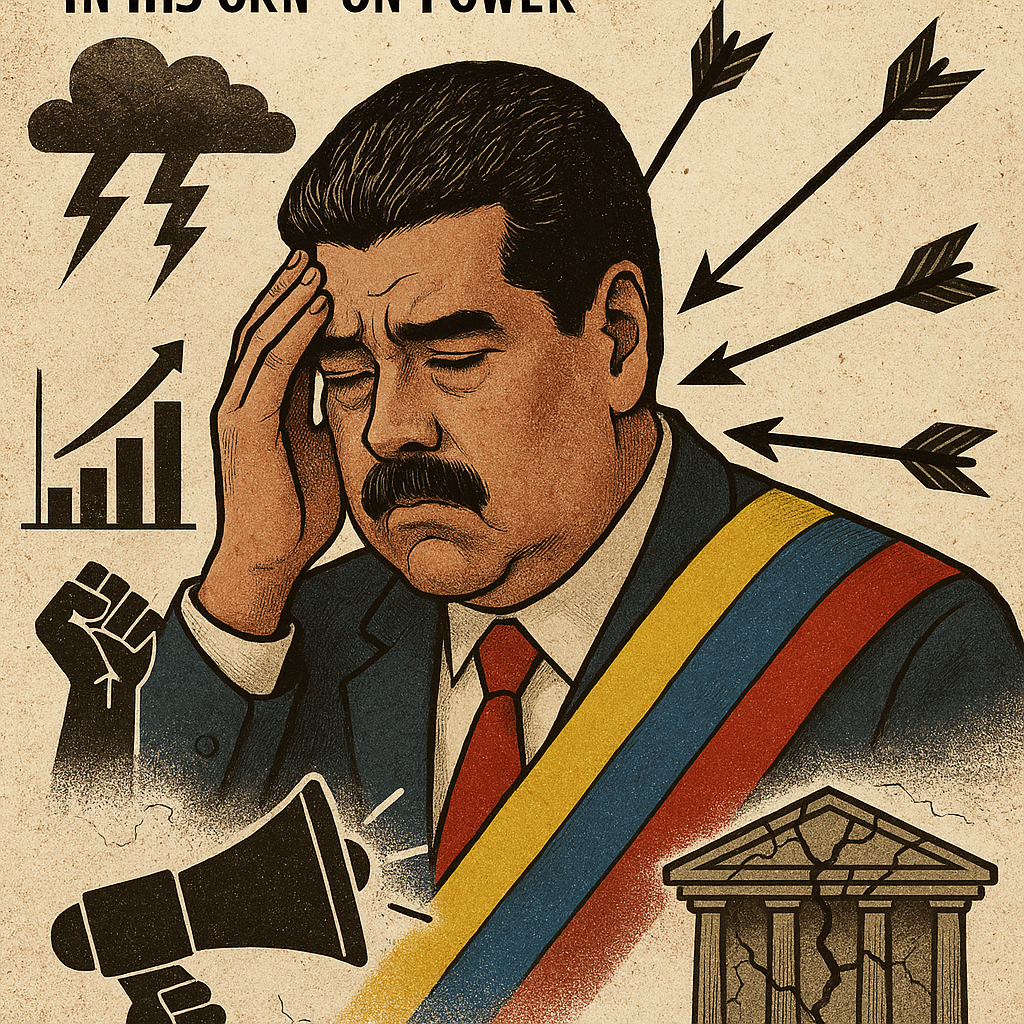
Within the tumultuous landscape of Latin American politics, Venezuela’s President, Nicolás Maduro, faces a critical juncture emblematic of the broader crisis threatening the very fabric of democratic legitimacy. Once heralded by some as a champion of socialist ideals, Maduro now finds himself entangled in a relentless power struggle that echoes the classic conflicts between authoritarian resilience and revolutionary resurgence. The whispers of international condemnation, combined with growing domestic unrest, suggest that Maduro is increasingly running out of options, with each decision echoing deeper into the nation’s destiny.

Maduro’s recent measures signal a potential shift that many political analysts see as an attempt to consolidate power amidst mounting challenges. The decision to tighten control over opposition-led institutions, coupled with crackdowns on dissent, mirrors historical tactics used by populist regimes seeking to strengthen the grip on the levers of power. As constitutional experts dissect these moves, parallels arise with regimes of the past that prioritized centralized authority over democratic accountability. The question remains: are these reforms defensive acts designed to preserve Maduro’s tenure, or are they the harbingers of an irreversible slide into authoritarianism?

Furthermore, the socio-economic fallout of these power struggles extends far beyond Caracas. The Venezuelan people, caught in a relentless struggle for survival, are often seen as pawns in a grand political chess game. The decisions made in the palace corridors—whether to hold new elections, amend the constitution, or suppress opposition voices—directly shape the life chances of millions. This reflects an age-old truth in political theory: where power resides, so too does the capacity to shape societal destiny. As the regime tightens its grip, it raises a fundamental question rooted in historical parallels — will the nation’s sovereignty be dictated by the ambitions of a solitary leader, or will it ultimately pivot back to the sovereignty of the people?

As the global community observes, the internal fractures within Venezuela serve as a stark reminder of how power struggles define history’s course. Whether Maduro manages to prolong his hold on power or succumbs to internal dissent and external pressure, the unfolding crisis underscores a timeless truth: politics is the arena where the fate of nations is decided, and where the future is written with each decision made in the corridors of power. With each passing day, Maduro’s dwindling options reveal that in the theater of sovereignty, the stage is set for either resurgence or ruin—only history can truly reveal the scripts yet to be enacted.

Social Media Auto Publish Powered By : XYZScripts.com



