
Matox News

Truth Over Trends, always!

Foreign Office to probe Peter Mandelson’s controversial ambassador payoff – UK politics in focus

International Power Play and the Political Aftermath of Mandelson’s US Payoff

In a move that underscores how geopolitical decisions are increasingly intertwined with domestic controversies, the case of Peter Mandelson has taken center stage in British political discourse. Once a leading figure in UK politics, Mandelson’s recent fallout over a taxpayer-funded payoff—reportedly up to £55,000—after being sacked as ambassador to the United States has sent shockwaves through Westminster. The controversy hinges on his association with Jeffrey Epstein, the late accused child sex offender, raising serious questions about judgment and integrity within the ruling circles. This incident is not just a domestic scandal but a test case for how international relations and internal political stability are now dangerously linked in an era of shifting global alliances and transparency demands.

While the Foreign Office claims proper procedures were followed in Mandelson’s termination, the revelation of his sizeable payoff—whose details are still to be fully disclosed—poses a critical question of cost and morality for government transparency. Analysts warn that such payouts, especially in high-profile diplomatic posts, can undermine public trust and usher in a wave of political instability. The incident also casts a shadow over Keir Starmer’s leadership, as he struggles to navigate a political landscape riddled with ongoing scandals. The international community watches with keen interest, knowing that in the ripples of this controversy lie repercussions for alliances, trade negotiations, and diplomatic reputation.

Prominent voices—including Pat McFadden, the Work and Pensions Secretary,—have called for Mandelson to return or donate the payoff to charity, emphasizing the moral duty in these turbulent times. European and transatlantic analysts suggest that this domestic scandal comes at a concomitant moment of geopolitical realignment. With Rising Powers like China and Russia recalibrating influence, Western nations are under increasing pressure to demonstrate strength and integrity. The question remains: Will such incidents weaken Western diplomacy or serve as a catalyst for tougher scrutiny of government officials’ conduct in the age of international transparency?

Historians like Sir John Bew and geopolitical analysts argue that how Western democracies handle scandals of this nature will define their global standing for decades to come. The ongoing review by the Foreign Office, which aims to reassess Mandelson’s pay and conduct, signals an understanding that the failure to uphold standards can embolden competitors. In a world where public opinion is increasingly shaped by scandals and transparency, the weight of history presses down on leaders who must decide whether to embrace accountability or risk history’s verdict of corruption and ethical failure. As the case unfolds, the question remains: Will this be a moment of reflection and reform or a harbinger of more unrest as international affairs grow ever more complex and unforgiving?

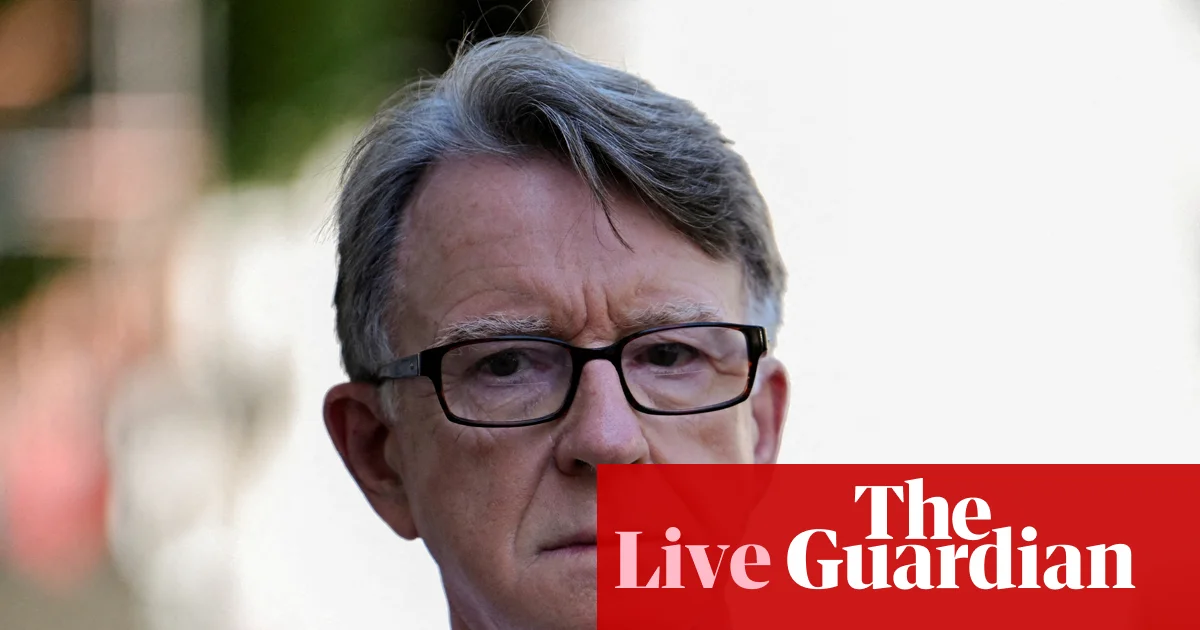
Thursday Brief: Will Epstein Files Tarnish Peter Mandelson’s Legacy?

In an era where power dynamics are rapidly shifting, the recent revelations surrounding Lord Mandelson signify more than mere scandal; they underscore profound vulnerabilities within the Western political establishment. The release of classified files by the US Department of Justice implicates Mandelson in contacts with Jeffrey Epstein, a convicted financier notorious for his alleged crimes and clandestine influence networks. The files detail contact with Epstein that, if proven to involve leaked or market-sensitive information, could fundamentally undermine trust in the integrity of public officials at the highest levels, prompting wide-ranging questions about accountability, judgment, and the opaque corridors of power.

While investigations by the Metropolitan Police are ongoing into allegations of misconduct in public office, what is striking is that Mandelson remains a member of the House of Lords. Such a situation exemplifies the persistent loopholes and ambiguous standards that allow influential figures to retain their titles despite serious allegations. Renowned analysts and legal experts recognize that the ‘good chap’ code—an undefined and largely subjective marker of personal integrity—still governs peer conduct. Historically, peers like Mandelson, with their extensive influence and strategic roles, are often shielded from the consequences that would swiftly befall lesser-known officials, emphasizing a double standard reflective of entrenched elite impunity.

Geopolitical impact of elite scandals

The scandal surrounding Mandelson extends well beyond domestic politics, threatening to destabilize international relations. Mandelson’s brief tenure as UK ambassador to Washington symbolized a strategic bridge between the two nations. The controversy now calls into question transatlantic trust and the integrity of diplomatic appointment processes. Global institutions and foreign partners, notably in the United States and European Union, are watching closely as this case exemplifies the broader issues of corruption, influence peddling, and accountability. Such vulnerabilities could be exploited by rival powers seeking to undermine Western cohesion, especially amid current geopolitical tensions with Russia and China. Accordingly, the Mandelson case has the potential to be exploited as a propaganda tool, emphasizing fragility within Western liberal democracies.

International organizations such as Transparency International have long warned that the erosion of trust in political elites fuels populist movements and destabilizes geopolitical balances. Historians and strategists recognize that these scandals serve as_warning_ markers of systemic decay, capable of igniting political crises that ripple across borders. How Western countries respond—either by addressing these breaches decisively or allowing them to fester—will shape the geopolitical landscape for years to come. In the shadow of this scandal, the challenge lies not just in safeguarding individual reputations, but in reaffirming societal trust in institutions designed to serve the public good.

Concluding thoughts: The weight of history

As history continues to unfold, the Mandelson scandal serves as a stark reminder that the forces of power and corruption often operate in tandem, threatening to erode the foundations of democratic accountability. The decisions made in the coming weeks—whether to press charges, reform peer conduct, or reinforce existing immunity—will determine if the tide of elite impunity persists or if the call for transparency and justice finally gains ground. The choice is clear: the fate of nations and societies hinges on whether those in power will be held accountable, or if the pages of history will record yet another chapter of entrenched privilege triumphing over justice. For now, the weight of history presses down, and the outcome remains uncertain, waiting for the actions of policymakers to define the course of the future.

Minister dismisses Mandelson's Epstein outrage as overblown—UK politics live
Minister dismisses Mandelson’s Epstein outrage as overblown—UK politics live

International Watch: UK Political Shake-up and the Rift over Peter Mandelson’s Controversy

The unfolding saga within Britain’s political landscape signals more than just internal strife; it echoes across the corridors of global power. Recent revelations concerning Peter Mandelson, a veteran political figure, have ignited widespread debate about accountability, morality, and national security. As he faces fallout from allegations linked to Jeffrey Epstein, the ripple effects threaten to reshape diplomatic and parliamentary standards worldwide. The controversy underscores how decisions made within Britain’s political elite are now dissected through a global lens, emphasizing the geopolitical impact of leadership scandals in an interconnected era.

Leading political voices, such as Ed Davey of the Liberal Democrats, are demanding a public inquiry into Mandelson’s associations, particularly citing concerns over national security and the rule of law. They argue that the leak of sensitive government information, allegedly by a minister acting as a mole, could have posed a grave threat to Britain’s institutional integrity. International analysts and organizations, including security experts, emphasize THAT lack of transparency in such cases fuels public distrust and weakens diplomatic credibility. In an age where soft power and diplomatic resilience are paramount, the fallout from internal scandals can weaken Britain’s stature on the world stage, especially if elites dodge accountability or dismiss serious allegations as ‘disproportionate’.

In the midst of the controversy, Mandelson’s own comments accentuate a troubling narrative. His assertion that “hiding under a rock would be a disproportionate response” to emails—some of which have linked him to misconduct—appears to dismiss the gravity of the allegations. Historians and political commentators warn that such dismissals only deepen international skepticism of Britain’s political class. As Katy Balls, a respected political journalist, highlights, Mandelson’s lack of contrition and his claims of naivety may serve to further erode public trust in a time when integrity is desperately needed. The UK’s decisions to address this crisis will inevitably influence how other nations hold their elites accountable, potentially setting a precedent for transparency or deterioration into diplomatic shadows.

Meanwhile, within Western democracies, the debate about the role of elites, morality, and security has intensified. The discourse underscores a broader, turning point: nations worldwide are revisiting their ethics and vetting processes for political and diplomatic appointments. With the US and European countries watching, the UK’s handling of Mandelson could be interpreted as either a reaffirmation of accountability or a capitulation to political expediency. Decisions made now will influence the future of governance standards across liberal democracies, impacting societies’ trust in their institutions and their leadership’s capacity to confront uncomfortable truths.

In the saga’s shadow, the words of security analysts and historians remind us that this is more than a scandal; it is a vonerable moment that could define Britain’s role on the world stage for generations. As the government prepares for a busy day of parliamentary debates and policy discussions, the weight of history settles heavily. The question remains: will Britain emerge from this crisis with renewed integrity and transparency, or will it perpetuate the shadows that threaten to undermine both its democracy and its international reputation? The answers lie in the choices made today—choices that will forever mark the course of history as the world continues to watch and judge.

Social Media Auto Publish Powered By : XYZScripts.com



