
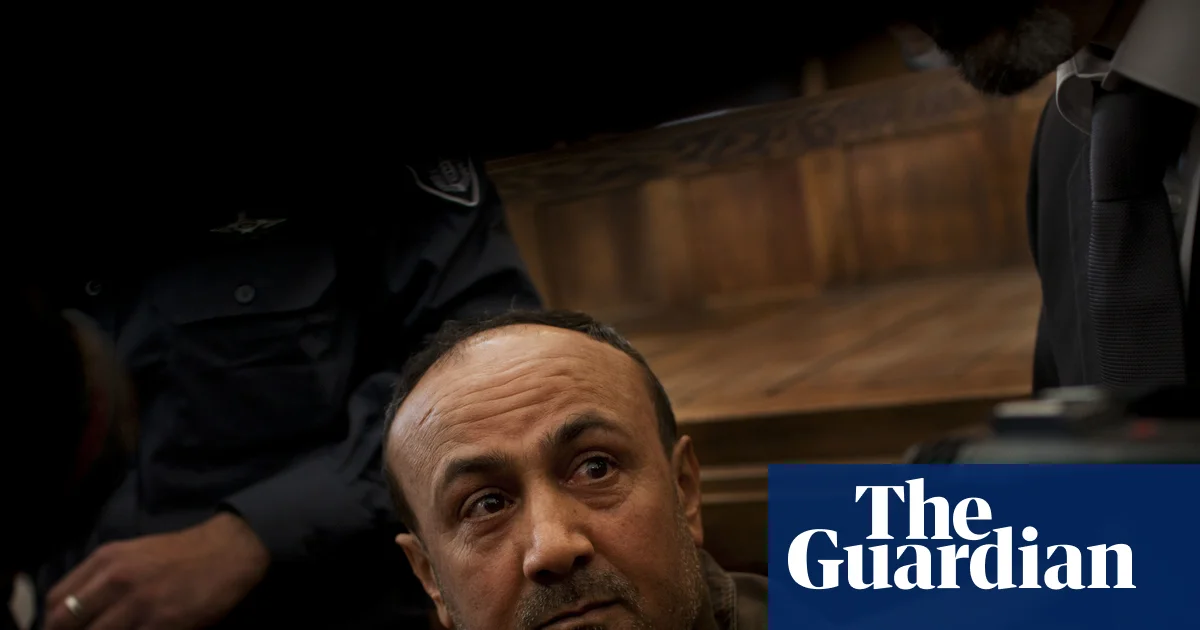

The detention of Marwan Barghouti, a senior Palestinian leader and influential advocate for a two-state solution, continues to resonate profoundly within the geopolitical landscape of the Middle East. His impending publication, Unbroken: In Pursuit of Freedom for Palestine, set for release on 5 November, offers a rare window into the personal and political journey of a man viewed by many Palestinians as a symbol of resilience and hope. Despite being incarcerated in Israeli prisons since 2002, Barghouti’s significance transcends his physical captivity—he remains the most popular Palestinian figure across Gaza and the West Bank, according to contemporary opinion polls. His sustained influence underscores the deep yearning among Palestinians for leadership that embodies their aspirations for dignity, sovereignty, and unity.
The international community’s response to Barghouti’s incarceration illustrates a broader story of contested justice and complex geopolitics. Detained after being accused—controversially—of orchestrating attacks that resulted in civilian deaths, Barghouti’s trial drew sharp criticism from organizations such as the Inter-Parliamentary Union, which argued that the proceedings breached international law and the Geneva conventions. His repeated denials of the charges amplify the debate over the legitimacy of his imprisonment, symbolizing the enduring clash of narratives surrounding the Israeli-Palestinian conflict. Meanwhile, allegations of inhumane treatment—extended periods of solitary confinement, limited family visits, and restrictions on international aid groups like the Red Cross—highlight violations that many experts consider breaches of modern human rights standards. These conditions have heightened calls from advocacy groups and international observers for the immediate release of a man many see as a de facto leader-in-waiting, which further complicates the geopolitical calculus of peace and conflict in the region.
Despite the political and legal disputes, Barghouti’s influence persists, largely due to his portrayal as a unifying figure capable of bridging the fractious Palestinian factions and reinvigorating the nationalist movement. His association with Fatah, a party often seen as more pragmatic than Hamas, positions him as a potential interlocutor capable of engaging with global powers on a pathway to peace. The layered complexity of his political stance—advocating for nonviolent resistance and diplomatic solutions—aligns with many international analysts’ assessments that his leadership could catalyze negotiations that are currently stalled. His enduring popularity, exemplified in successful protests and campaigns for his release across Western cities, resonates with a broader narrative of resistance against perceived injustices inflicted upon Palestinians. These demonstrations, which include distinguished figures from global culture and politics, serve as a reminder that Barghouti’s influence extends well beyond the prison walls—embodying a longstanding struggle for Palestinian self-determination in an era fraught with escalating tensions.
The unfolding story of Marwan Barghouti, set against the backdrop of ongoing conflict and diplomatic deadlock, underscores a crucial historical juncture. As the world navigates a shifting landscape where international institutions grapple with questions of justice and sovereignty, the fate of leaders like Barghouti will determine whether the quest for Palestinian independence remains a distant aspiration or gains tangible momentum. The publication of his memoir—comprising intimate letters, historical documents, and reflections—serves as a poignant reminder that the human dimension of this conflict is never far beneath the surface of geopolitics. As history continues to be written in the streets of Gaza, Ramallah, and global capitals, the weight of this narrative remains clear: in the shadows of prisons and conflicts, the long arc of justice, resistance, and hope bends towards destiny, no matter how profound the struggle or how distant the horizon.





