
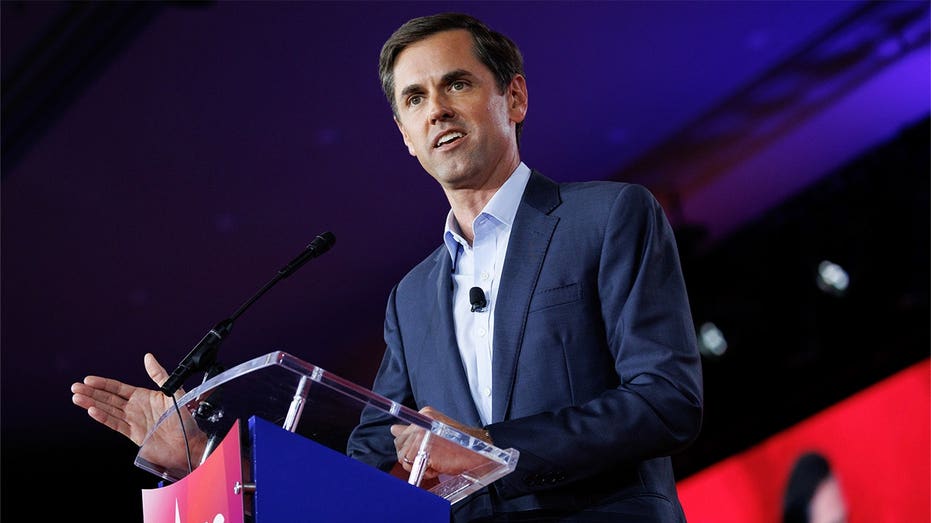

Austin, TX – State Senator Mayes Middleton has claimed victory in the fiercely contested Republican runoff for Texas Attorney General, concluding a bitter and expensive race against U.S. Representative Chip Roy. The outcome of the Texas Attorney General runoff election marks a significant moment for the state’s conservative landscape, clearing Middleton’s path to potentially become the next chief legal officer for the Lone Star State. This electoral battle, which saw both candidates vying for the mantle of the most ardent supporter of former President Donald Trump’s agenda, highlighted deep divisions and strategic spending within the Republican base.
A Battle of Ideologies and Resources
The contest between Middleton and Roy was characterized by intense debate over conservative principles and a substantial financial investment. State Senator Middleton, a prominent figure in the state legislature and president of an independent oil and gas company, largely self-funded his campaign. He injected approximately $17 million of his personal wealth into the race, demonstrating a significant commitment.
Middleton’s strategy centered on highlighting his strong support for former President Donald Trump and the broader MAGA agenda. He had narrowly edged out Roy in the initial March primary and consistently cast himself as the true ‘America First’ champion. This approach resonated with a significant segment of the Republican electorate keen on candidates who unequivocally align with the movement’s core tenets, pushing back against any perceived deviation from conservative orthodoxy. The financial might allowed Middleton to maintain a strong media presence and direct outreach across the state, ensuring his message of unwavering loyalty reached voters.
Roy’s Experience and Counter-Arguments
U.S. Representative Chip Roy, known for his staunch conservative stance in Congress and his past service as a Texas assistant attorney general, mounted a robust challenge. Roy’s campaign emphasized his extensive courtroom experience, arguing that his background as a prosecutor and a former chief of staff to Senator Ted Cruz made him uniquely qualified for the Attorney General position.
He highlighted his practical legal expertise, stating that having served as the first assistant attorney general made him ‘ready on day one.’ Roy underscored his readiness for the role, emphasizing his experience in court, standing before judges, and arguing cases—a track record he asserted his opponent lacked. In an interview with Fox News Digital prior to the runoff, Roy contrasted his ‘prosecutor’s experience’ with Middleton’s, suggesting these qualifications ‘should matter’ to voters.
Despite a late surge in fundraising from key backers, including an endorsement from Senator Ted Cruz, Roy faced persistent questions regarding his conservative credentials from Middleton’s campaign. Middleton’s team aired ads alleging Roy had ‘betrayed MAGA’ by not fully embracing certain aspects of the America First platform. This back-and-forth over who was the ‘truer’ conservative defined much of the campaign’s final weeks.
The Role of MAGA Loyalty in Texas GOP
The runoff was not merely a contest of qualifications but also a significant test of loyalty to the ‘Make America Great Again’ movement within the Texas Republican Party. Both candidates actively sought to demonstrate their alignment with former President Trump’s vision, turning the race into a proxy battle over the direction of the state’s conservative future.
Middleton’s campaign explicitly championed his MAGA credentials, while Roy, despite his strong conservative record, found himself defending against accusations of insufficient fealty. This dynamic underscores the powerful influence Trump’s endorsement and the broader America First ideology continue to wield over Republican primary voters, particularly in a state as politically significant as Texas. The outcome suggests that for many voters, a candidate’s perceived commitment to this national movement can be as crucial as, if not more important than, traditional political experience.
Implications for Texas’s Legal Future
Middleton’s victory positions him as the Republican nominee to succeed Attorney General Ken Paxton, whose tenure has been marked by significant legal and political challenges. The office of Attorney General is vital, overseeing state litigation, consumer protection, and providing legal counsel to state agencies.
With Middleton now advancing to the general election, the focus shifts to how his conservative legal philosophy and policy priorities will shape the Attorney General’s office. His approach is expected to align closely with the principles of limited government, free markets, and a strong defense of constitutional liberties, consistent with his campaign’s emphasis. This election’s result underscores a clear preference among many Republican primary voters for candidates who demonstrate unwavering loyalty to the party’s current ideological direction, setting a precedent for future contests within the state.
“The Texas Attorney General runoff became a pivotal test of conservative loyalty and financial might, shaping the future leadership of the state’s top legal office.”
As the general election approaches, the political battle for Texas Attorney General is set to intensify. Middleton’s decisive win in the primary reflects a clear direction from the Republican base, favoring a candidate who forcefully articulates an America First stance and is willing to invest significantly in their campaign.
His success, fueled by substantial personal investment and a strong alignment with the MAGA movement, sets the stage for a compelling contest ahead. The next Attorney General will inherit a critical role in upholding the rule of law and defending the state’s interests, making this election a crucial one for all Texans as they look to maintain order and uphold foundational principles. The implications of this primary extend beyond the state, offering insights into the evolving dynamics of the national conservative movement.






