
Matox News

Truth Over Trends, always!

Trump warns: Funding New York City could be tough if Mamdani wins mayor’s race

In the midst of political upheaval and shifting attitudes toward governance, New York City stands at a crossroads that exemplifies the broader ideological debates facing many urban centers in America today. With the upcoming mayoral race featuring innovative young candidates like Mamdani, the city is witnessing a vibrant movement that challenges traditional political paradigms. Mamdani, a 34-year-old state assemblyman, captured the imagination of many New Yorkers by positioning himself as a fresh voice committed to _restoring dignity_ and _empowering communities_. His victory in the Democratic primary signals a potential _cultural shift_—a move away from the old guard of political complacency to a more _youth-driven_ and _values-centered_ leadership.

The frontrunners’ contrasting visions underscore a broader theme: the importance of personal impact—not just on policy, but on the _lifestyle_ and _well-being_ of residents. While political discourse often fixates on budgets and legislation, the deeper ripple effect can be seen in how a city’s leadership influences everything from _public safety_ to _urban renewal_. Mamdani’s approach emphasizes _community dignity_, aiming to create an urban environment where everyone feels _valued_ and _safe_. This resonates with many young Americans who seek _authenticity_ and _accountability_ from their leaders, inspired by thought leaders like Jordan Peterson and organizations such as the Claremont Institute, which advocate _values-driven_ governance and _cultural renewal_.

On the other hand, the political landscape is tinged with echoes of the past, with figures like Andrew Cuomo remaining in the mix, positioning himself as a seasoned advocate during his tenure as governor. Yet, the contrast between the two candidates highlights a significant _lifestyle change_—a departure from _elite decision-making_ toward _grassroots engagement_. As debates unfold about federal funding and policies, the underlying question is: how will leadership influence not just the city’s finances, but its _cultural fabric_? The city’s $7.4 billion in federal funding exemplifies the sizable stakes involved, but more crucial is whom the city chooses to serve as its _moral compass_ and _visionary guide_. This dynamic underscores the vital role of _personal impact_: whether city officials foster _inclusivity_ and _liberty_ or succumb to _bureaucratic stagnation_.

  • Embrace the _power of community_—engage locally to understand your city’s unique _identity_.
  • Stay informed about _political shifts_ that influence your _quality of life_ and _personal wellbeing_.
  • Support leaders who prioritize _authenticity_, _dignity_, and _accountability_ in governance.

As the city’s narrative continues to unfold, it challenges each individual to reflect on what _leadership_ truly means in _everyday life_. The choices made today—be it at the ballot box or in everyday community engagement—shape a _culture of resilience_ and _hope_. For young Americans embracing the _lifestyle_ of self-empowerment and _public responsibility_, the future of New York is more than just a political story—it’s a collective _journey_ toward _renewed purpose_ and _lifestyle evolution_. In this ongoing _narrative of transformation_, the lessons are clear: _leadership rooted in integrity, connectedness, and vision_ can spark a _lifestyle revolution_, inspiring generations to believe in _the power of community_ and _their own capacity to effect change_.
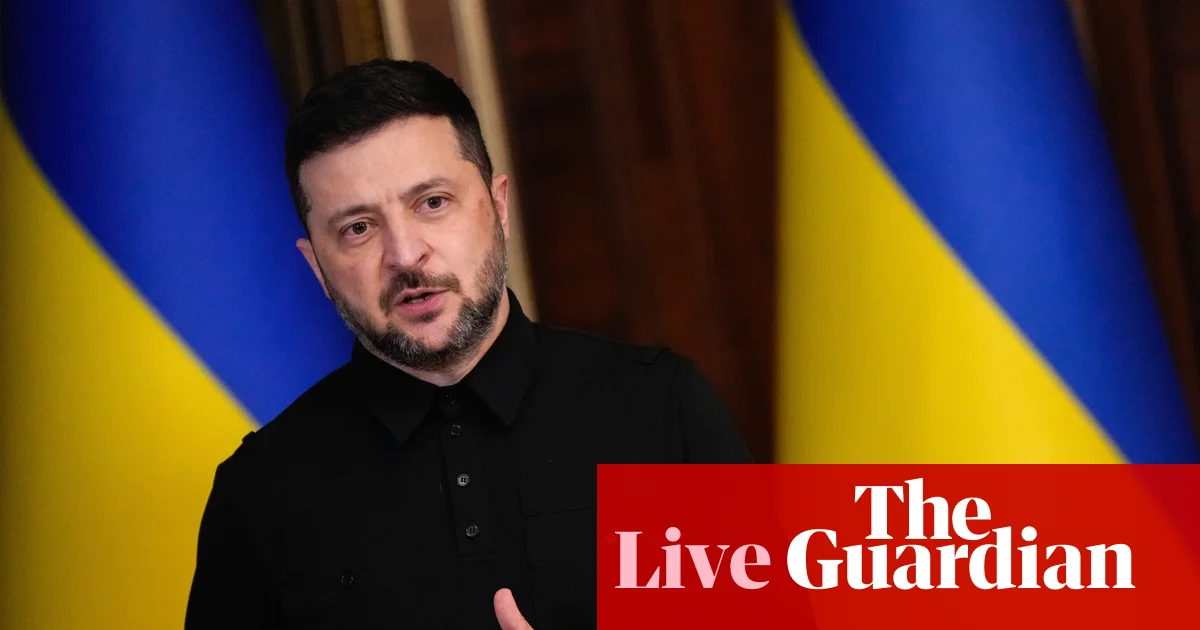
Zelenskyy names new Odesa leader after mayor’s Russian passport scandal – Europe updates | NATO

In the heart of Eastern Europe, Ukraine continues to be a focal point of geopolitical tension, with the recent appointment of Sergiy Petrovich Lysak as the new head of Odesa’s city military administration signaling an escalation of the Ukrainian government’s efforts to strengthen its regional security measures. This move follows the Ukrainian president Volodymyr Zelenskyy’s announcement on Tuesday to establish a dedicated military administration in the strategic port city, citing a critical need for increased protection amidst ongoing hostilities. Zelenskyy emphasized, “Odesa deserves greater protection and greater support,” highlighting the nation’s commitment to fortifying its vital Black Sea corridor against persistent threats.

The political upheaval in Odesa is part of a broader, tumultuous battle for sovereignty, as Kyiv revokes the citizenship of local officials suspected of dual loyalties. The dismissal of Hennadiy Trukhanov, who denies holding a Russian passport, underscores Ukraine’s rigid stance against dual citizenship, aiming to eradicate divisive figures potentially compromised by Moscow. This domestic strategy unfolds amid escalating military confrontations on multiple fronts, where Russian forces have claimed control over settlements like Oleksiivka and Novopavlivka, signaling a persistent push to consolidate territory amid mounting international support for Ukraine’s resistance.

All Eyes on NATO and Russia’s Rising Threat

As the Russian invasion enters its second year, NATO’s defense ministers convened in Brussels to address the rising threat of Russian airspace violations and the Kremlin’s ongoing aggression. NATO Secretary General Mark Rutte and other allies discussed intensifying their support for Ukraine, with the US contemplating the deployment of long-range missiles such as the Tomahawk to Kyiv—a move that, if realized, could significantly alter the dynamics of the conflict. US Defense Secretary Pete Hegseth indicated a collective commitment to bolster Ukraine’s defenses, emphasizing that more military aid, including advanced drones and weaponry, is forthcoming. Meanwhile, Russia’s military efforts have persisted, with reports of attacks on Ukrainian energy infrastructure—targets like power plants and gas facilities—aimed at debilitating Ukraine’s war effort and sowing chaos in civilian life.

Notably, Russia’s largest petrochemical complexes in Bashkortostan sustained attacks by Ukrainian drones, yet regional officials assert they continue to operate normally, illustrating the resilience of Moscow’s industrial backbone amidst setbacks. Yet, intelligence from Finland’s defense minister indicates that Russian forces are amassing anew and becoming more reliant on China—a sign that Moscow’s military resource pool might be primarily preoccupied with Ukraine, but still remains a formidable threat to NATO’s eastern flank. The gathering of NATO defense ministers highlighted concerns that Russia’s strategic posture could persist long after Ukraine’s war ends, cementing its role as a persistent destabilizer in the region.

Shifts in International Power and the Waning Kremlin Influence

Meanwhile, in the Middle East, Vladimir Putin’s attempt to project influence through the postponed Russia-Arab World summit backfired spectacularly, with only a handful of leaders attending, underscoring Moscow’s declining influence in the region. Instead, global attention shifted to Egypt, where a Gaza peace summit, attended by Donald Trump and regional leaders, signaled a geopolitical shift away from Moscow’s long-standing regional dominance. Pjotr Sauer of The Guardian notes that this diplomatic retreat reflects the reality: as the war in Ukraine presses on, Russia’s influence in the Middle East diminishes, revealing the limits of Putin’s strategy to assert global leadership.

Furthermore, the European Union is moving to confront its own internal crises, with Brussels set to propose regulations tackling short-term rentals—a social matter that, if unaddressed, could fuel populist discontent and threaten the unity of the bloc. As European nations grapple with economic stagnation, demographic declines, and social tensions, the trajectory of their resolve on international issues remains uncertain. The coming months could define whether Western alliances remain resilient or fragment under the weight of economic and geopolitical pressures.

In this unfolding chapter of history, decisions made in the corridors of power—whether in Kyiv, Brussels, or Moscow—will resonate well beyond their borders. As Ukraine’s struggle persists and NATO faces its future, the shadow of Russia’s resurgence lingers, hinting at a protracted contest that will test the resolve of Western unity, the resilience of Ukrainian sovereignty, and the shifting sands of global influence—a story that is still being written, as the world watches with bated breath, the weight of history pressing down on an uncertain horizon.

Social Media Auto Publish Powered By : XYZScripts.com



