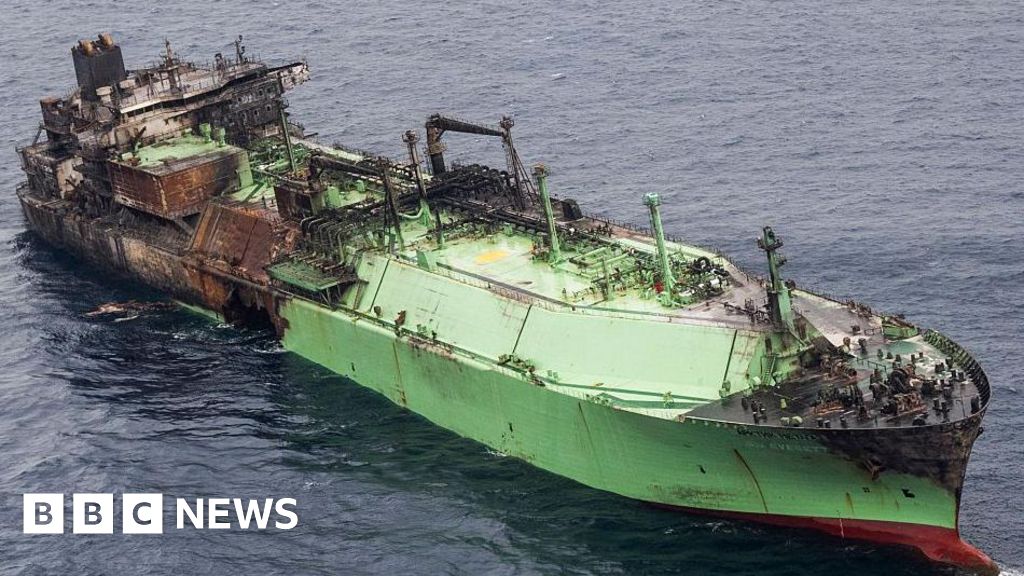

In recent weeks, the international security landscape has witnessed a troubling escalation of maritime conflicts that underscore a rapidly shifting geopolitical environment. According to reports from Ukrainian security services, notably the Security Service of Ukraine (SBU), three vessels operating in the Black Sea have been targeted, with catastrophic consequences. The most alarming of these incidents involved the vessel Dashan, which was reportedly subjected to “critical damage” — a stark indication that the maritime domain is becoming an increasingly contested and dangerous arena amidst ongoing hostilities in Eastern Europe.
Less than two weeks after these Black Sea attacks, a new incident emerged in the Mediterranean Sea: the oil tanker Quendil was hit, raising questions about the broader scope of maritime destabilization. Experts from various international organizations have pointed to these targeted assaults as a strategic move that complicates the balance of power in vital global shipping corridors. Experts like geopolitical analysts and military strategists warn that such covert assaults could not only disrupt global energy supplies but also serve as provocations meant to test the resilience of international maritime law and security arrangements. The United Nations and NATO have both expressed concern, yet the incidents reveal a more complex chessboard where traditional alliances are strained by emerging conflicts and asymmetric tactics.
The significance of these attacks goes beyond the immediate damage to vessels; they represent a deliberate attempt to reshape regional security dynamics. Some analysts argue that these strikes are part of a broader campaign to establish new influence zones in strategic choke points, where ongoing tensions involve Russia, Ukraine, and NATO members. The targeted vessels, often seen as symbols of international commerce, are now also tangible symbols of the **vulnerabilities** that global maritime trade faces in an era of hybrid warfare. According to historians specializing in modern conflicts, these incidents mark a *turning point* in the use of unconventional methods to project power and unsettle economic stability across major sea routes.
How the international community reacts to these provocations will profoundly shape the future of global security architecture. The European Union, U.S., and Russia are under intense scrutiny, with some voices warning that failure to contain these maritime strikes could trigger wider escalation. The Nord Atlantic Treaty Organization (NATO) has signaled readiness to bolster maritime defenses, but critics suggest that existing frameworks are ill-equipped for the asymmetry of modern hybrid threats. As maritime authorities and intelligence agencies scramble to identify perpetrators, the broader question looms: **are we witnessing a new phase of conflict where the seas become battlegrounds for geopolitical dominance?**
In the shadows of these escalating tensions, history reminds us that conflict on the seas often foreshadows larger regional upheavals. As ships vanish or are damaged in remote waters, the echoes of past maritime crises linger—reminding everyone that these waters are more than just routes for commerce; they are the arteries of power. How nations respond in the coming weeks will determine whether this chapter in maritime warfare remains isolated or morphs into a broader, more intense confrontation that could threaten global stability — a story still being written by the relentless currents of history itself.