
Matox News

Truth Over Trends, always!

Google simplifies AI memory transfer, boosting Gemini’s smarts for the next-gen user

Google Rolls Out Innovative Gemini Features to Cement AI Market Leadership

In a strategic move poised to reshape the landscape of artificial intelligence (AI) interaction, Google announced the launch of two groundbreaking tools within its Gemini platform: “Import Memory” and “Import Chat History”. These features are designed to drastically enhance user onboarding and retention, offering a sophisticated method for users to seamlessly transition from other AI chatbots without the tedious process of retraining or rebuilding their AI context from scratch. This move underscores Google’s commitment to maintaining its competitive edge against giants like OpenAI and emerging startups, while also accelerating the integration of AI into mainstream consumer behavior.

The core innovation here is the facilitation of rapid knowledge transfer—an essential evolution in AI user experience. The “Import Memory” utility enables users to port over their preferences and historical interactions by using a simple pre-scripted prompt, effectively copying the AI’s “mental” state. Coupled with “Import Chat History”, which allows users to upload comprehensive chat logs usually compressed in .zip files, these features make it possible to pick up conversations exactly where they left off, thus reducing friction and fostering long-term engagement. Such capabilities are not just about user convenience; they signify a fundamental disruption in how AI assistants are adopted for personal and professional use, especially as consumers seek more personalized and persistent AI companions.

Business Implications and Industry Disruption

The rollout of these features indicates a clear strategic intent by Google to capture significant share in an increasingly competitive AI ecosystem. By enabling seamless migration, Google is positioning Gemini not merely as another AI chatbot, but as a platform that prioritizes user loyalty and data portability—traits that are vital for enterprise adoption and consumer trust. While the features currently exclude business, enterprise, and under-18 accounts, their future integration could radically transform the enterprise AI landscape, forcing competitors to innovate further or risk obsolescence.

Industry analysts from Gartner and thought leaders like Elon Musk and Peter Thiel have long debated the importance of disruption in AI user experience. Google’s new tools exemplify this shift, emphasizing not just raw power but also seamless integration, persistence, and user control. These innovations could well serve as a benchmark for future AI design, fostering a more cohesive, user-centric model that could lock users into ecosystems before competitors even catch up.

Looking Ahead: An Urgent Call to Innovate

As AI continues to penetrate daily life, the pressure mounts on companies to innovate faster and deliver more disruptive solutions. The “Import Memory” and “Import Chat History” features signify only the beginning of what could evolve into an era of highly personalized AI assistants that learn and adapt instantly with minimal user effort. Industry insiders warn that delay in adopting similar capabilities may result in losing competitive ground, especially as younger demographics demand smarter, more intuitive AI solutions.

The future is imminent: AI platforms that prioritize disruption, innovation, and user empowerment will define the next generation of digital ecosystems. Companies ignoring this tidal wave of change risk being swept aside by more agile, forward-thinking tech giants who understand that AI’s true power lies not just in algorithms, but in the seamless integration of user data and experience. The coming months will be critical as Google and others push forward with their strategies—marking a pivotal moment in the evolution of human-machine interaction.

Anthropic powers up Claude’s memory to win over AI switchers

AI Innovation and Market Dynamics: Anthropic’s Strategic Moves

The AI industry stands at a pivotal crossroads as Anthropic, a rising star in artificial intelligence research, accelerates its technological advancements with recent feature rollouts aimed at enhancing user engagement and capability. Since October, Claude—the company’s flagship conversational AI—has gained a new suite of functionalities, notably the ability for users to import and export memories. This capability signifies a significant disruption in how AI models are personalized and retained, positioning Anthropic as a challenger in the evolving AI services arena.

Traditionally, such advanced memory features were restricted to paid subscriptions, limiting access to a select user base. However, now all Claude users can enable memory functionalities via settings, democratizing sophisticated AI customization. The inclusion of a memory importing tool—allowing users to copy prompts and outputs seamlessly—marks a new milestone in accessibility and user control. Industry analysts, including those from Gartner and tech think tanks like MIT, view this as a deliberate move toward increasing user engagement, loyalty, and data retention, which could fundamentally shift how enterprise clients and consumers leverage AI across multiple domains.

Meanwhile, Anthropic has been making headlines beyond feature enhancements. Recently, the startup publicly challenged the Pentagon’s attempt to relax constraints on its AI models, drawing what it describes as “red lines” around issues such as mass surveillance and fully autonomous lethal weapons. This stance signals a strategic positioning within the global AI arms race, emphasizing ethical boundaries and responsible innovation. As AI regulation tightens worldwide, companies that prioritize transparency and principled AI development are expected to gain a competitive advantage and set industry standards, potentially disrupting established players that favor rapid deployment over safety considerations.

From an investment standpoint, the implications are clear: industrial giants, government agencies, and private firms are closely watching these developments. The growing demand for customizable, ethically-conscious AI tools indicates a shift toward a more nuanced market—one where disruption is driven by innovation that balances technological advancement with societal responsibility. Experts like Peter Thiel and Elon Musk warn that losing sight of ethical boundaries could lead to severe consequences, fostering an environment where timely innovation and strict governance must go hand-in-hand.

The future of AI is unfolding at breakneck speed, with Claude’s new features exemplifying how disruptive technology reshapes user experiences and business models. As competitors scramble to keep pace, the key will be in their ability to innovate responsibly, balancing technological breakthroughs with strategic foresight. This evolving landscape signals an urgent call to action for industry leaders: those who pioneer ethically aligned AI while maintaining agility will not only dominate the market but also define the technological and moral standards of tomorrow. The trajectory suggests that the next few years will be crucial in determining whether AI becomes a tool for empowerment or an instrument of unchecked risk—making it imperative for stakeholders to stay vigilant, adaptable, and forward-thinking.

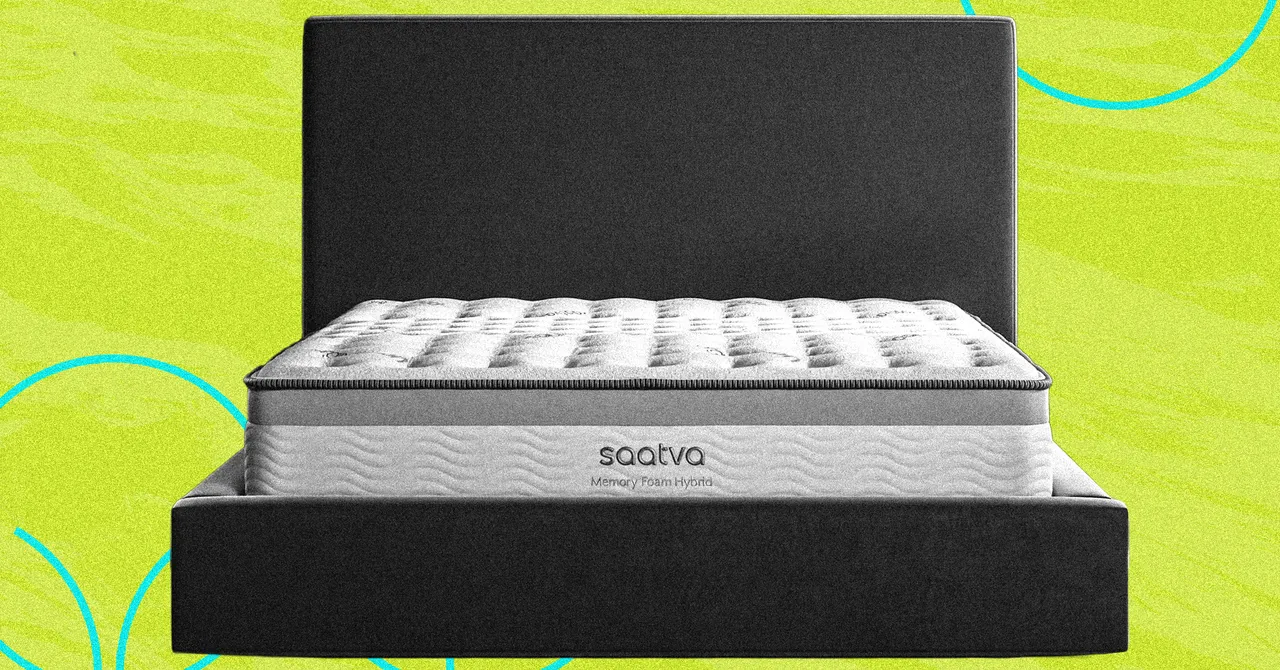
Saatva Memory Foam Hybrid Mattress: The Winning Pick for Sleep Kings and Queens

The mattress industry is experiencing a seismic shift driven by disruptive technology and an accelerating demand for customizable, high-quality sleep solutions. Industry leaders like Saatva are redefining the landscape with innovations that align closely with the core principles of consumer-centric design, innovation, and luxury. With the rise of the health and wellness sector, sleep technology is increasingly viewed as a critical frontier in wellness and productivity, compelling brands to compete fiercely on quality, experience, and technological integration.

Recent reviews highlight the significant advances in hybrid mattress technology, exemplified by Saatva’s Memory Foam Hybrid. This mattress utilizes a blend of memory foam, graphite infusion, and a bouncy support system—features that collectively push the boundaries of comfort and function. The mattress’s ability to support multiple sleeping positions without sacrificing motion isolation exemplifies disruptive innovations in hybrid comfort technology. Its superior spinal alignment support and pressure point cushioning particularly appeal to back and stomach sleepers, these being the dominant demographics in a global shift toward personalized health and wellness solutions.

From a business standpoint, Saatva’s approach exemplifies how customer experience and logistical innovation fuel competitive advantage. Offering services like free white-glove delivery, mattress setup, and haul-away, combined with an unprecedented 365-night trial and lifetime warranty, sets new benchmarks for customer engagement and retention. Such practices reflect a broader industry trend, as emerging startups and tech giants alike recognize that full-service offerings are a key differentiator. The company’s focus on high-quality materials and multiple firmness options demonstrates an understanding that the future of sleep technology lies in personalization and premium service.

Experts like Elon Musk and Peter Thiel emphasize the importance of technological disruption and breakthrough innovation to maintain competitive advantage. In the context of sustainable business models and market leadership, industry leaders must anticipate upcoming shifts rooted in smart home integration, IoT-enabled sleep tracking, and AI-driven customization. The current trajectory indicates that sleep technology is entering a new era—one characterized by integration, personalization, and consumer empowerment. As Gartner analysts note, companies that leverage innovation with a keen eye on customer experience will shape the competitive landscapes of tomorrow. The immediate challenge— and opportunity—lies in harnessing these advanced technologies to push the boundaries of what is possible in sleep science. The race for supremacy is underway, and those who act decisively will redefine an industry that is ripe for transformation, making sleep part of the ecosystem of cutting-edge connected devices and digital health solutions.

Social Media Auto Publish Powered By : XYZScripts.com



