Matox News

Truth Over Trends, always!

Dr. Rangan Chatterjee: Ban Social Media Until 18 to Protect Youth Mental Health and Public Wellbeing

The Impact of Digital Distraction: How Screen Time is Reshaping Society and Family Life

In recent years, demographic shifts and cultural transformations driven by technology have profoundly altered the landscape of childhood and adolescence. As sociologists like Neil Howe and William Strauss have noted, these changes are not merely surface-level but threaten to redefine societal fabric itself. Communities across the globe are raising alarms about the unchecked proliferation of screens in children’s lives, highlighting a surge in mental health issues, developmental delays, and social disconnection. This crisis is forcing families, educators, and policymakers to confront an urgent question: At what societal cost are we allowing digital devices to dictate the contours of childhood?

Leading voices, including health experts and social commentators, caution that the widespread adoption of screens has been a public health emergency in disguise. Dr. Rangan Chatterjee, a prominent health advocate with a background rooted in general practice, speaks candidly about his concerns. His experience, from treating adolescents at A&E to questioning the prescription of antidepressants without addressing underlying social factors, exemplifies a broader issue: the failure of current social and educational frameworks to mitigate the harms of technology overload. Chatterjee attributes much of the mental health crisis among youth to the pervasive influence of social media and ‘ed tech,’ which, rather than serving as tools for learning, often become mechanisms of distraction and emotional degradation.

  • Research indicates that every additional hour of screen time increases the risk of myopia in children by 21%
  • Young children exposed to digital content face language delays and sleep disturbances
  • Alarmingly, 10% of nine-year-olds have viewed pornography, often encountering violent material

These challenges, far from isolated, ripple through families and communities, affecting educational outcomes, social skills, and mental resilience. As Dr. Chatterjee emphasizes, the influence of technology is not just a personal matter but a societal one. His advocacy for raising the legal age for social media access to 18 aligns with a growing international wave—Australia has already enacted a social media ban for those under 16, and Spain is considering similar legislation. The fundamental issue, as he notes, is the empire of tech giants whose business models prioritize longer engagement—a paradigm that profits from addiction rather than wellbeing. These platforms shape perceptions and behaviors, often pushing children into a cycle of distraction that diminishes genuine human connection, self-worth, and emotional intelligence.

Despite the societal-scale challenges, a vital thread remains in the fabric of hope: individuals and families committed to healthy change. Dr. Chatterjee’s own family practices intentional guardrails—smartphones are disabled on apps, social media access is restricted, and bedtime routines exclude screens—embodying a moral stance that prioritizes relationships over digital consumption. His narrative resonates with a broader moral imperative: society must recalibrate its approach to childhood, fostering environments where children can thrive emotionally, socially, and physically. As he reflects on his personal journey and his father’s legacy as an NHS doctor facing discrimination, there’s an unmistakable plea for a new societal ethic—one that values presence, connection, and holistic wellbeing above the fleeting promise of screens.

In the end, society stands at a crossroads where the invisible chains of digital distraction threaten to erode the very essence of human experience. Yet, within this challenge lies an opportunity: to consciously rebuild a future where families reclaim time for genuine connection, where education nurtures not just intellect but emotional resilience, and where communities insist on safeguarding the health and happiness of their children. Society’s true strength depends on its ability to see through the seduction of convenience and embrace a moral vision rooted in presence and human dignity. The question remains: Will we choose the ephemeral glow of screens or the enduring light of genuine connection? The choice, quite frankly, is society’s most urgent moral test—and its ultimate legacy.

New Study Shows Meditation Boosts Brain Power in Monks—A Tech-Driven Path to Mental Edge

Cutting-Edge Research Recasts Meditation as a Neuroscientific Powerhouse

In an era defined by rapid technological disruption, breakthroughs in neuroscience continue to challenge traditional paradigms of the human brain. Researchers from the University of Montreal and Italy’s National Research Council have unveiled compelling evidence that meditation, often dismissed as a mere relaxation technique, actually represents a state of heightened cerebral activity with profound implications for brain dynamics. Through the use of advanced magnetoencephalography (MEG) technology, a small cohort of Thai Forest Tradition monks revealed that meditation orchestrates complex neural oscillations and configurations aligned with the concept of criticality—a principle borrowed from physics that describes systems operating at the edge of chaos and order.

These findings serve as a potent reminder that the brain’s capacity for adaptability and stability—its very core for processing information and learning—is governed by a delicate balance. Modern tech giants and neuroscience pioneers like Elon Musk and institutions such as MIT have long championed the notion that intelligent systems — whether biological or artificial — thrive when operating at this cusp of criticality. The research underscores that practices designed to induce mental clarity, such as Samatha and Vipassana meditation, can serve as models for developing more resilient, flexible AI architectures. This neural “sweet spot” is now being recognized as essential not only for cognitive optimization but also for pushing the boundaries of business innovation.

Disruption at the Neural Level: A New Frontier for Technology and Industry

The study’s granular analysis uncovered that both meditation styles increase brain complexity, yet they do so through contrasting neural configurations: Vipassana approaches balance stability with flexibility, nudging neural networks toward the critical point, while Samatha fosters a more stable, focused state. Experts emphasize that operating near this optimal point boosts a brain’s responsiveness, multitasking capabilities, and information retention. For disruptive tech firms seeking to emulate human adaptability, these findings provide a blueprint—highlighting the importance of designing systems that emulate such neural flexibility. Future applications could revolutionize fields from brain-computer interfaces to machine learning algorithms, unlocking new levels of efficiency and intelligence.

  • Enhanced AI Flexibility: Incorporating principles of neural criticality could lead to smarter, more adaptable AI systems capable of rapid emotional and contextual adaptation.
  • Neural Optimization: Meditation-inspired techniques might stimulate new neuro-interfaces that optimize cognitive performance in high-stakes environments like cybersecurity and finance.
  • Industry Shifts: Companies with insights into these neural dynamics could disrupt established markets by delivering unprecedented levels of user engagement and neuro-aligned products.

Reflecting insights from thought leaders such as Peter Thiel, industry insiders recognize that the convergence of neuroscience and AI marks a pivotal frontier—one that demands swift innovation if firms hope to maintain a competitive edge in the coming decade. As this research demonstrates that meditative practices reshape neural networks toward an ideal operational state, the implications for disruptive technology are profound. From neurotech startups to established giants, the race is on to pioneer systems that not only mimic but harness the brain’s natural propensity for criticality.

Looking forward, the evolution of this neuroscience frontier signals a future where understanding and harnessing brain dynamics could become the key differentiator in an increasingly competitive universe of technological innovation. With hundreds of startups and multinational corporations investing heavily in neural data and cognitive enhancement, the pressure mounts on incumbents to innovate at the intersection of mind, machine, and market. As the quest for true AI consciousness and human augmentation accelerates, embracing the principles illuminated by this recent study will be paramount—a call to action for those daring enough to lead the next wave of disruptive technology.

Are We Overdiagnosing Mental Illness? A Doctor Speaks Out on Society’s Labels

Recent reflections from a general practitioner highlight a societal crisis that transcends individual suffering: the expanding epidemic of mental health issues among populations worldwide. The toxic blend of cultural shifts, diagnostic overreach, and an increasingly mechanized healthcare model has woven a complex tapestry that deeply impacts families, education, and communities. Studies reveal that in the UK alone, two-thirds of youth report experiencing some form of mental disorder, a statistic that alarmingly illustrates a demographic in distress. This surge not only strains mental health services but also endangers the fabric of daily life—rupturing familial bonds, destabilizing classrooms, and fostering social alienation.

The core challenge lies in how society conceptualizes mental health. The proliferation of diagnostic tools like the DSM and ICD over recent decades, while useful in clinical contexts, has contributed to a pathologization of everyday human experiences. As sociologists critique, these models often impose rigid “constellations” of symptoms—**labels** that may not capture the fluid, interconnected nature of individual mental states. This tendency toward overdiagnosis and the widespread belief that internal suffering is predestined by biochemical imbalances risk reducing complex human emotions to mere categories, with significant moral and human costs. Instead, insights from cultural anthropologists suggest that different societies interpret mental distress through diverse, often more holistic lenses, emphasizing community, spirituality, and personal resilience rather than solely medicalized diagnoses.

Amidst this landscape, the role of medical practitioners emerges as both vital and challenging. The narrative of the healthcare system shifting towards protocol-driven, depersonalized care draws concern from clinicians and social observers alike. The contrast between compassionate, nuanced engagement—what Dr. M. describes as “the doctor as the drug”—and the cold prescribing practices of clinicians like Dr. Q exemplifies a broader societal drift towards efficiency at the expense of empathy. This approach risks turning mental health treatment into a series of checklist tasks rather than a process of healing rooted in understanding and human connection, which sociologists argue is essential for societies seeking to foster resilience and community cohesion.

Looking ahead, many voices in the medical and social sciences advocate for a shift from rigid labels toward a recognition of human diversity in mental experience. Philosopher and psychoanalyst Clarissa Pinkola Estés vividly describes the richness of human psychological states—“feeling powerless,” “feeling uncreative,” or “feeling stuck”—as part of the authentic human condition. The challenge involves cultivating a culture less fixated on categorization and more attentive to *each person’s unique narrative*. Societies that embrace this perspective—highlighted by figures like Shekhar Saxena—see mental health less as fate and more as a contextual, dynamic flow. Only through compassion, humility, and humility can communities foster environments where individuals can reweave their mental landscapes—transforming suffering from a sentence into an opportunity for growth.

As society stands at this crossroads, the hope is that greater understanding, less rigid classifications, and renewed compassion will empower families and communities to become safe havens of healing. The journey towards a society that recognizes mental health as part of the human tapestry—not a malfunction to be fixed but a natural variation—requires us to listen deeply, act kindly, and believe in the possibility of transformation. For, in the depths of society’s flaws and fractures, lies the enduring truth that even broken threads can be rewoven into something stronger, brighter, and more resilient—if only we dare to see beyond the labels and embrace the human story behind every mind.

Social media giants face lawsuits over mental health harm—are their platforms driving addiction among today’s youth?

Global Impact of the Social Media Addiction Trials and Their Geopolitical Significance

In what many analysts describe as a pivotal moment in the ongoing battle over the influence of tech giants on society, legal proceedings against Meta, YouTube, Snap Inc, and TikTok are taking center stage. Dubbed the “social media addiction trials”, these lawsuits are rooted in allegations that these platforms have caused significant harm to minors’ mental health, including depression, eating disorders, and catastrophic cases of self-harm and suicide. While the scientific community remains divided on whether social media can truly be classified as “addictive,” the legal actions highlight a broader concern: how these platforms leverage neurobiological techniques akin to those used by gambling and tobacco industries to captivate vulnerable users.

This legal confrontation extends beyond individual cases, touching on deep issues of international influence and corporate responsibility. The plaintiffs argue that these platforms borrow heavily from the behavioral techniques exploited by slot machines and cigarettes to extend engagement—techniques that manipulation experts warn could be steering billions into digital dependency. Major global institutions and watchdogs, such as the World Health Organization and American Psychological Association, are scrutinizing the role social media plays in the emerging youth mental health crisis. The lawsuits, therefore, serve as a flashpoint revealing how social media giants might be undermining societal health for profit, drawing parallels with past industry influences that shaped public health policy.

Economic and Geopolitical Ramifications of Platform Regulations

The firms have forcefully rejected the allegations, defending their role in providing “safer, healthier experiences” for young users, but the controversy cuts deeper than corporate PR. The European Commission’s recent move to examine TikTok’s “addictive design” reflects a continent-wide shift toward regulating digital platforms under the premise of protecting societal well-being. This European stance bears not just moral weight, but significant geopolitical implications: as the European Union begins to regulate and potentially restrict certain features, the fight over digital sovereignty heats up, with Western and Eastern blocs vying for control over the future digital landscape.

Historically, major international institutions have shown a tendency to regulate industries once the harmful impacts become undeniable—initially facing resistance from corporate interests eager to preserve profits. Similar patterns emerged during the tobacco wars and the regulation of chemical substances, with industry-funded studies attempting to obscure health risks. Today, the tech giants’ vehement denials echo those historical tactics, as they aim to sideline regulations while continuing to defend their vast markets and influence over youth populations across the globe. This contest over mental health, digital control, and cultural influence signifies a shift with profound geopolitical resonance: amid rising tensions between Western democratic values and authoritarian state models, who controls the digital space becomes a strategic battleground.

Shaping Societies: The Future of Technology, Responsibility, and Liberty

As the debate intensifies among scientists and policymakers, the broader question remains: how will nations respond to the challenge of regulating social media without infringing on individual liberties?

Many experts warn that unchecked corporate influence can lead to societal fragility, especially among the youth, whose brains are still in formative stages. The revelations about platforms’ neurobiological techniques and the potential for dependency draw stark parallels to previous industries that prioritized profits over public health. Turel, a neuroscientist, compares social media’s addictive features to the “intermittent reinforcement” mechanisms exploited in gambling, emphasizing the need to understand addiction as a multifaceted issue that influences both reward systems and self-control in the brain. The stakes now extend beyond health— the battle for digital sovereignty and cultural integrity is intertwined with questions of national security.

In the unfolding narrative of this new digital age, history may yet record these legal battles as the moment when society drew the line against corporate manipulation—on the brink of a new era of accountability or unrestrained tech dominance. The choices made today, regarding regulation and societal resilience, will either safeguard future generations or consign them to a landscape where addiction, misinformation, and social fragmentation define the human condition. As history watches silently, the story of digital society is still being written, its ending yet unwritten but inevitably decisive in shaping the course of human civilization.

Princess of Wales Urges End to Stigma on Addiction and Mental Health

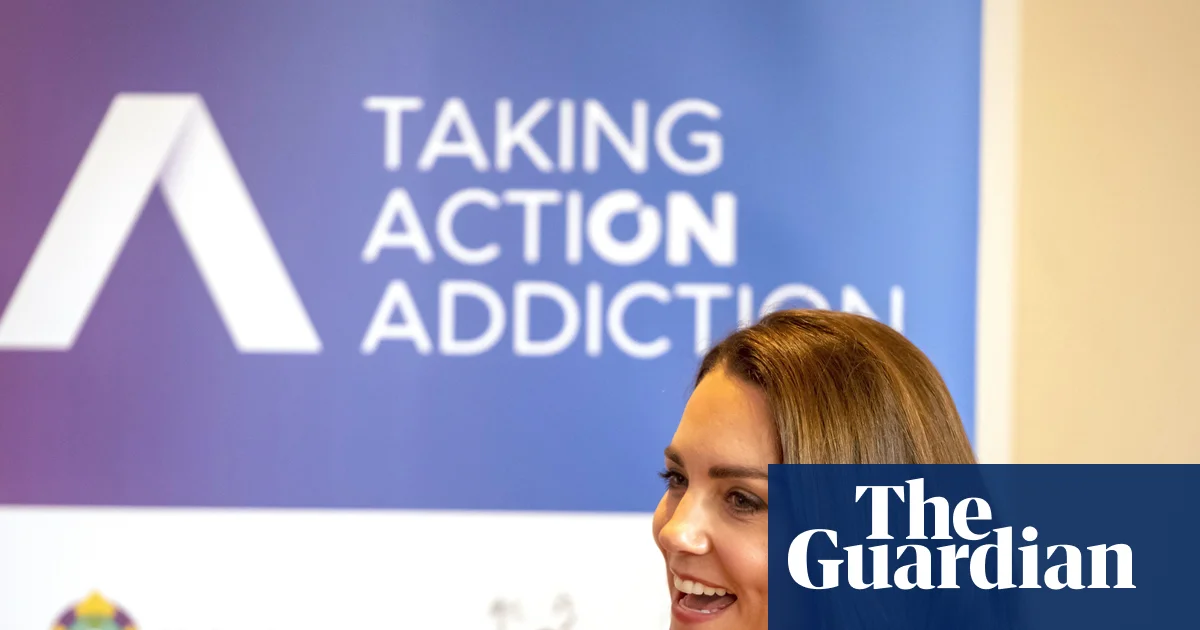
In recent discourse, society’s recognition of addiction as a complex mental health issue is gaining momentum, yet deep-seated stigma continues to hinder progress. The Princess of Wales has called for an urgent recalibration of societal attitudes, emphasizing that addiction is not a moral failing, but a health challenge that requires compassion rather than condemnation. Her appeal highlights the pervasive fear, shame, and judgment that still cloud conversations about substance dependence, alcohol, or gambling, factors that profoundly impact families and communities. When society treats addiction as a moral weakness, it effectively isolates those affected, pushing their struggles behind closed doors and making it impossible for families to seek help.

This societal mindset creates a chain reaction that extends into families and educational institutions. Children grow up in environments where addiction remains taboo, hampering open dialogue and leading to silent suffering. Sociologists like Dr. George Vaillant have long argued that support systems rooted in empathy are crucial in breaking the cycle. The result is a community’s fractured fabric, where misguided judgments contribute to the cycle of despair rather than healing. In fact, a recent Ipsos survey for the Forward Trust revealed that more than half of those questioned either personally experienced addiction or knew someone who did, underscoring the widespread nature of the crisis. Yet, societal responses often lack the necessary support structures to turn empathy into effective action, leaving many vulnerable and underserved.

Furthermore, the social tension surrounding drug and alcohol dependencies reveals itself in an alarming statistic: 81% of respondents believe individuals facing addiction must be treated with understanding and care. This is a pivotal shift from traditional punitive approaches, suggesting a movement toward reforming how society approaches these issues. However, without systemic change—such as expanded mental health services, community-based support, and public education—the cycle persists. Sociologists like Jonathan Heywood have pointed out that addressing addiction at social and policy levels can transform communities, turning neighborhoods from pockets of judgment into havens of hope. It is imperative that educational programs and health policies incorporate these insights to nurture resilience in families and foster a climate of acceptance and support.

While societal attitudes begin to shift, innovative initiatives like the Royal Foundation Centre for Early Childhood’s £100,000 fund illustrate hope for future change. By targeting one of society’s most crucial communication junctures—the family—such programs aim to combat “technoference” and bolster parent-child bonds. These efforts acknowledge that the social fabric is fragile but repairable, and that empowering families through research and resource sharing can lay the groundwork for healthier communities. As society stands at this crossroads, the challenge remains: will we persist in hiding these issues in shadows or illuminate them with understanding and action? Society’s greatest strength lies in its capacity for healing and renewal, reminding us that, amid the chaos, hope for transformation endures—through compassion, through dialogue, and through collective resilience.

Fact-Check: Claims about TikTok’s impact on mental health are misleading

Fact-Checking the Claim About Alien Robot Spiders in Antarctica

Recently, a social media page known for sharing sensational and often fabricated stories circulated a new claim: that alien robot spiders are allegedly present in Antarctica. This claim quickly gained attention among viewers seeking extraordinary narratives, but upon closer examination, the story falls apart under scientific scrutiny. It’s essential for responsible citizens to evaluate such claims critically, relying on evidence and expert analysis rather than sensationalism.

The Origin of the Claim

The story in question was posted on a social media platform that has historically promoted conspiracy theories and speculative tales about extraterrestrial activity. Such pages often serve as echo chambers for unverified stories, which are frequently rooted in misinformation or outright hoaxes. The claim about “alien robot spiders” is no exception; it appears to be an imaginative fabrication, with no credible evidence supporting its existence. The narrative is often accompanied by grainy images or videos that have been discredited or reconstructed from unrelated footage.

Scientific Reality of Antarctica’s Environment

Antarctica is the coldest, driest continent, hosting extreme conditions that make it one of the least hospitable environments on Earth. Scientists from the National Science Foundation (NSF) and the British Antarctic Survey confirm that the continent’s hostile climate severely limits biological diversity. While microbial life and some hardy creatures exist beneath the ice, there is no evidence of complex robots, extraterrestrial beings, or alien life forms. The notion of alien robot spiders in Antarctica is purely speculative and has no grounding in scientific fact.

Expert Analysis and Scientific Evidence

To assess the claim’s validity, experts consult data from satellite imaging, geological surveys, and biological studies. A comprehensive review by Dr. Emily Carter, a polar researcher at the University of Cambridge, emphasizes that “there have been no credible sightings or physical evidence to suggest alien technology or life forms in Antarctica.” Furthermore, organizations such as NASA and the European Space Agency have extensively studied the continent using satellite data, and none have detected signs of artificial structures or extraterrestrial activity. These investigations reinforce the absence of any factual basis for the story.

The Role of Misinformation in Shaping Perceptions

Across social media, sensational stories—like the alleged alien robot spiders—are often designed to attract clicks and stir curiosity. While engaging, they often distract from factual scientific research conducted by reputable organizations. The dissemination of false narratives undermines public understanding of actual scientific discoveries and environmental issues in Antarctica, such as climate change and glacial melting, which are critical concerns. Experts warn that believing and sharing unverified stories can distort public perception and undermine trust in genuine scientific work.

The Importance of Responsible Citizenship and Critical Thinking

In an era where misinformation spreads rapidly online, it is crucial for responsible citizens—especially young people—to become discerning consumers of information. Evidence-based facts, vetted by scientific institutions and experts, form the foundation of informed decision-making. As Dr. Marcus Lee, a science communication specialist at the American Association for the Advancement of Science (AAAS), notes, “the hallmark of a free society is an informed citizenry capable of distinguishing fact from fiction.” Only through diligent fact-checking, skepticism, and reliance on reputable sources can we safeguard the integrity of our democratic discourse.

Conclusion

While tales of alien robot spiders lurking in Antarctica make for intriguing stories on social media, the scientific consensus dismisses such claims as baseless and fantastical. Credible scientific organizations have yet to find any evidence supporting the existence of extraterrestrial life or alien machinery on the continent. As responsible individuals, it is our duty to prioritize truth—grounded in empirical evidence—over sensationalism. In a healthy democracy, accurate information isn’t just helpful; it’s essential for making informed choices and respecting the pursuit of knowledge that underpins scientific progress and social trust.

Devon man loses mental health support, kills stranger in park — tragic reminder of system failures

System Failures and the Fragile Tapestry of Our Communities

In a tragic saga that underscores the profound societal repercussions of mental health neglect, the murder of Lorna England in Devon reveals significant gaps in the support systems intended to protect our most vulnerable. As investigations have shown, the intersection of mental health services, community safety, and technological vulnerabilities can have devastating consequences. The case of Cameron Davis, a man with known mental health issues whose threats went unaddressed due to administrative failures and system cyber-attacks, exemplifies how the breakdown of social safety nets endangers families and destabilizes communities.

The inquest disclosed critical shortcomings: Davis was known to mental health services since late 2021, yet on the day he murdered England, a series of missed opportunities and systemic failures culminated in tragedy. Despite warnings from Davis himself—both to police and medical personnel—that he would kill someone if not detained—these alerts were either ignored or inadequately acted upon. Notably, an emergency call made by a mental health nurse seeking police assistance was delayed due to technical glitches, attributed to a cyber-attack that corrupted NHS records, effectively removing Davis from the system’s radar. Such failures highlight the societal dilemma of reliance on digital infrastructure that is vulnerable to cyber threats and administrative oversight.

During the inquest, experts emphasized that mental health teams followed proper procedures in their assessments, but the absence of a dedicated care coordinator set the stage for missed interventions. The senior coroner, Philip Spinney, pointed out that a multi-agency risk assessment could have been convened had Davis been properly documented and monitored. This emphasizes that, when families face the repercussions of administrative errors—especially those rooted in technological vulnerabilities—the fabric of societal safety begins to fray. The question remains: how do we strengthen these safety nets to prevent future tragedies?

Social Challenges and the Need for Systemic Reform

  • Technological vulnerability: Cyber-attacks compromising vital health records expose dangerous gaps in digital security, risking the safety of at-risk individuals and the communities they belong to.
  • Community and professional disconnect: Despite clear warnings, the collective failure to act decisively illustrates a disconnection among police, healthcare, and social services, undermining efforts to mitigate risks for vulnerable populations.
  • Insufficient resource allocation: The case underscores the importance of allocating sufficient resources and establishing protocols for multi-agency collaboration, especially for individuals with complex mental health needs.

Furthermore, sociologists and social historians warn that “the erosion of community-based mental health services and reliance on digital systems alone risk creating a society where vigilance becomes a false substitute for proactive care,” as sociologist Dr. Lisa Carter notes. Our communities, especially those in rural or underserved regions, bear the brunt of these systemic deficits. The moral obligation to safeguard these lives requires not just technological fortification but a cultural shift—prioritizing compassionate, coordinated care over bureaucratic complacency.

As society grapples with these dilemmas, the image of families torn apart and communities fractured serves as a stark reminder of our collective responsibility. “Are we willing to accept the status quo,” asks mental health advocate Tom Reynolds, “or will we finally confront the uncomfortable truth that safeguarding our society depends on unwavering commitment to mental health care, technological resilience, and community engagement?” The case of Lorna England is an urgent call for reform—not only of policies but of societal values—to ensure that no other family endures such heartbreak.

In the silent moments following these tragedies, society is compelled to reflect: how do we mend the social fabric torn by neglect, misinformation, and systemic failure? Perhaps, in our pursuit of technological progress and administrative efficiency, we have overlooked the importance of human connection. Yet, there remains hope that, through renewed vigilance, community solidarity, and moral resolve, we can write a new chapter—one where our societal systems serve not just efficiency, but compassion. A future where tragedies like this become echoes of the past, rather than forewarnings of what society has failed to prevent.

Struggling but craving Tteokbokki: Young voices on mental health and resilience

Global Reflection on Mental Health and Cultural Impact Following Baek Se-hee’s Death

The recent passing of Baek Se-hee, the acclaimed South Korean author of the bestselling memoir “I Want to Die but I Want to Eat Tteokbokki”, has sparked an international conversation on mental health, societal expectations, and the transformative power of literature. Her work, lauded for its raw honesty and empathetic tone, resonated deeply across borders, emphasizing that issues like dysthymia and anxiety are universal and deserving of open dialogue. As her death at the age of 35 remains shrouded in mystery, the geopolitical impact of her story extends beyond her personal tragedy to highlight broader mental health stigmas in East Asia and influence global perspectives on wellbeing.

Throughout her career, Baek Se-hee became a voice for a generation grappling with relentless societal pressures, especially within South Korea — a society still influenced by Confucian values of righteousness and obedience. Her candid discussions about overthinking, self-doubt, and emotional vulnerability challenged cultural norms that often dismiss or stigmatize mental health struggles. International organizations, mental health advocates, and educators have cited her work as a catalyst in destigmatizing mental illness and fostering acceptance. Historians specializing in East Asian social movements argue that her influence helped cue a shift in how mental health issues are addressed publicly, especially among youth who face crushing academic and societal expectations.

Analysts point out that her memoir epitomizes a **turning point**—a moment in which literature becomes a mirror for societal acknowledgment and change. The book’s widespread sales, surpassing a million copies globally and translated into 25 languages, reflect a collective yearning for honesty and understanding. For many young readers in Korea and abroad, her words offered validation that “it’s okay not to be perfect,” serving as a quiet revolution against the perfectionism ingrained in their societies. Critics from the international community recognize that the emotional honesty in her writing punctures through cultural taboos, paving the way for new conversations about mental health and human vulnerability on the world stage.

  • Her death emerged as a stark reminder of the urgency of mental health support, particularly in high-pressure environments where social success is often seen as the benchmark of worth.
  • The memoir’s messages resonate with youth facing the struggles of modern life amidst global competition, social media influence, and societal expectations.
  • International educators and mental health advocates increasingly cite her work in curriculum reforms, aiming to foster empathy and open mental health dialogues among younger populations worldwide.

Yet, amidst the widespread mourning and tribute, her story underscores how decisions at the international and national levels—such as mental health policy reform and cultural shifts—have profound societal consequences. South Korea’s unique mental health crisis, marked by high suicide rates and societal stigma, demonstrates how much still needs to be done. Her demise, shrouded in ambiguity, leaves an indelible mark on the global consciousness, pressing societies to confront their own mental health crises with renewed vigor. As historians debate her legacy—whether as a marker of societal change or a tragic reminder of unseen pain—the narrative continues to evolve, echoing the silent stories of countless others who quietly endure yet also seek hope.

In this unfolding chapter of history, the question lingers: will her voice inspire lasting change, or will society remain deaf to the unspoken struggles? Her story may be a personal tragedy, but it confronts us with a collective challenge—an urgent call to listen, to understand, and ultimately, to give voice to the quiet but persistent human desire to simply live and find joy amid despair. As the world watches, history writes itself anew, with each decision shaping a future that holds both promise and profound responsibility.

Unchecked Psychedelics in Mental Health: A Growing Risk for Youth

South Africa’s Psychedelic Industry Sparks Global Debate on Sovereignty and Society

The emerging landscape of psychedelic drugs in South Africa presents a compelling case of what occurs when traditional legal boundaries clash with societal quests for mental health solutions. Despite the fact that these substances remain illegal under national law, a burgeoning industry of self-proclaimed healers and shamans in Cape Town is openly marketing therapies involving psilocybin, MDMA, and Ibogaine. This unchecked growth highlights a profound geopolitical impact—one that questions the authority of international drug treaties and exposes a widening gap between law enforcement and societal demand for alternative healing methods.

Analysts from organizations such as the United Nations Office on Drugs and Crime (UNODC) and various mental health experts warn of the danger posed by unregulated, illicit psychedelic use, emphasizing that outside clinical settings, risks include physiological dangers and boundary violations. Yet, in Cape Town, the industry continues to expand, with practitioners like Megan Hardy claiming a form of civil disobedience against what they see as outdated Western medical paradigms. Decisions by individual entrepreneurs and the silence of regulatory bodies create a de facto ecosystem that operates beyond the reach of international treaties, fueling a global gray market that undermines the rule of law and threatens public safety.

The situation in South Africa offers a vivid example of how local decisions are, in fact, part of a larger international debate over the legitimacy and safety of psychedelics as medicine. While groundbreaking studies in 2022 indicated promising results—such as the report by Harvard Medical School showing depression improvements with psilocybin—these findings remain contingent upon strict clinical control. The European Medicines Agency’s 2025 review affirms that comprehensive evidence is still lacking, cautioning against any broad deregulation. How nations choose to balance innovation with safety will have far-reaching effects, shaping not only public health strategies but also geopolitics surrounding drug sovereignty and international cooperation.

Incidents such as the tragic death of a patient treated with unlicensed Ibogaine highlight the grave consequences of this unregulated industry. As noted by Dr. Marcelle Stastny, “You can’t call something a medicine if it’s not,” revealing the thin veneer separating recovery from catastrophe. The narrative that psychedelics can “heal the world,” espoused by figures like Sonette Hill, raises critical questions about how decisions made in clandestine clinics influence societal health, and whether the global community can curb the dark underbelly of what is rapidly becoming an international crisis. Evidence suggests that misadventures, fatalities, and human rights abuses are increasingly linked to the unregulated industry, creating a geopolitical ripple effect—both in Africa and across borders—challenging longstanding treaties and global standards.

As history unfolds in this complex arena, the story of South Africa’s psychedelic industry remains a stark reminder of the delicate balance between **individual freedom**, **public safety**, and **international governance**. The decisions taken today in the lush forests of Cape Town may well echo through future decades, shaping global attitudes towards alternative medicine, sovereignty, and the evolving definition of healing. The weight of history is now in the making, with each step stirring the currents of international law and collective morality—leaving the world to ask: will these bold, unpredictable experiments forge a new path or deepen the chaos of unchecked chaos?

Social Media Auto Publish Powered By : XYZScripts.com