Matox News

Truth Over Trends, always!

Mexico chaos: Locals and tourists warn of widespread destruction

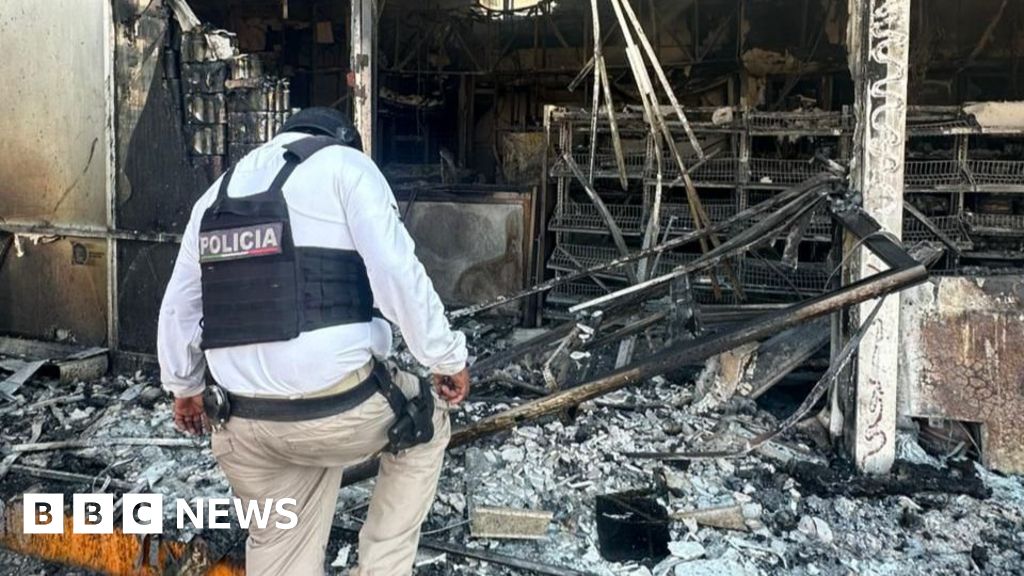
In a dramatic turn of events that has sent shockwaves through Mexico and the broader *North American* region, violence has erupted across multiple states following the confirmed death of the notorious cartel leader, El Mencho. The operation, which resulted in the elimination of one of the most powerful and elusive figures in organized crime, underscores the fragile stability of the country’s ongoing war against drug cartels. As authorities celebrate this development, many analysts warn that the repercussions could be far more destabilizing than the initial victory suggests.

The death of Rubén Oseguera González, known as El Mencho, the presumed head of the CJNG (Cártel de Jalisco Nueva Generación)—arguably the most formidable drug cartel operating in Mexico—marks a significant milestone in Mexico’s long-standing struggle to contain organized crime. According to official reports, security forces carried out a high-risk raid that culminated in his death, a move hailed by some in *Washington* and *Mexico City* as a major blow to transnational drug trafficking networks. However, the surge of violence that has followed demonstrates the precarious nature of relying solely on decapitation strategies in the fight against powerful criminal syndicates.

Historian and security analyst Carlos Mendoza notes that this episode highlights how the *U.S.-Mexico* security cooperation and *Mexico’s* internal policies remain insufficient to fully dismantle entrenched cartels. Many warn that the cartel’s fragmentation post-El Mencho’s death could trigger a violent power vacuum, leading to internecine conflicts that destabilize entire regions and further harm vulnerable communities. Moreover, international organizations like the United Nations have expressed concern over the potential for increased violence to cause a surge in migration and regional instability. The impact extends beyond borders, placing pressure on *U.S.* border security and straining diplomatic relations between *Mexico* and *Washington* as the fight against narcotraffic continues to dominate diplomatic agendas.

  • The recent spike in violence has been characterized by violent clashes, murders, and threats across *Jalisco*, *Michoacán*, and *Guerrero*, with innocent civilians caught in the crossfire.
  • Security analysts warn that cartel factions are now vying for control, turning peaceful communities into battlegrounds and destabilizing local economies.
  • International law enforcement agencies are mobilizing additional resources, though experts contended that dismantling these criminal enterprises necessitates comprehensive socio-economic strategies.
  • The *U.S.* administration has renewed calls for increased cooperation, emphasizing the importance of targeting illicit financial flows that sustain cartel operations.

The *international community* faces a moment of reckoning, as the death of a cartel kingpin exposes the limitations of purely militarized approaches. Historians see this as a pivotal point—an enduring testament to the fact that criminal organizations adapt and evolve beyond the constraints of leadership decapitation. As John Moore, a renowned geopolitical analyst, states, “The collapse of one figure often merely opens a new chapter in the brutal saga of organized crime, requiring a holistic approach that integrates law enforcement, social reform, and regional cooperation.”

As Mexico grapples with this rising tide of violence, the shadow of history looms large—an ominous reminder that the true cost of waging war against entrenched criminal networks is often paid in blood and societal upheaval. The death of El Mencho is neither an end nor a beginning but rather a stark chapter in a complex narrative that continues to unfold, leaving the world on edge — waiting to see if lessons learned will finally forge a path towards stability, or if history will merely repeat itself in a violent cycle of revenge and chaos.


Search intensifies across Mexico in urgent quest for Nancy Guthrie breakthrough

The ongoing search for the 84-year-old mother of U.S. television presenter Savannah Guthrie has entered its third week, drawing widespread media attention and raising concerns over the safety and well-being of vulnerable populations. The case has become emblematic of broader issues related to elder care, community alertness, and the role of international cooperation in protecting at-risk individuals amid rising social fragmentation. While the search remains focused on a single individual, the ripple effects extend far beyond, underscoring the interconnectedness of security, social responsibility, and policy in a rapidly changing world.

Experts in international security and humanitarian response highlight that the case highlights the importance of multinational cooperation and information sharing. Analysts from global institutions such as the United Nations emphasize that, in an era characterized by increased population mobility and transnational challenges, local incidents often have implications that resonate globally. The specificity of this search—an elderly woman potentially lost in complex urban environments—serves as a reminder of ongoing vulnerabilities faced by aging demographics across many nations. As social safety nets are strained and societal structures evolve, the risks faced by the elderly are increasingly becoming a matter of international concern.

The incident also sheds light on how national policies toward elder care and community vigilance influence societal resilience. Critics argue that, in many countries, inadequate funding for healthcare and social services contributes to increased instances of vulnerable individuals going unnoticed or without adequate support. As the world watches this case unfold, it prompts a critical dialogue about the role of governments, community organizations, and international bodies in safeguarding vulnerable populations. According to scholars like Dr. James McCarthy, the crisis underscores the urgency for a unified global framework to address the needs of aging citizens—an initiative that could reshape international health and social policies.

In geopolitical terms, the search for Guthrie’s mother exemplifies how seemingly localized tragedies can influence international perceptions of national stability and social cohesion. Western nations pride themselves on technological innovation and social safety, yet incidents like this starkly reveal foundational gaps. The case also offers a platform for examining the international dimensions of elder care, especially as countries grapple with demographic shifts and economic pressures that threaten to compromise social safety mechanisms. Some analysts warn that if systemic issues remain unaddressed, societies could face a future marked by increased social instability, with elder abandonment and neglect becoming normalized societal issues. The response to this crisis could serve as a microcosm of broader geopolitical resilience or failure.

As the search persists into its third challenging week, the world’s gaze remains fixed on this poignant human story. The uncertainty surrounding the elderly woman’s whereabouts echoes a deeper, more profound question: how nations prioritize and protect their most vulnerable amidst the turbulence of modern geopolitics. The effort to locate her is not only a matter of individual rescue but a stark reminder that history is defined by moments where human compassion intersects with policy and resilience. The outcome of this case—still unwritten—may one day serve as a powerful chapter, illustrating whether societies can rise above their divisions and reaffirm their commitment to caring for all members. Time will tell if this fleeting crisis will spark lasting change or fade into the annals of overlooked tragedies, yet the urgency of the moment persists—an enduring testament to history’s relentless march forward.

Meta Faces New Mexico Child Safety Trial — What Youth and Tech Fans Need to Know

Meta Faces Landmark Legal Battles: Disruption at the Crossroads of Technology and Society

In what could be a watershed moment for the tech industry, Meta is currently embroiled in a series of high-profile lawsuits that threaten to reshape the landscape of social media accountability. The state of New Mexico has brought a lawsuit against the social media giant, alleging that Meta failed to protect minors from exploitation and designed platforms that fostered harmful environments. This case signals a broader shift in regulatory attitudes towards disruption, innovation, and corporate responsibility within the digital ecosystem. As Meta defies attempts to settle, the proceedings could unveil internal practices that have prioritized engagement metrics over user safety, drawing public and governmental scrutiny centered on the profound societal impact of social media’s business models.

Adding further to Meta’s legal challenges is the simultaneous trial in California, the nation’s first legal probe into social media addiction. This “JCCP” involves multiple civil suits, including allegations from figures like Sacha Haworth of the Tech Oversight Project, who warns of “an industry that has enabled predators and addictors alike.” Plaintiffs accuse companies such as Snap, TikTok, and Google of negligent design that deliberately manipulates algorithms to maximize user engagement at the expense of minors’ well-being. Notably, TikTok and Snap have already settled, leaving Meta’s resistance to settlement as a focal point that could lead to unprecedented witness testimonies, revealing the inner mechanics of platforms built on “attention economy” strategies. This trial underscores a pivotal industry shift: regulators and courts are actively challenging a trajectory of innovation that borders on exploitation.

From a business perspective, these legal battles lay bare a critical truth for the tech sector: the cost of doing disruptive business is rising. Meta’s alleged complicity in enabling harmful content and exploitation illustrates how a relentless pursuit of growth and user engagement can clash with regulatory and moral boundaries. As Gartner analysts observe, such lawsuits serve as a “canary in the coal mine” — signaling that **the era of unchecked platform innovation without accountability is nearing its end**. The implications are clear: big tech firms must now balance innovation with compliance, or risk debilitating repercussions that could stifle future disruption. Ruthless market shifts demand that companies develop technology ecosystems more resilient to legal, ethical, and societal pushback—a call to arms for entrepreneurs and tech leaders eager to shape the future responsibly.

Looking ahead, the emerging legal landscape anticipates a fundamental reassessment of how social platforms innovate and monetize. As regulations tighten and consumer awareness grows, **the next wave of tech innovation will likely favor transparency, safety, and ethical design**. Industry titans have a limited window to pivot towards solutions that leverage breakthrough technologies such as AI-driven moderation, privacy-preserving algorithms, and robust user protections—integrating these into their core strategies to future-proof their business models. The ongoing trials symbolize a critical inflection point; failure to adapt could result in a “regulation tsunami” that disrupts traditional giants’ dominance. For entrepreneurs and investors targeting the next frontier of technology, the message is unmistakable: act swiftly, innovate with integrity, and prioritize societal benefit—because the future of tech is being rewritten today, and only the most visionary will thrive amid the disruption ahead.

Actor Timothy Busfield charged with child abuse in New Mexico

The recent indictment of actor Timothy Busfield in New Mexico on serious child sex abuse charges underscores the persistent and troubling issue of misconduct and exploitation within influential sectors of society. While this case remains in the judicial arena, its fallout extends beyond individual morality, casting shadows on the integrity of the entertainment industry and, by extension, societal trust in establishments that shape cultural narratives. It serves as a stark reminder that the fight against abuse must be unwavering, regardless of status or influence, resonating with international organizations dedicated to protecting vulnerable populations worldwide.

On a broader geopolitical scale, this incident exemplifies how domestic crises can have reverberations in the global arena. As international analysts observe, the integrity of legal institutions and the rule of law in nations like the United States affect the perception of stability and justice in the broader Western alliance. Leaders and policymakers are increasingly scrutinized not only for their foreign policies but also for their domestic moral fabric. Historians warn that unchecked misconduct in key sectors erodes societal resilience, paving the way for internal strife and weakening alliances that hinge on shared values of justice and human rights.

Furthermore, the case poses critical questions about the role of international norms concerning child protection. Organizations such as the United Nations and regional bodies like the European Union emphasize the importance of robust safeguarding measures, which now come under strain whenever high-profile figures are implicated in abuse. In a world increasingly interconnected, domestic scandals threaten to undermine trust in global institutions aimed at fostering accountability and universal human rights. As the Global Coalition for Child Protection and independent watchdogs analyze this case, it underscores a global necessity: to harmonize efforts in combating abuse and ensuring justice sustains across borders.

With the intense media scrutiny and a swell of public consciousness, authorities and advocates alike understand that these cases highlight the need for preventative frameworks and swift judicial responses. The American legal system faces ongoing critique for handling cases of abuse, but international efforts, backed by resources from organizations such as the World Health Organization and UNICEF, strive to establish universal standards for safeguarding children. Analysts such as Dr. Emily Carter emphasize that these cases live at the intersection of moral responsibility and diplomatic credibility, underscoring that international stability depends partly on citizens’ faith in justice systems and societal morals.

Ultimately, this revealing chapter in a nation’s moral saga is more than a domestic legal matter; it is a potent symbol of a broader struggle—a confrontation between transparency and concealment, justice and impunity. As history unfolds, the weight of these allegations extends into the fabric of society and international relations. The world now watches, holding its breath, as the future of integrity and societal resilience hangs in the balance. The question remains: will justice prevail and restore trust, or will sliding moral standards weaken the foundations of modern civilization? The answer rests in the collective resolve of nations and societies to confront their darkest truths, knowing that in doing so, they shape the course of history itself.

Mexico sets tough tariffs of up to 50% on China and others to protect its economy

In a bold move signaling a shift towards economic nationalism, Mexico has recently approved a comprehensive tariff package impacting over 1,400 products, many sourced from China. This policy, championed by President Claudia Sheinbaum, aims to bolster domestic manufacturing and reduce reliance on foreign imports amidst mounting economic pressures. These tariffs allow for duties of up to 50%, a clear indication of Mexico’s intent to recalibrate its economic strategies in a rapidly changing global landscape. While the move is framed domestically as a matter of economic sovereignty, its geopolitical implications ripple beyond borders, especially as Mexico engages in delicate negotiations with the United States.

  • The tariffs come at a fraught time, with U.S. President Donald Trump threatening steep import taxes on Mexico, including potential 50% duties on steel and aluminum. These measures are part of a broader strategy to exert economic pressure, ostensibly aimed at curbing the flow of synthetic opioids like fentanyl into the U.S., but also revealing a deeper struggle over trade dominance.
  • In addition, Trump has signaled intentions to impose a 5% tariff on Mexican goods, citing the longstanding Rio Grande treaty—an 80-year-old agreement—regarding water rights as a pretext. Through social media, the U.S. leader accused Mexico of “not meeting the terms” of this treaty, which historically grants the U.S. access to water from the Rio Grande tributaries, raising questions about the truthfulness and strategic motivation behind these claims.

International reactions have been swift and cautious. Warnings from Beijing to Mexico included a reminder to “think carefully” about the implications of imposing tariffs on Chinese products. Analysts note that these measures reflect a broader realignment of economic alliances in which Mexico seeks to navigate between two superpowers—the United States and China. As the world’s second-largest economy, Beijing remains deeply entrenched in Latin America, its investments and trade ties reshaping regional power dynamics. The decision by Mexican lawmakers underscores a strategic push to assert economic independence, but also signals potential shifts in regional stability, especially if tariffs spark retaliatory measures or escalate into trade conflicts.

Impact on Society and Future Trajectory

The societal impact of Mexico’s tariff policy cannot be understated. For consumers, increased costs on everyday products threaten to fuel inflation, while domestic industries may benefit from increased protection. However, historians and economic analysts warn of the long-term consequences of such protectionism—potentially fostering a fragmented global trade system that complicates international cooperation. The moves also reflect a broader pattern of nationalist resurgence across the globe, where nations challenge existing treaties and alliances in pursuit of national interests.

As Mexico confidently asserts its economic independence amid a tense geopolitical climate, the world watches with bated breath. The pending negotiations with the United States—a trading behemoth and regional neighbor—could set a precedent for how nations leverage tariffs and treaties in a new era of economic brinkmanship. The decisions made in Mexico today are not isolated policies but artifacts of a larger, ongoing competition for influence and sovereignty. With history unfolding before our eyes, the question remains: will these tariff maneuvers carve a path towards renewed national strength, or will they spiral into a broader confrontation that reshapes the very fabric of global geopolitics? The answer lies in the unfolding chapter of international relations, where every move could tip the delicate balance of power, leaving the world to witness the next act in this high-stakes geopolitical play.

Top 50 Bars of 2022: The Hottest Spots Every Young Rebel Should Know

Barcelona’s Paradiso Reigns Supreme: A New Era for Global Cocktail Culture

In a remarkable turn of events that signals a shift in the world’s vibrant nightlife landscape, Barcelona has surged to the forefront of the global cocktail scene, claiming the coveted title of World’s Best Bar in 2022 with its iconic establishment, Paradiso. A Mediterranean-style speakeasy tucked away behind a freezer door in the hip El Born district, Paradiso’s ascent from number three in 2021 to the pinnacle of the industry marks a significant evolution in the cocktail world. This recognition underscores the city’s rising reputation as a cosmopolitan hub where tradition meets cutting-edge innovation, inviting young enthusiasts to indulge in a lifestyle rooted in _wellness_ and experiential leisure.

What makes Paradiso’s victory particularly momentous is its status as the first bar outside of London or New York to claim top honors since the inception of the World’s 50 Best Bars list in 2009. Its founders, Giacomo Giannotti and Margarita Sader, emphasize creating cocktails that push creative boundaries while remaining anchored in _authentic Mediterranean style_. Giannotti shared with the awards organizers that their philosophy blends **hard work**, **passion**, and **innovation**, recognizing that breakthrough success stems from relentless discovery and a dedication to _excellence_. More than a celebration of taste, Paradiso exemplifies how the new cocktail culture is about _inspiring_ and _transforming_ the beverage experience, aligning with what wellness experts like Amanda Feifer highlight as the importance of _mindful indulgence_ in a health-conscious era.

Europe’s Culinary and Mixology Renaissance

The city of Barcelona is no longer just known for its striking architecture or rich cultural heritage—it’s now a key player on the global stage of _lifestyle_ and _culinary_ innovation. The 2022 list features three of the top 10 bars hailing from this vibrant city, including Sips, which catapulted from 37th to 3rd position, exemplifying how _food-inspired_, _creative_ cocktails are reshaping the industry. European cities continue to maintain dominance in this arena, with London and Italy also making powerful showings, underscoring the continent’s _legacy_ of blending _culinary artistry_ with a _luxurious lifestyle_, one that resonates with a youthful desire for _luxury_ and _personal impact_ in everyday pleasures.

  • Engage in _local _tours, exploring Barcelona’s innovative venues, and experiencing _Mediterranean-inspired_ cocktail craftsmanship.
  • Seek out _experiential_ and _food-infused_ drinks that elevate _wellness_ and _mindful_ consumption.
  • Embrace _design_ and _aesthetics_ in drinking experiences, including _custom glassware_ and _science-driven techniques_ like centrifuges, as exemplified at Paradiso and other top-tier venues.

In tandem, the emphasis on _hospitality_ and _customer experience_—a ripple effect of the pandemic’s lessons—continues to prioritize safety, _personalized service_, and creating environments where patrons feel valued and secure. This renewed focus not only elevates _leisure_ but fosters a sense of _community_ and _well-being_, essential elements for forging a _purposeful lifestyle_ rooted in _quality_ and _authenticity_. By drawing from expert voices and the evolving landscape of _gastronomy_ and _mixology_, these bars reflect a cultural shift where _creative_ expression harmonizes with _healthful_ living.

Beyond the Cityscape: A Global Tapestry of Cocktail Creativity

The recognition of Barcelona’s Paradiso as the world’s top bar symbolizes a broader _rebirth_ of _cultural innovation_ across continents. Notable entries from Madrid’s Salmon Guru, Italy’s Florence, and Lisbon exemplify how emerging hotspots further diversify the global _premium lifestyle_ scene. In Asia, Singapore’s Jigger & Pony takes the Best Bar in Asia title, while Middle Eastern hubs like Dubai demonstrate a persistent _luxury_ that appeals to _global_ explorers and _young adventurers_ seeking _meaningful_ _leisure_. Each of these venues offers a unique _story_—a _narrative of _craft, culture_, and _ambition_—that inspires aspiring _independent thinkers_ and _trendsetters_ to view _lifestyle_ as a personal _journey_, a collection of _moments_ that shape _identity_ and _well-being_.

As the industry continues to evolve, tools like science-based _cocktail_ techniques and _artful_ _presentation_ are seamlessly merging _culinary_ arts with beverage innovation. The emphasis on _aesthetic_ and _experience_—whether through _custom glassware_ or _food-inspired_ drinks—encourages a _mindful_ approach to _indulgence_. This reflects a societal desire to _reclaim_ _pleasure_ as _part of a _holistic_ lifestyle_, fitting seamlessly into the _wellness_ paradigm favored by intellectuals like Tim Ferriss and wellness entrepreneurs emphasizing _quality over quantity_. It reminds young audiences that _living well_ does not mean sacrificing excitement for health; instead, it’s about _integrating_ _the best_ into _everyday life_, cultivating _balance_, and _creating_ _lasting impressions_ of _self-awareness_ and _inspiration_.

In conclusion

Today, the _world’s top cocktail bars_ do more than serve drinks—they craft _experiences_ that embody the _spirit_ of _adventure_, _creativity_, and _self-improvement_. They evoke a sense of _possibility_, inspiring a generation to see _lifestyle_ as a _personal _canvas_, where _health, _leisure_, and _self-expression_ intertwine. As you navigate the corridors of this _lyrical_ _world_, remember that your _journey_—like a meticulously crafted _cocktail_—is about _balance, _discovery_, and _embracing_ each moment with _passion_. Because ultimately, _life_ is the grandest _adventure_, waiting to be _poured_ from the _bottle_ of _your_ _potential_ into a _glass_ of _possibility_.

Woman sentenced to 20 years for deadly attack on Aussie surfers and American in Mexico

The recent tragic murders of three international tourists in Baja California have sent shockwaves through global communities and ignited debates on security and geopolitical stability in the region. The victims—Australian brothers Jake and Callum Robinson, aged 30 and 33, and American Jack Carter Rhoad, 30—symbolize the increasing vulnerability faced by tourists crossing international borders, especially in areas plagued by organized crime. Mexican judicial authorities announced that Ary Gisell Silva, a 23-year-old woman, received a 20-year prison sentence for her direct involvement in instigating and participating in the robbery that ultimately led to their death. This heinous crime underscores a persistent issue: how uncontrolled criminal activity in border regions threatens international security and the reputation of Mexico as a tourist destination.

The geopolitical impact of this incident extends beyond the borders of Mexico. The tragedy intensifies a broader concern among Western nations regarding safety in their citizens’ travel zones, especially in regions bordering the United States. International organizations like the United Nations Office on Drugs and Crime have long warned about the proliferation of violence and organized crime in Mexico, which often spills over into neighboring countries. Analysts suggest that such violent outbreaks not only discourage tourism but also weaken diplomatic relations, prompting governments to reconsider their travel advisories and security cooperation strategies. These developments jeopardize economic and diplomatic ties, emphasizing that violence in regions like Baja California is not just a local issue but a matter of global concern.

Recent history documents a pattern of violence, with other foreign tourists falling victim to criminal activity in Mexico’s Pacific coast regions. In 2015, a notorious attack saw two Australian surfers, Dean Lucas and Adam Coleman, murdered and later burned in Sinaloa. Such incidents serve as stark warnings that criminal enterprises have entrenched themselves deeply within parts of Mexico, intentionally targeting tourists to promote fear and chaos. International observers argue that these recurring tragedies expose underlying geopolitical vulnerabilities and demand urgent action. International organizations and security analysts warn that unchecked violence fuels instability, with ramifications that could reverberate globally if coordinated efforts are not prioritized.

As authorities aim to bring justice for the victims, the broader challenge remains: protecting life and restoring confidence in regions marred by crime. The Mexican government faces mounting pressure to clamp down on organized crime and demonstrate its commitment to safety, not only for its citizens but for international visitors whose livelihoods and families depend on secure borders. Meanwhile, the incident underscores the importance of a strategic reassessment by global actors, emphasizing cooperation and intelligence-sharing to combat transnational criminal networks. The unfolding story leaves us pondering whether the tide can truly be turned or if this is only the beginning of a darker chapter that will reshape how nations view security and sovereignty in the 21st century. Ultimately, the weight of history presses heavily on the collective conscience, reminding us that the choices made today will profoundly influence the safety and stability of future generations.

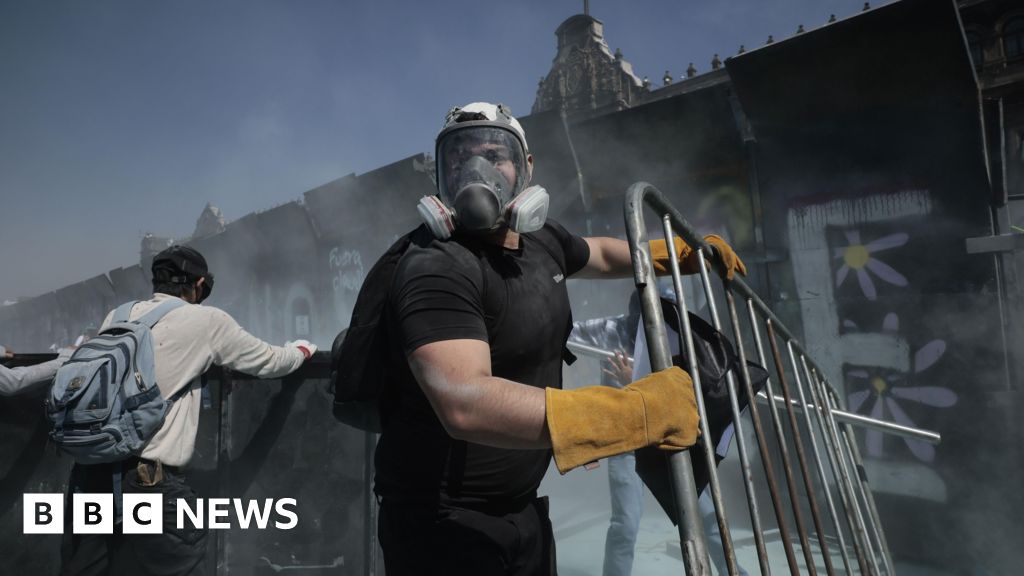
Youth-led protests erupt in Mexico criticizing government’s crime crackdown

In a striking display of domestic unrest, Mexico has recently witnessed thousands of protesters flooding the streets of Mexico City and other urban centers, voicing their anguish over the persistent grip of violent crime and cartel warfare. Organised largely by Generation Z youth groups, this wave of dissent underscores a profound societal crisis that transcends mere law enforcement failures to threaten the very fabric of Mexican society. The rally, sparked by the brutal assassination of Carlos Manzo, a progressive mayor who demanded tough action against criminal gangs, echoes a broader dissatisfaction with the government’s approach, and highlights the simmering tensions that could destabilize the region further.

President Claudia Sheinbaum has come under fire for her handling—or perceived mishandling—of these issues. Her assertions that the protests are fueled by right-wing political actors and online bots reveal her effort to deflect responsibility and maintain public approval, which remains above 70% according to official polls. Yet, critics—both within and outside Mexico—argue that her resistance to an all-out war against cartels is fueling the violence, while her reluctance to implement aggressive drug policies—a legacy of Mexico’s tumultuous history—risks prolonging the chaos and undermining regional stability. As analysts like historian María Rivera warn, the decision to tread carefully rather than confront cartels directly could have far-reaching consequences beyond Mexico’s borders.

The geopolitical impact of Mexico’s internal turmoil extends to its neighbors, especially the United States. US policymakers, concerned about the spillover of violence and fentanyl trafficking, see Mexico’s approach as a critical factor in shaping regional security. President Trump’s focus on border security and drug interdiction is echoed by others who demand a more aggressive stance; however, Mexico’s reluctance to escalate the conflict highlights a broader debate about sovereignty, intervention, and the limits of foreign influence. Meanwhile, Peru’s recent declaration of Sheinbaum as persona non grata and the severance of diplomatic ties reveal how Mexico’s domestic issues have begun to resonate on the international stage, destabilizing diplomatic relations in South America and exposing fissures within Latin America’s diplomatic fabric.

As global powers jostle to define their roles in this unfolding crisis, international organizations have warned of a potential regional escalation. The International Crisis Group cautions that if Mexico’s internal strife persists without a clear and effective resolution, it could serve as a catalyst for broader U.S.-Latin America tensions, and even encourage unauthorized state actors to exploit the unrest. The fact that Mexico—once hailed as a pillar of regional stability—is now embroiled in violent upheaval underscores the cautionary tale that history offers: when internal disorder is left unaddressed, it inevitably becomes a larger, transnational threat. The world watches with bated breath as this chapter of Mexico’s history remains unwritten, yet the shadows of conflict cast long and dark across continents.

Army vet with Purple Heart deported to Mexico by ICE—Justice or injustice?

The deportation of Jose Barco, a decorated U.S. Army veteran, from Arizona to Mexico, underscores growing controversies surrounding immigration policies and military service amidst America’s ongoing internal conflicts. This case exemplifies not only the complicated legal and humanitarian questions but also the broader geopolitical impact of U.S. immigration enforcement on international relations—particularly with Latin American nations that have historically been sources of undocumented migration and refugee flows.

Barco’s story is emblematic of an increasingly contentious debate: how nations should treat their military veterans who, despite serving with distinction and receiving commendations like the Purple Heart and the Combat Infantry Badge, face deportation due to past criminal convictions. His case is especially provocative given his family’s history of fleeing oppression—his father was a political dissident in Cuba before seeking refuge in Venezuela and the United States. The international community and analysts, including experts from organizations like the International Crisis Group, warn that deporting such individuals not only undermines the moral fabric of U.S. military service but also damages America’s global image as a land of opportunity and refuge.

From a geopolitical perspective, the decision to deport Barco to Mexico rather than directly to Venezuela or Cuba—despite court orders—has raised concerns about U.S.-Latin America relations. Critics argue that this move might deepen regional instability and hinder efforts to maintain diplomatic ties. Mexico’s role as a transit and destination country for migrants complicates the scenario, especially as it faces its own pressing economic and political challenges. The United States’ policies of deportation and their implementation serve as a mirror to broader U.S. foreign policy issues, including how it balances domestic security with international reputation. Many analysts believe that such isolated incidents contribute to a perception of moral decline and disrespect towards military veterans, which could ripple through alliances and diplomatic negotiations in the Americas and beyond.

The domestic implications of this case are equally profound, stirring debates within the U.S. about immigration reform, military service, and justice. Critics contend that policies justifying the deportation of veterans—some who have committed serious, even violent, crimes—undermine the social contract and threaten to erode the moral authority of institutions responsible for national security. Conversely, proponents argue that America must uphold its laws uniformly, regardless of service history, emphasizing the importance of the rule of law over individual circumstances. The case of Barco, with its layered history involving trauma, service, and legal jeopardy, highlights how internal policies can become flashpoints that resonate well beyond national borders—drawing international scrutiny and casting long shadows over the United States’ leadership role in defending human rights and the rule of law.

Historians warn that such instances are not isolated but part of a consequential pattern—one that risks reinforcing global perceptions of U.S. inconsistency and moral ambiguity. As the world watches, a single case like Barco’s can quickly become a catalyst for wider debates on sovereignty, justice, and international credibility. With the unfolding of yet another chapter in this ongoing saga, history reminds us that the decisions made today will echo across decades, shaping how nations view the symbolism of service, sacrifice, and the rule of law in a rapidly changing world. The weight of this moment rests heavy on the scales of history, as the global community wonders whether justice will prevail or whether the indelible scars of internal conflicts will continue to define the narrative of a nation caught between principles and pragmatism.

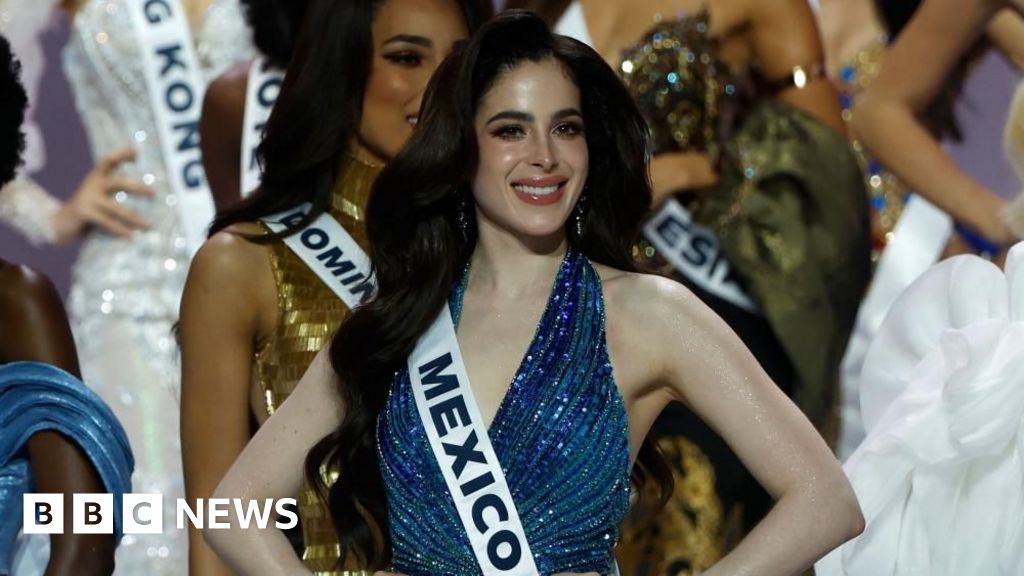
Miss Universe Contestants Walk Out After Organizer Criticizes Miss Mexico

The recent controversy at the Miss Universe pageant in Thailand has sparked a broader discussion about respect, authority, and gender roles on the international stage. The incident occurred during a pre-pageant event when Nawat Itsaragrisil, the reigning Miss Universe Thailand director, publicly berated Miss Mexico, Fatima Bosch, over her alleged failure to promote content. The confrontation escalated as Nawat dismissively called security and threatened to disqualify supporters—an act that led to the walkout of several contestants, including the current Miss Universe Denmark, Kjaer Theilvig of Denmark. The event’s fallout underscores how personal conduct in the international arena can ripple into significant geopolitical signals, especially around issues of cultural respect and gender equality.

The incident’s international repercussions resonate beyond the confines of a beauty contest. Critics argue that such displays of disrespect contribute to perpetuating cultural insensitivity and undermine the credibility of the pageant as a platform of empowerment for women. Analysts, including social commentators and cultural historians, have pointed out that the Miss Universe organization’s swift response—sending a delegation of international executives and threatening legal action against Nawat—reflects a broader effort to preserve the pageant’s image as a global champion for women’s rights. According to Raul Rocha, the MUO President, the organization condemned Nawat’s conduct, emphasizing that his actions “humiliated and insulted” a delegate and involved “serious abuse.” This intervention signals a clear message: in a world increasingly conscious of gender issues, respect and dignity are non-negotiable, regardless of cultural differences.

Beyond the internal fallout, the incident has heightened geopolitical tensions about how nations project power and cultural standards. Thailand’s reputation as a host nation, especially in an era of rising nationalism and cultural assertiveness, now faces scrutiny. Analysts warn that such incidents can be leveraged for political narrative, influencing perceptions of Thailand on the global stage. Meanwhile, the walkout by contestants—most notably Victoria Kjaer Theilvig—serves as a reminder that young women from diverse nations are increasingly unwilling to accept disrespectful behavior that reflects poorly on societal values. Their solidarity sends a powerful warning about the evolving cultural landscape, where issues of respect and dignity are intertwined with national identity and international reputation.

As the world watches on, the unfolding drama within the Miss Universe organization is more than a mere scandal. It highlights a broader shift in global consciousness, where young generations demand accountability and fairness. Historians and international observers warn that decisions made today—whether to uphold dignity or accept disrespect—will shape the narrative of gender relations and cultural diplomacy for years to come. The confrontation in Thailand is a microcosm of the struggles facing global institutions: how to balance tradition with progress, authority with respect, and national interests with universal human rights. In this critical moment, the weight of history presses down as the world teeters between maintaining its old norms and forging a new path—one where dignity, equality, and respect are fundamental, not just ideals to be preached, but values to be fiercely defended. The continuing story of this incident holds the potential to redefine the future of international cultural exchanges, and as history unfolds, one thing remains clear: the era of unchallenged authority is ending, and a new chapter demanding accountability has begun.

Social Media Auto Publish Powered By : XYZScripts.com