
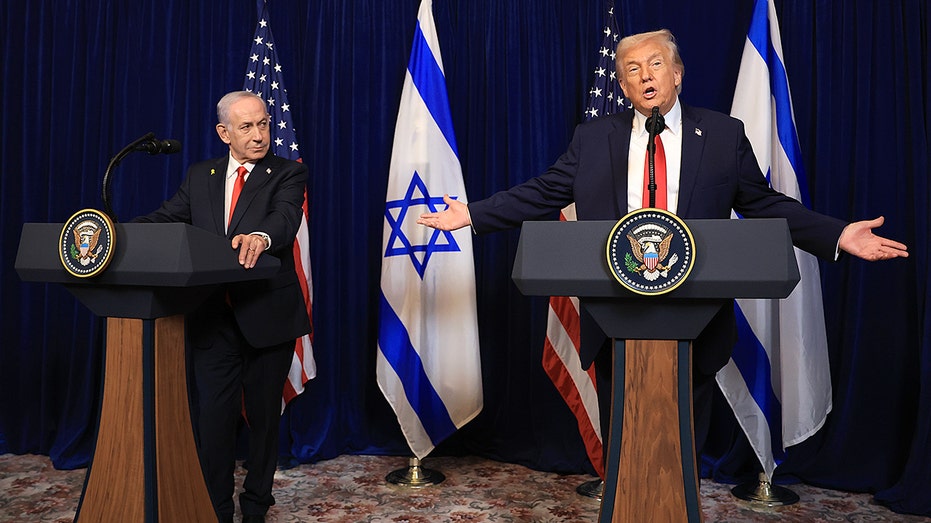

Former President Donald Trump is reportedly intensifying his calls for several Muslim-majority nations to join the landmark Abraham Accords, a move he suggests could be mandatory for their involvement in a developing agreement with Iran. This strategic push underscores a consistent foreign policy objective to foster greater stability and diplomatic normalization across the Middle East.
According to reports from News Desk, President Trump explicitly urged nations such as Saudi Arabia, Qatar, Egypt, Pakistan, Turkey, and Jordan to formalize relations with Israel. His statement, shared on Truth Social, emphasized that after the significant diplomatic efforts by the United States to forge these agreements, it should be a baseline expectation for these countries to sign on.
A Foundation for Regional Peace
The Abraham Accords, initiated during the Trump administration, represent a series of historic agreements aimed at normalizing diplomatic relations between Israel and various Arab and Muslim-majority nations. The United Arab Emirates and Bahrain were the first two nations to sign these accords in 2020, marking a significant shift in regional dynamics and fostering new avenues for cooperation and peace.
The accords have been lauded by proponents as a testament to effective diplomacy, demonstrating that direct engagement and mutual recognition can pave the way for a more secure and prosperous Middle East. By circumventing traditional impasses, the agreements have opened doors for economic, cultural, and security partnerships, strengthening the front against destabilizing forces in the region.
Conditioning Participation in Iran Talks
President Trump’s current stance links future participation in an Iran agreement directly to adherence to the Abraham Accords. He stated, “I stated that, after all the work done by the United States to try and pull this very complex puzzle together, it should be mandatory that all of these Countries, at a minimum, simultaneously, sign onto the Abraham Accords.” This suggests a strategic leverage point, aiming to consolidate a broad regional consensus before engaging with Tehran on critical issues.
Nations specifically mentioned in his outreach include:
- Saudi Arabia
- Qatar
- Egypt
- Pakistan
- Turkey
- Jordan
This approach highlights a belief that a united and normalized front among these key players would present a more formidable and stable negotiating bloc against Iran, ensuring any future agreement is built on a foundation of broader regional consensus and security.
A Vision for Broader Inclusion, Even Iran?
In a surprising development, President Trump also floated the intriguing idea that the Islamic Republic of Iran could eventually become part of the Abraham Accords. He noted, “In speaking to numerous of the Great Leaders mentioned above, they would be honored, as soon as our Document is signed, to have the Islamic Republic of Iran as part of the Abraham Accords. Wow, now that would be something special.” This bold vision, while seemingly distant, suggests a long-term aspiration for comprehensive regional peace and integration.
“It should be mandatory that all of these Countries, at a minimum, simultaneously, sign onto the Abraham Accords.”
However, immediate progress on certain fronts remains contingent on internal political developments. U.S. and Israeli officials do not anticipate the UAE, for instance, to advance further on such issues until after Israel’s upcoming elections in September. Such political realities underscore the complex interplay of domestic and international factors shaping Middle Eastern diplomacy.
The former President’s continued advocacy for the Abraham Accords signals a persistent commitment to reshaping the Middle East’s diplomatic landscape. By tying participation in crucial Iran negotiations to regional normalization, he aims to build a more cohesive and secure alliance, ultimately strengthening American interests and promoting lasting stability in a historically volatile region.






