Matox News

Truth Over Trends, always!

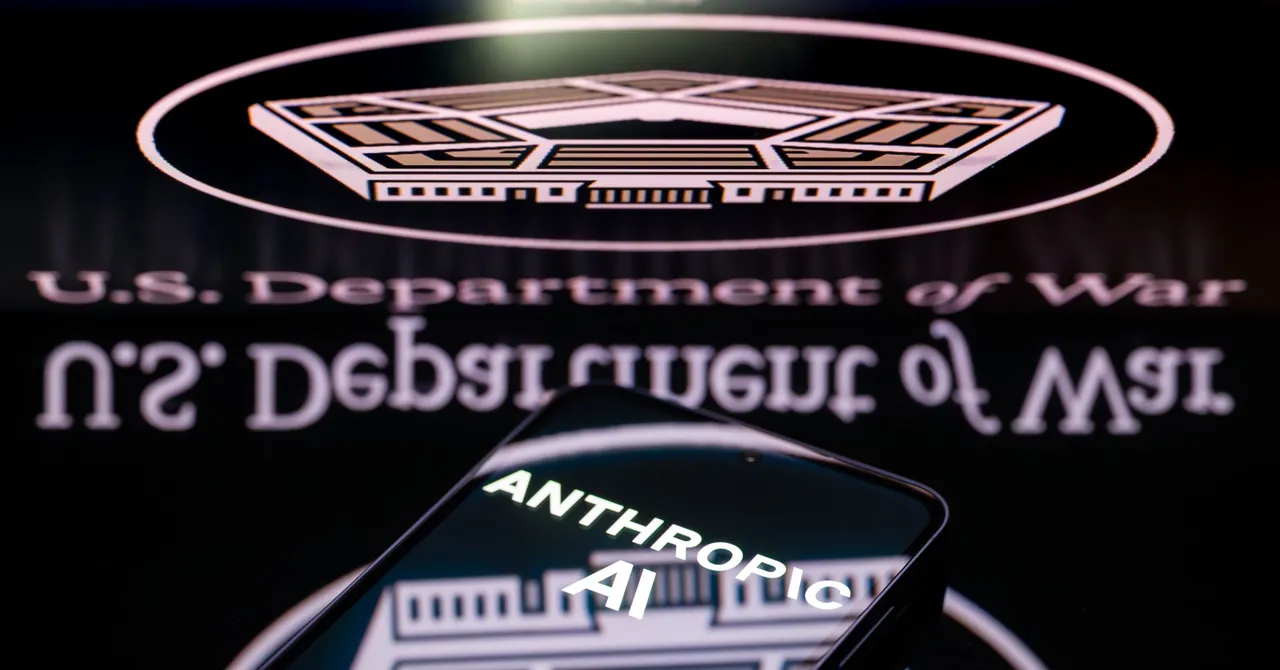
Justice Dept Warns Anthropic on Warfighting Systems—Not to Be Trusted

Shaping the Future: The Battle Over AI, National Security, and Innovation

The current legal clash between Anthropic and the Trump administration marks a pivotal moment in the evolution of AI regulation, set against the backdrop of national security and technological disruption. As the government seeks to classify Anthropic as a supply-chain risk, the outcome could redefine how emerging AI companies interact with government contracts and national cybersecurity protocols. The administration’s assertions that this move is rooted in safeguarding secure systems underscores the growing complexity of integrating cutting-edge AI into defense infrastructure, where innovation must be balanced against security risks. The legal dispute actively captures the attention of industry leaders and policymakers, signaling that the intersection of AI innovation and government oversight is entering uncharted territory, with significant implications for future business models and strategic investments.

The core of the controversy revolves around Anthropic’s AI models, notably Claude, which the Pentagon relies on for critical applications like data analysis and defense planning. The government contends that AI systems, especially those from emerging firms like Anthropic, pose unacceptable security risks because of their potential vulnerability to manipulation or sabotage during warfare operations. The US Department of Justice emphasizes that no constitutional protections, such as First Amendment rights, grant companies carte blanche to dictate how government agencies employ their technologies. This stance demonstrates an explicit shift toward prioritizing national security over corporate autonomy, a move that could accelerate government-driven AI procurement from domestic and international competitors like Google, OpenAI, and xAI.

Disruption in Defense Tech and Business Dilemmas

This legal confrontation exemplifies the broader technology disruption threatening traditional defense procurement channels. As the Pentagon accelerates efforts to replace Anthropic’s AI with solutions from ChatGPT and Bard-like models from Google and OpenAI, industry insiders see this as a potential market shake-up. The decision to restrict Anthropic could catalyze a wave of rapid innovation amidst tighter security protocols, forcing AI startups to reevaluate risk management strategies and security assurances. Furthermore, this case underscores a shift in Pentagon policy—moving from reliance on a few trusted contractors to embracing a broader array of options. Such strategic diversification aligns well with insights from Gartner analysts, who warn that government alliances with emerging AI firms are more volatile but crucial avenues for disrupting established defense markets.

  • Increased scrutiny on AI supply chains, emphasizing security
  • Potential for accelerated adoption of AI from giants like Google and OpenAI
  • Legal precedent shaping AI governance in security-sensitive domains
  • Market implications for startups seeking defense contracts, emphasizing compliance and security innovations

Looking Forward: Disruption, Urgency, and Strategic Imperatives

Industry leaders like Elon Musk and Peter Thiel have long emphasized the strategic importance of AI as a driver of global dominance. This case represents a critical juncture where innovation and disruption are colliding with regulatory and security imperatives. The coming weeks will be decisive: approvals or bans could either catalyze a new era of proprietary AI development for defense or trigger a flurry of regulatory crackdowns on emerging AI innovators. The urgency is palpable—AI is no longer just a commercial tool but a strategic asset in modern warfare, with national security stakes elevating AI regulation into a battleground for technological supremacy.

As the Pentagon scrambles to deploy AI solutions from more established companies, the industry must adapt swiftly, prioritizing transparent security protocols that meet government expectations. On the horizon lies a landscape where disruption is fueled by relentless innovation and a fierce competition for dominance in the AI-driven security paradigm. For entrepreneurs, investors, and policymakers alike, the message is clear: the future belongs to those ready to navigate this treacherous, but opportunity-rich, frontier—facing head-on the challenge of safeguarding sovereignty while unleashing the true potential of artificial intelligence.


Russia’s Mega Missile Showdown: Powerful But Crashing on the Frontlines

In a landscape marked by rapid technological advancements, Russia’s recent missile tests reveal a nation still striving to modernize its nuclear arsenal amidst ongoing geopolitical tensions. Despite signals from Moscow that the Sarmat intercontinental ballistic missile (ICBM) would soon be operational, recent failures cast doubt on its readiness, illustrating the broader challenges faced by Russia in maintaining a credible nuclear force. This development signals a significant industry disruption within Russia’s defense sector, where modernization efforts have stalled and technological hurdles have hampered deployment timelines. Meanwhile, the US continues to monitor with precision, emphasizing the importance of surveillance and strategic advantage.

Russia’s strategic missile program, once considered a centerpiece in its military doctrine, now faces setbacks that could impact global stability. The Sarmat missile, capable of carrying multiple warheads and targeting distant adversaries, was heralded as a game-changer in nuclear deterrence. However, recent test failures—despite high-profile declarations from President Vladimir Putin—underscore the risks of overreliance on aging technology and ambitious claims. As noted by military analysts at MIT and defense think tanks, this persistent technical lag leaves Russia’s nuclear deterrent vulnerable, which could prompt shifts in global strategic calculations. Concurrently, Moscow’s emphasis on replenishing assets essential to the Ukraine conflict has diverted resources from nuclear modernization, illustrating a prioritization of conventional forces over strategic deterrence. Notably, the scheduled test of the shorter-range Yars missile demonstrates Russia’s ongoing efforts to maintain a layered nuclear posture, but confidence in these systems remains fragile amid repeated failures. Russia’s internal debate about the efficacy of its arsenal reflects a broader trend among key military powers—where innovation is often outpaced by geopolitical ambitions and budgetary constraints.

The implications for business and innovation in the defense industry are profound. As nations like the United States utilize advanced surveillance platforms such as the RC-135S Cobra Ball—equipped with optical and electronic sensors—to monitor missile tests, private defense contractors and government agencies face mounting pressure to accelerate technological breakthroughs. Indeed, the rise of artificial intelligence, machine learning, and next-generation sensors are reshaping how strategic assets are tested, validated, and deployed. Private sector innovators and established defense giants are now competing in a high-stakes race to develop systems capable of ensuring missile accuracy, stealth, and rapid deployment—areas that are becoming central in the era of disruptive military technology.

Looking ahead, the future trajectory of nuclear modernization remains uncertain. While Russia’s failure to bring the Sarmat into operational readiness underscores the fragility of current military technology, it also emphasizes the increasing importance of innovation that can disrupt traditional deterrence models. Leading experts, including those from Gartner and the Belfer Center at Harvard, warn that the next decade will be critical as advanced hypersonic weapons, cyber capabilities, and AI-driven command systems redefine strategic stability. The lesson is clear: in the race for supremacy, businesses and governments must prioritize disruptive innovation to stay ahead of technological obsolescence. Otherwise, the risk is that defects in current arsenals could introduce unpredictable instability, forcing the world into an unpredictable future where technological primacy determines peace or conflict.

Satellites Spill the Secrets: Your Calls, Texts, and Data on the Open Sky

Satellite Communications Under Scrutiny: A Disruptive Wave for Global Security

In an era defined by technological innovation and unprecedented connectivity, recent findings have cast a spotlight on the vulnerabilities within satellite communication networks, signaling a profound shift in the landscape of digital security. SES, a dominant player in satellite services and parent company of Intelsat, has underscored a complex reality: users can often select their own encryption methods tailored to specific needs. This flexibility, while empowering, exposes a potential chink in the armor, especially on public Wi-Fi networks akin to those found in coffee shops or hotels. When such networks are compromised, malicious actors could potentially infiltrate sensitive satellite data, raising alarming questions about security protocols in this high-stakes domain.

Recent investigations have revealed disturbing lapses in satellite communication security, particularly involving Mexican government and affiliated organizations. Data collected by researchers using advanced satellite dishes—covering roughly 15 percent of global transponder communications—indicates significant unencrypted transmissions in Western US and Mexican airspace. These findings are not mere technical anomalies; they represent a disruptive breach that could undermine trusted satellite operations. Industry insiders, including Tom Stroup, president of the Satellite Industry Association, emphasize that such exposures threaten the integrity of critical infrastructure, prompting calls for enhanced vigilance and international cooperation to prevent further breaches.

The business implications of these security breaches are seismic. For satellite providers like SES and affiliated service firms such as Grupo Financiero Banorte, maintaining credibility in a fiercely competitive market hinges on robust, transparent security measures. Yet, the current landscape reveals a critical vulnerability—an open invitation for cyber disruptions that could affect everything from financial transactions to national security. Analysts from Gartner and MIT warn that disruption in satellite security could accelerate a shift toward new, more resilient architectures—like quantum-encrypted satellites and decentralized communication networks—that could redefine the industry horizon. Companies that fail to adapt risk falling behind as the demand for secure, disruption-proof satellite communications surges amidst geopolitical tensions and rapid technological evolution.

Looking Ahead: The Future of Satellite Security and Innovation

As the satellite industry confronts these mounting challenges, innovation emerges as the essential solution. The development and deployment of next-generation encryption technologies, coupled with international standards for satellite security, are becoming non-negotiable. Industry leaders like Elon Musk’s Starlink are already exploring scalable, ultra-secure communication platforms to outpace malicious actors. Meanwhile, MIT researchers and global agencies advocate for a paradigm shift: integrating AI-powered security systems and resilient satellite architectures that can withstand cyber-physical threats.

The industry stands at a crossroads—an inflection point driven by disruptive technologies and an urgent need for security vigilance. The next decade will determine whether satellite communication can uphold the promise of a hyper-connected future or succumb to vulnerabilities exploited by increasingly sophisticated adversaries. As Peter Thiel and other tech visionaries warn, those who fail to innovate rapidly may find themselves obsolete in a digital war where security is the new frontier. The race is on—an era of transformative innovation beckons for those willing to lead, disrupt, and redefine the future of global connectivity.

Social Media Auto Publish Powered By : XYZScripts.com



