Matox News

Truth Over Trends, always!

Labour council slams minister’s ‘moral bankruptcy’ in social care spat

The Chilling Reality of Social Care in Deprived Communities

Across Britain’s most deprived regions, the cracks in social infrastructure are becoming painfully evident. The recent confrontation between Hartlepool’s Labour council and Steve Reed, the Housing, Communities and Local Government Secretary, exposes a society struggling under the weight of inadequate social care funding. The council’s staunch accusation of Reed’s “arrogance, indifference and moral bankruptcy” underscores a deeper moral crisis that transcends mere politics—speaking directly to how society prioritizes its most vulnerable.

The crisis in social care funding is not just about dollars and cents; it’s about a moral obligation to protect our children and uphold human dignity. Hartlepool, a town burdened by deprivation, has the third-highest per capita rate of children in care nationally. Yet, its dedicated social services face a funding shortfall that forces children into expensive, often unregulated placements, averaging up to £20,000 weekly per child. Such figures spotlight how families are being crushed under systemic neglect, with vulnerable children facing a future defined by instability rather than stability. Renowned sociologists like Robert Putnam have warned that societal inequality erodes trust and cohesion—Hartlepool’s plight is a stark embodiment of this decline.

Government’s Response and the Persistent Shortfall

The government asserts it is reforming an outdated and unfair funding system, pledging £78 billion for local authorities and a 33% funding increase for Hartlepool by 2028-29. However, local leaders argue that such reforms are too little, too late; the real needs far surpass the allocated resources. The Hartlepool Labour group highlights a critical mismatch—the town receives only around £6,674 per child in social care, a figure far below the national average, which leaves social workers stretched thin and unable to provide adequate care or support. Sociologist David Garland has extensively analyzed how austerity measures and fiscal austerity disproportionately harm minorities and impoverished communities, rendering their struggles invisible in national discourse.

Adding to the urgency, the influx of families relocated from wealthier regions has placed additional pressure on Hartlepool’s social services. As Pamela Hargreaves notes, this has led to “dumping” of societal burden into one of the poorest areas. These practices exacerbate existing social tensions, deepen inequality, and threaten the very fabric of community cohesion. The failure to address these issues fosters a culture of despair and disengagement, where families feel abandoned and communities fractured.

The Moral Challenge and the Path Forward

Despite the bleakness, voices like Hargreaves’ insist on the moral necessity of investing in social care as a moral and legal responsibility, not a “reward.” The wave of potential resignations among Hartlepool’s Labour councillors signals an awakening—an urgent call for a society that recognizes that funding isn’t just policy; it’s moral justice. Addressing these social issues demands a recalibration of priorities, emphasizing human dignity over political profit.

As sociologist Arlie Hochschild has reflected, “The society we aspire to is one where no child is deemed expendable, where families are supported, and communities uplifted.” The challenge lies ahead: will society heed this call and rectify a system that punishes deprivation and neglect? Or will it capitulate, leaving vulnerable children and families to the mercies of outdated policies and complacency? The path to societal renewal is fraught with difficulty, but even in despair, a glimmer of hope persists—a hope rooted in collective action and moral awakening. Society’s greatest strength remains its capacity to change, to heal, and to forge a future where every child’s right to care and dignity is upheld.


Union Chief Urges Ministers to Drop Foolish Pay Restraints on Civil Service

Challenges Facing Society’s Core Institutions and Families

In an era marked by rapid technological advancement and shifting socio-political landscapes, public institutions stand at a critical juncture. The civil service, tasked with implementing policies that shape everyday life, faces a crisis rooted in underfunding and regulatory undermine. Union leader Mike Clancy has issued a stark warning: if Ministers do not end the misguided restraints on civil service pay, the essential pool of technical and digital specialists will continue to erode. These professionals are the backbone of effective governance, yet low pay and limited career progression threaten to disarm the very institutions designed to serve society. Clancy emphasizes that the government’s outdated approach—such as equating civil service pay at senior levels with that of the Prime Minister—is both “barking mad” and self-sabotaging. Such policies not only hinder recruitment but also compromise the quality of public service that families depend upon for stability and fairness.

The Impact on Education, Environment, and Community Trust

Across the fabric of our communities, resource shortages translate into tangible delays and neglected responsibilities. According to recent reports, agencies like Natural England and the Environment Agency are unable to meet critical deadlines—delays that directly impact families and local environments. For example, over half of planning application responses have missed their targets, primarily due to insufficient staffing and expertise. This is not just a bureaucratic failure; it is a breakdown in the social contract that holds communities accountable and ensures their well-being. As sociologists like Michael Sandel argue, trust in civic institutions is foundational to societal cohesion. When residents see their requests ignored, especially on issues like housing or infrastructure, the consequences deepen social divides and foster cynicism towards authorities meant to protect them.

Underlying Social Tensions and the Need for a Cultural Shift

At the heart of these issues lies a profound cultural shift—one where regulation is misinterpreted as an obstacle rather than a safeguard. Clancy warns against the simplistic view that deregulation and austerity will boost productivity, asserting instead that “regulators are builders, not blockers.” The misallocation of resources and the neglect of institutional capacity threaten to unravel the moral fabric of society, where fairness, opportunity, and progress for families and workers are paramount. The push by some business groups to weaken worker protections, such as the Employment Rights Act, exemplifies how economic interests often overshadow social stability. It highlights a need for a societal narrative that recognizes the importance of equitable pay, strong regulations, and invested public services as pillars of a resilient, forward-looking nation.

In this fragile landscape, the challenge is to balance economic vitality with social justice, ensuring that families are not sacrificed on the altar of deregulation. As historian and social commentator David Hackett Fischer notes, societies flourish when they invest in their human capital; neglecting this investment leads to disillusionment and decline. The path forward demands courage—rejecting right-wing tropes that trivialize the vital role of civil servants, and embracing a vision where communities are active agents, not passive recipients of government policy. Only through such a cultural renaissance can society begin to mend its fractured trust and cultivate a hopeful future where societal resilience is built on fairness, resourcefulness, and shared purpose.

Ministers: Send debts won’t threaten our schools—youth-focused council absorbs costs responsibly

The Struggle for Support: How Social Issues in Education Reshape Families and Communities

In recent years, the landscape of special educational needs and disabilities (Send) has become a focal point of societal tension, exposing broader issues of demographic shifts, funding disparities, and community resilience. As families with children requiring tailored support grapple with an increasingly strained system, the question arises: can our society uphold the moral obligation to adequately support its most vulnerable? Local authorities and parent groups have voiced growing concern over the government’s plans to repurpose funding sources, with many warning that these measures risk destabilizing networks of care and education for children with complex needs.

At the core of this crisis is the rapidly rising demand for Send services. Since 2016, the number of young people with education, health and care plans (EHCPs)—official documents outlining support entitlements—has doubled across England. This demand, compounded by underfunding and systemic inefficiencies, has created a perfect storm, where families are left to navigate a labyrinth of uncertainty and inadequate resources. Currently, local authorities receive a ring-fenced grant to fund Send, but rising needs have led them to spend billions beyond what the central government provides. The Social Commentator Anna Bird cautions that the government’s optimism about reform timelines may overlook the reality that overhauling such a complex system will take considerable time, risking further hardship for families caught in the gaps.

The Money Problem and Its Impact on Families and Education

  • The £6 billion forecasted cost for supporting children with disabilities is set to be taken from local authorities, effectively shifting financial burdens from the state onto community shoulders.
  • This move comes despite warnings from the Office for Budget Responsibility (OBR) that councils face a cumulative deficit of £14 billion by 2028, threatening their capacity to sustain other vital services.
  • Opposition voices, including the Shadow Education Secretary, assert that any reduction in school budgets jeopardizes educational quality and fairness, especially for children with special needs.

For families like Aimee Bradley, a mother of three autistic children, the lack of transparency fuels anxiety. “Parents see vague promises and no concrete plans,” she states. Many are worried about not just the future of their children’s support services but also the quality of education and inclusion in mainstream society. Sociologists emphasize that when social infrastructure falters, it’s families—particularly those with marginalized children—who bear the brunt, reinforcing cycles of inequality and social exclusion.

The Social and Ethical Dilemmas of Budget Cuts

Amidst the debate, experts like Luke Sibieta from the Institute for Fiscal Studies advise that the government has three primary options: slowing the growth in Send spending, increasing the overall schools budget, or cutting mainstream school funding. Each pathway threatens to ripple through communities, affecting the morale and stability of schools, and the cohesion of neighborhoods. The National Audit Office’s description of the system as “broken” underscores a sobering reality: without urgent and sustained reform, society risks leaving behind its most vulnerable children, perpetuating a cycle of unequal opportunity that stunts community growth and societal progress.

For many social commentators, the core challenge lies in balancing fiscal responsibility with ethical duty. The future hinges upon whether policymakers recognize that investment in supporting children with special educational needs is not merely a matter of budgets but a moral imperative to nurture societal resilience and fair opportunity. As society faces these difficult choices, the hope persists that the collective moral voice of families, educators, and community leaders can forge a future where every child is valued and supported—restoring faith that society’s true strength lies in its capacity to care for its most vulnerable.

Ministers pledge £75m to fix carer’s allowance failures impacting young carers

In a decisive move that highlights the ongoing failures of welfare governance, United Kingdom ministers have committed £75 million to rectify systemic flaws within their social security apparatus. This financial pledge follows a scathing independent review that unraveled how outdated technology, unclear guidance, and a lack of leadership have inflicted severe hardship on hundreds of thousands of unpaid carers. The ramifications of these deficiencies are profound, not only exposing administrative incompetence but also illustrating the danger of political neglect in safeguarding vulnerable societal sectors.

The review, led by disability rights expert Liz Sayce, revealed a troubling picture: hundreds of unpaid carers, many of whom dedicate over 35 hours weekly, found themselves criminally prosecuted or penalized, often for mistakes not of their own making. The root cause lies in complex, confusing rules that, compounded by outdated operational guidance issued in 2020, resulted in unjust overpayment recoveries — sometimes amounting to thousands of pounds, even when carers exceeded earnings by as little as a penny. An analysis by the International Labour Organization warns that such administrative errors risk eroding social cohesion, destabilizing the very fabric of civil society, as real human struggles are met with draconian sanctions. The government’s plan is to allocate most of the new funding towards the reassessment of 145,000 overpayments spanning a decade, aiming to recommence fairness that was long abandoned by bureaucratic indifference

In the broader geopolitical context, this crisis underscores a recurring theme: the failure of European welfare states to adapt swiftly to changing economic realities, often hamstrung by their own institutional inertia. Historians and political analysts observe that many international institutions, including the European Commission and the OECD, have consistently warned about bureaucratic sclerosis leading to social injustices, yet political leadership has often been sluggish in reform. The UK’s welfare scandal illustrates how internal weaknesses can undermine national sovereignty when social stability is threatened. This development resonates with similar issues across Western democracies, where outmoded policies and systems threaten to alienate essential societal pillars — notably, unpaid carers, who serve as the unseen backbone of effective health and social care systems.

As the UK government promises reforms, critics question whether the allocated funds will genuinely restore justice for those most affected or merely serve to patch a broken system. Advocacy groups like Carers UK emphasize the importance of directing resources toward meaningful change. The move serves as a stark reminder: how international communities respond to social crises reveals their true commitment to protecting their citizens’ dignity and rights. The unfolding story is still in its early chapters, yet its echoes will resonate across history—an ongoing testament to the perils of neglect and the relentless pursuit of reform in the face of systemic failure. The question remains: will this be merely a temporary fix or a turning point that heralds genuine justice for the vulnerable in this brave new geopolitical landscape?

Advisers Warn Ministers: Banning Palestine Action Might Backfire Among Youth

In recent weeks, the United Kingdom has taken a contentious step by banning Palestine Action, a grassroots organization dedicated to confronting the UK’s arms trade with Israel. Despite advice from officials warning that such a prohibition could inadvertently elevate the group’s profile, policymakers proceeded with proscription under terrorism laws. This decision marks a significant chapter in the ongoing global debate over civil liberties versus national security, illustrating the complex interplay between domestic policy and international tensions, especially in Britain’s role in the Israeli-Palestinian conflict.

The decision was underpinned by a secretive community impact assessment, revealing internal debates about the potential repercussions of a ban. Officials cautioned that proscription might exacerbate Muslim-Jewish tensions within Britain, deepen societal divisions, and be perceived as government bias favoring Israel. Moreover, polling data indicated that a significant portion of the British public supported bans on arms shipments to Israel, reflecting a growing frustration with the military actions in Gaza. Nonetheless, the advisors warned that such a move could “become a flashpoint for controversy and criticism,” highlighting the perilous balancing act that policymakers face—demanding security while avoiding alienating critical segments of society.

Critics argue that the government’s crackdown on Palestine Action has backfired, boosting the organization’s visibility and support rather than diminishing it. Huda Ammori, co-founder of Palestine Action, expressed that “awareness of the issues and the group’s popularity has grown exponentially,” indicating that the ban has inadvertently strengthened their stature. This outcome underscores how decisions rooted in security fears and political expediency can often generate unintended consequences, further entrenching the divisions they seek to quell.

The policy shift also sheds light on the geopolitical impact of Britain’s internal security measures. Proscription under terrorism laws frames the conflict in moral and legal terms but also risks alienating Muslim communities and fueling anti-government sentiments. This, in turn, influences Britain’s international standing, complicating diplomatic relations with Middle Eastern nations and global organizations advocating for Palestinian rights. As analysts point out, the UK’s overt involvement in Israel’s defense industry—an issue that the government actively suppresses—has become a source of tension with other Western nations that are questioning the equity of their support for Israel.

In the broader context, Britain’s internal conflict over Palestine reflects a wider geopolitical contest. How Western democracies choose to engage—whether through silence, activism, or suppression—shapes the global narrative surrounding the Israeli-Palestinian dispute. The recent ban represents a symbolic battleground for values—security versus civil liberties, activism versus state control—marking a decisive moment where internal policy decisions echo into the larger arena of international diplomacy. The unfolding saga leaves history’s watchful eyes pondering: will this be a turning point towards greater governmental control, or a catalyst that emboldens those fighting for justice? The answer remains shrouded in the shadow of history, as the world watches, and the story continues to unfold.

Ministers gear up for China visits amid spying trial backlash, Labour critics warn

The United Kingdom is charting a precarious course in its renewed engagement with China amidst the turbulence of global power shifts and internal controversy. Despite simmering tensions sparked by the recent abandonment of espionage charges against two individuals accused of spying for Beijing, UK ministers have signaled a strategic intention to resume high-level talks before the year’s end. This includes plans for Jonathan Powell, the national security adviser, to visit Beijing in November—an effort aimed at fostering a “long-term and strategic” relationship, as emphasized by government officials. Such moves are not merely diplomatic gestures but carry profound geopolitical impact, signaling the UK’s attempt to balance economic interests with national security concerns amid China’s global rise.

This renewed diplomatic pursuit comes at a critical juncture. While official statements insist that engagement is rooted in “UK interests,” critics argue that this signals a recalibration—possibly a capitulation—to Beijing’s influence. Notably, the recent controversy involving the dismantling of charges against individuals linked to espionage suggests a possible diplomatic *trade-off*. Leaders like Keir Starmer are navigating a complex landscape, balancing the desire to reopen channels with fears of China’s expansionist reach and surveillance overtures. Many analysts, including security experts and historians, warn that this strategy risks emboldening Beijing at a time when U.S.-China tensions are intensifying. Global institutions such as the IMF and diplomatic commentators have voiced concerns that the UK’s embrace could undermine the collective effort to contain China’s geopolitical ambitions, thereby threatening regional stability.

Furthermore, these diplomatic overtures extend beyond government talks. Key figures like Rachel Reeves and Oliver Robbins have undertaken visits to China, promoting economic investment and revitalizing bilateral ties. Reeves’s recent involvement in unveiling £600 million of Chinese-backed investments underscores Britain’s attempt to capitalize on economic opportunities—yet such moves are fraught with risks. Chinese officials have openly communicated their displeasure over UK restrictions targeting their security apparatus, warning of potential retaliation that could destabilize diplomatic efforts. As international organizations track this evolving saga, they emphasize that decisions made today will shape the future of global power dynamics, with the UK caught squarely in the crossfire of a new Cold War landscape.

The unfolding developments evoke reflections from foreign policy analysts and historians who see this as a defining moment in 21st-century geopolitics. The last British Prime Minister to visit ChinaTheresa May in 2018—once spoke optimistically about a “golden era,” yet recent events reveal how swiftly that narrative has unraveled. The proximity of Kemi Badenoch and other senior officials to the Chinese government indicates a profound shift, perhaps towards a pragmatic yet perilous engagement policy. As Starmer’s alleged plans for a bilateral visit in February and Trump’s own sudden interest in China demonstrate, the global chessboard is realigning rapidly, with the UK positioning itself delicately amidst the rising tide of Chinese influence.

In the shadow of these high-stakes negotiations, history warns that such pivotal moments are often fraught with unforeseen consequences. The decisions taken in Parliament’s chambers and diplomatic suites will resonate through decades, shaping the balance of power in the Indo-Pacific and beyond. As the world watches, the UK’s future hinges on whether these diplomatic gambits will uphold sovereignty and security or succumb to the seductive allure of economic gains at a perilous geopolitical cost. The pages of history are turning once more, and the weight of global destiny hangs in the balance—an intricate dance of strategy, influence, and power, with the world on the edge of a new epoch.”

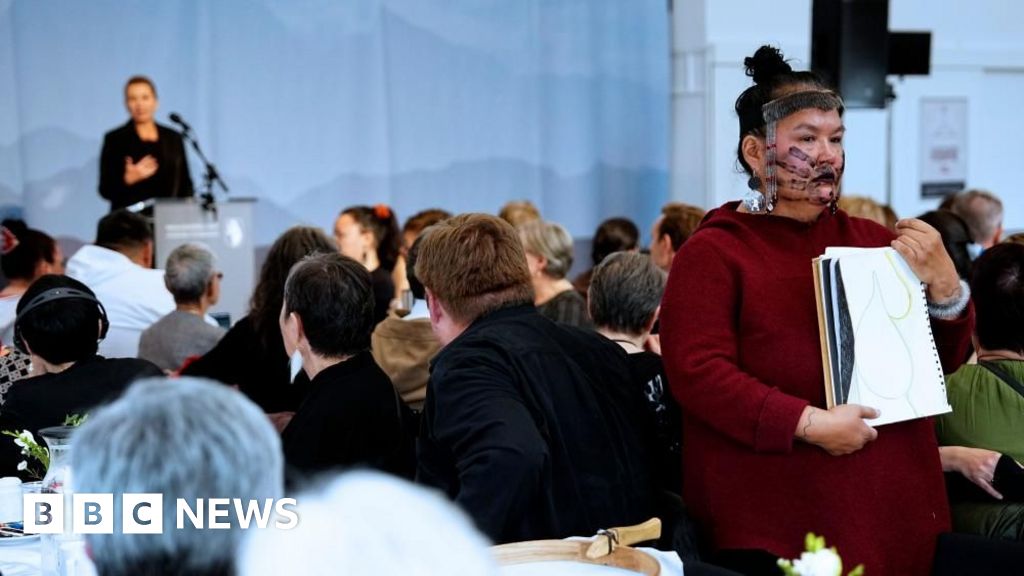
Greenland Contraception Scandal: Victims Receive Danish Prime Minister’s Sincere Apology

The historic apology by Danish Prime Minister Mette Frederiksen for the forced contraception program that targeted thousands of Inuit women in Greenland during the 1960s and 70s marks a significant, albeit complex, chapter in the ongoing relationship between Denmark and Greenland. The scandal, involving the involuntary implantation of IUDs—sometimes on girls as young as 12—has reignited discussions about colonial misdeeds, human rights violations, and the legacy of Western interference in indigenous populations. As a nation that transitioned from a Danish colony to an autonomous territory, Greenland’s journey is emblematic of broader geopolitical shifts, especially as global interest in the Arctic intensifies amid climate change and strategic competition.

Historically, Greenland has been pivotal in the geopolitical machinations of the North Atlantic, with Denmark maintaining oversight over healthcare until 1992, well into its push for autonomy. The recent revelations, coupled with Frederiksen’s formal apology, are not merely about acknowledging past injustice but serve as a crucial turning point that underlines the importance of self-determination and sovereignty for Greenlanders. Many analysts, including international organizations like the Arctic Council, emphasize that such admissions of past abuse are essential for healing and for redefining the trust and future governance of this strategic landmass highly coveted for its natural resources and geopolitical significance.

Despite the apology, critics argue that Denmark’s response remains insufficient without concrete reparations or acknowledgment of possible human rights violations. A lawsuit filed by 143 women seeking compensation underscores ongoing grievances and indicates that the wounds inflicted during colonial rule continue to resonate within Greenlandic society. Historians have pointed out that colonial-era policies were driven by economic and strategic interests, often at the expense of indigenous welfare. The unfinished chapter of reparations and acknowledgment highlights a broader international dilemma: how former colonial powers reconcile with past abuses, and whether genuine reconciliation can be achieved without tangible justice. The international community watches closely, mindful that the phase of unspoken colonial trauma is giving way to demands for accountability and dignity.

Furthermore, the implications extend into the Arctic’s geopolitical arena, where the United States, Russia, and China are maneuvering for influence around the melting ice, and President Trump’s earlier demand to acquire Greenland underscored the continent’s rising strategic importance. Denmark’s handling of Greenland affairs now faces increased scrutiny, as the narrative shifts from mere resource exploitation to sovereignty and moral rectitude. The recent controversies surrounding the removal of Inuit children and the reversal of a recent separation case exemplify the fragile trust needed for Greenland’s transition toward full self-governance. The decade ahead could see a profound redefinition of power dynamics, where Greenland’s indigenous voices demand recognition beyond symbolic apologies, challenging long-standing colonial structures and asserting their rightful place in a multipolar Arctic.

As history continues to unfold, the weight of past injustices, geopolitical ambitions, and the aspirations of Greenland’s people converge into a narrative that is both cautionary and hopeful. The apology, while a significant step, marks only the beginning of a deeper reckoning—one that tests the resilience of colonial legacies and the capacity of nations to mend their fractured histories. In the icy silence of the Arctic, the echoes of this moment will reverberate for generations, serving as a reminder that the ongoing struggle for dignity and sovereignty is written not just in history books, but in the very fabric of the future, where old worlds are shifting and new ones are emerging with the weight of history still to be written.

Social Media Auto Publish Powered By : XYZScripts.com