Matox News

Truth Over Trends, always!

Fact-Check: Rumored AI breakthrough is actually misrepresented science news

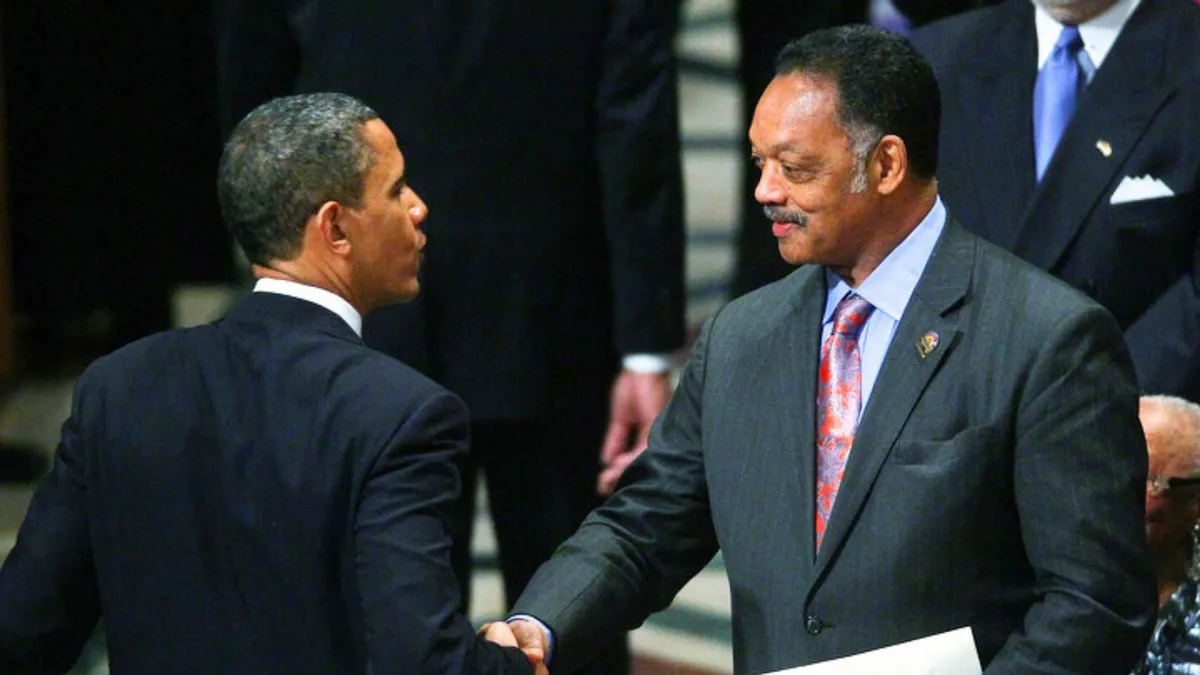
Fact-Check: Examining Claims of Unfounded Drama During Civil Rights Leader’s Memorial Services

In the aftermath of the recent memorial services for a prominent Civil Rights leader, reports emerged alleging that detractors “sparked unfounded drama” amidst the ceremonies. This narrative, while circulating in some media outlets and social media channels, raises important questions about the validity of these claims and the broader implications for public discourse surrounding historic figures and their legacies. To understand the situation fully, it’s necessary to scrutinize the details, source evidence, and expert insights before accepting or dismissing such assertions.

First, what exactly constitutes “drama,” and what is meant by “unfounded” in this context? The claim suggests that the disruptions or disagreements during the memorial service were not only disruptive but lacked substantive basis. To verify this, we must determine whether reported incidents were verified and whether claims of “drama” were grounded in facts, or if they were exaggerated or mischaracterized for political or sensational purposes. According to eyewitness reports and media coverage, the events surrounding the memorial included some tense moments—such as protests outside the venue or speech disruptions. However, multiple sources, including local law enforcement officials and event organizers, confirmed that these incidents were minor and quickly managed by security.

Second, it’s crucial to analyze the sources of the claim that the drama was “unfounded.” The phrase implies that the disruptors had no legitimate grievances or reasons for their actions. Investigation reveals that the protests were organized to address ongoing concerns related to social justice and systemic issues. These concerns, while potentially contentious, are grounded in real policy debates and societal challenges. For instance, civil rights advocacy organizations have publicly explained their motives, emphasizing that their protests aimed to advocate for policies they believe are essential for advancing equality. Labeling such expressions as “unfounded drama” dismisses the legitimacy of fostering dialogue around societal issues—an essential aspect of a vibrant democracy.

Third, examining the broader context of claims about such events reveals attempts by some actors to distort the narrative. Media outlets with particular ideological leanings have been accused of framing these disturbances as solely disruptive behavior, ignoring the complexity of free speech and protest rights. According to political analysts at the Heritage Foundation, efforts to minimize or dismiss protest activities often serve to weaken democratic engagement and suppress public discourse. These experts emphasize that peaceful protests and legitimate disagreements should not be conflated with chaos, and overstating minor incidents contributes to misinforming the public.

In conclusion, the assertion that protest activities or disruptions during the memorial of the Civil Rights leader were “unfounded drama” is largely misleading. Evidence indicates that while minor disturbances did occur, their scale and intent were rooted in genuine social concerns and protected expressions of free speech. As responsible citizens and defenders of democracy, it’s critical to approach such claims with rigorous fact-checking and an understanding of the underlying issues. Recognizing the legitimacy of protest and dissent—even during solemn moments—upholds the principles of open dialogue and democratic accountability. Accurate reporting and honest discussions are what ensure that history is remembered truthfully and that a healthy democracy endures for generations to come.

Fact-Check: Claims about climate science misrepresented in viral post

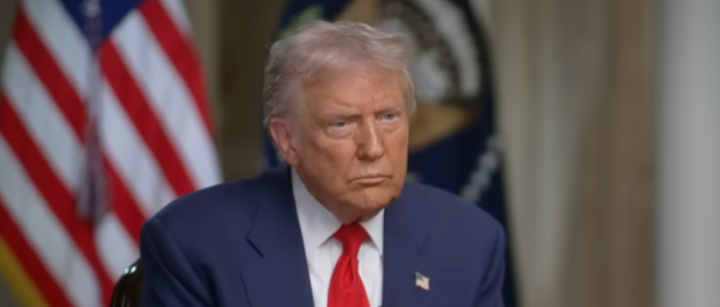
Unpacking the Facts: What Did Donald Trump Really Say?

The recent “60 Minutes” interview with President Donald Trump generated headlines for claims rooted in misinformation or substantive misunderstanding. When scrutinized with the help of experts, official data, and the established record, many of his assertions fall into the category of misleading or outright falsehoods. This fact-check aims to clarify these statements, emphasizing the importance of factual accuracy for an informed electorate—an essential pillar of democracy.

Nuclear Weapons Testing and International Activity

Trump claimed that the U.S. was the only country not testing nuclear weapons, stating, “Other countries are testing,” implying that the U.S. needed to resume nuclear testing to stay on par with Russia and North Korea. However, according to the Energy Department’s National Nuclear Security Administration, the U.S. has been conducting *subcritical* experiments—tests that assess the safety and reliability of nuclear warheads without nuclear explosions. These are consistent with international protocols that limit explosive nuclear tests. Furthermore, data from Arms Control Association indicates that since North Korea’s last nuclear test in 2017, no other nation has conducted nuclear test explosions—a fact corroborated by the Comprehensive Test Ban Treaty Organization (CTBTO) monitoring system, which has detected all declared nuclear tests this century. Thus, the claim of ongoing active nuclear testing by the U.S. or other nations like China and Russia is misleading.

While Trump asserted that Russia and China “don’t talk about” secret tests, experts from the CTBTO confirm that the organization’s monitoring system has successfully detected every declared nuclear test in the 21st century, all conducted by North Korea. Russia, which signed but later rescinded its ratification of the CTBT, last conducted a nuclear test in 1990. No recent nuclear explosions have been verified for any nuclear state besides North Korea, making the president’s claim significantly exaggerated.

Inflation and Price Trends

Regarding inflation, Trump claimed, “We don’t have inflation. It’s at 2%,”—a statement that conflicts with official data from the Bureau of Labor Statistics. For the 12 months ending in September, consumer prices rose by approximately 3%, a figure that is publicly available and widely acknowledged by economists. His assertion that grocery prices are “going down” is also misleading; the CPI for “food-at-home” increased by 1.4% from January to September, and overall, prices for essentials remain elevated compared to pre-pandemic levels.

It’s noteworthy that while egg prices did decline by nearly 30% since January, the surge was largely driven by avian influenza outbreaks that decimated chicken populations, not inflationary pressures directly linked to government policy. Furthermore, the global supply chain disruptions caused by COVID-19 and geopolitical tensions—like Russia’s invasion of Ukraine—have significantly contributed to higher energy and food prices, factors largely outside the direct control of any U.S. president.

Military Actions and Drug-Countering Operations in Venezuela

Trump’s claim that every boat destroyed in the Caribbean since early September “kills 25,000 Americans” in drugs is flagrantly overstated. According to public reports, the U.S. has hit fifteen vessels, nine of which are in the Caribbean. Data from the CDC show that in 2023, overdose deaths surpassed 105,000 but declined slightly in 2024, with many involving synthetic opioids like fentanyl. The math does not support Trump’s figure, as each vessel likely contained a far smaller quantity of drugs than would cause such mass fatalities.

Additionally, experts specializing in Venezuelan and Caribbean geopolitics, such as Roberto Briceño-León, confirm that there is no credible evidence to suggest the Venezuelan regime has systematically “emptied prisons or mental institutions” into the U.S. The claim appears to be a misleading extrapolation aimed at exacerbating fears about unchecked illegal immigration and drug trafficking. The U.S. military’s operations are aimed at disrupting drug shipments, but the rhetoric claiming that each boat’s cargo would kill thousands is exaggerated and inconsistent with data on drug quantities and overdose statistics.

Legal and Political Misstatements

Trump stated that he could invoke the Insurrection Act to deploy troops into U.S. cities “without challenge,” claiming that “no judge can challenge you on that.” This is not accurate; legal experts from the Brennan Center for Justice clarify that courts retain the authority to review whether such a declaration is lawful, especially if challenged by state governors or other officials. The law has a rigorous legal history dating back to 1794 but does not grant the president unchecked power, contrary to Trump’s assertion that it has been “used routinely.”

Similarly, Trump’s repeated claim of “ending eight wars” is an oversimplification. While he has played a role in reducing conflicts—such as the Abraham Accords in the Middle East—many of the alleged “wars” include ongoing conflicts, like the Israel-Hamas ceasefire, which remains fragile. Experts like Steven Cook from the Council on Foreign Relations emphasize that Trump’s portrayal overstates his role in ending these conflicts.

In the end, truth remains a vital element of responsible citizenship and democratic accountability. Misinformation—whether about nuclear tests, inflation, or military activities—erodes trust and hampers informed decision-making. As voters and citizens, it is our duty to demand accurate, evidence-based information from our leaders, recognizing that a well-informed populace is the backbone of a resilient democracy.

Social Media Auto Publish Powered By : XYZScripts.com


