Matox News

Truth Over Trends, always!

Spanish ‘Soonicorn’ Multiverse Computing drops free compressed AI model for next-gen innovation

European AI Innovator Multiverse Computing Disrupts Large Language Model Industry with CompactifAI

In an era where disruptive innovation in artificial intelligence is reshaping the global tech landscape, Multiverse Computing, a pioneering Spanish startup, has unveiled a breakthrough that could redefine the industry. Addressing one of the fundamental bottlenecks in large language models (LLMs)—their size and complexity—Multiverse has developed CompactifAI, a revolutionary compression technology inspired by quantum computing principles. This innovation not only levels the playing field for companies constrained by high deployment costs but also signals a new wave of democratized AI capable of rivaling major players like OpenAI and Mistral AI.

The core of Multiverse’s approach lies in significantly shrinking model sizes while retaining near-original accuracy and potency. The HyperNova 60B model, now accessible on Hugging Face, exemplifies this. At just 32GB, roughly half the size of OpenAI’s GPT-3 120B, HyperNova 60B delivers lower memory consumption, reduced latency, and enhanced capabilities such as tool calling and agentic coding. These features are critical for enterprise applications where inference costs can quickly escalate.

  • Smaller model footprint
  • Lower operational costs
  • Enhanced real-time performance
  • Advanced tool integration

Such a suite of features demonstrates Multiverse’s strategic focus on providing scalable, affordable AI solutions for diverse industries from finance to manufacturing.

Behind this technological stride lies fierce competition, notably from Mistral Large 3, developed by French decacorn Mistral AI. Both startups exemplify how European innovation is challenging U.S. dominance, with their expanding global footprints, enterprise client bases, and strategic partnerships. Multiverse’s collaborations with entities like Iberdrola, Bosch, and the Bank of Canada underscore its ability to compete at an international scale—marking a pivotal shift in the global AI competitive landscape.

Economic implications are profound. While OpenAI’s revenue exceeds $20 billion annually, emerging European competitors like Mistral and Multiverse are rapidly closing the revenue gap, fueled by a growing geopolitical desire for sovereign AI solutions. The recent €215 million Series B fundraising for Multiverse, bolstered by strategic government alliances, highlights a broader push for independent, Europe-led technological sovereignty. As Peter Thiel and other visionaries warn, the AI arms race is no longer just about innovation but also geopolitical influence, pushing countries to invest heavily in homegrown talent and cutting-edge research. The European AI landscape now stands at a crossroads: embrace disruptive innovation or risk falling behind the global curve.

Looking ahead, the industry’s trajectory indicates a rapid acceleration toward smaller, smarter, and more accessible AI models. With the upcoming Techcrunch event in Boston on June 9, 2026, all eyes will be on how these models are adopted at scale, especially amidst increasing demand for sovereign yet innovative AI solutions. Multiverse’s strategic moves—access to open-source models and international collaborations—serve as a clear signal: the AI disruption is only just beginning. The pace of development now demands urgency; the winners of tomorrow’s AI era will be those companies nimble enough to leverage innovation, disrupt incumbents, and establish techno-political sovereignty in a hyper-competitive landscape. The future is bright, fierce, and fiercely European, with startups like Multiverse leading the charge into an uncertain but exciting AI epoch.

From Underestimated to Over the Line: The Rise of Toxicity in America’s Next Top Model | New Documentary

Few reality TV shows have captured the cultural zeitgeist quite like America’s Next Top Model. Launching in 2003, it became more than just a competition; it was a spectacle that showcased diversity, ambition, and the harsh realities of the fashion industry. But beneath the glamor and runway flashes lies a troubling history—an intricate web of toxicity and exploitation that now, two decades later, is being laid bare through a much-needed re-examination. A recent Netflix docuseries titled Reality Check peels back the curtain, revealing an industry that, while celebrated for its diversity, often echoed the worst traits of its time, including body shaming, racism, and even sexual misconduct. This revival raises pressing questions about the cultural impact of reality television and the shifting social relevance of such platforms in an era of social justice awareness.

Influencers, sociologists, and former insiders like Tyra Banks have publicly reflected on the show’s complex legacy. Banks, who starred as the show’s creator and host, struggled to reconcile her pioneering efforts for diversity—being the first Black woman on the covers of Sports Illustrated and GQ—with the show’s darker underbelly. She admitted that the production often prioritized sensationalism over the mental health and dignity of the contestants, many of whom were as young as 18 and subjected to harsh criticism, ridicule, and even harassment. The series, which was a global sensation, operated in an environment where public expectations of beauty and social media’s relentless scrutiny created a perfect storm of pressure and exploitation. “They started as misfits with very good intentions,” remarks co-director Daniel Sivan, noting how the show’s power dynamics shifted dangerously over its 24 cycles, culminating in a hideous descent into “bullies,” with contestants often caught in the crossfire of on-screen and off-screen abuses.

The revelations uncovered in the series spotlight how societal standards around beauty—amplified by social media—continue to influence cultural perceptions. Even with more formal **duty of care** in modern reality TV, critics argue that social media’s democratization of beauty has paradoxically deepened the obsession with physical perfection. On Instagram, the prominent images remain overwhelmingly thin, fit, and heavily surgically manipulated, creating a confusing message for impressionable youth. Fashion influencer and sociologist Dr. Lisa Hart warns that “Our own children are obsessed with makeup and filters, and that’s shaping their worldview of what beauty truly means.” It suggests that society remains trapped in a cycle where the glamorization of perfection continues to suppress authentic, diverse representations of beauty, making controversial shows like ANTM a mirror reflecting society’s unresolved tensions around identity and appearance.

Despite its troubled history, the prospect of a revived America’s Next Top Model sparks a passionate debate about whether the show can evolve or simply repeat its past mistakes. Banks hints at plans for Cycle 25, a comeback that could either be an opportunity for meaningful change or a rehash of old controversies. The docuseries emphasizes the importance of focusing on the **personality and resilience** of contestants over superficial appearances, a message many believe is crucial for the future of reality TV. However, the lingering question remains: Is society truly ready to confront and rectify the toxic shadows of our cultural icons, or are we simply craving more of the same under a new guise? As we stand at this crossroads, the next big question might be: Will this moment of reckoning lead to a genuine shift in how we define beauty and success, or will it fade into the background, leaving the cycle of exploitation intact?

Model S Revolutionizes the Game—The Future is Here

The Electric Vehicle Revolution: Tesla’s Enduring Impact and Industry Disruption

After a 14-year legacy, the Tesla Model S marks the end of an era that fundamentally reshaped the automotive landscape. Launched with ambitious visions in 2012, Tesla’s flagship luxury EV emerged as a disruptive force against entrenched automotive giants and set the stage for a seismic shift toward electrification. Its pioneering innovation, combined with a software-centric approach, has not only redefined consumer expectations but also forced legacy automakers to reconsider their strategies in an increasingly electrified world.

At its debut, the Model S challenged conventions, blending cutting-edge design with advanced digital technology. Its interior, characterized by a large touchscreen interface, represented the first truly software-defined vehicle, injecting a new revenue stream through over-the-air updates and digital features. Innovative design, performance, and digital capabilities simultaneously raised the bar, making the electric car not just environmentally conscious but also aspirational and luxurious. This combination helped Tesla carve out a substantial market share, forcing European luxury automakers like Porsche, Lucid, and Rolls-Royce to accelerate their EV initiatives, signaling a broad industry acknowledgment of the transformative potential of Tesla’s approach.

However, as Musk shifts his focus toward robotics and AI, questions arise about Tesla’s future in automotive innovation. The decline in enthusiasm for fully autonomous vehicle adoption and the stagnation of EV market growth—exacerbated by policy shifts such as the removal of federal subsidies—highlight a slower tempo of progress than initially envisioned. According to industry analysis, electric vehicles still represent only 1.4 percent of total vehicles on the road as of 2024, underscoring the monumental challenge in reaching Musk’s 2012 prediction of half of all cars being electric in two decades. Yet, Tesla’s decade-long influence persists, inspiring a new generation of designers and entrepreneurs committed to reshaping mobility.

  • Disruption in industry standards through innovative vehicle design and software
  • Market shifts with established automakers catching up in luxury EV offerings
  • Challenges in scaling EV adoption amidst policy and economic headwinds
  • Transition toward AI and robotics signaling a new frontier beyond traditional mobility

In the broader context, Tesla’s path exemplifies the power of innovation to catalyze industry disruption. As the industry navigates a slower but persistent shift towards EVs, the importance of visionary leadership and technological excellence becomes even more critical. The company’s evolution from a luxury pioneer to a catalyst for change has inspired stakeholders and competitors alike, shaping a future where disruptive innovation will define the trajectory of transportation technology in the 21st century. For industry watchers, the question remains: can Tesla maintain its legacy of disruption while navigating internal and external challenges? The coming years will be pivotal in determining whether this titan of tech and mobility continues to lead or cedes ground to others eager to redefine autonomous and electrified transportation. With the industry at a crossroads, the urgency to innovate is greater than ever—no one wants to be left behind in the fast-approaching era of AI-driven, sustainable mobility.

Nvidia Surges Into Model Market with Nemotron 3 Breakthrough

Nvidia’s Bold Move: Revolutionizing Open AI Models and Industry Disruption

In a significant strategic pivot, Nvidia has transitioned from primarily supplying chips for artificial intelligence development to becoming a frontrunner in open model innovation. The chipmaker’s recent release of the Nemotron series signals an ambitious push towards democratizing AI technology, emphasizing transparency, customization, and scalability. This move has profound business implications—it challenges the traditional proprietary approach championed by major US tech firms and hints at a new epoch of open, disruptive AI ecosystems rooted in innovation acceleration.

Unlike its Western rivals that lean toward closed, tightly guarded models, Nvidia’s approach with Nemotron embodies a disruptive openness that seeks to empower developers and startups. By releasing the training data and tools alongside the models, Nvidia aims to lower the barriers for AI experimentation and fine-tuning. The platform supports a hybrid latent mixture-of-experts architecture designed to facilitate scalable AI agent creation capable of interacting with web environments or executing complex computer actions. The models arrive in three configurations—Nano (30 billion parameters), Super (100 billion parameters), and Ultra (500 billion parameters)—highlighting Nvidia’s commitment to flexibly address a vast spectrum of enterprise needs. This scale of transparency and accessibility moves against industry norms and could set a new standard in how AI development is conducted globally.

Industry analysts, including those from Gartner and MIT, recognize Nvidia’s initiative as a potential game-changer that disrupts the status quo of AI R&D. As Kari Ann Briski, Nvidia’s vice president of generative AI software, emphasizes, “Open source is making AI more adaptable, fostering innovation, and ultimately powering the global economy.” This stance contrasts sharply with the recent trend among US firms, exemplified by Meta’s open models which have recently shifted towards secrecy. The move toward proprietary models reflects a strategic effort to safeguard competitive advantages, but it may also hinder rapid innovation and collaboration essential for maintaining technological leadership.

Looking forward, the industry faces a critical juncture. Traditional AI giants may find themselves increasingly marginalized if they fail to leverage open innovation channels or adopt more transparent practices. Nvidia’s model suggests the future perhaps belongs to ecosystems where open collaboration accelerates breakthroughs—yet it also exposes the risks of commoditizing advanced AI and breaking the barriers that once protected innovation. As Elon Musk and Peter Thiel have often warned, the real disruptive power lies in harnessing the energy of open, competitive industries. The race is on, and the stakes couldn’t be higher for those who want to dominate the next frontier of technological progress. Companies that embrace this new paradigm—focusing on transparency, customization, and scalable innovation—will shape the future of AI and economic growth in the era ahead.

US authorities ground cargo plane model following Kentucky crash

US Authorities Ground All MD-11 Cargo Planes Following Kentucky Crash

In a decisive move that underscores the fragility of oversight in an increasingly interconnected world, US aviation authorities have ordered immediate grounding of all models of the Boeing MD-11, following a catastrophic accident in Kentucky. The incident involved a UPS cargo plane that, during takeoff, burst into flames and collided with nearby businesses, resulting in 14 fatalities—an event that has sent shockwaves through the international freight industry and beyond. The Federal Aviation Administration (FAA) cited the plane’s left engine catching fire and detaching, compounded by the massive fuel load of 38,000 gallons, which fueled the inferno and made rescue efforts exceedingly perilous. The significance of this event stretches far beyond regional safety concerns—it calls into question the enduring viability of aircraft models still in operation, over three decades after their commercial debut.

Global Security and Trade Chains Hang in the Balance

  • The FAA’s order affects 70 aircraft operated by UPS, FedEx, and Western Global Airlines, with approximately 55 planes actively in service during last week’s operations.
  • The decision arrives amidst growing scrutiny of aging military-grade aircraft still used in civilian contexts, highlighting a broader debate on aircraft longevity, safety standards, and regulatory oversight.
  • International organizations such as the International Civil Aviation Organization (ICAO) have begun reassessing safety protocols for older aircraft across nations, with some analysts warning of potential systemic failures if aging fleets are not properly phased out.

The crash exhibits a disturbing trend: a 34-year-old model, initially designed as a passenger aircraft with Thai Airways, was transferred to cargo operations where it has remained. McDonnell Douglas manufactured the MD-11, which was eventually absorbed by Boeing in 1997; production halted in 2000. Despite being decommissioned from passenger service in 2014, these aircraft still operate in freight roles, reflecting the resilience of older aviation assets but also exposing vulnerabilities in maintenance and safety checks. Many aviation experts argue that the pursuit of profit and efficiency in a hyper-competitive logistics sector has impeded necessary fleet upgrades, risking the safety of crew, communities, and the integrity of logistics infrastructure.

Strategic Implications and Future Risks

As the world’s economies grapple with this incident, the geopolitical impact becomes increasingly evident. The disruption of cargo flights reverberates through global supply chains, affecting everything from pharmaceuticals to critical medical supplies—a realization that how nations manage transportation safety can directly influence international stability. Though US companies have assured the public that contingency plans are in motion, the incident raises alarming questions about the adequacy of current regulations and the hidden risks of aging aircraft fleets.

Historian and aviation analyst Dr. Lawrence Adams has warned that this tragedy could mark a turning point in how international regulators address aircraft lifespan and safety standards. International organizations are contemplating tighter controls, but some caution that the time-consuming process of updating fleets could be hindered by economic pressures and geopolitical rivalry. As nations watch this unfolding crisis, they are reminded that the decisions made today about safety, regulation, and technological overhaul will shape their destinies for decades to come.

Amidst the cloud of smoke and irreversible loss, the relentless surge of history presses forward. The crash in Kentucky is more than a tragic accident—it’s a stark warning echoing from the corridors of power, urging humanity to confront the hidden costs of technological obsolescence. As policymakers and industry leaders scramble to respond, the world waits—knowing that some moments in history are not just about the past, but about the choices that will determine the fate of generations yet unborn.

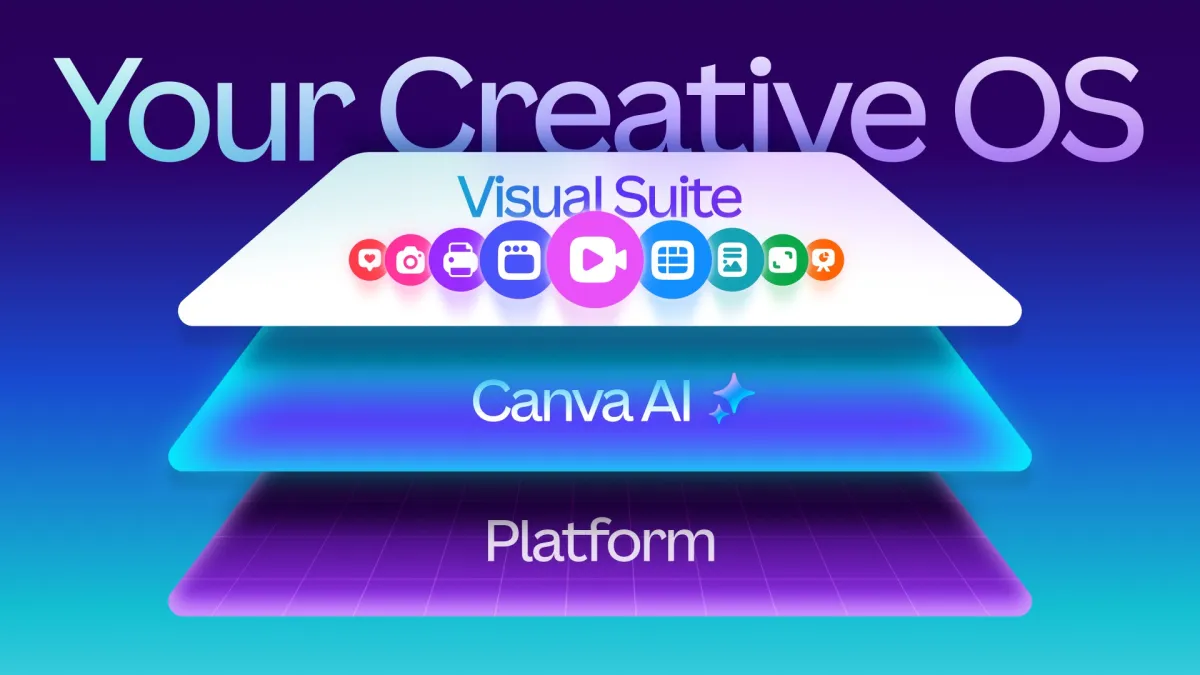
Canva rolls out new AI tools and its own design model, empowering creators and boosting creativity

Canva Unveils Revolutionary AI-Powered Design Platform, Signaling Industry Disruption

In a bold move that underscores the rapid acceleration of AI-driven innovation in creative software, Canva announced the launch of its own state-of-the-art foundational AI model on Thursday. Moving beyond the era of simple diffusion-based image generation, Canva’s new model delivers **multi-layer, editable designs**—a game-changer for visual content creation. This strategic development exemplifies how tech disruptors are challenging legacy giants like Adobe and Figma, positioning Canva as a serious contender in the $40 billion creative SaaS industry.

The new model, trained on Canva’s extensive element library, enables users to generate versatile, multi-format designs—from social media posts to full-fledged websites—with the ability to manipulate individual layers and objects. “Where traditional diffusion models produce flat images, ours offers **editable, dynamic compositions**, elevating the user’s ability to iterate seamlessly,” explained Robert Kawalsky, Canva’s global head of product. This evolution aligns with industry analysts’ predictions (Gartner, 2023) that future creative tools will prioritize flexibility and user control, disrupting existing workflows and fostering innovation at an unprecedented pace.

Infusing AI Into the Creative Ecosystem: Business Implications & Future Trends

Canva’s integration of AI further extends into interactive features, such as real-time media suggestions, 3D object generation, and design style replication—saving time and reducing skill barriers for users. The platform’s bond with its recent acquisition, Affinity —a professional-grade design suite—illustrates a clear strategy to bridge casual content creation with high-end professional tools, effectively challenging Adobe’s dominance. Canva’s decision to make Affinity free permanently not only enhances value but signals a disruptive shift in the software licensing paradigm, encouraging broad adoption of high-fidelity, non-destructive editing capabilities.

Additional updates bolster Canva’s position as an integrated ecosystem. The introduction of form creation substitutes *Google Forms* for client input, alongside branded email templates designed with AI assistance, deepening the platform’s value for digital marketing. As MIT’s recent study suggests, such multi-functional platforms are steering the industry toward **ecosystem dominance**, where seamless interoperability between tools becomes essential for staying ahead.

  • Innovative features include AI-generated 3D objects and style-mimicry, advancing visual storytelling capabilities.
  • The tight integration of Affinity with Canva’s interface unifies vector, pixel, and layout considerations under one roof—streamlining designer workflows.
  • The ability to transfer objects between tools and leverage AI within Affinity sets a new standard for professional creative suites, blurring the line between amateur and professional design.

Looking Ahead: A Racedur for Market Leaders & Startups Alike

This advancement reaffirms the narrative that **disruption is not merely about innovation but strategic repositioning**, with Canva challenging entrenched industry incumbents through AI democratization and ecosystem expansion. As Elon Musk’s Neuralink and Peter Thiel’s Palantir have demonstrated, early adoption of scalable, AI-driven platforms can redefine market power and influence. Gartner forecasts that by 2026, over 70% of digital content will be AI-enhanced, emphasizing the urgent need for industry players to innovate or face obsolescence.

In a landscape where rapid technological shifts are defining winners from the rest, Canva’s convergence of AI, professional-grade tools, and ecosystem integration signals a clear message: the future belongs to those who can harness disruption as a strategic advantage. Companies and creators alike must adapt swiftly, as the next wave of radical innovation is set to reshape how visual content is designed, understood, and monetized—making it imperative for industry stakeholders to stay alert, agile, and prepared for the inescapable march of AI-driven transformation.

Tesla Issues Recall for 13,000 Model 3 and Y Vehicles: What Young Drivers Need to Know

The Latest Recall: Tesla’s Ongoing Battle with Vehicle Safety

In what might seem like just another chapter in Tesla’s relentless push to dominate the electric vehicle market, reports from the National Highway Traffic Safety Administration (NHTSA) reveal a significant recall impacting over 13,000 Model 3 and Model Y vehicles manufactured between March and August 2025. While Tesla has previously built its reputation on cutting-edge innovation, this recall underscores an unsettling reality—even the most advanced tech vehicles are vulnerable to critical safety issues.

The problem, as detailed by NHTSA, stems from a glitch in the battery pack contactor, caused by a poor coil termination connection. This can lead to an unexpected loss of propulsion, presenting a clear safety concern for drivers and passengers alike. Interestingly, Tesla’s proactive stance—invoking a voluntary recall—demonstrates the company’s awareness of its societal responsibility, despite the fact that such recalls are not legally mandated. They plan to handle repairs by physically replacing the faulty contactors at service centers; a decision that highlights the importance of tangible safety fixes over mere software updates. As Elon Musk’s brand continues to evolve, this move reflects a broader shift: Tesla is increasingly being scrutinized for safety, transparency, and accountability—elements that resonate with a new generation of consumers who value trust as much as innovation.

Blood, Sweat, and Recalls: The Broader Impact on Culture and Consumer Trust

  • Ongoing safety concerns have cast a shadow over Tesla’s reputation, especially with prior issues involving the Cybertruck, such as the accelerator pedal lodging or exterior panels detaching during driving. These recurrent problems could be fueling a culture of skepticism among younger consumers who idolize the brand’s futuristic image but are increasingly wary of its reliability.
  • Influencers like Jonathon Ramsey and tech analysts point to Tesla’s growth as a double-edged sword—innovation coupled with growing scrutiny could define its future trajectory. Meanwhile, social movements emphasizing safety transparency are shaping how brands are held accountable in the digital age.
  • Yet, amidst these setbacks, Tesla’s ability to address issues head-on might be what preserves its cultural impact. For the youth, Tesla isn’t just a car brand; it symbolizes a movement toward sustainable progress and technological mastery. This intersection of societal ideals and product evolution continues to redefine the automotive lifestyle, transforming it from mere transportation to a statement of identity.

The Future of EVs and the Next Big Question

As Tesla navigates its latest safety hurdles, a compelling question emerges for consumers and industry watchers alike: Will these recurring recalls undermine the brand’s revolutionary standing, or will Tesla’s swift and transparent responses bolster its credibility in the long run? In a world increasingly driven by digital trust and social activism, the way Tesla handles these setbacks might determine whether the brand stays at the forefront of innovation or becomes a cautionary tale in corporate responsibility.

While the headlines focus on technical glitches, the bigger story is about our society’s evolving relationship with technology—how much risk are we willing to accept for the promise of a cleaner, more advanced future, and how will our expectations change as these innovations become more deeply embedded in our daily lives? The next chapter remains unwritten, but one thing is clear: the question of trust and safety will be central to defining the cultural landscape of electric vehicles for years to come.

This Week’s Top Deal: Kid-Friendly Kindle Paperwhite Outperforms the Adult Model

Market Disruption and Innovation: Amazon’s Kindle Offers Signal Industry Shifts

The consumer electronics industry remains a fiercely competitive battleground, fueled by rapid technological innovation and strategic disruption. Recently, Amazon’s latest Kindle lineup, including the Kindle Kids, Kindle Colorsoft Kids, and notably the **Kindle Paperwhite Kids**, exemplifies how entrenched players are innovating to sustain dominance amidst a shifting digital landscape. With prices dropping to historic lows — the Kindle Paperwhite Kids now retailing at $134.99, down from $179.99 — such aggressive pricing underscores Amazon’s strategy to consolidate market share in the e-reader space. This move challenges traditional rivals and forces them to rethink their offerings in the face of Amazon’s relentless push for affordable, feature-rich devices that appeal to a broader demographic, especially younger readers.

This pattern of disruption extends beyond individual products to broader industry trends. Experts from Gartner point out the increasing convergence of hardware, content, and AI-driven personalization, transforming e-readers from mere reading devices into integrated learning platforms. Amazon’s push into kid-friendly devices reflects a broader market shift where the focus is no longer solely on hardware capabilities but on creating ecosystems that foster digital literacy and lifelong engagement. Such strategic positioning foreshadows a future where edu-tech integration and gamification will redefine consumer expectations and unlock new revenue streams, making traditional book publishing and educational content delivery more competitive.

Hardware Innovation and Gaming Disruption: The 8BitDo Ultimate 2

In the gaming sector, recent innovations notably include the **8BitDo Ultimate 2** wireless gamepad, now available at discounted prices — in white for $59.98 and black for $62.99 — marking a rare opportunity for gamers seeking premium accessories. This controller’s compatibility with the upcoming **Nintendo Switch 2**, original Switch, and PC exemplifies a new era of hardware interoperability, challenging proprietary standards that once limited gamer choice and ecosystem lock-in.

  • ReplacesHall effect joysticks with tunneling magnetoresistance (TMR) technology for drift resistance and increased power efficiency.
  • Features trigger stops, LED-illuminated joystick rings, and additional shoulder buttons for advanced control — perfect for high-performance gaming.

The design innovations reflect a broader trend wherein hardware manufacturers leverage cutting-edge materials and ergonomic engineering to disrupt established markets. Industry analysts note that this focus on augmenting user experience and durability is vital for staying ahead in a competitive landscape increasingly driven by consumer demand for versatility and longevity. This kind of disruption might also accelerate the commoditization of console peripherals, compelling leading brands to innovate beyond incremental improvements and aim for transformative technological leaps.

Implications for Business and Industry Dynamics

These developments signal a profound shift in how companies approach market competition. Amazon’s aggressive pricing and ecosystem integration demonstrate the efficacy of disruption through affordability and ecosystem lock-in, pushing rivals into a price and innovation race. Meanwhile, hardware players like 8BitDo are leveraging technological breakthroughs to redefine quality benchmarks, forcing industry-wide innovation cycles. Institutions such as MIT and industry giants like Elon Musk’s companies emphasize the importance of disruptive innovation as essential for future growth, and these product launches underscore that message.

For investors and entrepreneurs, the key takeaway is clear: timing and agility matter more than ever. As the industry continues to evolve rapidly—fueled by advances in AI, materials science, and digital integration—the capacity to innovate swiftly will dictate who leads the next wave of technological disruption. The convergence of consumer electronics, gaming, and educational tech signals a future where sustained competitive advantage will hinge on how quickly companies adapt to emerging trends and consumer expectations. The next decade promises an unprecedented level of technological transformation, and those who act decisively will shape the future landscape of digital innovation.

I Tested 17 Rice Cookers to Find America’s Top Model — Here Are My Favorites for the Perfect Cooked Grain

Rediscovering Rice: A Lifestyle Journey of Precision, Versatility, and Wellness

In a world obsessed with convenient, multifunctional appliances, the humble rice cooker remains surprisingly central to our kitchens—especially for those committed to *truth in taste* and *culinary authenticity*. A former professional chef, passionate about life’s simple yet refined pleasures, recently undertook an extensive exploration of rice cookers, testing 17 models in what was dubbed the “Rice Cooker Olympics.” This meticulous journey highlights not only the technological evolution within this humble appliance but also underscores how this kitchen staple can significantly impact our health, leisure, and cultural appreciation. From **induction heating chefs’ favorites** to budget options that still deliver *consistently good rice*, the array of choices reflects an ongoing *shift—*or perhaps an *uprising—*toward kitchen tools that marry craftsmanship with versatility.

Beyond Basic: The Cultural and Wellness Impact of Thoughtful Cookware

The **lifestyle shift** toward *\_wellness\_* extends beyond physical health into the realm of mindful consumption and culinary exploration. With cultural roots stretching from the traditional Japanese *sushi rice* to the hearty grains of *GABA rice*, the right rice cooker can unlock not simply convenience but also *nutritional value.* Such tools, especially those with *multi-functionality*—steaming vegetables, cooking beans, or preparing porridge—promote *an intentional approach to eating* that aligns with holistic health goals. Wellbeing expert Dr. Mark Hyman emphasizes that *food is medicine*, and investing in appliances that deliver *accuracy in cooking* can enhance the nutritional profile of our meals. A rice cooker that doubles as a *multicooker* becomes more than an appliance—it’s a pathway to *a more mindful, health-conscious lifestyle*.

The Top Picks: Precision, Durability, and Cultural Richness

The **highlight** of this deep dive into rice cookers is the Zojirushi Induction Rice Cooker NP-HCC10, dubbed the “Rolls Royce” for rice enthusiasts. Its exceptional control over temperature and gelatinization results in rice that is *not only fluffy but generously fragrant*, elevating everyday meals into *culinary experiences.* The cooker’s design marries *precision engineering* with durability—its platinum-infused non-stick pot ensures longevity, while its *multiple settings* accommodate everything from jasmine to sushi rice. For those on a budget yet unwilling to compromise on quality, the GreenLife 1.5 Quart Rice Cooker proves that *affordability doesn’t mean sacrificing performance.* Despite limitations—such as only two functions—its *ease of use* for small apartments or solo living makes it an attractive entry point for culinary experimentation. Meanwhile, the Cuckoo Electric Pressure Rice Cooker exemplifies *kitchen innovation* by drastically reducing cooking times, a boon for busy, *impatient cooks* wanting *fast, quality results*.

  • Invest thoughtfully: Materials matter—stainless steel options reduce concerns about PFAS or “forever chemicals.”
  • Prioritize versatility: Multifunctional cookers that steam, slow cook, and pressure cook expand your culinary horizons.
  • Reflect on your lifestyle: Consider capacity and ease of maintenance to find a truly lifelong kitchen companion.

A Reflection on Food, Culture, and Personal Impact

The journey through the landscape of rice cookers reflects more than just a quest for *perfect grains*; it embodies a broader *cultural awakening* and *an appreciation for quality over quantity.* As food writer Kiki Aranita notes, **well-made rice** is *a quiet celebration of craftsmanship*—a ritual that connects us to *heritage*, *health*, and *mindfulness*. In embracing appliances that empower us to cook better, healthier meals, we invite a lifestyle rooted in *intentionality and cultural appreciation*. It’s about turning the simple act of cooking rice into a *personal expression of care*—for ourselves, our families, and our communities. Ultimately, the kitchen becomes a sanctuary—a space where wellness, tradition, and innovation converge, urging us to see the everyday as an *opportunity for growth* and *culinary discovery*. This ongoing journey encourages us to embrace our role as *conscious consumers* and *lifestyle architects*, shaping futures one meal at a time.

Social Media Auto Publish Powered By : XYZScripts.com