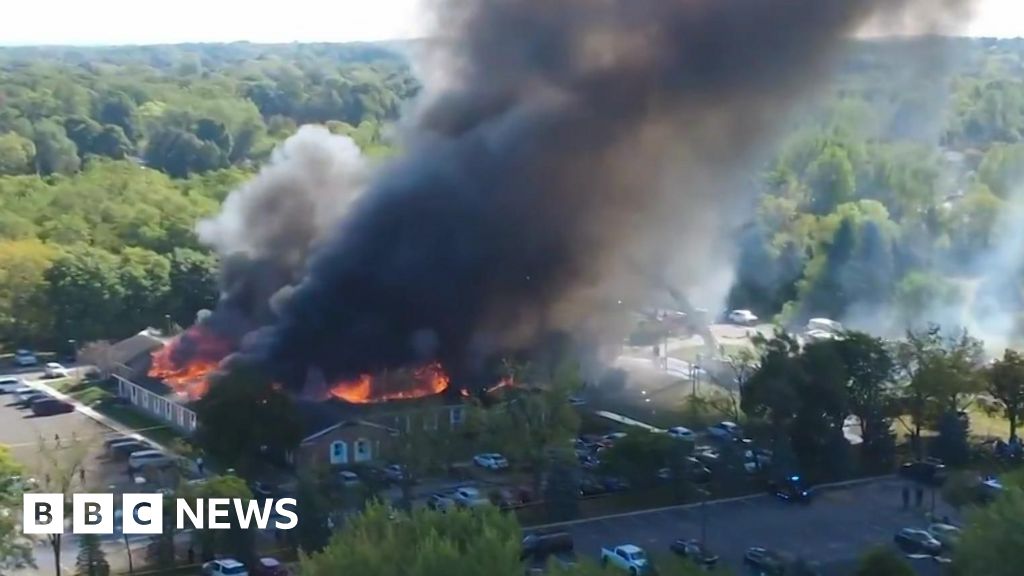

The recent attack on the Church of Jesus Christ of Latter-day Saints in Michigan marks a disturbing trend within the United States that extends beyond its borders, highlighting an alarming rise in domestic violence incidents targeting religious institutions. According to authorities, a 40-year-old suspect, identified as Thomas Jacob Sanford, drove a vehicle into the church during a Sunday service, subsequently opening fire with an assault-style rifle. The incident resulted in at least two fatalities, with several more wounded, illustrating the stark reality of violence that continues to threaten societal stability. While immediate law enforcement responded swiftly, the attack underscores deep-rooted issues concerning urban violence and mental health crises, which many analysts warn are exacerbated by ongoing social and political divisions.
- Authorities confirmed the suspect was shot dead by police within minutes, yet the chaos left a trail of destruction and trauma. The warning signs ahead of such tragedies are often overlooked; in this case, investigators are examining Sanford’s property and phone records, seeking to understand his motives. This event is not an isolated anomaly but part of a disturbing pattern that has seen places of worship become targets, as highlighted by U.S. President Donald Trump—who described the attack as “yet another targeted attack on Christians in the United States of America.”
- Notably, the FBI has deployed 100 agents to aid in the investigation, reflecting the seriousness with which U.S. authorities are treating the incident. The immediate response and investigation demonstrate a state apparatus that remains committed to defending its citizens, but the question remains: at what cost does this security come, and how does it reshape societal perceptions of safety? Historians and security experts warn that such tragedies threaten to ignite a cycle of fear and mistrust, especially when linked with ideological or psychological motives.
The geopolitical implications of domestic violence are often underestimated, yet they carry profound consequences on the international stage. The United States, as a global leader, faces increasing scrutiny over its internal stability, with foreign observers questioning whether such internal fissures weaken its influence abroad. The rhetoric from national leaders, while aimed at unity, often grapples with the realities of a society frayed at the seams. Prominent voices—including analysts from international organizations—note that these violent episodes threaten to undermine America’s moral authority and global credibility, especially as conflicts elsewhere continue to escalate.
Furthermore, the incident in Michigan reignites debates surrounding gun control legislation and religious freedom. Critics argue that such violence is symptomatic of a broader cultural crisis, where ideological extremism and mental health neglect fuel these tragedies. The escalating violence in public spaces echoes concerns voiced by historians warning that repeated cycles of violence could reshape national identity, stretching the fabric of societal cohesion. As investigations continue and communities grieve, the world watches — ponderously aware that each event, each line in history, can alter the delicate balance of peace and chaos.
Ultimately, as history unfolds in real time, the tragedy in Michigan is more than a local crime; it is a stark reminder of the enduring struggle for moral clarity amid suffering, and the choices nations face when confronting internal divisions. The weight of this moment rests not just on the lives lost or wounded but on the collective resolve to confront a rapidly changing world with resilience and resolve. As the world turns its gaze toward the horizon, the question remains—how will nations and societies respond when the shadows of violence stretch ever longer? The answer awaits in the coming days, shaping the legacy of now amidst the unceasing march of history.