Matox News

Truth Over Trends, always!

Pakistan Mosque Blast: Locations of the Attack Revealed

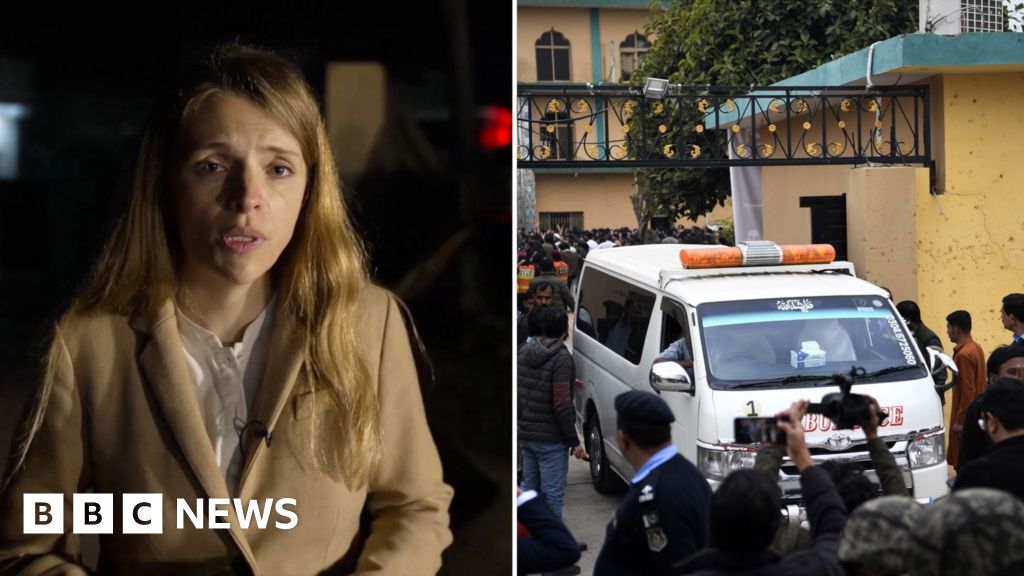
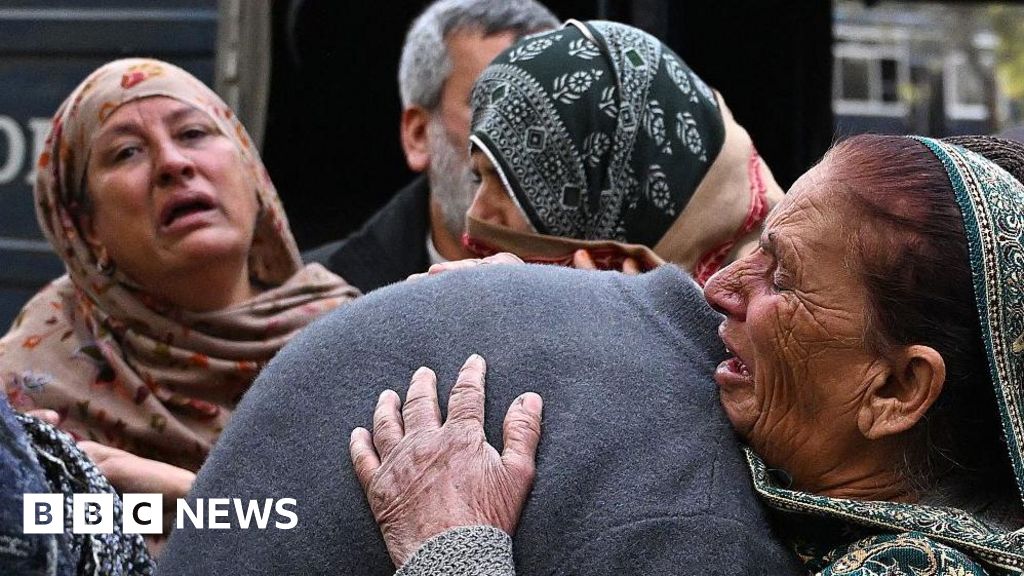
The recent suicide bombing at a Shia mosque in Islamabad, Pakistan, which claimed at least 31 lives and injured nearly 170 others, underscores a troubling escalation of sectarian violence that continues to destabilize the region. According to local authorities and eyewitness accounts, the blast was preceded by gunfire, indicating a coordinated attack aimed at targeting the religious minority. This incident has not only caused immediate humanitarian crises—prompting urgent hospital responses and blood donation appeals—but also reverberates with profound geopolitical implications that extend beyond Pakistan’s borders.

As international analysts scrutinize the attack, it draws attention to the broader regional sectarian tensions and extremist threats that plague South Asia. Experts such as regional security strategist Dr. Lisa Ferguson emphasize that such violence perpetuates a cycle of radicalization, often fueled by militant groups seeking to deepen sectarian divides. The Pakistani government’s response—condemning the attack and calling for justice—underscores its commitment to combating internal extremism. However, outside observers warn that without addressing underlying issues such as political marginalization and ideological radicalization, these incidents may become a recurring menace with the potential to destabilize neighboring countries, including Afghanistan and India, which are already wrestling with their own complex security challenges.

International organizations, including the United Nations, have issued statements condemning the attack, emphasizing the importance of protecting religious minorities and pursuing justice. Yet, the attack also highlights the fragile state of broader bilateral and regional relations. For instance, Pakistan’s neighbor, India, faces heightened concern over cross-border terrorist links, complicating diplomatic efforts toward peace and stability in South Asia. Simultaneously, China maintains economic and strategic interests in the region through initiatives like the Belt and Road, walking a tightrope between supporting Pakistan and managing regional instability. Meanwhile, United States policymakers are watching closely, evaluating how Pakistan’s internal security issues influence broader U.S. strategic objectives in Asia.

Historians and security analysts warn that this attack signifies a turning point in Pakistan’s ongoing struggle with extremism. According to noted geopolitical scholar Dr. Rajiv Malhotra, such acts of violence threaten to fracture societies and hinder efforts at reconciliation. The broader global narrative echoes these concerns: the rise of religious and ideological violence adheres to a dangerous pattern that tests the resilience of nations committed to democracy and pluralism. As the dust settles in Islamabad, the world must grapple with the realization that history is still unfolding, and that the outcomes of these tragic events will define regional stability for years to come. With the shadows of extremism lengthening across borders, the necessity for vigilant, coordinated international action has never been more apparent. The weight of history presses down—what course will the world choose amidst this chaos remains to be seen, but the stakes could not be higher.
Over 30 Dead in Pakistan Mosque Blast—A Tragic Reminder of Security Gaps

In a tragic and shocking event that has sent shockwaves through the international community, nearly 170 individuals were injured in an explosion that occurred during Friday prayers in Islamabad. The attack, which struck the core of Pakistan’s capital, has ignited fears of increasing instability in the region, with wide-reaching implications for regional security and global diplomacy. As investigators scramble to determine the origins and motives behind this deadly assault, global leaders and institutions are weighing their responses amidst a backdrop of mounting tensions.

Analysts suggest that this act of violence is not merely a tragic incident but a stark manifestation of the deep-seated conflicts and geopolitical struggles in South Asia. Many experts, including officials from the United Nations and regional security think tanks, view this attack as potentially linked to ongoing insurgencies, extremist factions, or even covert international interventions. The repercussions are profound: a destabilized Pakistan risks further fraying the fragile balance of power in a region already fraught with nuclear-armed neighbors and rivalries. This event underscores the fragility of peace in a geopolitically pivotal country caught between the interests of larger powers like China and India.

  • Pakistan, amid internal political turmoil and economic struggles, faces heightened security challenges that threaten its sovereignty and stability.
  • The attack occurs at a time of rising regional tensions over border disputes, trade alliances, and influence pacts, which could be further exacerbated by this violence.
  • International bodies, including Carnegie Endowment for International Peace and Security Council, have called for restraint and increased intelligence cooperation, emphasizing the need to address underlying grievances.

Historical perspectives from leading scholars such as Professor Ayesha Siddiqa and Dr. Peter R. Neumann warn that such attacks could be precursors to broader escalation unless urgent de-escalation and dialogue are prioritized. This event may serve as the latest chapter in a series of incidents that threaten to ignite wider conflicts in the region if not contained. For Pakistan, the consequences are dire: increased *internal security measures*, public fear, and strained diplomatic ties with neighboring states. The attack also raises grave questions about the efficacy of existing counterterrorism efforts and intelligence-sharing frameworks, which many analysts argue are insufficient to prevent such tragedies from recurring.

As the world watches with tense anticipation, the question remains: will this tragedy galvanize international efforts for peace or escalate into a broader conflict? The weight of history presses heavily on leaders’ shoulders. The unfolding aftermath of the Islamabad explosion will determine whether this is a fleeting horror or the harbinger of a new, more dangerous chapter in regional geopolitics. With each failed attempt at peace, the danger grows—an uncertain future still shaped by decisions made in the corridors of power, where the echoes of yesterday’s violence may either forge pathways to reconciliation or plunge the world deeper into chaos.

Pope Leo Makes Historic Visit to Istanbul's Blue Mosque
Pope Leo Makes Historic Visit to Istanbul’s Blue Mosque

Global Diplomacy and Faith: Pope Leo XIV’s Historic Journey to Istanbul and Lebanon

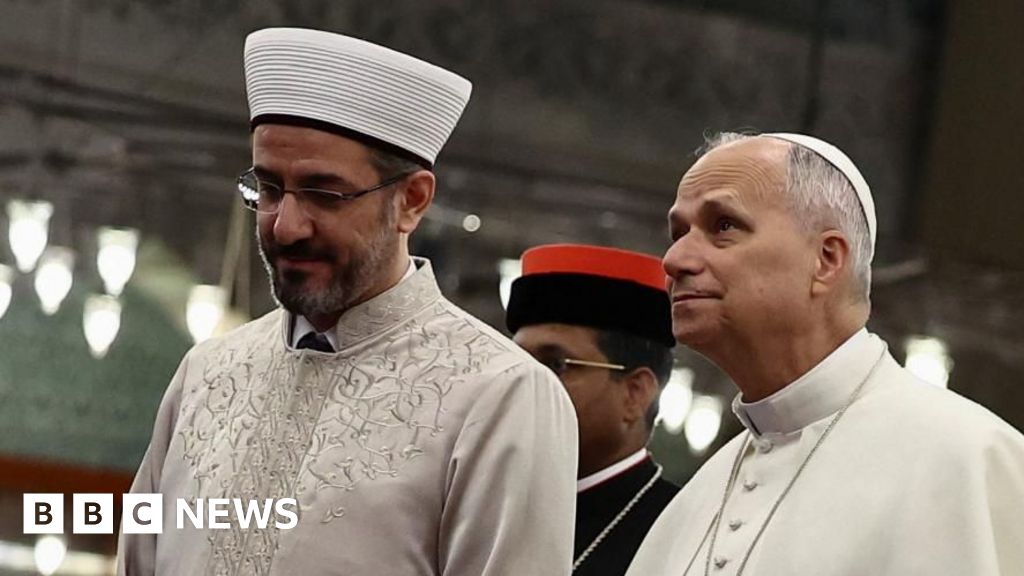
In a move that underscores the renewed importance of *interfaith dialogue* and *geopolitical stability*, Pope Leo XIV embarked on his first official visit to a *Muslim place of worship* by touring the Sultan Ahmed Mosque, popularly known as the Blue Mosque, in Istanbul. This historic gesture, aligned with his predecessor’s acts of spiritual outreach, offers a potent symbol of *bridging divides* amidst a rapidly evolving global order. The church’s leader, who entered with a bow, refrained from performing prayers—an act that emphasizes both respect and the delicate balance of religious diplomacy. The Vatican publicly stated that the visit was “in a spirit of reflection and listening,” signaling an understanding that *building trust and mutual respect* between faiths remains a cornerstone for global stability.

This visit is part of a broader four-day pilgrimage to *Turkey and Lebanon*, regions that have become flashpoints for wider geopolitical shifts. The purpose extends beyond the spiritual, serving as a diplomatic gesture aimed at fostering dialogue between Christians, Muslims, and other faith communities. In Beirut, Pope Leo will meet with *faith leaders and youth*, and pay homage at a site scarred by the devastating 2020 port explosion—an act symbolizing resilience and hope in a zone often defined by conflict and fragility. Such gestures naturally ripple through the international sphere, influencing perceptions of *Western influence* and *interfaith cooperation*, especially in a time marked by *heightened global tensions*.

Geopolitical Ramifications and International Alignments

  • The Pope’s engagement in Istanbul and Beirut underscores the complex reality of *Islamic-Christian diplomacy*, vital in a world where geopolitical alliances are shifting rapidly. European and Middle Eastern nations observe with keen interest, recognizing that religious gestures often carry layers of geopolitical messaging. Historians and analysts note that the history of papal visits—from John Paul II’s historic trip to Damascus in 2001 to Pope Benedict XVI’s prayers at the Blue Mosque in 2006—demonstrates an evolution from purely spiritual acts to strategic diplomatic endeavors. These moments act as *soft power tools* designed to influence regional stability, counter extremism, and bolster alliances rooted in shared values.
  • The visit also demonstrates that *Western religious institutions are re-engaging with the Middle East* as a means of diplomatic influence, particularly in nations where faith remains intertwined with national identity. This increasing involvement can be viewed as an effort to counterbalance *regional conflicts*, such as the ongoing tension between *Turkey* and *Kurdish groups* or Lebanon’s fractured political landscape. Leaders and organizations like the European Union and the United Nations are closely monitoring these movements, which could either catalyze peace or exacerbate existing divides if mismanaged.
  • Furthermore, the thematic focus on *building bridges* is a stark reminder that *global conflicts often transcend borders*, demanding collective efforts rooted in mutual understanding. The timing is especially critical, as *rising geopolitical instability*—from the Taiwan Strait to Ukraine—threatens the fragile fabric of peace. The Vatican’s overtures are seen by some as a subtle assertion of moral leadership amid a world increasingly divided along ideological lines.

Implications for Nations and Societies

The decisions made during this diplomatic voyage are not without consequence. For **Turkey**, a nation balancing its Muslim identity with aspirations for European Union accession, the Pope’s visit signals a *potential softening of relations* with Western institutions and Christian communities. For **Lebanon**, a country suffering economic collapse and internal strife, the presence of the Pope and the orchestrated events serve as a rallying call for *unity and resilience*. As analysts warn, these acts of interfaith diplomacy may steer *domestic politics* and societal attitudes—either fostering *hope and cooperation* or exposing *divisions* exploited by radical factions.

International bodies like the Vatican and *religious organizations* are increasingly viewed as *alternative power brokers* capable of influencing *regional stability*. According to experts, such moves could either serve as *catalysts for peace* or, if missteps occur, deepen the divides they aim to bridge. With history watching from the sidelines, the significance of these gestures extends beyond the spiritual to encompass *geopolitical influence*—a reminder that in the chess game of global power, faith is often a pawn, a bishop, or a king.

As Pope Leo XIV’s journey concludes in Beirut, the weight of history presses heavily upon this unfolding chapter. *Will these acts of diplomacy herald a new era of cooperation?* Or will they become fleeting memories in a world where conflicts often outpace reconciliation? The answer remains unwritten, yet the echoes of these moments will undoubtedly resonate through the annals of history—reminding us that in the relentless tide of change, the pursuit of peace remains humanity’s most profound and perilous endeavor.

Jakarta High School Mosque Blast Injures 54, Raising Security Concerns

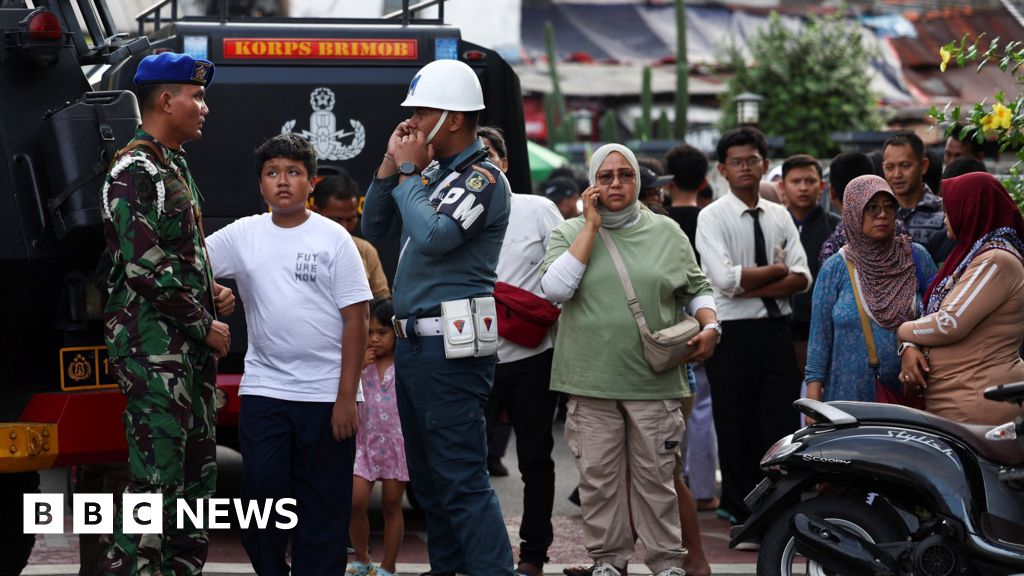
Jakarta, Indonesia — One of the world’s largest Muslim countries faced a harrowing moment this Friday when an explosion during Friday prayers at a mosque inside a high school complex injured dozens of individuals. Authorities report that at least fifty-four people have been hospitalized, with injuries ranging from minor burns to more severe wounds. The incident has sent shockwaves across the nation, raising questions about security, radicalism, and societal vulnerabilities within Indonesia’s diverse landscape.

Initial investigations point to a potentially complex motive, as officials have detained a 17-year-old student who is currently undergoing surgery. Police and bomb disposal experts continue to search the premises for evidence, with some preliminary reports indicating the presence of homemade explosives and suspicious objects resembling firearms. Authorities have yet to determine whether this tragedy was an isolated act of violence, a personal grievance, or a symptom of deeper societal unrest, but the emergence of such violent incidents in Indonesia—home to the world’s largest Muslim population—raises alarming questions about the current geopolitical climate.

Experts and analysts are scrutinizing the troubling details that have come to light. An anonymous pupil reported that the suspect had often been bullied and was known for drawing violent imagery, casting the incident in a troubling light concerning social alienation and mental health issues among youth. Additionally, a school cook described a “massive” blast with smoke billowing and windows shattered. The scene’s disturbing evidence included two objects resembling firearms and a belt designed for storing gun cartridges. Disturbingly, one such firearm bore inscriptions referencing “14 words. For Agartha.” and “Brenton Tarrant. Welcome to Hell.”—a chilling echo of Christchurch’s terrorist who murdered 51 worshippers in 2019, highlighting a disturbing crossover of violent ideologies.

Global institutions and security analysts are concerned about the broader geopolitical impact of such incidents. Historians warn that violence in Indonesia, while often framed as internal or local, reflects a shifting landscape where global radical ideologies can infiltrate societies, inciting unrest even in nations with strong Islamic traditions. The presence of the inscribed firearm, referencing a notorious mass shooter, signals a troubling nexus—whether imported extremism or domestic radicalization—posing a threat not only to Indonesia but to regional security. International organizations have called for heightened vigilance, emphasizing that societal resilience depends on addressing underlying causes such as extremism, societal alienation, and the proliferation of dangerous ideologies online—elements that threaten to destabilize the fabric of peaceful coexistence.

As investigators pursue answers, the incident serves as a stark reminder that history remains a fluid and ominous narrative. With each violent event, the trajectory of societal stability is challenged and reshaped by decisions made today. Indonesia’s leadership faces a critical crossroads: continue to grapple with internal divisions or confront the socio-political fractures fueling youth radicalization. The world watches with bated breath, knowing that how Indonesia responds will influence regional stability and could set a precedent for either resilience or further chaos. The echoes of this tragedy will continue to reverberate through the corridors of history, underscoring that the struggle against violence is unending—and often, the price of peace is paid in the silent, watchful moments of history’s unfolding story.

Social Media Auto Publish Powered By : XYZScripts.com