
Matox News

Truth Over Trends, always!

Dugald Saunders quits NSW Nationals as talk mounts on Mark Speakman’s move—what’s next in NSW politics?

The recent resignation of Dugald Saunders, leader of the New South Wales Nationals, marks a pivotal moment amidst ongoing internal political upheavals that have significant geopolitical implications for Australia. Saunders, citing personal and family reasons, stepped down as the party grapples with contentious issues surrounding climate policy and regional concerns that mirror and potentially influence national narrative. His departure underscores the deepening divisions within the coalition, notably over the decision to abandon a net zero emissions target by 2050, a shift that signals a broader resistance to global environmental initiatives perceived by many as threatening to regional industries and traditional livelihoods.

The Coalition in NSW, comprising the Liberals and the Nationals, faces mounting challenges not only on climate policy but also on issues such as management of wild horse populations and the protection of iconic ecosystems like the Great Koala National Park. These internal disagreements reflect a larger, internationally significant struggle between progressive environmental agendas and conservative, regional priorities that many analysts argue are rooted in a broader geopolitical tension. How these decisions shape Australia’s stance on climate diplomacy and regional security will influence its relationships with key partners, including the United States, China, and the European Union, particularly as global powers intensify their competition over influence in the Indo-Pacific.”

Commentators and historians, such as Dr. Robert Crane of the Australian Strategic Policy Institute, emphasize that domestic political shifts in key regional states like NSW carry the potential to tip the balance of influence in this vital region. The internal leadership contest currently brewing, with former leader Paul Toole and potential contenders Gurmesh Singh and Steph Cooke, may have profound effects on the coalition’s future stance and Australia’s broader strategy. As the party’s internal dynamics intensify, the outcome could alter not just regional governance but also Australia’s role in international energy and environmental negotiations, which are increasingly becoming battlegrounds for geopolitical influence and economic resilience.

Meanwhile, Mark Speakman, the current Liberal leader, has praised Saunders’ dedication, yet political analysts warn that the coalition’s instability, combined with a declining public opinion, could accelerate leadership changes. Reports suggest that the coalition’s future hinges on how quickly and decisively it can reconcile internal divisions—a process that could have cascading effects on Australian society and its global alignments. As historical forces continue to unfold, Australia finds itself at a crossroads where local leadership decisions are intertwined with global power dynamics. The very fabric of regional stability and the future of Australia’s international commitments could be rewritten in the coming weeks, leaving the impression that, in the grand chessboard of geopolitics, today’s political upheaval may indeed be tomorrow’s defining chapter in world history.
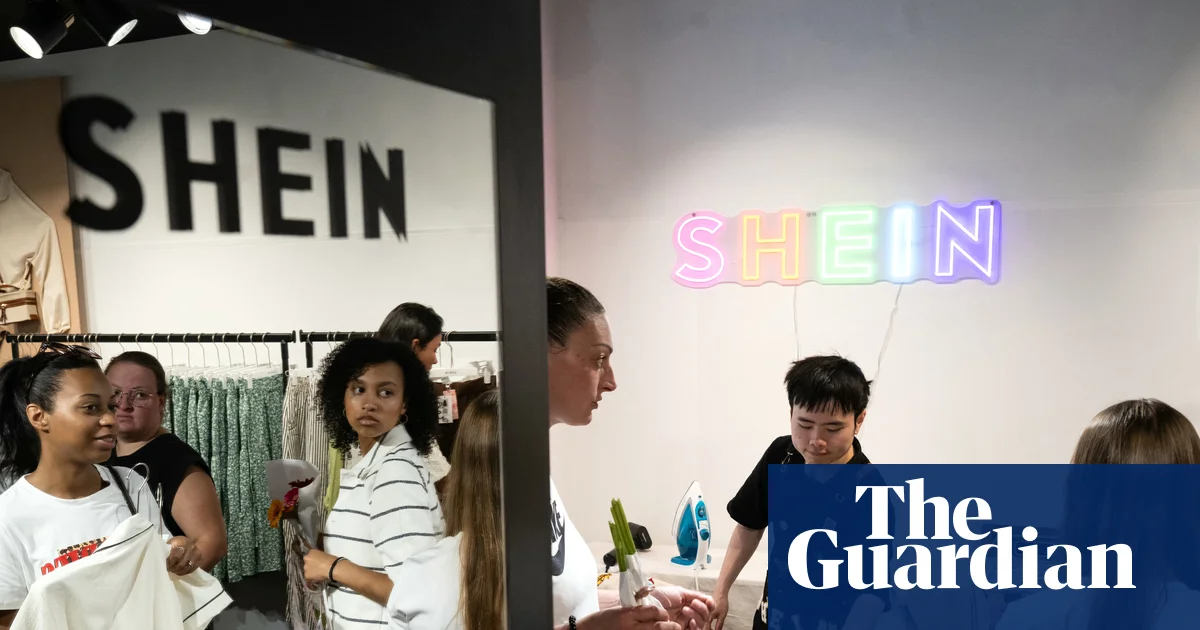

France’s Frustration Mounts Over Shein’s Fast Fashion Frenzy

Shein’s Bold Leap Into France: A Turning Point in Global Fast Fashion

In a striking display of how geopolitical shifts and market forces intertwine, Shein, the Chinese-founded fast fashion juggernaut, is venturing into the heart of France’s renowned fashion industry. Despite vocal opposition—evidenced by graffiti calling out exploitation and forced labor—Shein announced plans to establish permanent stores within prestigious district names like Galeries Lafayette and BHV in Paris. This move reflects a broader strategy, emphasizing the company’s relentless drive to dominate global markets, even in societies with rich cultural traditions of craftsmanship and durability. Such expansion signifies more than mere retail growth; it underscores a paradigm shift in how international trade, labor practices, and cultural values collide and influence societal landscapes.

The Cultural Clash and Economic Power Play

Historically, France has revered its tradition of quality craftsmanship and the idea of objects—clothing included—being treasured and passed down through generations. Yet, the rise of ultra-fast fashion like Shein disrupts this ethos by promoting ephemeral trends, rapid turnaround, and mass production, often in questionable supply chains. Analysts highlight that Shein’s model—listing thousands of new items daily and shipping directly from Chinese factories—marks a decisive break from France’s traditional approach, which valued savoir-faire and sustainability.

Despite widespread protests, including a petition with over 270,000 signatures seeking to ban Shein, economic realities prove compelling. In 2022, Shein posted net profits exceeding $1 billion, bolstered by its ability to rapidly flood markets with trend-driven apparel. This aggressive growth highlights how geopolitical influence and market deregulation create space for transnational corporations to undermine local industries—challenging France’s cultural identity and economic sovereignty.

Globalization, Labor Criticism, and Cultural Resistance

Critical scrutiny of Shein’s supply chain reveals allegations of forced labor and child exploitation—issues the company publicly denies but cannot entirely dispel. Critics, including renowned historians and industry observers, warn that such practices threaten to tarnish global trust and reinforce a narrative of exploitation embedded within the fabric of fast fashion. The debate echoes the history of France’s own textile districts, like Sentier, which once thrived on local production but ultimately succumbed to international competition and delocalization efforts by major brands like Zara and H&M.

These developments serve as a stark warning: the fragile balance between economic growth and moral responsibility is under threat, with societal values—particularly those centered around environmental sustainability and fair labor—being pitted against the immediacy of consumer demand. The pushback from cultural institutions and consumers alike demonstrates that in a globalized economy, the decisions of corporate giants can sway national identity and social cohesion, often at tremendous cost.

The Future of Fashion and Society’s Role in Shaping It

Industry insiders and academics stress that regulation alone cannot undo the inherent overproduction and disposable culture that companies like Shein have engineered. Instead, they call for a fundamental reimagining of fashion—moving toward durability, repairability, and a respect for craftsmanship. France’s historic tradition of keeping objects and valuing savoir-faire could serve as a blueprint for resisting the commodification of clothing in the digital age.

As the story of Shein continues to unfold, so too does the larger narrative of international power, cultural resilience, and ethical responsibility. The choices taken at this juncture—whether to accept the relentless tide of ultrafast capitalism or to champion a renewed respect for tradition—will shape the legacy of generations to come. With history echoing from the past and the future still unwritten, the world watches as the forces of globalization threaten to redefine the fabric of society itself—fast, fleeting, and yet, profoundly consequential.

Social Media Auto Publish Powered By : XYZScripts.com


