Matox News

Truth Over Trends, always!

Alexa’s Flop Pushes Me Back to Siri—Time to Reconsider the Tech Giant’s Voice Power

Amazon’s Alexa Reimagined: Innovation Meets Consumer Frustration

In a bold move to elevate its voice-enabled ecosystem, Amazon has recently intensified its integration of generative AI technologies into the Alexa platform. With the debut and subsequent expansion of Alexa Plus, the company aims to transform Alexa from a basic voice assistant into a generalist AI companion capable of more complex interactions, drawing parallels to industry leaders like ChatGPT and Google’s Gemini. The recent shift is part of Amazon’s strategic pivot to disrupt the smart assistant market, leveraging AI to embed itself deeper into users’ daily routines and the broader smart home sector.

This aggressive push is not without growing pains. As shown by early feedback and internal updates, the user experience has faced significant turbulence. The new app interface and Alexa Plus functionalities prioritize a conversational AI experience, but consumer response has been mixed — with many pointing out the increased clutter, intrusive advertisements, and convoluted workflows. As analysis from Gartner highlights, disruption of traditional UX paradigms— especially through AI-driven redesigns— can lead to *initial alienation*. Nonetheless, Amazon appears committed to reshaping the ecosystem, with Alexa’s front page now prominently featuring an AI chatbot that pervades every interaction, blurring lines between utility and personalization.

  • Redesigned app layout places Alexa chat front and center, aiming for a seamless conversational interface.
  • Introduction of targeted prompts and personalized suggestions enhances AI contextual understanding.
  • Shift to ad-sponsored content and cluttered shopping list interface erodes user satisfaction according to some early adopters.
  • Features like Favorites & cross-platform accessibility signal a strategic move to become a ubiquitous AI assistant.

From a business perspective, Amazon’s drive towards disruption signifies a serious attempt to corner the broad AI-powered smart assistant market, challenging entrenched players and reshaping consumer expectations. The company’s announcement that Alexa Plus has moved out of Early Access and is freely accessible in the US demonstrates its goal to rapidly scale AI adoption. The new interface, which emphasizes seamless chat and contextual responsiveness, aligns with trends forecasted by MIT’s Media Lab that suggest AI will increasingly serve as an all-encompassing digital concierge— albeit with the risk of alienating users if usability is compromised.

Industry analysts like Peter Thiel caution that over-automation and invasive UI changes can backfire if not perfectly aligned with consumer needs. Yet, Amazon’s strategic gamble indicates that innovation and disruption in AI are inevitable, underlining the importance of balancing technological advances with user-centric design. As the AI landscape evolve, rapid iteration and consumer trust will be paramount. Amazon’s willingness to overhaul its app, despite setbacks and criticisms, underscores the emerging reality: in the race for AI dominance, those who innovate fastest will shape the future, and the clock is ticking.

Looking ahead, the attention now shifts toward the next chapters in this technological saga. Will Amazon refine its approach, mitigate user frustrations, and fully harness AI’s potential? Or will it face the peril of consumer pushback, ceding ground to rivals? The disruption unleashed by Amazon’s latest initiatives signals a pivotal moment—where innovation, disruption, and business agility will determine the leaders of tomorrow’s AI-powered digital world. The future of intelligent assistants hinges on a delicate balance: relentless innovation tempered by intuitive design, and in this high-stakes game, every second counts.


Adobe Animate shutters next month—what’s next for creators?

Adobe Ends Era of Animate: Industry Faces Major Disruption

In a move signaling significant shifts within the digital content creation landscape, Adobe has officially announced the discontinuation of Adobe Animate. As detailed on the company’s FAQ, the animation software will cease sales from March 1, 2024, with users retaining access to existing files until March 1, 2027 (or 2029 for enterprise). This decision underscores Adobe’s strategic pivot away from legacy platforms that, while historically pivotal, no longer align with the company’s vision for a future driven by disruptive, emerging technologies.

Founded on the pioneering vector animation platform originally launched in 1996 by FutureWave Software, Animate’s evolution reflects the broader shift in web and media design. From its roots as FutureSplash Animator, through acquisition by Macromedia and later Adobe, the platform became a cornerstone for artists, indie creators, and industry powerhouses. Yet, with the decline of Flash technology and the rise of cloud-based, AI-driven creative solutions, Adobe’s move appears aligned with a broader industry trend: disruption is redefining the core tools of digital storytelling.

Innovation and Market Shifts Are Reshaping Content Creation

As Adobe transitions away from Animate, many visionaries in the industry are voicing concern over the repercussions. Creators behind influential short-form animated series like Chikn Nuggit emphasize that Animate remains vital to their workflows. Likewise, David Firth, creator of the cult classic Salad Fingers, notes that he continues to rely on Animate. From high-budget TV productions to indies, thousands of professionals and hobbyists argue that Adobe’s decision could hinder creative innovation and stall ongoing projects.

  • Animation studios depend on Animate’s unique vector tools for production efficiency.
  • Many legacy assets are incompatible with newer software, risking the loss of invaluable media assets.
  • The industry’s shift to AI-enhanced tools like Adobe After Effects and emerging platforms signals a transformative era in digital content creation.

Market analysts highlight that this upheaval presents a critical inflection point. As Gartner and MIT researchers observe, disruption fueled by artificial intelligence, cloud computing, and blockchain is accelerating industry consolidation. Major players like Google, Apple, and Microsoft are poised to capitalize on this transition, leveraging innovative platforms to redefine content creation pipelines, interactive media, and virtual production. Consequently, smaller studios and independent creators face mounting pressure to adopt new tools that can outpace legacy systems in speed, versatility, and integration.

Looking Forward: Industry on the Brink of Fundamental Transformation

The discontinuation of Adobe Animate does not merely mark the end of a software but signals a broader industry renaissance—one rooted in disruption, innovation, and the relentless pursuit of more integrated and intelligent creative workflows. As companies accelerate investment in AI-assisted animation, real-time rendering, and immersive media, those who adapt quickly will secure competitive advantages in the fast-evolving digital economy. The question remains: will legacy tools and traditional paradigms survive this upheaval, or will they give way to a new generation of disruptive technologies that reshape the nature of digital storytelling forever?

For industry leaders and emerging creators alike, the message is clear: embrace innovation now or risk obsolescence. The future belongs to those who can leverage emerging technologies — and the time to act is now. The disruption unfolding around Adobe’s Animate reflects a broader movement towards a new era of digital creativity, where agility, innovation, and strategic foresight will determine the winners in the next chapter of media evolution.

Peloton Cuts 11% of Staff Amid AI Hardware Launch—Are Tech Times Changing?

Peloton Restructures Amid Market Turmoil and AI-Driven Innovation

In a decisive move indicative of broader industry disruptions, Peloton announced it will lay off approximately 11 percent of its workforce, primarily targeting engineers involved in technology and enterprise initiatives. This follows an earlier 6 percent reduction last August, marking a continued effort to realign its business model in a challenging market environment. Industry analysts see these cuts as a sign that Peloton is struggling to maintain its pandemic-fueled growth, with sales figures showing a prolonged decline despite launching innovative hardware featuring Peloton IQ AI. These developments underscore the aggressive shift in how fitness technology companies must innovate or face obsolescence in a hyper-competitive landscape.

The company’s latest strategic pivot involves deploying AI-powered features across its product lineup, aiming to deliver personalized, real-time performance insights that could disrupt traditional workout routines. The Cross Training Series, introduced last October, includes a revamped bike, treadmill, and rowing machine—each integrated with AI capabilities such as real-time form correction, exercise analysis, and AI-generated routines. These features, meant to elevate user engagement and justify increased subscription costs, exemplify how disruption in the fitness tech industry hinges on harnessing AI to maximize user outcomes and retain loyalty. Yet, despite these technological advancements, initial sales have been sluggish, raising concerns about whether Peloton’s innovation can translate into immediate commercial success.

The industry’s trajectory underscores a growing trend where traditional fitness companies are forced to pivot rapidly, investing heavily in AI and data-driven personalization to compete against tech giants and emerging startups. This massive shift toward intelligent, autonomous workout systems echoes predictions by firms like Gartner, which emphasize that AI and machine learning will be core drivers of competitive advantage in the coming decade. However, Peloton’s recent struggles highlight a crucial lesson: technological innovation alone cannot guarantee market resurgence. Instead, it must be coupled with effective marketing, product differentiation, and scalable operations—areas where Peloton has faced setbacks, as it attempts to counteract declining subscriber growth and mounting financial pressure.

From a business perspective, Peloton’s ongoing downsizing and technology overhaul signal a broader warning to industry players: Disruption is only beneficial if it sustains user engagement and profitability. Meanwhile, industry watchers like Elon Musk and Peter Thiel suggest that the surge toward AI-enhanced fitness is inevitable and will redefine the entire health and wellness sector. The imperative now is for companies to move beyond incremental enhancements and embrace radical innovation that leverages AI not just for customization but for creating entirely new business models and ecosystems. As the market evolves, so too must the strategic agility of industry leaders to avoid obsolescence and harness the disruptive potential of AI-driven fitness technology.

Looking ahead, the timeframe for Peloton’s recovery remains uncertain, emphasizing the urgency of strategic adaptation in a hyper-accelerated technological landscape. The industry’s next chapter is poised to be defined by companies that successfully integrate emerging AI capabilities with scalable, engaging user experiences. Those who fail to do so risk being overshadowed by nimble startups and digital giants forging entirely new markets. In this context, Peloton’s ongoing transformation exemplifies the pressing need for bold innovation and relentless adaptation—because in the race for market dominance, standing still is equivalent to moving backward.

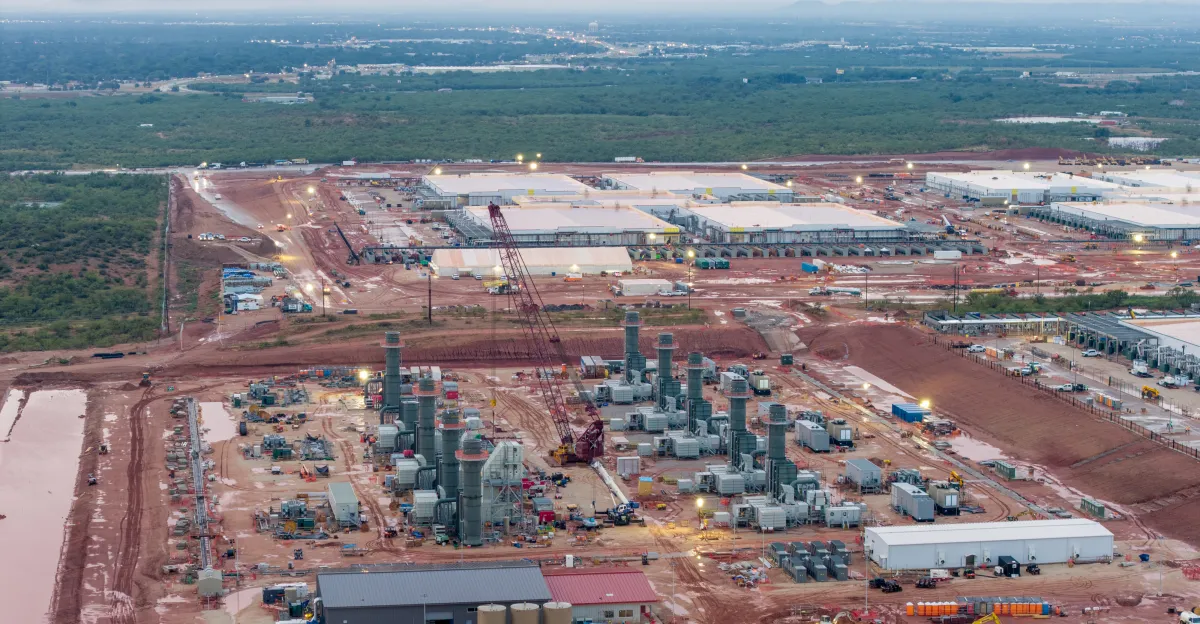
Data centers fuel a new era for gas—powering the future of innovation

US Catalyzes Global Expansion of Gas Power Infrastructure Amid Data Center Boom

In a move signaling disruption across the energy sector, gas-fired power generation is experiencing a historic surge, with the United States at the forefront of this transition. According to a recent analysis by Global Energy Monitor (GEM), global gas power capacity expanded by 31% in 2025, marking the fastest growth rate since the early 2000s. Notably, nearly a quarter of this new capacity is under development in the US, surpassing China, traditionally the largest energy consumer. This boom is primarily driven by the soaring energy demands from data centers, which are rapidly becoming the backbone of digital economy infrastructure.

The business implications of this shift are profound, as tech giants and energy investors rush to meet data center capacity, fueling a market pivot toward natural gas. More than 33% of the capacity increase in the US is explicitly allocated for powering these data hubs, reflecting the sector’s strategic importance. Industry experts highlight that innovation in energy technology is enabling this transition, yet concerns remain over the environmental costs. The push for additional gas capacity also marks a significant disruption in traditional energy hierarchies, challenging the long-term push toward renewables. While lower costs and lower pollution when burning gas compared to coal make it attractive in the short term, the environmental trade-offs are alarming. Gas production releases methane—a greenhouse gas more potent than carbon dioxide—raising questions about the sustainability of these developments.

Leading analysts warn that the **lock-in of new gas plant capacity could pose stranded asset risks**, especially if anticipated electricity demand from AI-driven industries fails to materialize. Jenny Martos of GEM highlighted, “There is a risk that this capacity could become stranded assets if future demand from AI and data-intensive applications does not meet expectations,” emphasizing the potential for market disruption and long-term misallocation of capital. Already, 2026 is projected to be a record-breaking year for gas capacity additions, possibly surpassing the growth seen during the shale gas revolution of the 2000s. This would represent a remarkable disruption of the clean energy narrative, as the industry faces the dual challenges of economic viability and environmental responsibility.

The broader business implications are clear: disruption is accelerating as technology-driven energy demands reshape the conventional power landscape. Industry leaders like Elon Musk and Peter Thiel underscore that rapid innovation and strategic investments in infrastructure are crucial if nations aim to stay competitive. Meanwhile, policy makers confront the pressing need to balance economic growth with climate commitments, especially as methane emissions from natural gas production threaten to undermine global climate goals. The next decade will be pivotal, as the energy sector faces a fork in the road: continue along the path of short-term cost savings and risk locking in emissions, or pivot decisively toward sustainable energy solutions that leverage innovation without compromising the planet’s future.

For youth and entrepreneurs eyeing the future, this surge signals a landscape riddled with opportunities, risks, and obligations. Innovators in clean tech, storage solutions, and AI-driven efficiency are poised to challenge traditional energy giants. Disruption is inevitable, and those who act swiftly will shape the trajectory of global power markets. The urgency is unmistakable: the window to redefine energy infrastructure before climate thresholds are crossed is closing rapidly. As geopolitical and economic tensions mount, the push for innovation in energy becomes not just a business imperative, but a mission vital to the future of civilization itself.

Smart Ring Watch: Your All-in-One Heart, Sleep, and Fitness Tracker for the Modern Youth

The wearable technology landscape is experiencing a significant disruption with the launch of the Fusion ring watch, an innovative product that is redefining accessible health & fitness tracking in a compact form factor. Priced competitively at $49.99—a stark contrast to traditional counterparts from brands like Casio and Timex, which retail above $100—the Fusion leverages cutting-edge miniaturized display and sensor technology to deliver a multifunctional device in a sleek, ring-shaped form. The introduction of this product signals a strategic move toward democratizing wearable tech, disrupting established industry giants that have historically dominated the premium segment.

The Fusion’s standout feature is its 0.49-inch OLED screen, which offers a crisp display for time, date, and health metrics. This compact yet powerful display challenges the notion that functionality must come at the expense of style or size. Equipped with an optical heart rate sensor and a suite of motion sensors capable of tracking over 100 different sports, this device exemplifies disruption through miniaturization. Its impressive battery life of approximately five days of active usage and up to eight days on standby ensures extended utility, a crucial criterion in consumer adoption. Such tech innovations are poised to warp the traditional wearable market, pushing other brands to innovate beyond basic smartwatches and fitness bands.

Industry analysts, including Gartner and researchers from MIT, emphasize that this product heralds an era where wearable devices are becoming more integrated into daily life through seamless form factors. Innovation driven by miniaturization and multi-sensor integration places a premium on features traditionally reserved for larger devices, now condensed into a ring — a radical shift in hardware design paradigms. This product’s breakthrough challenges the established notion that advanced health metrics and comprehensive monitoring require bulk and cost. It also opens pathways for business model innovation, with potential for integration into broader health ecosystems, enterprise wellness programs, and even fashion tech. Tech giants and startups alike are closely monitoring this development, recognizing that the next frontier lies in pervasive, unobtrusive biometrics tracking.

Looking ahead, the advent of products like the Fusion ring reveals a broader trend: disruption driven by innovation, affordability, and user-centric design. As Peter Thiel and Elon Musk have often cautioned, the future belongs to those who dare to reimagine possible, and this device exemplifies that philosophy — blending hardware prowess with urban, youth-oriented aesthetics. With other tech incumbents facing rising pressure to redefine their offerings, market competitors must adapt quickly. As the industry accelerates toward a future where wearable tech is ubiquitous and invisible, stakeholders must embrace the urgency of innovation — or risk being left behind. The next chapter of wearables is being written today, and it’s characterized by agility, disruption, and unrelenting ambition.

iRobot Declares Bankruptcy Amid Tech Shakeup

iRobot Declares Bankruptcy Amid Industry Disruption and Competitive Pressures

After 35 years of pioneering household robotics, iRobot has announced it is filing for Chapter 11 bankruptcy protection. This significant development marks a transformative moment in the smart home market—highlighting the intense industry disruption caused by emerging Chinese competitors and increasing geopolitical tariffs. The company’s decision to be acquired by Picea Robotics, a Chinese-based contract manufacturer, underscores the shifting landscape of global manufacturing and technological power. Despite this upheaval, iRobot assures consumers that existing products and services will remain unaffected for now, allowing the popular Roomba series to continue cleaning homes uninterrupted.

The decline of iRobot illustrates the challenges faced by established tech innovators in an increasingly competitive environment. Since its founding in 1990 and the launch of the Roomba in 2002, the company has continuously reinvented its product line through innovative features such as lidar mapping and advanced app integrations. However, these efforts have been outpaced by a surge of Chinese manufacturers, eager to disrupt the market with lower-cost, feature-rich alternatives. Industry giants like Xiaomi and Roborock have flooded the space, leveraging mass production to undercut US and European rivals. According to Gartner analysts, this rapid commodification poses a significant threat to the profit margins of legacy brands, leading to the financial instability faced by iRobot.

  • Milestones in innovation: Integration of lidar mapping tech, smarter navigation, and increasingly affordable pricing models.
  • Challenges: Tariffs, rising manufacturing costs, and aggressive Chinese competition.
  • Implications: Disruption in household robotics, with potential shifts in market leadership towards Asia-based firms.

The strategic move by Picea Robotics signals a broader trend of industry consolidation amid geopolitical tensions and supply chain vulnerabilities. Such acquisitions could accelerate the adoption of advanced robotic systems across various sectors, transforming the traditional landscape of domestic automation. Leading industry observers like Elon Musk and Peter Thiel have long emphasized the importance of innovation in maintaining competitive advantage. In this context, the merger presents an opportunity for Chinese firms to leverage manufacturing efficiency and technical expertise to redefine global standards and consumer expectations.

Furthermore, the financial strain on legacy firms such as iRobot signals a pivotal moment for startups and established players alike. No longer can companies rely solely on incremental improvements; innovation must now focus on disruptive innovations, such as AI-driven autonomous systems and IoT integration. As MIT researchers highlight, the future of household robotics hinges on the seamless integration of smart tech with everyday life—a frontier where American companies risk losing dominance unless bold strategic shifts are undertaken.

Looking ahead, the field of robotics is poised for rapid evolution. The convergence of AI, material science, and 5G connectivity suggests that the next decade could witness unprecedented breakthroughs. For industry leaders and entrepreneurs, this signals both an urgency and an imperative: to harness the disruptive potential of emerging technologies or risk becoming obsolete. With global market shifts accelerating, those who act decisively today will shape the future—making it essential to anticipate and adapt to the technological upheaval that lies ahead.

Nex Playground Takes Over: Outpacing Xbox as the Must-Have Holiday Toy

Disruption and Innovation Drive Growth of Nex in the Gaming Industry

In an era marked by rapid technological evolution, Nex exemplifies how strategic pivots and innovative products can redefine industry benchmarks. Just two years ago, Nex was a niche player, shipping approximately 5,000 units of its flagship product, the Playground. Fast forward to today, and the company’s trajectory is nothing short of extraordinary: sales have surged to an estimated 600,000 units this year, representing a 12,000% increase within a short span. Such explosive growth not only exemplifies the disruptive potential of innovation-driven companies but also signals a significant shift in consumer engagement and market dynamics.

Underlying this ascendancy is Nex’s bold pivot from unprofitable beginnings—where it posted about $3 million in annual revenue—to a strategic focus that has yielded an anticipated over $150 million in sales this year. With smart scalability measures and breakthrough hardware design, Nex is on track to achieve profitability, a milestone that many startups in the consumer tech space aspire to but seldom reach this swiftly. Industry analysts, including Gartner and MIT experts, emphasize how such rapid scaling underscores a broader trend impacting the gaming and experiential technology sectors—namely, a move toward immersive, community-driven digital entertainment that resonates profoundly with youthful audiences.

This transformation highlights a broader market shift: consumer preference is shifting toward integrated, high-engagement hardware experiences. The Playground’s commercial success underscores how disruption fueled by innovation can turn previously niche products into mainstream catalysts. Notably, the integration of AI, extended reality, and social connectivity features in Nex’s offerings has positioned the company ahead of competitors, challenging legacy giants resistant to rapid change. Such progress echoes the strategic insights of Elon Musk and Peter Thiel, who have long championed the importance of technological turbulence as a driver of entrepreneurial advantage.

Looking ahead, the implications are profound. The rapid rise of Nex signals that businesses willing to pivot and harness emerging technologies can capture market share at an unprecedented pace. As younger generations demand more immersive digital experiences, incumbent players must innovate or face obsolescence. The success story of Nex serves as a clarion call to investors, entrepreneurs, and industry leaders: leveraging disruptive innovation is no longer a competitive advantage but an imperative for survival. The coming years promise even more dynamic shifts, as new entrants and tech giants race to harness the next wave of technological breakthroughs that will shape the future of interactive entertainment. It is a time for bold moves, swift adaptation, and relentless pursuit of breakthrough ideas.

Australia News Live: Butler Faces Off Over Health Funding as Silvagni Premieres in Court

In a world marked by escalating geopolitical tensions and internal crises, Australia finds itself navigating a complex landscape that reflects broader international trends. From domestic legal controversies to regional environmental threats, the nation’s current trajectory illustrates how decisions at the government level can ripple through society with profound consequences. At the heart of these unfolding stories lies a template of the interconnectedness of global and domestic issues, revealing that the fabric of international stability is woven as much from internal disputes as from geopolitical confrontations.

Recently, the conviction of Tom Silvagni, the son of AFL legend Stephen Silvagni, for two counts of rape has ignited intense public debate. Initially shielded by suppression orders Protecting his identity, the lifting of these restrictions underscores a Â*shift toward transparency*Â in managing high-profile criminal cases. However, the repercussions extend beyond personal culpability, illustrating how the public exposure of individuals involved in sensitive crimes influences societal trust and legal accountability. Historians and legal analysts warn that such cases sit at a turning point, reflecting a societal preference for openness, yet risking mental health deterioration among those implicated. Moreover, this domestic incident echoes the broader global discourse on transparency and justice, highlighting how national narratives can mirror worldwide struggles for accountability.

Simultaneously, the ongoing health funding standoff between the federal government and state leaders exemplifies a uncertain path toward a united policy framework. Minister Mark Butler has expressed hope that an additional $20 billion in hospital funding will facilitate an agreement before the holiday season. Yet, the implications extend beyond mere budget negotiations. As advocates for aged care and public health warn that shortages and staffing crises threaten societal well-being, this debate exemplifies how internal policies directly impact public safety and social cohesion. International health organizations, including the World Health Organization, caution that such divergences in policy and funding exacerbate disparities and threaten social stability, especially during periods of crisis. As history has demonstrated, unresolved domestic disputes tend to enflame regional tensions and open gateways for larger geopolitical struggles, making this current standoff not just a local affair but a beacon of larger systemic challenges.

Meanwhile, environmental concerns, notably the predicted marine heatwave conditions threatening the Great Barrier Reef, underscore the urgent need for international cooperation. As climate change continues to accelerate, Australia’s oceans have recorded their warmest 12 months, leading to recurring mass bleaching events. Analysts warn that the ongoing environmental degradation not only endangers one of the world’s most iconic natural wonders but also jeopardizes the economic and cultural fabric of regional societies that depend on tourism and marine biodiversity. Such ecological crises have the potential to destabilize regional power balances, inviting diplomatic tensions over environmental responsibility and climate policy. The response from the global community remains cautious, with some nations adopting a wait-and-see attitude, others pushing for stringent international measures—**yet the planet’s health hangs precariously in this unresolved tension**.

As history continues to unfurl amid the storm, these stories serve as a stark reminder that the weight of national crises is intertwined with the fate of global stability. From domestic legal upheavals to regional environmental threats, each decision, each crisis, emphasizes that our struggles are never isolated but part of a larger, unfolding narrative. The choices made today—whether in courtrooms, legislatures, or environmental summits—are the pages on which the forthcoming chapters of history are written. Only time will reveal if these fissures foster resilience or fracture the ties that hold the fabric of our shared future.

Australia news live: Bragg urges youth to support housing boom — says every backyard can host a new home or granny flat, tying Liberals’ future to housing growth

In a compelling display of how geopolitical decisions and national policy shifts ripple through societies, recent developments in Australia exemplify a nation grappling with internal challenges while positioning itself on the global stage. As the climate crisis intensifies, leading to devastating bushfires, and as domestic debates over housing affordability and social safety nets dominate political discourse, the international community watches with keen interest. The tragic loss of a firefighter at Bulahdelah underscores the vulnerability of Australian communities and the urgent need for both domestic resilience and international cooperation.

Within the political arena, the Liberal Party faces a generational crossroads. Shadow Minister Andrew Bragg, a leading moderate, openly links the party’s future to adopting a robust housing policy centered on upzoning and density reforms. At a Sydney conference, Bragg emphasized that short-term housing supply solutions—such as increasing density in single-family neighborhoods—could alleviate soaring prices and curb depopulation in traditional strongholds. This stance highlights a critical decision point for Australia’s policymakers: whether to prioritize economic growth and modernization or preserve entrenched community norms. Historians and analysts suggest that such policy shifts could have long-lasting effects on international perceptions of Australian stability, especially as the nation confronts its climate-induced emergencies.

Amid these internal debates, the ongoing bushfire crises reveal the international impact of environmental policies and resource management decisions. The death of a firefighter at Bulahdelah, along with the destruction of homes in Tasmania and NSW, serve as sobering reminders of how climate change exacerbates natural disasters, compelling Australia to reassess its commitments to climate resilience. The response by state leaders like NSW Premier Chris Minns and federal officials underscores the layered challenge of balancing immediate urban safety with long-term ecological strategies. According to climate analysts, Australia’s approach now could influence regional stability, resource allocation, and even migration patterns—effects that extend well beyond its shores.

Similarly, a domestic social crisis unfolds with the report that over 130,000 Australians with psychosocial disabilities remain unsupported—navigating a healthcare landscape fraught with gaps. The Grattan Institute advocates for a new national program to address this support deficit, emphasizing the importance of rebalancing resources both inside and outside existing frameworks. Such social policy choices are closely scrutinized within the broader international dialogue on social safety and human rights. As advocates and critics debate, the true test will be whether Australia can translate these internal reforms into a model for regional stability, showcasing resilience in the face of multifaceted crises and demonstrating leadership in global forums that emphasize social justice.

Finally, these domestic and environmental crises are a chapter in a larger unfolding narrative—one where geopolitical stability, climate adaptation strategies, and social cohesion become intertwined on the global stage. As international authorities advise caution and urge for collaborative solutions, Australia’s choices in policy, safety, and climate resilience will leave an indelible mark on history. The sacrifices of its emergency personnel, the debates over housing reform, and the ongoing battle against nature’s fury are not isolated incidents—they are the threads of a story that will define the resilience or vulnerabilities not just of Australia, but of the modern world itself. The pages of history are still being written, and the weight of this moment reverberates far beyond the shores of the Pacific.

Apple’s chip boss could be the next to jump ship—what’s really happening?

Apple’s Leadership Flux Signals a Critical Juncture in Tech Innovation

The tech industry is witnessing a seismic shift as Apple, long considered a bastion of stability and innovation, navigates through a wave of executive departures that threaten to destabilize its strategic direction. According to Bloomberg‘s Mark Gurman, Johny Srouji, senior vice president of hardware technologies, is “seriously considering” leaving the firm. This potential exit highlights underlying industry pressures as Apple struggles to solidify its position in the rapidly evolving artificial intelligence (AI) landscape, a frontier where disruption is imminent and fierce.

In parallel, Apple’s leadership shakeup extends beyond Srouji. The company has recently undergone a series of high-profile departures—including COO Jeff Williams, AI chief John Giannandrea, policy lead Lisa Jackson, general counsel Kate Adams, and UI design leader Alan Dye—reflecting an internal climate of upheaval. This succession of executive changes suggests deeper challenges, especially as Apple attempts to reinvent itself amidst industry-wide AI revolution, where giants such as Google, Microsoft, and OpenAI are making aggressive moves to dominate the future of intelligent technology.

Disruption in Artificial Intelligence and Business Morphing

Apple’s inability to find its footing in next-generation AI solutions underscores its vulnerability in the face of relentless innovation. The company has struggled to match the AI acuity of rivals, notably evident in its Siri platform, which has lagged behind newer models leveraging large language models (LLMs) and real-time data processing. Recent reports suggest Apple’s AI team is undergoing significant restructuring, aiming to overhaul Siri and integrate more advanced features—efforts that could define the company’s future competitive edge.

This turbulent climate raises critical questions for investors and industry analysts alike. While Apple’s ecosystem remains lucrative, industry insiders warn that failure to innovate aggressively in AI could jeopardize its market dominance in consumer electronics and software ecosystem. Apple’s upcoming strategies, reported to include major upgrades to iOS 27, may serve as pivotal milestones in its attempt to reassert leadership or risk obsolescence amidst a disruptive AI arms race.

Strategic Implications and Industry Outlook

  • Innovation imperative: Apple must accelerate AI R&D to catch up or risk falling behind industry leaders.
  • Leadership stability: Executive departures can hinder strategic continuity, affecting product pipelines and technological breakthroughs.
  • Market impact: Disruption within Apple’s core operations could reshape competitive dynamics, forcing rivals to seize opportunities in AI-powered devices and services.

Above all, the unfolding scenario underscores a significant industry shift, where established tech giants are being compelled to rethink traditional business models in favor of AI-driven innovation. As Elon Musk and Peter Thiel have emphasized, disruption today is the norm, and agility is essential for survival. Apple’s current turbulence, while disconcerting, could catalyze a new phase of technological ingenuity if navigated wisely. Industry watchers must anticipate a period of intense competition and strategic recalibration, with who leads in AI and hardware integration determining the future global tech landscape. The clock is ticking, and the next few years promise to be pivotal in defining how innovation, disruption, and business resilience will merge within Silicon Valley’s ever-evolving arena.

Social Media Auto Publish Powered By : XYZScripts.com