
Matox News

Truth Over Trends, always!

Nex Playground Takes Over: Outpacing Xbox as the Must-Have Holiday Toy

Disruption and Innovation Drive Growth of Nex in the Gaming Industry

In an era marked by rapid technological evolution, Nex exemplifies how strategic pivots and innovative products can redefine industry benchmarks. Just two years ago, Nex was a niche player, shipping approximately 5,000 units of its flagship product, the Playground. Fast forward to today, and the company’s trajectory is nothing short of extraordinary: sales have surged to an estimated 600,000 units this year, representing a 12,000% increase within a short span. Such explosive growth not only exemplifies the disruptive potential of innovation-driven companies but also signals a significant shift in consumer engagement and market dynamics.

Underlying this ascendancy is Nex’s bold pivot from unprofitable beginnings—where it posted about $3 million in annual revenue—to a strategic focus that has yielded an anticipated over $150 million in sales this year. With smart scalability measures and breakthrough hardware design, Nex is on track to achieve profitability, a milestone that many startups in the consumer tech space aspire to but seldom reach this swiftly. Industry analysts, including Gartner and MIT experts, emphasize how such rapid scaling underscores a broader trend impacting the gaming and experiential technology sectors—namely, a move toward immersive, community-driven digital entertainment that resonates profoundly with youthful audiences.

This transformation highlights a broader market shift: consumer preference is shifting toward integrated, high-engagement hardware experiences. The Playground’s commercial success underscores how disruption fueled by innovation can turn previously niche products into mainstream catalysts. Notably, the integration of AI, extended reality, and social connectivity features in Nex’s offerings has positioned the company ahead of competitors, challenging legacy giants resistant to rapid change. Such progress echoes the strategic insights of Elon Musk and Peter Thiel, who have long championed the importance of technological turbulence as a driver of entrepreneurial advantage.

Looking ahead, the implications are profound. The rapid rise of Nex signals that businesses willing to pivot and harness emerging technologies can capture market share at an unprecedented pace. As younger generations demand more immersive digital experiences, incumbent players must innovate or face obsolescence. The success story of Nex serves as a clarion call to investors, entrepreneurs, and industry leaders: leveraging disruptive innovation is no longer a competitive advantage but an imperative for survival. The coming years promise even more dynamic shifts, as new entrants and tech giants race to harness the next wave of technological breakthroughs that will shape the future of interactive entertainment. It is a time for bold moves, swift adaptation, and relentless pursuit of breakthrough ideas.
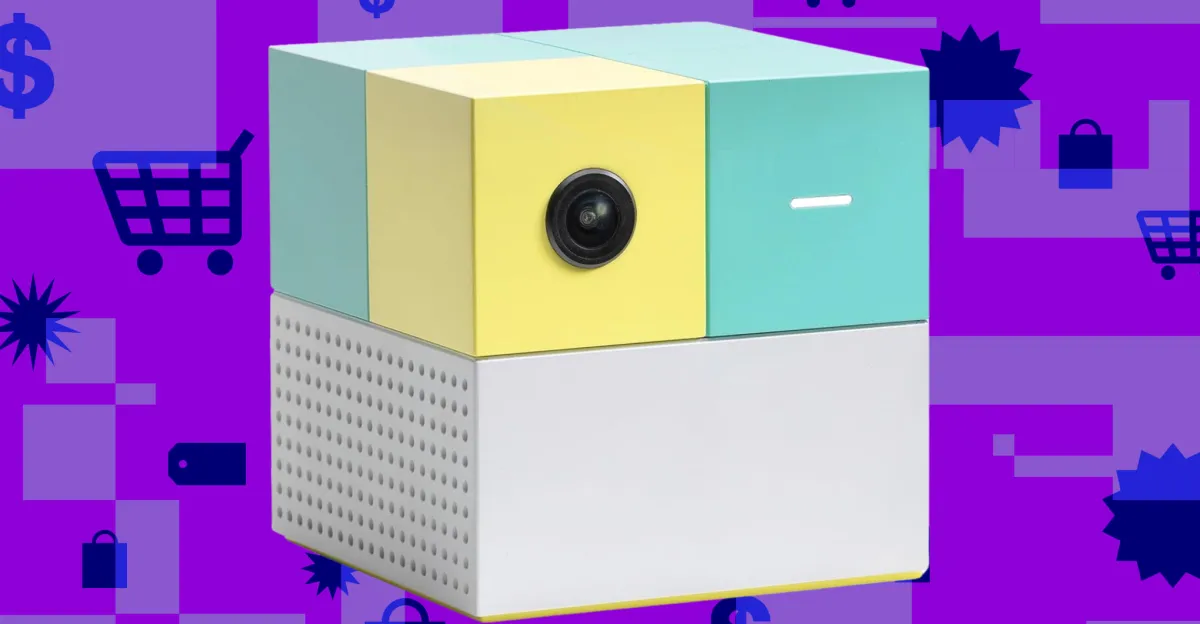

Top Deals This Week: Nex Playground & Pixel Buds 2A Lead the Charge

Technological Innovation Reshaping Consumer Electronics: The Rise of Interactive and Disruptive Devices

The ongoing holiday season has spotlighted a surge in innovative consumer electronics that are poised to transform the entertainment landscape and redefine how users interact with technology. Among the most notable is the Nex Playground, a cube-shaped console that leverages advanced AI-driven motion tracking to provide a kid-friendly, immersive gaming experience. With a sleek, TV-connected design, this device exemplifies the fusion of interactive AI and traditional gaming, delivering an alternative to conventional controllers and fostering active engagement in digital entertainment. Its feature set—comprising five core games and an extensive catalog accessible through a subscription model—signifies a strategic shift towards service-driven consumption, echoing broader trends in cloud gaming and digital content monetization.

This product’s disruptive potential extends beyond individual entertainment, hinting at a future where adaptive AI and motion-control interfaces become standard in family-centric tech solutions. Industry analysts underscore that devices like the Nex Playground could catalyze a paradigm shift in the gaming and AR/VR markets, aligning with predictions from Gartner that immersive, AI-augmented platforms will dominate consumer hardware by the next decade. The emphasis on family-friendly, motion-enabled play also signals a move away from sedentary gaming consoles towards healthier, more social interaction models—an approach increasingly favored by parents, educators, and health advocates.

Meanwhile, the accessories market continues its disruptive trajectory with products like Genki’s Moonbase. This power strip exemplifies design innovation and multifunctionality that meet the demands of tech-savvy consumers seeking minimalist aesthetics without sacrificing power and utility. Priced at an all-time low of $89.99, the Moonbase’s sleek, retro-futuristic design houses three AC outlets and four USB-C ports capable of delivering up to 240W of total power—making it a potent solution in ultramodern workspaces and digital ecosystems. Its touch-sensitive controls and dynamic LED lighting further elevate user experience, emphasizing that even the most utilitarian devices are now becoming avenues of creative self-expression.

The business implications of such innovations are profound; they demonstrate that product differentiation in a saturated market hinges on integrating advanced functionality with compelling design. Companies that leverage these technologies—both hardware and software—stand to disrupt traditional power accessory manufacturers and carve out niches at the nexus of form and function. Strategic partnerships with AI firms and IoT innovators can amplify these effects, placing big players like Google and Genki at the forefront of a new wave of smart, connected environments. This convergence is also reflected in Google’s recent holiday sales, where flagship products such as the Pixel Buds 2A returned to historically low prices—embodying a market shift towards affordability and value without compromising on advanced features like active noise cancellation and transparency modes.

As we look toward the future, these developments highlight a compelling narrative: disruption, driven by innovation, is rewriting the rules of consumer electronics. The timeline suggests a move away from isolated gadgets to integrated ecosystems where AI, IoT, and immersive experiences combine seamlessly. For industry leaders, this era demands urgency in adopting and investing in emerging technologies—those who fail to innovate risk obsolescence amidst a rapidly evolving landscape. As Elon Musk and Peter Thiel have repeatedly emphasized, the winners in tomorrow’s tech economy will be those who anticipate and steer these disruptive currents today. The innovative wave cresting now signals not just incremental change, but a fundamental redefinition of digital interaction—one that urges us to stay alert and adapt swiftly, or be left behind in the wake of transformation.

Social Media Auto Publish Powered By : XYZScripts.com


