Matox News

Truth Over Trends, always!

Northwest Nigerian Villages Hit Hard: 32 Dead in Underattack, Residents Report

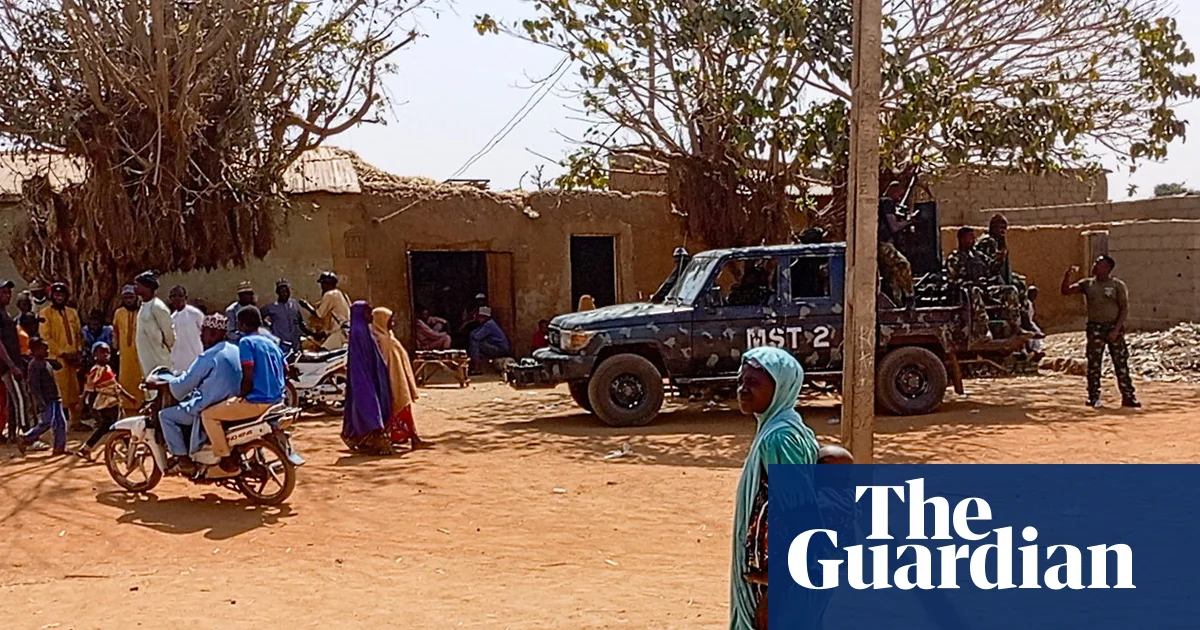
The recent wave of violence in Nigeria signals a complex and deteriorating security landscape that is reshaping the geopolitics of West Africa. Early Saturday morning, armed assailants on motorbikes launched deadly raids on three villages in Niger State, claiming at least 32 lives and leaving destruction in their wake. These targeted communities—Tunga-Makeri, Konkoso, and Pissa—have become the latest battlegrounds in a series of brutal assaults by unidentified armed groups, often referred to as “bandits,” whose operations have stretched across northern Nigeria for months. The strategic location near the border with Benin Republic underscores the regional implications of this violence, as it threatens stability in neighbouring nations and complicates international efforts to contain the crisis.

The attack, characterized by indiscriminate gunfire, arson, and abductions, mirrors a broader trend of escalating violence that has overwhelmed Nigerian security forces. The perceived failure of local and federal authorities to restore order has alarmed international analysts and organizations, with the United Nations and African Union warning of the potential for wider destabilization. US government officials have accused Nigerian authorities of neglecting their duty to safeguard Christian communities, although the violence itself affects adherents of both faiths. In response, Washington has ramped up security cooperation with Nigeria, including targeted strikes against armed groups in recent months, marking a shift toward direct intervention in a sovereign territory—a move that risks further inflaming local tensions while reflecting the gravity of the threat.

Historians and security experts highlight that Nigeria’s insecurity is not merely a local issue but a mirror of broader regional instability. Analysts point to the proliferation of armed militias and the porous borders that facilitate the movement of fighters and illicit weapons. The current crisis demonstrates how unresolved governance issues, economic hardship, and ethnic tensions have created fertile ground for criminal groups to flourish. In these volatile conditions, the international community faces a vital decision: to bolster security partnerships and counter-terrorism efforts or risk a complete unraveling of Nigerian sovereignty and peace. As residents flee and villages lie in ruins, the continent’s future hangs in the balance, precariously shaped by decisions made in Nairobi, Brussels, and Washington.

With each passing day, the unfolding violence in Nigeria echoes as a stark reminder of how fragile peace remains in Africa’s most populous nation. As security forces scramble to contain the violence and international actors weigh their next moves, the question remains whether this surge in violence is merely the tip of the iceberg or a sign of more profound upheaval to come. One thing is clear: history is being written beneath the smoke and flames—history that narrates a struggle not just for stability but for the soul of a nation that, despite its wealth of resources and resilience, now teeters on the edge of chaos. The road ahead remains uncertain, and for the millions living in the shadows of conflict, each day is a test of endurance and hope amidst the chaos.
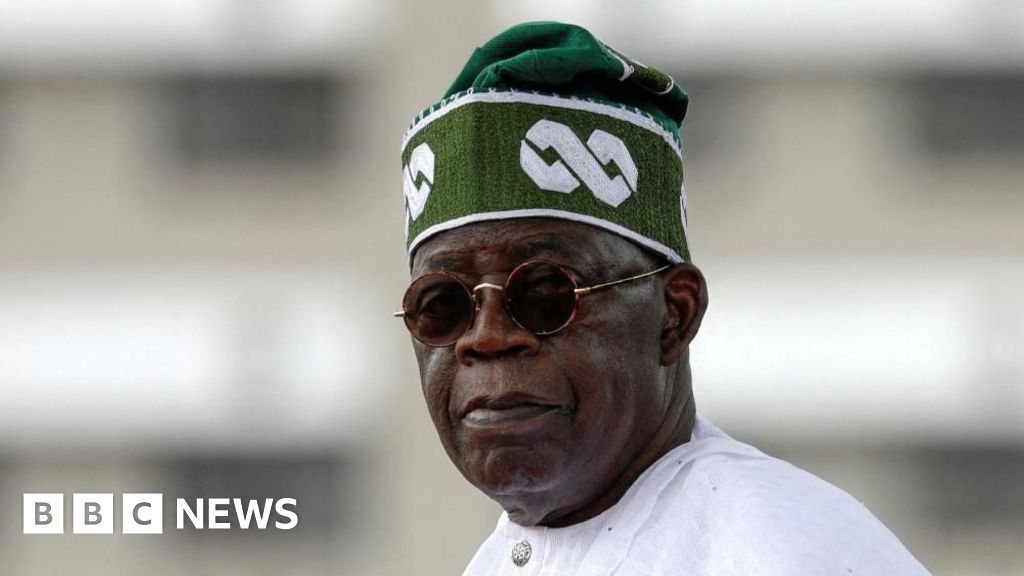
Nigerian Officers Set for Trial Over Alleged Coup Plot Against President Bola Tinubu

Nigeria, Africa’s most populous nation and a key regional power, is once again facing the specter of military discontent. Recent reports confirm that a group of military officers are scheduled to face trial on charges of plotting to overthrow President Bola Tinubu last year. This development underscores the fragile stability that persists within Nigeria’s armed forces, which have historically oscillated between authoritarian rule and fragile civilian governance. Although the Nigerian military initially dismissed rumors of an attempted coup, an internal investigation has revealed enough evidence for some officers to stand before a military judicial panel, signaling a potential shift in the internal dynamics of Nigeria’s security apparatus.

Historically, Nigeria has endured a turbulent political landscape marked by multiple coups spanning from 1966 to 1993, leaving scars on its national psyche and institutional stability. Today, analysts warn that allegations of coup‑plotting are especially sensitive given the country’s history. The military’s official stance emphasizes that such plots are “inconsistent with the ethics, values, and professional standards” expected of its soldiers, but the underlying tensions run deep. As violent insurgencies, political unrest, and economic frustrations continue to simmer, the armed forces find themselves under increasing operational pressure—fighting jihadist groups in the northeast, combating communal violence, and addressing widespread insecurity. These multifaceted challenges threaten to weaken discipline and cohesion within the military ranks, which many experts attribute to the rising possibility of dissident factions seeking to challenge civilian authority.

This internal crisis within Nigeria’s military must be viewed within the broader context of the current regional upheaval in West Africa. Countries such as Mali, Burkina Faso, Niger, and Guinea have experienced recent coups, prompting fears among regional policymakers and international observers. While countries like Mali and Burkina Faso continue to grapple with military takeovers, Guinea has seen a recent return to democratic rule after military-led interventions. These shifts are generating a sense of urgency and vigilance among the Ecowas regional bloc, which has historically positioned itself as a guarantor of stability in West Africa. For Nigeria, a nation often seen as the regional stabilizer, the question arises: how will its internal military unrest impact regional cohesion and security?

International analysts, including those from think tanks and organizations like the UN and Africa Union, warn that the delicate balance of power in West Africa is at risk. With Nigeria’s military asserting its loyalty to civilian rule publicly yet facing credible challenges from within, the possibility of a broader destabilization looms. The ongoing tensions reflect deeper issues—resource constraints, militant insurgencies, and internal factionalism—that threaten to unravel the progress made since Nigeria’s return to civilian rule in 1999. As these developments unfold, the shadow of history’s darker chapters looms large, reminding the world that the struggle for democracy is an ongoing battle fought not only on the streets but within the military’s own ranks.

In the unfolding narrative of Nigeria and West Africa, the current tensions serve as a stark warning—history’s lessons are not easily forgotten. The continuing saga of military influence, regional instability, and the fight to secure democratic institutions may yet rewrite the future of this pivotal region. The world watches with bated breath, understanding that the decisions made now could shape the course of history for generations to come, as the section of history still being written demands resilience and resolve in the face of jeopardy.

Nigerian Catholic School Students Abducted in Shocking Attack

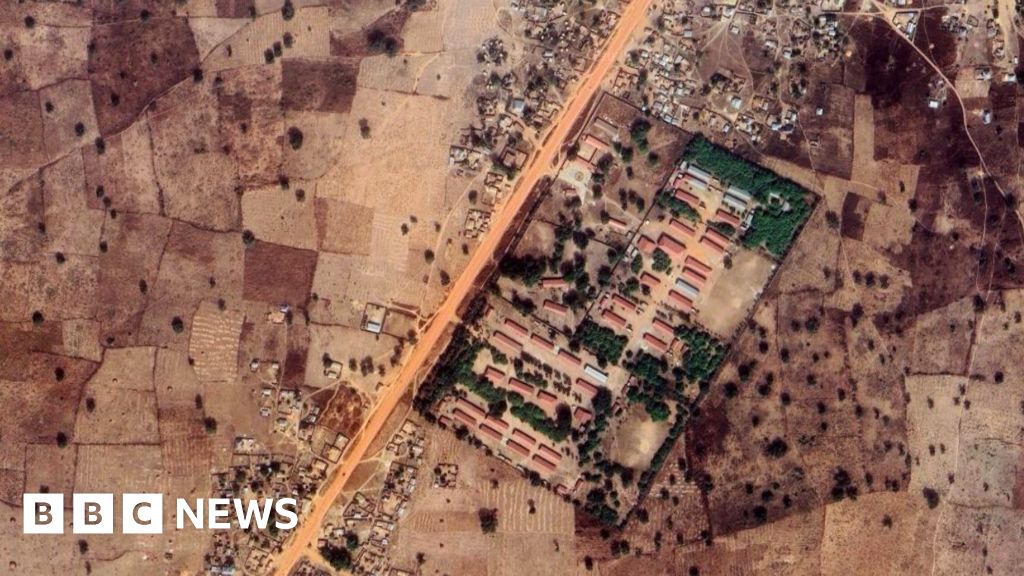
The recent surge of violence and insecurity in Nigeria has precipitated a crisis that threatens the stability of West Africa’s most populous nation. In a series of catastrophic events, armed groups—ranging from criminal gangs to jihadist factions—have intensified their operations, abducting thousands of innocents and unleashing chaos across multiple states. Amidst this upheaval, the recent abduction of students from St Mary’s School in Papiri, Niger state, underscores a disturbing trend: the deterioration of security that now engulfs Nigeria like a relentless storm. The attack, executed by armed men reportedly storming the educational facility in the early hours, left residents in fear and confusion, highlighting the reckless disregard for life and” safety,” as analysts warn of a **”nation on the brink.”**

Geopolitical Impact: Nigeria’s Crisis and the International Response

International observers, including prominent historians and security analysts, connect these domestic upheavals to the broader geopolitical consequences for Africa and the global community. From the mounting human rights concerns to the destabilization of regional economies, Nigeria’s security failures threaten to ripple far beyond its borders. Notably, US President Donald Trump has made controversial claims that Christians are being persecuted within Nigeria, fueling diplomatic tensions. His overt threat to deploy troops—asserting he would send “guns blazing”—was swiftly dismissed by the Nigerian government as a *”gross misrepresentation.”* Despite this, such declarations amplify the fragile perception of Nigeria as a failed state, where the rule of law is under siege.

Meanwhile, the United Nations and various regional blocs have expressed concern over the proliferation of violence, including the ongoing jihadist insurgency in the north-east and resource-driven conflicts between herders and farmers in the central region. Analysts warn that Nigeria’s overlapping crises—religious, ethnic, and criminal—test the limits of state authority and threaten to ignite even greater regional instability. “Without decisive action,” warns one international security expert, “Nigeria could become a failed state whose chaos spills into neighboring countries.”

How Decisions Shape Societies and Futures

The Nigerian authorities have faced immense criticism for their response—or lack thereof. Despite repeated warnings and intelligence reports, government agencies permitted the reopening of schools like St Mary’s, after ignoring directives designed to safeguard students in a time of heightened threat. This persistent neglect is symptomatic of deeper systemic failures, as local authorities scramble to contain the mounting crises without sufficient resources or coordination. Governments’ decisions to mismanage or neglect essential security measures directly influence societal resilience, shaping the lives of millions. For many young Nigerians, the long-term impact is clear: a loss of hope, disrupted education, and the risk of radicalization as chaos becomes the magnetic force drawing vulnerable youth toward insurgent factions.

Furthermore, the international community remains divided in how to address Nigeria’s multifaceted crisis. While some, like the U.S., threaten military intervention, others advocate for enhanced aid, diplomatic pressure, and internal reforms. Yet, as the violence persistently erupts, it becomes evident that the fate of Nigeria—the giant of Africa—may hinge on whether its leaders can muster the political will to confront these criminal and insurgent networks with unwavering resolve. “Decisions made today,” warns a renowned historian, “will determine whether Nigeria’s children can inherit a nation of peace, or a land awash in the blood of the innocent.”

As the world watches Nigeria teeter on the edge, history reminds us that the unfolding chapter remains unwritten—and that every choice, every response, will echo through generations. The duration of Nigeria’s tumultuous struggle is yet to be measured, but the weight of what is happening now leaves no doubt: the continent’s future, and perhaps the global order, hang in the balance as the shadows of conflict stretch across the horizon, looming ominously over a nation’s destiny yet to be determined.

Nigerian Separatist Leader Gets Life Sentence in Terrorism Case

Nigeria’s Judicial Crackdown on Separatism: A Landmark Verdict and Its Geopolitical Reverberations

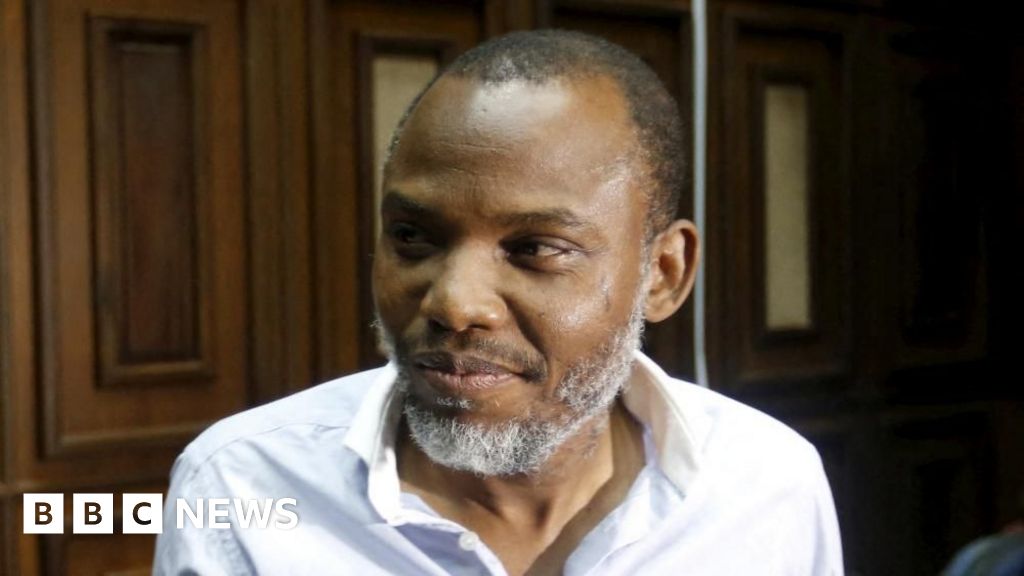
In a decisive move that highlights the enduring tensions within Nigeria, a court in Abuja has found separatist leader Nnamdi Kanu guilty of terrorism, treason, and conspiracy, sentencing him to four concurrent life sentences. This landmark ruling, delivered by Judge James Omotosho, signals a definitive stance by the Nigerian government against secessionist movements, particularly the Indigenous People of Biafra (Ipob). While the prosecution pushed for the death penalty—a reflection of the severity with which authorities are tackling threats to national sovereignty—the judge emphasized evolving perspectives on capital punishment, stating that executions are now “frowned upon.” This decision marks a potential turning point in Nigeria’s domestic policy on militancy and separatism, with wider implications for regional stability across West Africa.

The trial and conviction of Kanu also underscore the complex web of geopolitical and societal factors that underpin Nigeria’s ongoing struggle with internal divisions. Kanu, a British-Nigerian citizen who came to prominence through a London-based radio station calling for a separate Biafra state, has long been a symbol of Igbo aspirations for independence. His movement, once banned as a terrorist organization and connected to violent outbreaks, embodies deep-seated grievances rooted in historical marginalization. Analysts from the International Crisis Group and renowned historians contend that Nigeria’s government seeks to suppress non-state actors that threaten its territorial integrity, but critics argue this approach risks inflaming regional tensions further and undermining democratic dialogue. As Kanu’s supporters threaten protests, security around the court was heightened, reflecting the intelligence community’s fears of unrest, yet the muted response in southeastern Nigeria raises questions about the movement’s genuine popular support.

A Historical Shadow: The Legacy of Biafra and Africa’s Fragile Peace

  • In 1967, Igbo leaders declared the secession of Biafra, igniting a brutal civil war that resulted in the deaths of one million people. The defeat of the Biafran uprising left emotional scars and a legacy of marginalization that still influences regional politics today.
  • Since then, the drive for independence has persisted symbolically, but the Nigerian state has maintained a firm stance against secessionist groups, viewing them as threats to national unity and stability.
  • In 2022, Nigeria’s judiciary appeared divided over Kanu’s case, with an appeal court ordering that charges against him be dropped due to illegal detention abroad—an order that was subsequently overturned by the Supreme Court.

This saga exemplifies the intense struggle facing Nigeria—and the broader West African region—where calls for independence are intertwined with complex issues of ethnicity, history, and sovereignty. The verdict against Kanu not only serves as a warning to other separatist factions but also fuels the debate on how states must balance security with respecting cultural identities. International organizations and regional powers observe with caution, as Nigeria’s internal stability has repercussions for regional security, migrant flows, and economic partnerships across Africa and beyond.

As the weight of history presses heavily on the present, the case of Nnamdi Kanu stands as a stark reminder of the fragile path toward national cohesion. The echoes of the Biafran war still resonate, and the decisions made today could shape the narrative of Nigeria’s future for decades to come. The world watches as a nation at the crossroads grapples with its history—faced with the dilemma of how to forge unity from fragmentation before the tides of division are irreversible. In this unfolding drama, the true cost of unresolved grievances and the price of sovereignty remain painfully clear—history’s pen is never silent, and its questions are as urgent as ever.

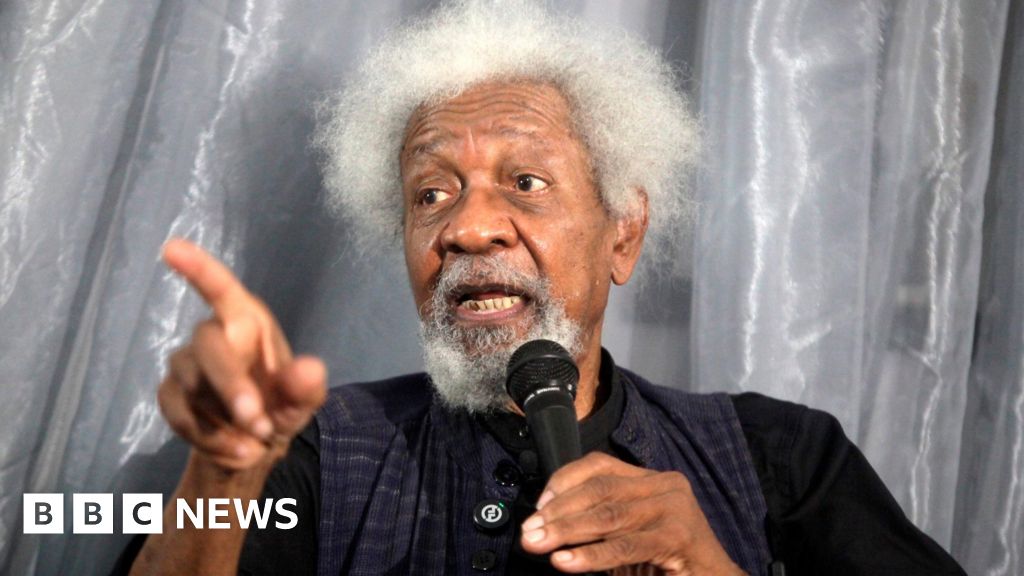
Nigerian Nobel Laureate Wole Soyinka Claims U.S. Visa Revocation

International Tensions Rise as US Implements Restrictive Visa Policies

The recent move by the United States to revoke visas of prominent figures like Nigerian Nobel laureate Wole Soyinka signals a significant shift in its diplomatic stance towards cultural and intellectual diplomacy. Soyinka, who publicly announced that the US had canceled his visa—calling it a “curious love letter from an embassy”—embodies the broader tensions over American foreign policy and its impact on global perceptions. The US State Department’s decision, which comes amidst the implementation of *restrictive visa policies* affecting many African nations, underscores a broader pattern of tightening borders that deeply affect individual exchanges and international reputation.

This policy shift is not occurring in isolation. In July, the US government announced sweeping changes to its non-immigrant visa system, especially targeting citizens of Nigeria, Cameroon, Ethiopia, and Ghana. These nations now face restrictions where visas are predominantly single-entry and valid for only three months, reversing previous allowances for longer, multiple-entry visas. Analysts argue that such policies serve as a form of diplomatic signaling—whether intended or not—casting shadows over US commitment to global engagement and collaboration. This crackdown is influencing how nations perceive the US as a hub for international exchange, academic progress, and cultural diplomacy, factors that historically bolstered America’s soft power worldwide.

How Decisions Reshape Diplomatic Norms and Societal Relations

Soyinka’s experience underscores how political decisions translate into tangible consequences for individuals and, by extension, their countries. A renowned critic of US policies, Soyinka has long been an advocate for free expression—yet now finds himself barred from the land where he once held permanent residency, which he renounced in 2016 in protest of President Donald Trump’s policies. This incident exemplifies how shifts in US immigration policy—linked directly to political rhetoric—can undermine the country’s reputation as a sanctuary for free thinkers and seekers of knowledge. By restricting visas, the US risks alienating the very voices that have historically contributed to its intellectual diversity.”

Cultural and academic exchanges are vital to fostering mutual understanding, yet recent actions threaten to erode this foundation. The revocation of Soyinka’s visa, following his critical remarks comparing Trump to Uganda’s infamous dictator Idi Amin, reflect a pattern where political dissent is increasingly viewed as disloyalty or threat. Such acts of suppression could have lasting implications, impairing efforts aimed at bridging cultural divides and advancing shared global values. International organizations and historians warn that these moves risk creating a polarized world where societies retreat behind nationalistic barriers rather than engaging in dialogue that promotes peace and cooperation.

Unfolding History and the Future of Global Competitiveness

As world leaders watch the US’s evolving policies, the geopolitical landscape is shifting dramatically. Many consider these restrictions a strategic move to assert national sovereignty, yet critics argue they threaten to diminish America’s global influence during a time when international stability is fragile. The decisions influence multiple facets: diplomatic relations, academic collaborations, and cultural exchange programs—elements integral to the fabric of global society. This era could be remembered as a turning point when the US’s commitment to openness and diversity was tested, with consequences rippling across generations. International institutions warn that if such policies persist, they may embolden other nations to follow suit, ushering in a new era of fragmented global engagement.

Ultimately, the unfolding story of visa restrictions, diplomatic retractions, and international reactions leaves humanity at a crossroads. History will judge whether these decisions serve as a temporary blip of authoritarian overreach or a signal of a fundamental shift in global power dynamics. As nations watch and react, the weight of history hangs heavy, reminding all that in the dance of geopolitics, today’s choices forge tomorrow’s legacy—an unfolding saga that history will record long after the ink has dried.

Social Media Auto Publish Powered By : XYZScripts.com