Matox News

Truth Over Trends, always!

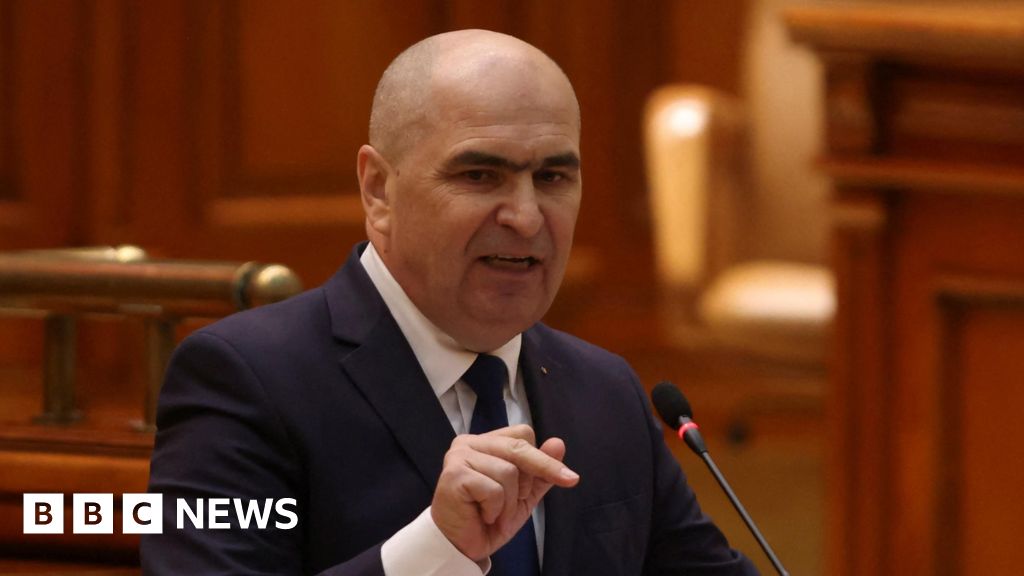
Romanian PM ousted as opposition oust government in no-confidence vote

In a startling turn of events that underscores the fragility of contemporary governance, Ilie Bolojan recently faced a decisive defeat in a parliamentary vote after the largest party within his coalition aligned itself with the far-right opposition. The outcome not only signals internal fractures within the political landscape but also signifies a potential realignment of regional power dynamics, resonating far beyond the borders of Romania.

Analysts and political commentators note that this episode highlights the increasingly volatile nature of coalition politics in Eastern Europe, where traditional alliances are now being reconfigured amid rising nationalist sentiments. Historically, such shifts have often served as precursors to wider geopolitical recalibrations, especially as nations grapple with issues of sovereignty, regional security, and economic stability. The decision by the largest coalition partner to bolster far-right forces marks a pivotal moment—potentially reorienting the nation’s approach to both domestic policies and foreign relations.

Most notably, international organizations and international analysts are closely scrutinizing the implications of these internal conflicts. The European Union, for instance, observes with cautious concern as the rise of far-right factions within member states lands at odds with the bloc’s foundational principles of democracy and pluralism. Experts warn that such political shifts could embolden similar movements across the continent, thereby weakening EU cohesion and complicating efforts to pursue unified foreign policy initiatives. Meanwhile, global institutions such as NATO are watching closely, aware that instability within key allied nations could have ripple effects on regional security architectures.

This development also carries significant geopolitical impact. The fragmentation within Romania’s political landscape exemplifies a broader trend of rising nationalism across Europe and beyond, challenging established international norms and treaties. It forces leaders and strategists to question the durability of existing alliances and the future of multilateral diplomacy. As noted by historian Dr. Maria Vasilescu, “When internal factions align with extremist groups, it catalyzes a shift in the entire geopolitical structure, where sovereignty begins to conflict with supranational commitments, rendering traditional diplomacy increasingly complex.”

As history diligently records these moments, the fate of Romania and its regional allies hangs in the balance, with each decision carrying weight well beyond national borders. The recent upheaval serves as a stark reminder that in a world where power is often measured in spheres of influence, the line between stability and chaos can be dangerously thin. The course of history remains unwritten, but the unfolding narrative suggests that the coming days may prove pivotal not only for Romania but for the global order itself—the very fabric of international relations poised on the cusp of transformation and uncertainty.
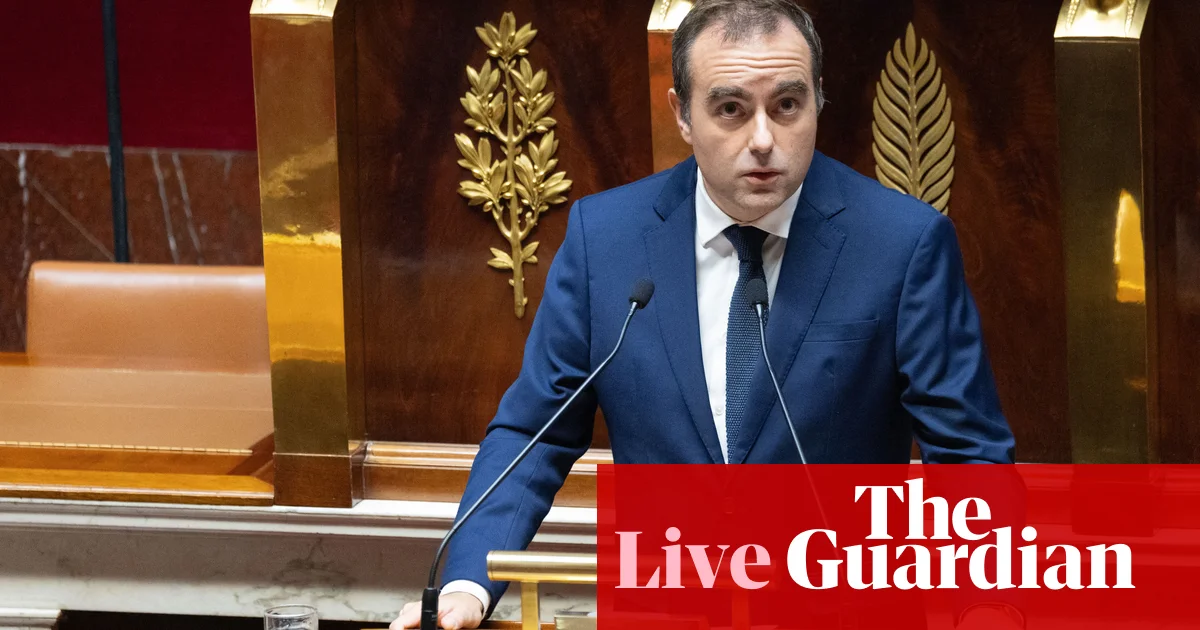

French PM survives no-confidence vote—Europe watches as new chapter begins

France’s Political Turmoil: A Look at Yesterday’s No-Confidence Votes

In a tumultuous turn for France, the government narrowly escaped a series of high-stakes no-confidence votes that threaten the stability of Emmanuel Macron’s leadership amid unprecedented legislative fragmentation. The recent votes in the French parliament highlighted a nation grappling with deep ideological divides and a strained economic landscape, with the veteran president’s political legacy hanging in the balance. The episode underscores geopolitical impact not just domestically but across Europe, as the continent watches a proud democracy teeter on the brink of upheaval.

Yesterday’s no-confidence votes—initiated by opposing factions—brought to light an intense confrontation between Macron’s centrist policies and the fragmented opposition bloc. A total of 271 MPs voted to topple the government, falling short of the required majority of 289. Notably, Sébastien Lecornu, Macron’s prime minister, faced potential resignation but survived narrowly after he proposed delaying a cornerstone pension reform that would raise France’s retirement age to 64. This move was a calculated attempt to buy time amid a crisis rooted in the nation’s perennial resistance to reforms that threaten the social safety net cherished by many citizens. Such decisions have profound societal consequences, affecting the collective well-being and shaping future policies that will decide the country’s direction.

Moreover, the political landscape remains fragile. The Socialist Party, despite refusing to support the no-confidence motions directly, is preparing to leverage the upcoming budget debate to push for a “Zucman tax,” a targeted levy on the ultra-rich, aiming to raise revenue from France’s most affluent—affecting a mere 0.01% of taxpayers. Analysts suggest that this reflects a broader strategy by the left to capitalize on Macron’s economic challenges, including a $30 billion squeeze involving tax reforms and social welfare adjustments. On the other flank, Marine Le Pen’s National Rally has struggled legally, with her legal challenges to electoral rules decisively rejected by France’s highest administrative court. With a conviction and subsequent ban on running for office, her capacity to lead the far-right in the 2027 presidential race remains uncertain—yet her rhetoric and support base continue to influence the political discourse, adding layers of complexity to France’s impending leadership choices.

The international ramifications of France’s internal crisis are manifold. As historians and international agencies warn, political instability in France ripples through the European Union, potentially undermining markets and amplifying regional geopolitical uncertainties. Since Macron’s controversial decision to dissolve parliament amidst the crisis, the country faces a constitutional „permacrisis“, marked by a dangerous stalemate over budget and policy reforms. Meanwhile, France’s neighbors—Poland, Estonia, Germany, and Denmark—have recorded incidents of breaches and drone activity, underscoring that the continent’s peace is increasingly fragile amidst rising tensions between NATO and Russia. This upheaval occurs at a critical juncture, as global powers navigate conflicts and alliances, with European stability vital for broader geopolitical balance.

History is watching, and the course of France’s future remains unpredictable. As political leaders scramble for control and societal factions clash over reforms and ideology, France’s destiny seems poised on a knife’s edge, as the weight of history presses upon the nation’s shoulders. In this unfolding saga, each parliamentary vote, legal decision, and policy debate not only shapes France’s future, but also echoes across a geopolitically sensitive world where the tides of democracy and authoritarianism collide—reminding us all that, in politics, as in history, the only certainty is uncertainty.

Social Media Auto Publish Powered By : XYZScripts.com


