
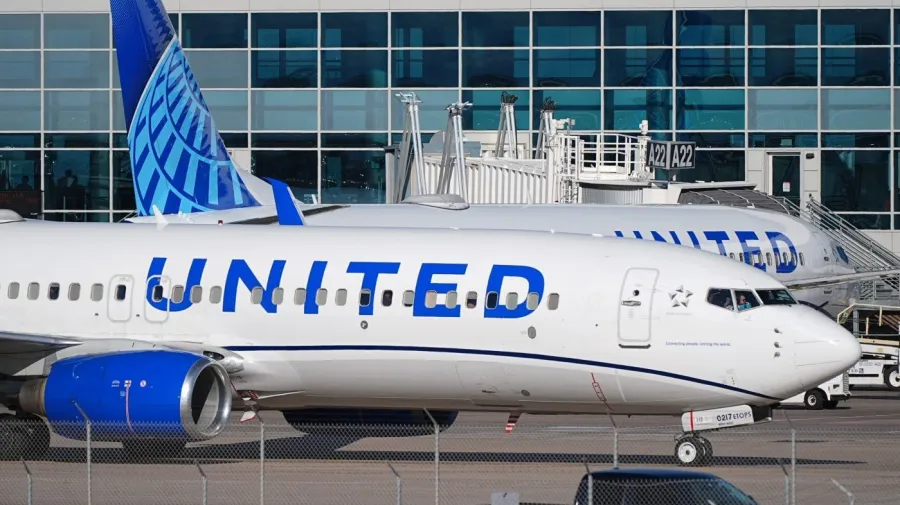

National Tides of Power: The Incident on the New Jersey Turnpike Sparks Broader Debate
The recent incident involving United Airlines Flight 169, which struck a light pole on the New Jersey Turnpike, has once again thrust the fragile interplay between regulatory oversight and corporate accountability into the national spotlight. The National Transportation Safety Board (NTSB), tasked with probing this unsettling event, underscores how critical decision-making at the intersection of private enterprise and government oversight truly is. As the investigation unfolds, it reveals a larger narrative — one where the power struggle between regulatory bodies, industry stakeholders, and political interests determines the safety and sovereignty of the traveling public.
This episode is more than an accident; it is emblematic of ongoing conflicts over control and responsibility. Airlines operate within a complex lattice of federal regulations and safety protocols, often under the influence of political pressures favoring deregulation and corporate freedom. President Biden’s administration has emphasized the importance of safety reforms, promising increased oversight, yet critics argue that decades of deregulation have eroded safety standards to prioritize profit margins. From a historical perspective, this tension echoes early 20th-century debates about government control versus private enterprise, reminiscent of the Progressive Era’s reforms and their subsequent rollback. Today, the stakes are higher, for decisions made in this arena directly shape the safety and rights of everyday travelers.
The incident’s implications extend into the realm of power dynamics where corporate interests and public safety often collide. The airline industry, heavily influenced by lobbying efforts, has maintained a delicate balance — or perhaps a fragile dominance — over regulatory policies. As the NTSB’s investigation progresses, it raises questions about accountability. Was this a failure of oversight, or simply an unavoidable accident? How decisions by corporate executives and regulatory agencies influence safety standards remains at the heart of the debate. More critically, these events serve as a testing ground for the resilience of our constitutional checks and balances — do agencies like the NTSB wield enough authority, or are they hamstrung by political and industry interests? Experts in constitutional law warn that the outcome of these investigations could test legal boundaries, determining whether regulatory agencies can truly hold powerful entities accountable in pursuit of the public good.
At the core, this incident underscores a broader truth: politics is the theater where the future of individual liberty, safety, and national sovereignty is authored. The decisions — whether enhancing oversight or succumbing to corporate influence — will ultimately decide the shape of society’s fundamental rights: safety, mobility, and trust. As history and political theory reveal, power struggles are never static; they evolve through crises, victories, and setbacks, mirroring the ongoing contest for dominance between state control and private enterprise. Here, in the shadow of this incident, lies a critical question for citizens and policymakers alike: in the choreography of power, who truly holds the steering wheel? The answer, as history has shown, may very well determine whether society advances in safety and sovereignty or falters into chaos — for in politics, fate is written not with ink, but through the deliberate actions of those who dare to shape the future.






