
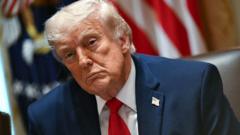

President Donald Trump has convened a critical meeting with his advisors to make a “final determination” on a potential framework deal with Iran. The high-stakes discussions, held in the White House’s Situation Room, follow confirmations from US officials that a preliminary agreement has been reached between the two nations.
The proposed understanding, described as a memorandum, aims to extend a current ceasefire for 60 days and initiate broader talks concerning Iran’s controversial nuclear program. However, the path forward remains contingent on President Trump’s approval and the consent of Iran’s leadership, with significant conditions laid out by the American side.
Key Demands for Tehran’s Compliance
President Trump articulated clear, non-negotiable terms that Iran must accept for any deal to proceed. Foremost among these is an unequivocal commitment to abandon any pursuit of nuclear weaponry. “Iran must agree to never have a nuclear weapon or bomb,” the President stated, underscoring a fundamental pillar of US national security policy.
Beyond nuclear proliferation, the President also addressed the critical issue of maritime security and global commerce. He demanded that the Strait of Hormuz be immediately reopened for “unrestricted shipping traffic, in both directions,” and that any existing mines within the vital waterway be “destroyed.” This firm stance highlights the administration’s commitment to protecting international trade routes and upholding maritime law, crucial for the global free market.
Framework Agreement Takes Shape
Reports from US officials, as cited by News Desk, indicate that a framework for a deal has indeed been established. This understanding, while not a final accord, represents a significant step in ongoing efforts to de-escalate tensions and address long-standing concerns regarding Iran’s regional activities. The proposed 60-day ceasefire extension would provide a window for more comprehensive negotiations on the future trajectory of Iran’s nuclear capabilities.
Despite these developments, Iran has publicly maintained that it is not currently negotiating its nuclear program, a point of divergence that underscores the complexities and challenges inherent in these diplomatic efforts. The international community watches closely as both sides weigh the strategic implications of a potential agreement.
Iran must agree to never have a nuclear weapon or bomb, and the Strait of Hormuz must be reopened for unrestricted shipping.
Global Implications and Future Steps
The decision facing President Trump holds immense weight for regional stability and global security. A resolution to the contentious nuclear issue, coupled with guarantees for free passage through critical chokepoints like the Strait of Hormuz, could redefine geopolitical dynamics in the Middle East. Conversely, a failure to secure these concessions could lead to renewed tensions and uncertainty.
As the White House prepares to announce its final determination, the focus remains on ensuring a verifiable and lasting agreement that safeguards international interests and promotes a more ordered and secure world. The outcome will undoubtedly shape future diplomatic engagements and the broader foreign policy landscape.






