Matox News

Truth Over Trends, always!

Jensen Huang Signals Nvidia’s Shift Away from OpenAI and Anthropic — What’s Really Going on?

Tech Industry Shakeup: Nvidia’s Strategic Investments and the Geopolitical Tensions Reshaping AI

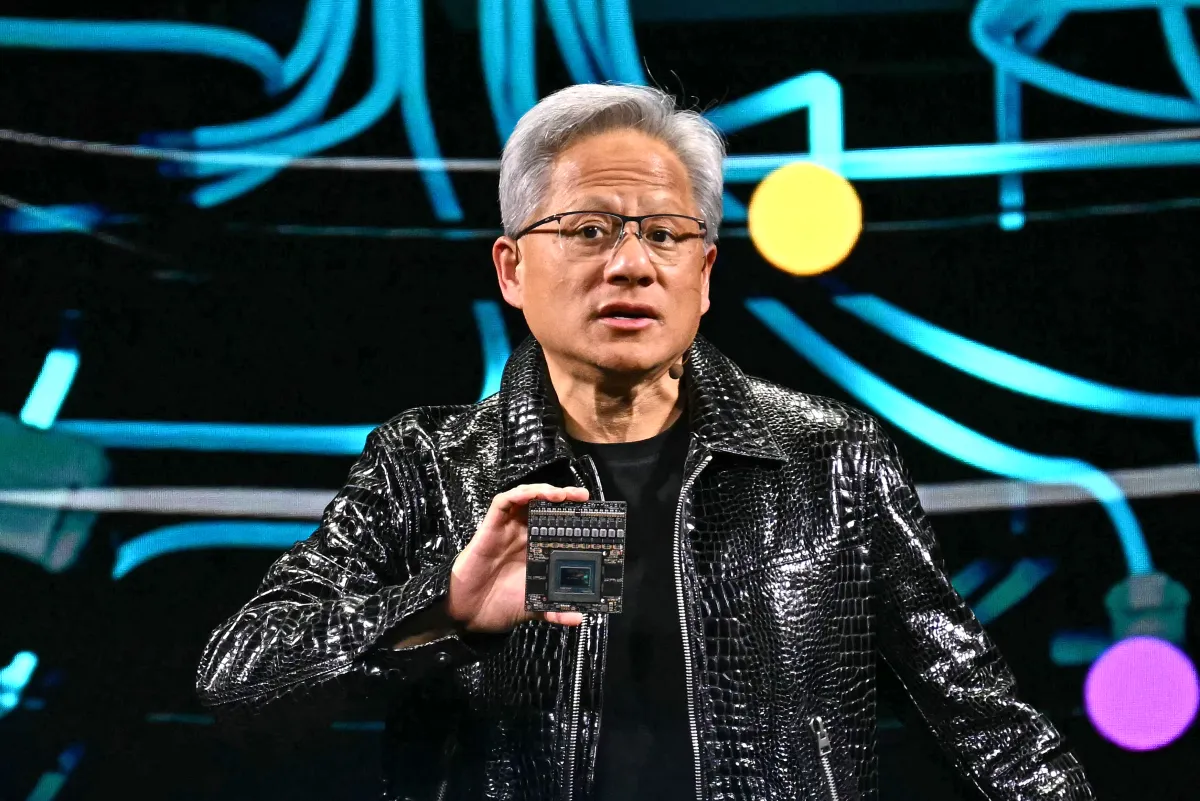
In a landscape where innovation and disruption define the pace of progress, Nvidia remains a dominant force, yet recent developments expose the complex chess game shaping the future of artificial intelligence (AI). The company’s muted commentary on its latest strategic moves, coupled with a shift in investment scales, signals a nuanced recalibration. As Huang, Nvidia’s CEO, emphasized on the company’s Q4 earnings call, their investments are primarily aimed at “expanding and deepening” their ecosystem reach. However, the actual scale of these investments, particularly in OpenAI and Anthropic, reveals a story of caution and reevaluation amid industry turbulence.

Initially, Nvidia announced a lofty pledge to invest up to $100 billion in OpenAI last September—a move that drew skepticism from industry experts like MIT Sloan professor Michael Cusumano. The plan was described as “a kind of a wash,” highlighting the circular nature of AI investments where alliances and stakes tend to feed into each other. Recently, Nvidia finalized a significantly reduced investment—approximately $30 billion—less than half of their original commitment. This contraction underscores a market wary of overextensions amid signs of a possible bubble, where speculative investments threaten to distort valuation metrics. The changing scale points toward a strategic pragmatism as Nvidia recalibrates its AI ambitions, understanding that different industry shifts could impact both its market dominance and geopolitical positioning.

Adding another layer to this dynamic is Nvidia’s relationship with Anthropic. Despite recent investments, tensions have surfaced, notably with Anthropic CEO Dario Amodei comparing the U.S. chip industry’s export controls to “selling nuclear weapons to North Korea,” highlighting the geopolitical fragility endemic to AI supply chains. The Trump administration’s decision to blackist Anthropic—barring federal agencies and defense entities from deploying its models—illustrates the dangerous intersection of AI innovation with national security concerns. Meanwhile, OpenAI’s swift pivot to contract with the Pentagon—marked by a strategic, yet contentious, military technology deal—further accentuates the industry’s shifting alliances. This divergence in trajectories underscores a broader trend: AI firms are increasingly caught at the crossroads of innovation and geopolitics, with their business models and strategic partnerships under intense scrutiny.

Implications for the Industry: Innovation, Market Disruption, and Policy Challenges

  • Innovation and Disruption: Nvidia’s redefining of its AI investments exemplifies how disruptive innovations can outpace traditional strategic planning, unveiling new opportunities for startups and established players alike. As AI models become more advanced, the pressure to balance innovation with geopolitical prudence intensifies, pushing firms to adopt more flexible, diversified approaches.
  • Market Shifts and Industry Realignment: The stark contrast between Nvidia’s cautious scaling and the aggressive Pentagon deal underscores a tectonic shift in market alliances. Firms that align with government and defense sectors may unlock enhanced capabilities and funding, but at the risk of alienating other markets or inviting regulatory backlash.
  • Business and Geopolitical Implications: Major corporations need to prepare for a future where global supply chains, export controls, and international diplomacy directly influence AI development. The industry’s trajectory may well depend on policy decisions increasingly driven by national interests, which could either stifle innovation or propel it into new geopolitical realms.

Analysts from Gartner and institutions like MIT warn that industry leaders must navigate these choppy waters with agility—balancing cutting-edge technological breakthroughs against emerging regulatory and geopolitical headwinds. The move by Nvidia, and industry shifts like the Pentagon-OpenAI deals, signal that the future of AI is not just about technological supremacy, but also about strategic positioning within a rapidly evolving global framework. With new alliances forming and old ones fracturing, the industry faces an inflection point where urgency and anticipation are paramount.

As we look ahead, the key question remains: who will shape AI’s next chapter—those who innovate at the edge or those who control the geopolitical levers? In this high-stakes game, the winners will be those capable of maintaining technological leadership while navigating the complex matrix of international policy and market disruption. The clock is ticking, and the future of AI—along with its vast implications—hangs in the balance, calling for strategic foresight and unwavering resolve.


Intel gears up to disrupt GPU market from Nvidia’s grip

Intel’s Strategic Shift: Entering the GPU Arena to Challenge Nvidia’s Dominance

Despite ongoing efforts to streamline its core operations, Intel has announced a bold initiative to develop a new line of graphics processing units (GPUs), signaling a strategic disruption in an industry long dominated by Nvidia. With the leadership of Kevork Kechichian, an industry veteran from Intel’s data center group, the company is aiming to leverage its vast manufacturing capabilities to carve out a significant share in the rapidly evolving AI and gaming markets. This move marks a crucial pivot toward innovation and diversification that could reshape the competitive landscape, forcing incumbents like Nvidia to revisit their market strategies.

The company’s efforts have attracted attention from industry analysts and tech insiders, noting that Intel’s expansion into GPU development is not just a technological upgrade, but a calculated disruption aimed at challenging Nvidia’s market leader position. The hiring of Eric Demmers, formerly a senior VP at Qualcomm with over 13 years in engineering, underscores Intel’s commitment to building a high-caliber team capable of innovating at the chip level. As the project is in its early stages, Intel intends to align its development with customer demands and industry needs, signaling a pragmatic approach rooted in both technological prowess and strategic market positioning.

This move by Intel is more than just a product development milestone; it is a response to industry-wide shifts towards AI acceleration, cloud computing, and high-performance gaming—areas where GPUs are pivotal. While Nvidia’s GPUs have revolutionized AI and machine learning, with their advanced AI systems and market Command, recent market analyses from Gartner illustrate a fragile balance as Nvidia begins to face increased competition.

  • Intel’s entry could intensify market competition
  • Potential to lower prices and accelerate technological innovation
  • Possible reshuffling of market share among semiconductor giants

Historically, Intel has focused primarily on CPUs, but as industry disruptions accelerate, merging CPU and GPU innovations could unlock new business models and revenue streams. Disruptive technologies like integrated processing units and advanced chip architectures are reshaping industry standards—experts from MIT and other leading institutions predict that within the next five years, the semiconductor industry will see unprecedented levels of convergence and innovation. This shift presents both a challenge and an opportunity for Intel—a chance to disrupt established players and redefine the semiconductor landscape.

As the industry stands on the cusp of this technological evolution, the urgency for firms to innovate is paramount. With AI chips and high-performance graphics becoming critical to future tech ecosystems, Intel’s move signals the beginning of a new battleground—one where agility, innovation, and strategic disruption will determine supremacy. The upcoming TechCrunch event in Boston, scheduled for June 2026, will be a pivotal platform to observe Intel’s latest advancements and assess whether its gamble will reshape the future of computing. The race is on, and between the giants, only the most innovative will survive—and thrive—in this fierce new era.

Nvidia’s AI GPUs fly off the shelves as data center spending surges $10B in Q1

Nvidia Sets New Standard in AI and Data Center Markets with Record-Breaking Q3 2026 Earnings

Nvidia has once again disrupted the technology landscape, signaling a new era of AI dominance and industry transformation. The company’s Q3 2026 earnings report shattered previous records, with revenues reaching a staggering $57 billion—a historical high that highlights the relentless growth of AI infrastructure and digital economy sectors. The firm’s profit margins are equally impressive, clocking roughly $4,000 in pure profit per second. Central to this surge is a $10 billion growth in the data center segment, which alone amassed an unprecedented $51.2 billion—an increase of 66% compared to the same period last year. This explosive figure positions Nvidia as a clear bellwether for the so-called ‘AI bubble’, with industry analysts scrutinizing its trajectory amid widespread hype.

The market implications of this surge are profound, especially considering industry-wide skepticism about sustainability. Despite warnings of potential market correction from institutions such as Gartner and various industry analysts, Nvidia’s Q4 2026 outlook anticipates a revenue of $65 billion—an $8 billion increase over the previous quarter. CEO Jensen Huang emphasizes that Blackwell Ultra chips are now leading every segment, with demand at an all-time high. “Blackwell sales are off the charts, and cloud GPUs are sold out,” Huang reports, signaling an unprecedented supply chain squeeze driven by hyperactive enterprise adoption of AI solutions.

The growth isn’t limited to the data center market alone. Nvidia’s gaming division also saw a 30% increase in revenue year-over-year, demonstrating that consumer markets remain integral to its overall ecosystem. The launch of Blackwell gaming chips—despite some mixed reviews of the RTX 50-series GPUs earlier this year—has found its footing again, driven by a rising global appetite for high-performance gaming experiences. This dual success in both enterprise and consumer segments exemplifies Nvidia’s strategic positioning as a disruptor across the entire AI ecosystem.

The innovations Nvidia is advancing are setting a new standard for the industry, pushing rivals and startups alike to innovate faster or risk obsolescence. Experts at MIT and industry veterans like Elon Musk and Peter Thiel highlight that such explosive growth could catalyze a wave of disruption across traditional sectors—including cloud computing, automotive, and robotics. As the technological frontier shifts rapidly, businesses must adapt swiftly to leverage these advancements or face being left behind. Nvidia’s trajectory suggests we are on the cusp of a fundamental transformation, demanding urgent strategic realignment from industry leaders. The future belongs to those who recognize that in this era of AI-driven disruption, timing and innovation are everything.

Social Media Auto Publish Powered By : XYZScripts.com



