
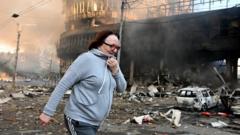

Kyiv and surrounding regions bore the brunt of intense overnight strikes, causing widespread damage to civilian infrastructure and raising concerns over the escalating conflict.
A devastating wave of Russian missile strikes has once again shattered the fragile peace across Ukraine, claiming at least four lives and injuring scores of civilians. The large-scale assault, reported by the News Desk, saw Kyiv as a primary target, alongside other vital urban centers. Crucially, Moscow has confirmed the deployment of its advanced ‘Oreshnik’ hypersonic missile, marking a significant escalation in the ongoing conflict.
A New Chapter in Missile Warfare: The Oreshnik Hypersonic
The Russian Ministry of Defence explicitly stated that the ‘Oreshnik’ hypersonic missile was among the munitions used in these latest strikes. This advanced weapon, reportedly capable of traveling at speeds exceeding ten times the speed of sound, represents a formidable challenge to conventional air defense systems. Its deployment underscores a concerning technological escalation in the conflict, potentially altering the dynamics of future engagements and raising significant questions about the effectiveness of current defensive measures against such sophisticated threats.
Civilian Casualties and Extensive Damage
The human toll of the overnight bombardment is tragic. Ukrainian President Volodymyr Zelensky confirmed that while Kyiv was the primary focus, other areas across the nation were also severely impacted. Reports indicate approximately 100 people sustained injuries, with at least four fatalities recorded in the capital and its broader region. The scale of destruction to civilian infrastructure is alarming, highlighting the indiscriminate nature of such large-scale attacks:
- Dozens of residential buildings sustained direct hits or shrapnel damage.
- A local school, an opera house, and a museum were among the cultural and educational institutions significantly damaged.
- Explosions were heard throughout the night, leaving many communities in distress and disarray.
Reciprocal Claims and Denials
In a statement, Russia’s defence ministry characterized the strikes as a direct response to what it termed Ukraine’s ‘attacks on civilian infrastructure.’ This justification is vehemently rejected by Ukraine’s military, which consistently denies targeting non-combatants and asserts its operations adhere strictly to military targets. The persistent cycle of accusation and retaliation underscores the profound breakdown of trust and adherence to international humanitarian law in the region, making any path to de-escalation increasingly arduous.
Earlier on Monday, reports from the Interfax news agency, citing local authorities, indicated damage to energy infrastructure in Russia’s Belgorod region, bordering Ukraine. While these incidents contribute to the broader narrative of escalating cross-border hostilities, they do not diminish the gravity of the large-scale assault on Ukrainian cities and civilian populations, which saw residential areas and public facilities directly impacted.
The deployment of hypersonic missiles represents a formidable challenge to conventional air defense systems, marking a concerning technological escalation.
The recent Russian attack on Ukraine serves as a stark reminder of the devastating human cost and strategic implications of modern warfare. As the conflict deepens, the international community continues to grapple with the challenge of de-escalation and ensuring the protection of civilian lives. The use of advanced weaponry like hypersonic missiles not only intensifies the immediate threat but also complicates efforts towards a lasting and just peace in the region. Upholding international order remains paramount.






