
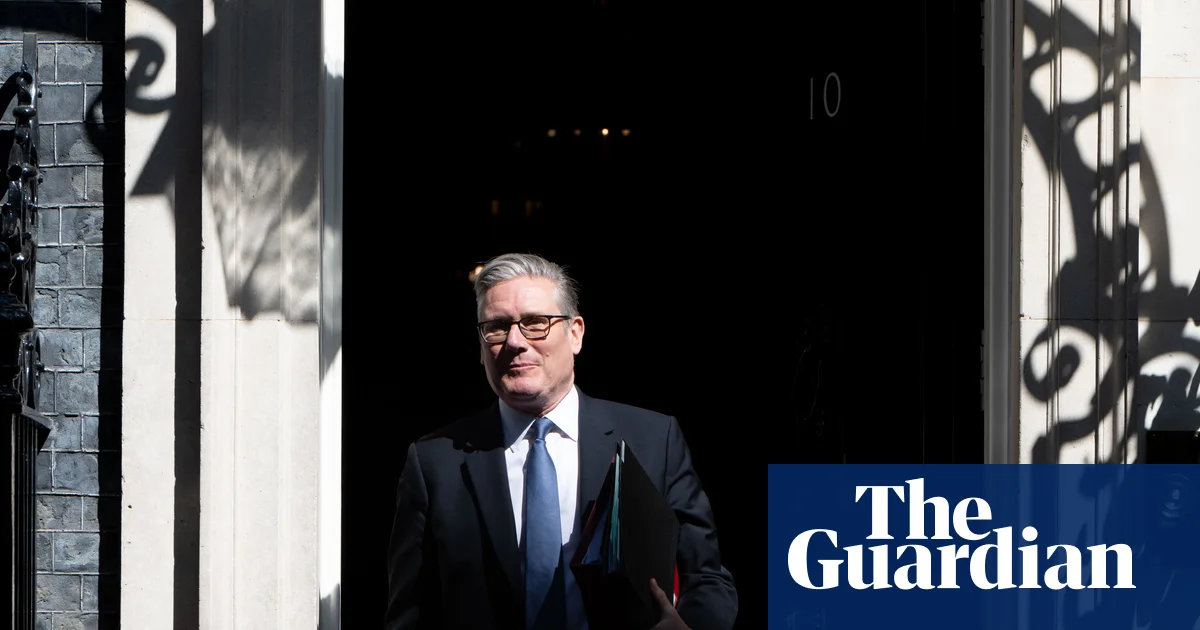

Labour Party in Flux: Leadership Challenges and the Fight for Control
In a climate of mounting political volatility, the Labour Party finds itself at a crossroads, teetering on the brink of internal chaos sparked by recent electoral setbacks. The aftermath of disastrous local poll results has ignited a power struggle within the party, with some MPs questioning the leadership of Keir Starmer. Despite official declarations of stability, cabinet ministers have reportedly warned rebellious backbenchers that any move to remove Starmer may unleash a wave of destabilization that could irrevocably fracture the party’s unity. This internal tug-of-war underscores a fundamental truth of modern politics: leadership often becomes a battleground where ideological loyalties clash with pragmatic power, shaping the direction of national discourse.
The question remains: how will the internal power dynamics within Labour influence the wider political landscape? Historically, party leadership crises serve as a reflection of the broader societal tensions. As political theorist Daniel Bell once argued, parties are inherently *representative institutions*, yet their internal struggles often reveal underlying conflicts of power, ideology, and public trust. In this context, the possibility of Starmer’s ousting unveils a deeper struggle over the party’s future orientation—whether it will continue along a centrist path or shift toward a more radical, grassroots-driven agenda. The external pressures of an electorate disillusioned by economic instability and insecure social cohesion only intensify this contest of wills, transforming party politics into a microcosm of national identity and destiny.
Indeed, the internal conflict highlights the delicate balance between conservative institutionalism and progressive reforms. The Labour leadership’s current predicament echoes early 20th-century debates over party loyalty versus reformism, reminiscent of ideological struggles faced by Labour pioneers like Ramsay MacDonald and Nye Bevan. Today, decision-makers are caught in the vise of public disenchantment and internal discord. Any move to replace Starmer risks spawning chaos, akin to the historical upheavals that have long defined the nature of party politics—a reminder that elections are not just about voter sentiment but also about who controls the narrative and, ultimately, the power to shape policy and society.
As the battle lines are drawn, it becomes clear that the stakes extend beyond mere leadership. The outcome will inevitably influence how the people are governed, how rulings are made, and which visions of the nation are prioritized. Power struggles like this, between entrenched elites and reformists, serve as a crucible for the future of democracy itself. The quote from constitutional experts reminds us that parties are the vessels of ideological contestation, where the fate of democracy hinges on choices made behind closed doors and the willingness, or unwillingness, to accept the democratic will. In this high-stakes arena, decision-making is no longer just about winning votes but about defining the very fabric of the nation’s future—where political destiny is written in the crucible of conflict.






