
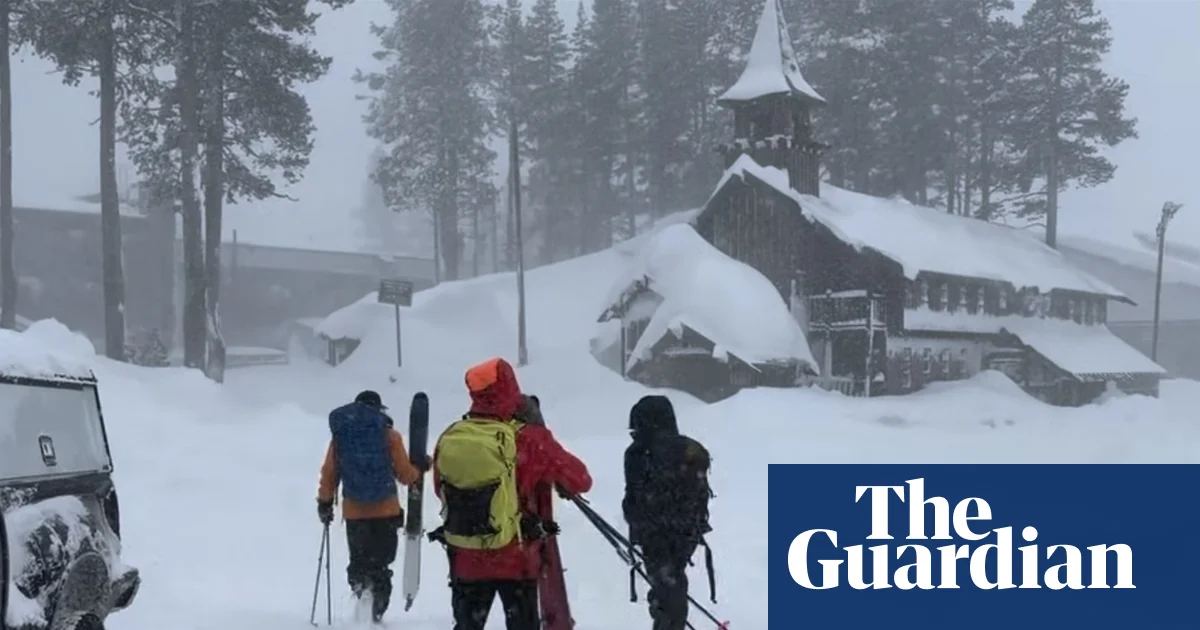

The tragic accident near Lake Tahoe, which claimed the lives of at least eight individuals in a devastating avalanche, underscores the profound influence of technological innovation in the realm of crisis management, especially amid the increasingly unpredictable challenge of natural disasters. The incident involved a group of 15 skiers, including six instructors and nine clients, with six survivors rescued thanks to the pioneering emergency SOS feature embedded within Apple’s devices. This cutting-edge technology, introduced in 2022, exemplifies how private technological advancements are becoming instrumental tools in the broader context of international safety and security cooperation.
According to reports, the survivors relied on the iPhone’s satellite-based emergency communication to alert authorities, enabling rescue efforts in a remote, rugged environment where traditional cell towers are nonexistent. Sheriff Shannan Moon confirmed that emergency teams accessed vital information through conversations facilitated by the feature, leading to the rescue of six individuals and the discovery of multiple bodies. Meanwhile, the California Office of Emergency Services engaged in extensive, hours-long coordination with rescuers and guides via personal locator beacons capable of satellite texting, illustrating a shift towards a more technologically interconnected era of crisis response. This incident demonstrates an important “turning point” in crisis management, where private corporations and government agencies are increasingly intertwined in safeguarding lives during natural disasters.
From a geopolitical impact perspective, the incident and technological responses highlight a rapidly evolving landscape where nations are compelled to adapt to the geopolitical consequences of technological sovereignty and innovation. As global institutions and governments rely more deeply on private corporations’ advances, such as Apple’s satellite capabilities, the independence and security of national emergency infrastructure are indirectly affected. Experts warn that reliance on private tech firms for critical situations raises questions about sovereignty, data control, and the potential for international tensions, especially if these technologies are manipulated or fail during crises. Analysts like Dr. Maria Lopez, a security scholar at the Global Policy Institute, note that “the integration of commercial satellite tech into state-level rescue operations signifies a new form of public-private partnership, reshaping the realm of international crisis response and security.”
In the geopolitical theater, where nations contest control over technology and airspace, these incidents serve as a stark reminder that the boundary line between private innovation and national security is becoming increasingly blurred. As international organizations scrutinize the role of private corporations in critical communications, the implications of a single tech company wielding such influence become more apparent. This moment, poised at the intersection of natural peril and technological power, reminds humanity that the march of history continues—a relentless pursuit of survival shaped by the decisions of today, where the nation-state’s sovereignty is no longer the sole arbiter of security, but part of a broader, interconnected tapestry spanning corporate interests, technological control, and global stability.





