
Matox News

Truth Over Trends, always!

Greenlandic Families Push Back as Parenting Tests Banned, Fight to Reclaim Their Kids

Greenlandic Families Fight for Justice Amid Danish Child Welfare Policies

In an unfolding chapter of international custody and cultural conflict, families from Greenland are challenging decades-long practices by the Danish government that have led to the removal of their children. Tied to a complex history of colonialism, these legal and social interventions have sparked protests, emotional trauma, and ongoing legal battles, exposing a deep-rooted crisis of cultural identity and human rights. As Greenland strives for recognition of its sovereignty and cultural integrity, the case of these families underscores how international decisions can reverberate across societal fabric—shaping laws, perceptions, and lives in powerful, often tragic ways.

Central to this controversy are the so-called FKUs—parenting ability assessments that, since their inception, have been used by Danish social services in complex welfare cases. Critics argue that these evaluations are heavily biased, culturally insensitive, and lack scientific validity—particularly when applied to Greenlandic families. Analysts and human rights advocates warn that these tests, administered in Danish and tailored around Danish norms, distort true parenting capacity, threatening to erase traditional Greenlandic values and foster a cycle of loss and despair. For many families, like Keira and Johanne, these assessments have resulted in the heartbreaking removal of their children immediately after birth or during early childhood, often based on superficial tests that critics say cannot reliably predict parental success.

The Human Cost and Cultural Clash

The stories of Keira and Johanne are emblematic of the personal tragedy woven into this larger international issue. Keira, a Greenlandic mother, recounts her agony of having only two hours with her newborn, Zammi, before social services took her away—an experience marked by uncontrollable sobbing and whispers of regret. Despite ongoing visits, she remains separated from her daughter, battling court decisions rooted in assessments that questioned her parental abilities based on questions about Mother Teresa or the speed of sunlight. Similarly, Johanne’s premature son was taken at birth, despite a brief period of contact, and subsequently adopted—the loss lingering painfully for both parents. Such cases illustrate how administrative decisions intertwined with cultural insensitivity can fracture families permanently.

While the Danish government announced a review of hundreds of such cases in the wake of mounting criticism and protests—some in Nuuk, Greenland’s capital—>the process remains slow and uncertain. As of now, only a fraction of cases have been reevaluated, with no children returned. Critics, including social workers and psychologists, contend these assessments are often based on outdated or culturally biased criteria. The recent ban on FKUs in Greenland was a significant step, yet advocates argue that systemic reform is necessary to prevent future tragedies and uphold the rights of indigenous communities.

Implications for Global Law and Sovereignty

The dilemma extends beyond individual families; it highlights the broader geopolitical impact of colonial legacies and sovereignty. Greenland, a territory with a rich indigenous culture and increasing strategic importance due to its natural resources, finds itself at the crossroads of international governance and cultural preservation. The families’ struggles reflect a wider debate: should colonial-era social policies continue to dominate or give way to indigenous-led justice? International organizations like the United Nations and European Court of Human Rights face mounting pressure to intervene, signaling a global shift towards recognizing indigenous rights and cultural autonomy in social policies.

As historians and analysts observe, this murky intersection of law, culture, and geopolitics is a *turning point*—a test of how modern nations reconcile their histories with contemporary human rights standards. For Greenlandic families, especially, the fight is about more than custody; it is about preserving identity and dignity amid an evolving global landscape. Time may echo with the resolutions of courtrooms and legislative chambers, but the weight of history continues to cast shadows. The ongoing struggle for the return of their children serves as a stark reminder: decisions made in distant boardrooms and courtrooms today will, in time, define the legacy of justice, cultural resilience, and sovereignty for generations to come. The story is still unfolding, and only history can tell whether humanity advances towards true equality or remains prisoner to its colonial past.
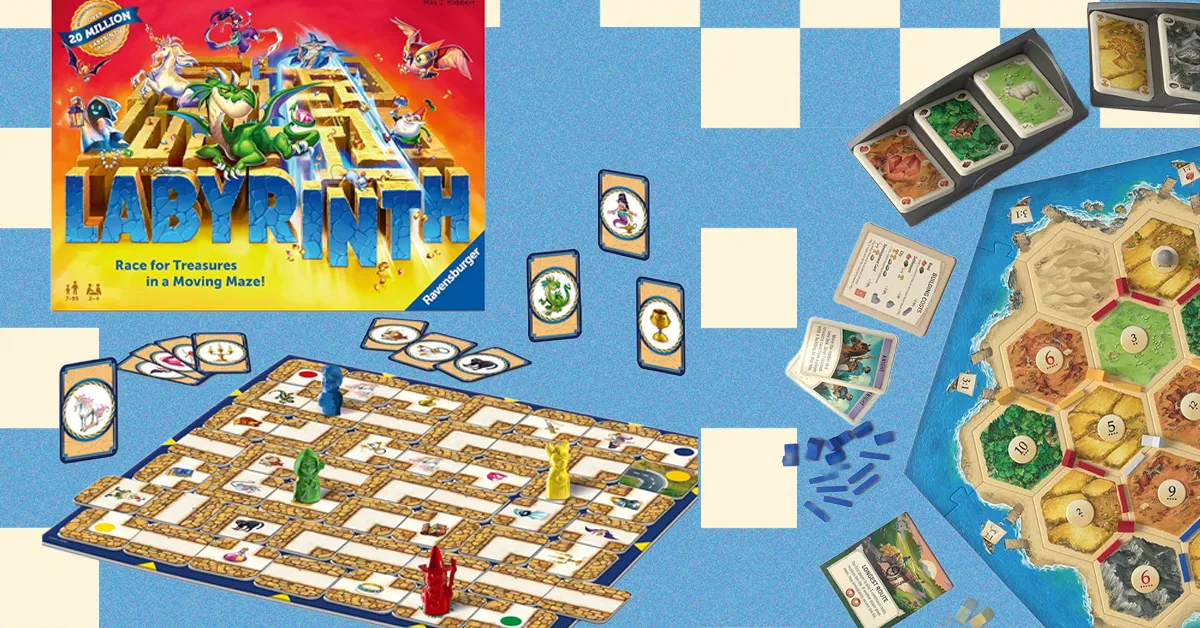
Top Family Board Games of 2025: Catan, Ticket to Ride, Codenames & More

Emerging Trends in Digital Gaming Signal Disturbance in Traditional Markets

In a landscape marked by relentless innovation, the digital gaming explosion exemplifies pioneering disruption capable of transforming entire industries. This wave is driven by advancements in augmented reality, artificial intelligence, and new interactive platforms that have begun to redefine how businesses conceptualize entertainment, engagement, and revenue models. A prime example is the emergence of warehouse-like, multiplayer, and cooperative game formats that lean heavily on digital interconnectivity, challenging traditional paradigms of family entertainment and social interaction.

Leading firms like Exploding Kittens and Wired are capitalizing on these innovations by shifting from conventional board games to digital-integrated experiences. Notably, these companies leverage AI-assisted game design, real-time analytics, and crowdsourced content to craft immersive, fast-paced, and highly social experiences that appeal to the tech-savvy youth demographic. Furthermore, the industry is witnessing a notable pivot towards virtualized, multiplayer setups that transcend geographical limitations, heralding a new era where physical game assets evolve into digitally enriched entertainment ecosystems. This shift is also reinforced by data from Gartner, which predicts that by 2025, the majority of family and social gaming will be rooted in interactive, digitally networked platforms, foreshadowing a steep decline in traditional physical game sales and a rise in hyper-disrupted content delivery channels.

One of the most disruptive elements lies in the business model innovation facilitated by these technologies. Subscription-based access, microtransactions for in-game assets, and on-demand gaming experiences are fundamentally altering the revenue stream, much like the monetization strategies seen in AI-powered cloud services and streaming giants. Companies such as Ultra PRO and others are now offering digital packages that integrate seamlessly with social media, further accelerating the shift towards a gig economy of gaming content, where user-generated content feeds into monetization pipelines. This transition into a **digital economy** is a wake-up call for legacy board game manufacturers and retail giants, many of whom are ill-prepared for the scale of disruption.

With industry heavyweights like MIT and analysts such as Peter Thiel warning about the stagnation of non-digital entertainment sectors, it becomes clear that the race for technological dominance is intensifying across gaming, social interaction, and consumer engagement. Those who fail to adapt risk being left behind in an era where innovation in AI and augmented reality revolutionizes consumer expectations overnight. As the landscape evolves with new formats—from visually stimulating tile-building games to fast-paced guessing competitions—the urgency for incumbent businesses to innovate is more critical than ever. Leaders in tech and entertainment must collaborate, harness data-driven insights, and accelerate the deployment of next-generation gaming infrastructures—failing which their market share is destined to erode significantly. Recognizing this seismic shift, stakeholders need to deploy aggressive R&D strategies and prioritize open platforms that foster community-driven content and cross-platform integration.

Future Outlook

Looking forward, the persistent acceleration of digital disruption demands proactive adaptation from market players. The advent of AI-integrated game design, virtual reality, and advanced analytics promises to unlock unprecedented levels of engagement and profitability. Companies that view this as an opportunity—rather than a threat—will dominate the new digital gaming frontier. The window to capitalize on these innovations is closing rapidly; industry leaders must act decisively to secure a competitive edge, or risk becoming obsolete in the blink of an eye. The future belongs to those who can orchestrate disruptive technologies at scale, merging innovation with business agility. The question is no longer if but when and how the next wave of digital entertainment will redefine the marketplace—those who recognize the urgency now will shape its future trajectory.

Expert warns social media parenting tips mislead youth and harm society

Addressing the Modern Parenting Crisis: Misinformation, Community Support, and Society’s Future

In an era dominated by social media, a concerning trend emerges where parents turn increasingly to TikTok influencers and Instagram gurus for guidance on critical issues like childhood vaccination, potty training, and behavioral management. According to Bridget Phillipson, the UK’s Education Secretary, this shift exposes families to a landscape rife with misleading and low-quality information, which can have devastating effects on the health and well-being of children, and by extension, the fabric of society itself.

Recent research commissioned by the government underscores the depth of this problem: approximately 33% of parents with young children now report being “heavily reliant” on social media for parenting advice, with nearly 70% feeling overwhelmed by the sheer volume of conflicting information. These figures signal a societal breakdown in trusted sources and a failure to provide accessible, evidence-based guidance. Such confusion not only endangers children’s health—highlighted by the fact that one in five children in England is now starting primary school unprotected against serious infectious diseases like measles and mumps—but also creates emotional and moral strife within families facing impossible choices in uncertain times.

The Rise of Misinformation and Its Impact on Society

As social commentators and sociologists have long noted, the decline of community-centered institutions has left families vulnerable to the cacophony of unchecked opinions online. With the erosion of trusted advice channels, many parents are resorting to digital platforms that often promote “miracle cures” or unverified parenting hacks, contributing to a culture of skepticism and mistrust. Notable cases include viral Instagram posts suggesting that nurturing empathy alone can create a “better society,” implicitly dismissing the importance of structure and discipline—an idea that, while well-meaning, risks undermining societal norms of responsibility and order.

  • The proliferation of unverified health claims, such as false vaccination debates, paves the way for public health crises and the resurgence of preventable diseases.
  • Conflicting advice hampers parental confidence, leading to delays or outright avoidance of crucial decisions such as vaccination, which has serious implications for community health and societal resilience.
  • The consequences are not confined to individual families; they ripple outward, challenging the cohesion of communities and the long-term stability of social institutions.

Cultural shifts away from **trusted community hubs** have compounded these issues. Historically significant institutions like Sure Start, introduced under Labour to support early childhood development, have suffered from funding cuts and closure—conditions that create a void in accessible support networks for families. As a result, many children grow up in environments where guidance is fragmented, and social trust erodes further, echoing the concerns of sociologists such as Émile Durkheim about social cohesion and community resilience in modern times.

Building a Future Fairer and Stronger

Recognizing these challenges, the government’s “Best Start in Life” campaign seeks to rebuild trust and strengthen community support by establishing a network of family hubs and accessible, evidence-based resources. These hubs aim to serve as anchors of stability, offering comprehensive guidance on parenting, health, and early childhood education—covering issues from pregnancy to toddlerhood. The initiative reflects a desire not merely to conflict with harmful misinformation but to **establish a moral foundation** where families can rely on credible sources and community support to nurture the next generation.

For societal progress, this effort must transcend policy; it must become a moral project rooted in the recognition that families are the bedrock of society. Sociologist Charles Murray argues that fostering resilient communities requires empowering local institutions and restoring a sense of shared purpose. As the government invests in family centers and community-based interventions, society is witnessing a renewed acknowledgment that **the future of the nation depends on how well families are supported today**.

In a world buffeted by the rapid tide of social change, the hope remains that society, through collective effort and moral clarity, can mend its fraying social fabric. As communities come together to reforge trusted spaces and provide truthful guidance, they may yet reclaim the promise of a society where every child can start life with the support they need, and every parent can feel confident in the choices they make.

Social Media Auto Publish Powered By : XYZScripts.com