Matox News

Truth Over Trends, always!

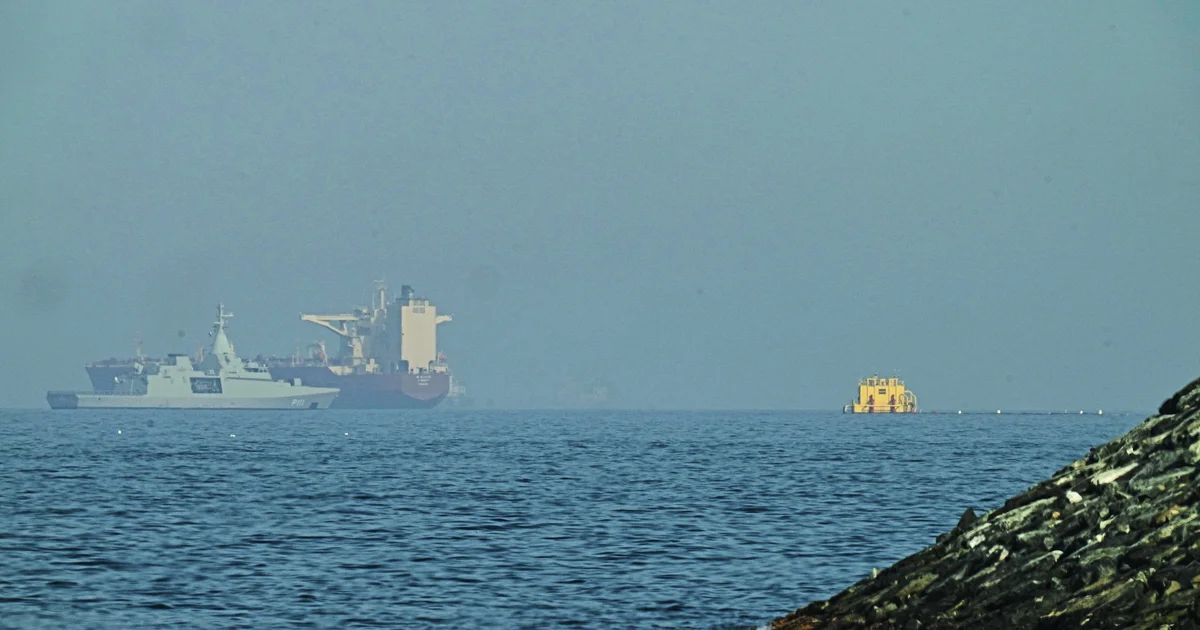
US Navy ships pass Strait of Hormuz after Iranian threats escalate

In a noteworthy demonstration of assertiveness, two U.S. Navy destroyers recently transited the strategically vital Strait of Hormuz and entered the Persian Gulf, amid escalating tensions with Iran. According to defense officials, this maneuver followed a navigational challenge wherein the American vessels had to navigate through an Iranian barrage. Such actions are emblematic of the ongoing power struggles that define Middle Eastern geopolitics, where maritime access and control over vital waterways shape the balance of regional influence.

The decisions to challenge Iranian harassment reflect a broader stance under the current U.S. administration, viewed by many national security analysts as a demonstration of military resolve and deterrence. Historically, the Strait of Hormuz has been a flashpoint—a narrow, tumultuous corridor through which approximately 20% of the world’s oil passes. Control over this waterway has long been a symbol of regional dominance; hence, the U.S. Navy’s assertive passage sends a clear message that Washington remains committed to safeguarding international navigation rights, despite Tehran’s persistent attempts to assert control through intimidation and harassment.

From a constitutional and strategic perspective, these actions underscore the underlying power struggles between geopolitical actors. The U.S., grounded in a broad geo-strategic doctrine emphasizing freedom of navigation, often clashes with Iran’s revolutionary ambitions, which seek to establish regional hegemony. As constitutional experts analyze the legality of such naval movements, figures like Thomas Hobbes and Carl Schmitt remind us that sovereignty, viewed through the lens of modern power politics, is often defined by control over key choke points—such as the Strait of Hormuz—where the state’s ability to project force directly influences its sovereignty and security.

Furthermore, these maritime confrontations serve as a reflection of the broader ideological dichotomy—liberal maritime principles versus revolutionary resistance. The U.S. position, rooted in a belief in an open international economic order, often collides with Iranian revolutionary nationalism, which seeks to challenge Western dominance through asymmetric means. This clash manifests visibly in navy maneuvers, symbolic acts that define how decisions at the top ripple through the fabric of everyday life, affecting energy supplies, regional stability, and global markets. The ongoing power struggle underscores the fundamental question: who ultimately controls the corridors through which global commerce flows?

As history demonstrates, theater of such maritime encounters is more than mere tactical display; it is where the fate of nations is often decided in quiet but decisive battles of will. The recent provocations and responses are a chapter in the ongoing drama—one where the sovereignty of nations is not a static entity but a continually negotiated arena, hammered out in the decisive moments of strategic daring. Political theorists suggest that these actions are less about immediate outcomes and more about reinforcing the narrative of strength that underpins a nation’s destiny. In this arena of power and principle, the stage is set for where history’s next defining act will be written—reminding all that, ultimately, politics remains the arena where the future is forged and the course of history is shaped.
Can Putin's Flying Kremlin Pass Through EU Skies to Reach Budapest?
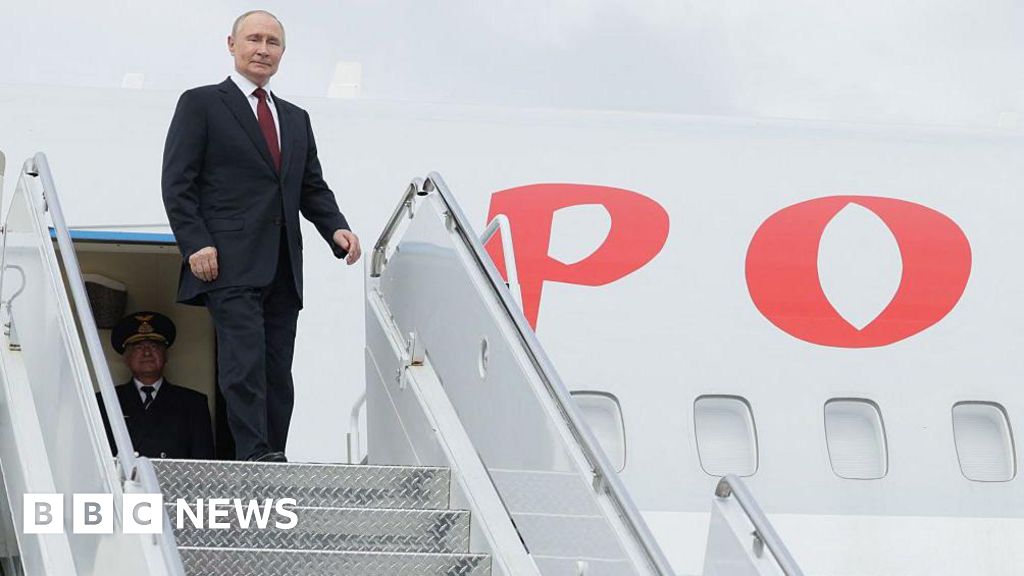
Can Putin’s Flying Kremlin Pass Through EU Skies to Reach Budapest?

In an era defined by evolving alliances and shifting geopolitical boundaries, Russia stands at a crossroads, with Vladimir Putin exploring possibilities that threaten to ignite further instability within the European continent and beyond. The prospect of a high-stakes summit with U.S. President Donald Trump in Budapest signals an intense phase in diplomatic chess, where decisions made in the coming weeks could either pave the way for a fragile peace or deepen the chasm of conflict. Despite the veneer of diplomatic efforts, the underlying tensions are palpable, rooted in decades of strained relations and recent aggressive moves by Moscow.

Putin’s planned visit to the Hungarian capital is encumbered by complex logistics and international restrictions. Russia’s planes are officially barred from EU and NATO airspace, meaning Putin would require emergency dispensation to bypass these restrictions—an unlikely event given the current political climate. Experts warn that even with special permissions, the likelihood of safe passage over countries such as Bulgaria and Romania remains uncertain, especially considering the ongoing NATO build-up on Europe’s eastern flank. The most straightforward route—through Serbia or Turkey—invites its own set of diplomatic challenges, as these nations are either non-EU members or official candidates, potentially serving as bridges for Putin’s flight without breaching international sanctions yet complicating the delicate balance of Western alliances. The scenario underscores a dangerous dance of sovereignty, where every move could deepen the rifts that threaten global stability.

Meanwhile, the European Union and NATO are meticulously examining the legal and strategic implications of such a summit. The EU’s executive commission has underscored that any move that advances “a just and lasting peace for Ukraine” is supported—but emphasizes that the methods of transit remain tightly regulated. The crux lies in whether member states will grant exceptions for Putin’s aircraft, risking further escalation or symbolic defiance of Western sanctions. Historians and analysts suggest that Russia’s continued defiance of international norms, including accusations by the International Criminal Court of war crimes related to Ukraine, have made genuine negotiations elusive, and such summits risk merely being tactical gestures rather than pathways to resolution.

The backdrop to this perilous moment reveals a Europe increasingly divided, with Hungary under Viktor Orban positioning itself distinctively. Orban’s close ties with Putin, combined with his outspoken skepticism of the EU’s stance on Ukraine, threaten to undermine consensus within the bloc. Orban’s overt rejection of Brussels’ pro-war rhetoric and his assertion that the EU will be “left out of peace talks” illustrates a broader pattern of internal discord and the resurgence of nationalist rhetoric that WEstern analysts associate with a potential realignment of power dynamics in Europe. This internal fracture complicates an already tense environment, as Orban’s government prepares to host Putin amidst mounting international sanctions and military build-ups. The move could be viewed as a calculated gamble by Orban, betting that good relations with Moscow may bolster Hungary’s strategic autonomy at a time when the continent faces existential threats.

The unfolding story is a stark reminder that history is still being written—each diplomatic maneuver carries the weight of nations’ future, and even the most cautious steps could lead to unforeseen consequences. As the world watchfully stares at Budapest’s horizon, the potential for a summit that could transform the geopolitical landscape remains looming. Will it be a groundbreaking step towards peace or the spark for a broader conflict? In this tense moment, history beckons us to reflect: the decision to meet or to refuse may determine the destiny of nations for generations to come, leaving us all spectators in an unpredictable saga that is far from over.

Social Media Auto Publish Powered By : XYZScripts.com



