Matox News

Truth Over Trends, always!

18 Dead as Ferry with 300 Passengers Goes Underneath—A Tragic Loss for Our Community

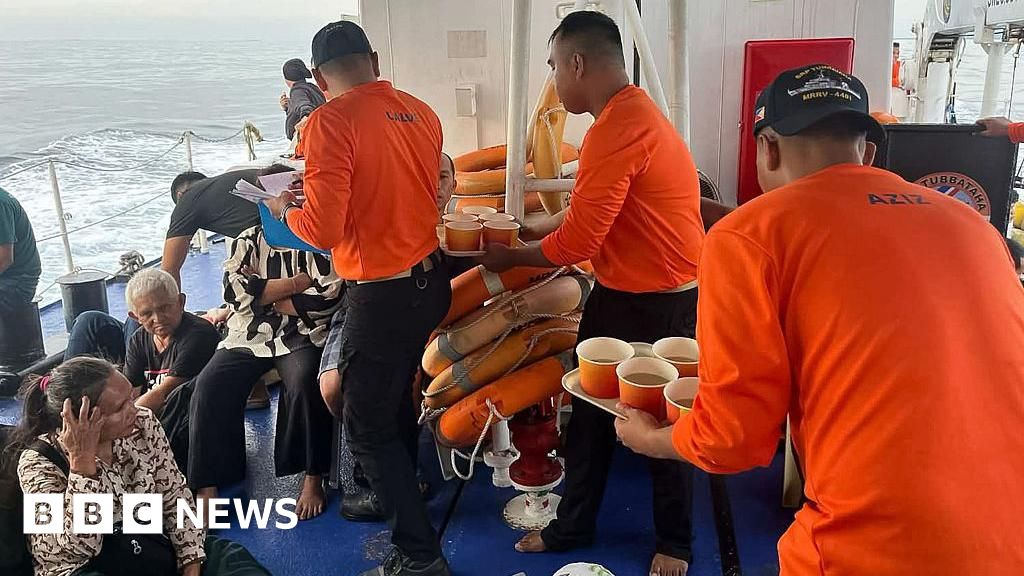
The recent sinking of the MV Trisha Kerstin 3 off the southern coast of Philippines marks yet another somber chapter in the archipelago’s history of maritime disasters. With over 350 passengers and crew onboard, the tragedy has resulted in at least 18 fatalities and dozens still missing amidst a rescue operation overwhelmed by the scale of human tragedy. As coastal authorities continue efforts to locate missing persons, this incident underscores enduring flaws within the nation’s maritime safety infrastructure, which some analysts attribute to systemic issues of poor maintenance and overloading.

The Philippines, consisting of more than 7,100 islands, remains reliant on ferries as the lifelines connecting communities. Despite the ubiquity swayed by economic constraints, decades of maritime accidents tragically highlight an urgent need for international and domestic reforms. According to maritime safety experts and international organizations, recurring fatalities, such as the 28 deaths in a 2023 ferry fire and previous fires involving high-speed vessels, reveal persistent gaps in regulation enforcement and vessel maintenance. As regional security analysts warn, these failures are not just about safety—they threaten national stability and the social fabric of countless vulnerable communities.

Historically, the< u> Philippine maritime sector has been marred by challenges rooted in governance, infrastructure, and environmental hazards. The recent incident occurs against a background of deteriorating safety conditions, exacerbated by rough seas and adverse weather. Government officials and international observers continue to investigate the cause, yet critics argue that these tragedies are often preventable through stricter regulation and investment. Meanwhile, some regional leaders, such as Basilan Governor Mujiv Hataman, have shared heart-wrenching images of survivors, exposing the human toll that often results when safety standards are disregarded. In the words of maritime analysts, “Such incidents should be a wake-up call”—a plea for comprehensive reforms amid a rising tide of preventable loss of life.

These disasters have far-reaching *geopolitical impact*, particularly as they reflect deeper issues of governance within maritime Southeast Asia. While the< u> Philippines struggles to modernize its fleet amidst economic and infrastructural challenges, regional powers and international organizations monitor the sector’s vulnerabilities, fearing that persistent safety lapses could lead to greater instability. As ASEAN members observe, the safety of maritime nations directly influences regional security, trade, and diplomatic relationships. Critics suggest that international cooperation, combined with robust domestic reform, is essential to prevent future tragedies. But until tangible action is taken, the stories of the missing and dead serve as grim reminders that history’s warning signs continue to be ignored.

Indeed, the weight of history hangs heavily over the Philippines’ vast maritime network. With each sinking and fire, the narrative deepens: a nation caught between economic necessity and the urgent need for safety reforms—a nation whose continued resilience hinges on whether it will heed these lessons. As the search for survivors continues and officials grapple with accountability, the nation stands at a crossroads. Will it choose the path of reform and safety, or continue to be haunted by the ghosts of maritime calamities past? The pages of history are still being written, and the world watches as another chapter of tragedy unfolds, waiting for the moment when tragedy transforms into resolve.”


Luxury Cruise Passengers Escape, But Suzanne Rees Was Left Behind and Died Alone on Remote Australian Island

Remoteness and Responsibility: Lessons from a Tragic Incident near Lizard Island

The recent tragedy involving Suzanne Rees, an 80-year-old tourist who died on Lizard Island, highlights significant concerns surrounding maritime safety and accountability in remote regions of the world, even as tourism industries expand across fragile ecological zones like the Great Barrier Reef. The incident, which unfolded after the cruise ship Coral Adventurer allegedly left without properly accounting for Rees, underscores the failure of basic safety protocols—a lapse that could have devastating geopolitical repercussions.

Historically, international maritime regulations and local safety standards aim to protect vulnerable travelers, especially in isolated environments where rescue operations are complex and costly. Yet, this event reveals how inertia and lapses in procedural accountability threaten not only individual lives but also the reputation of tourism operators and, ultimately, national tourism strategies. Analysts suggest that such failures are emblematic of broader systemic issues within maritime safety oversight, especially as more nations with burgeoning tourism sectors attempt to attract international visitors without sufficient infrastructure or regulatory enforcement.

International organizations like the International Maritime Organization (IMO) have long emphasized the importance of passenger accountability—something seemingly overlooked in this case. The incident’s fallout echoes incidents from the past, including the 1998 death of Tom and Eileen Lonergan on the Great Barrier Reef and the haunting accounts of rescue failures in shark-infested waters. Experts warn that such events threaten to undermine global confidence in maritime safety history, with consequences that ripple across diplomatic and economic spheres.

As investigations by Australian authorities unfold, the incident serves as a stark warning of the need for stringent safety protocols. The question of responsibility isn’t solely about individual lapses but about the distribution of accountability among cruise companies, local authorities, and international regulators. Such tragedies threaten to become emblematic of a fragile trust that, if broken, could have long-lasting implications not only for visiting nations but for societies that depend heavily on responsible tourism. The weight of history continues to press upon us: the unfolding narrative of this event will likely shape maritime safety legislation and accountability measures for generations to come, reminding us that in the pursuit of adventure and progress, human life remains the ultimate litmus test of our collective responsibility.

Why Turning on Airplane Mode Matters for Young Passengers on Flights

Shaping the Future: How International Decisions and Technology Reconfigure Geopolitical Boundaries

In an era punctuated by rapid technological advancement and shifting alliances, geopolitical impact is evident in every facet of international relations. Recent episodes of global decision-making expose the profound influence that international institutions and national policies wield over the lives of societies and nations worldwide. Whether it’s the ongoing debates surrounding the rollout of 5G networks or the lingering shadows of past treaties, each decision ripples across borders, challenging established security protocols and redefining power balances. Historically, analysts and historians like Niall Ferguson and Margaret MacMillan warn of the crucial turning points where technology and diplomacy intertwine—each choice shaping the contours of the 21st-century global order.

The core of recent controversy lies with the deployment of 5G wireless technology. Governments, including Australia and the United States, have voiced serious aviation safety concerns linked to the new standard’s spectrum proximity to aircraft navigation frequencies. Airline industry leaders and safety experts fear that the close spectrum overlap could cause electromagnetic interference, jeopardizing critical phases of flight such as landings. While the European Union has largely moved forward without significant incidents, the debate underscores a fundamental tension: how technological progress is constrained by and influences international standards. The Federal Aviation Administration and Boeing once studied this issue, concluding in 1992 that electronic devices during non-critical flight phases did not interfere. Still, the recent proliferation of high-speed 5G networks, particularly with the advent of millimeter-wave spectrum, reignites a pivotal question—how do nations balance innovation against safety risks in a tightly controlled electromagnetic environment?

Crucially, decision-making regarding spectrum allocation is rooted in international cooperation through organizations like the International Telecommunication Union (ITU). Nonetheless, the clash between expanding mobile broadband and aviation security reveals the limits of existing governance frameworks. As analysts confront the complexities of 5G’s near-spectrum overlap with traditional navigation bands, it becomes evident that how nations respond to these technological challenges will directly influence their geopolitical resilience. Countries that quickly adapt or lead in resolving such conflicts may gain strategic advantages, while others risk sidelining safety standards, fostering distrust and instability. The ongoing struggle exemplifies a broader narrative: international conflicts over resources, technology, and security will determine the global power structure for decades to come.

Another significant geopolitical layer involves international diplomacy and regional alignments. While EU nations have relatively integrated policies allowing residual use of personal devices, the US and Australia remain cautious, citing potential ground interference. These discrepancies threaten to fracture global standards, potentially creating a digital and security rift reminiscent of Cold War-era divisions. Experts warn that such divergences may pave the way for a new form of technological sovereignty, where nations prioritize national interests over cooperation, heightening risks of conflict and fragmentation. As governments grapple with the future of wireless networks, history reminds us that the unchecked pursuit of technological dominance often fosters geopolitical rivalries, the repercussions of which resonate across political, social, and economic domains.

As multilateral institutions and national leaders scramble to craft policies that mitigate risks while embracing innovation, the enormity of the ongoing technological and diplomatic evolution becomes unmistakably clear. Today’s decisions are not merely about spectrum or aviation safety—they are the forging of a new geopolitical landscape where the fabric of international power is woven anew. Moving forward, the choice to prioritize safety, sovereignty, and cooperation will determine whether history will record these moments as a renaissance of collaboration or as the dawn of a fractured and multipolar world. The world stands at a precipice, and in the silent corridors of power, the echo of these decisions will reverberate through the ages—molding a future still being written in the crucible of history’s unfolding saga.

Social Media Auto Publish Powered By : XYZScripts.com



