Matox News

Truth Over Trends, always!

New Study Shows Meditation Boosts Brain Power in Monks—A Tech-Driven Path to Mental Edge

Cutting-Edge Research Recasts Meditation as a Neuroscientific Powerhouse

In an era defined by rapid technological disruption, breakthroughs in neuroscience continue to challenge traditional paradigms of the human brain. Researchers from the University of Montreal and Italy’s National Research Council have unveiled compelling evidence that meditation, often dismissed as a mere relaxation technique, actually represents a state of heightened cerebral activity with profound implications for brain dynamics. Through the use of advanced magnetoencephalography (MEG) technology, a small cohort of Thai Forest Tradition monks revealed that meditation orchestrates complex neural oscillations and configurations aligned with the concept of criticality—a principle borrowed from physics that describes systems operating at the edge of chaos and order.

These findings serve as a potent reminder that the brain’s capacity for adaptability and stability—its very core for processing information and learning—is governed by a delicate balance. Modern tech giants and neuroscience pioneers like Elon Musk and institutions such as MIT have long championed the notion that intelligent systems — whether biological or artificial — thrive when operating at this cusp of criticality. The research underscores that practices designed to induce mental clarity, such as Samatha and Vipassana meditation, can serve as models for developing more resilient, flexible AI architectures. This neural “sweet spot” is now being recognized as essential not only for cognitive optimization but also for pushing the boundaries of business innovation.

Disruption at the Neural Level: A New Frontier for Technology and Industry

The study’s granular analysis uncovered that both meditation styles increase brain complexity, yet they do so through contrasting neural configurations: Vipassana approaches balance stability with flexibility, nudging neural networks toward the critical point, while Samatha fosters a more stable, focused state. Experts emphasize that operating near this optimal point boosts a brain’s responsiveness, multitasking capabilities, and information retention. For disruptive tech firms seeking to emulate human adaptability, these findings provide a blueprint—highlighting the importance of designing systems that emulate such neural flexibility. Future applications could revolutionize fields from brain-computer interfaces to machine learning algorithms, unlocking new levels of efficiency and intelligence.

  • Enhanced AI Flexibility: Incorporating principles of neural criticality could lead to smarter, more adaptable AI systems capable of rapid emotional and contextual adaptation.
  • Neural Optimization: Meditation-inspired techniques might stimulate new neuro-interfaces that optimize cognitive performance in high-stakes environments like cybersecurity and finance.
  • Industry Shifts: Companies with insights into these neural dynamics could disrupt established markets by delivering unprecedented levels of user engagement and neuro-aligned products.

Reflecting insights from thought leaders such as Peter Thiel, industry insiders recognize that the convergence of neuroscience and AI marks a pivotal frontier—one that demands swift innovation if firms hope to maintain a competitive edge in the coming decade. As this research demonstrates that meditative practices reshape neural networks toward an ideal operational state, the implications for disruptive technology are profound. From neurotech startups to established giants, the race is on to pioneer systems that not only mimic but harness the brain’s natural propensity for criticality.

Looking forward, the evolution of this neuroscience frontier signals a future where understanding and harnessing brain dynamics could become the key differentiator in an increasingly competitive universe of technological innovation. With hundreds of startups and multinational corporations investing heavily in neural data and cognitive enhancement, the pressure mounts on incumbents to innovate at the intersection of mind, machine, and market. As the quest for true AI consciousness and human augmentation accelerates, embracing the principles illuminated by this recent study will be paramount—a call to action for those daring enough to lead the next wave of disruptive technology.
Trump Paves Path for Nvidia to Export Advanced AI Chips to China

US-China Tech Duel Reshapes Geopolitical Landscape

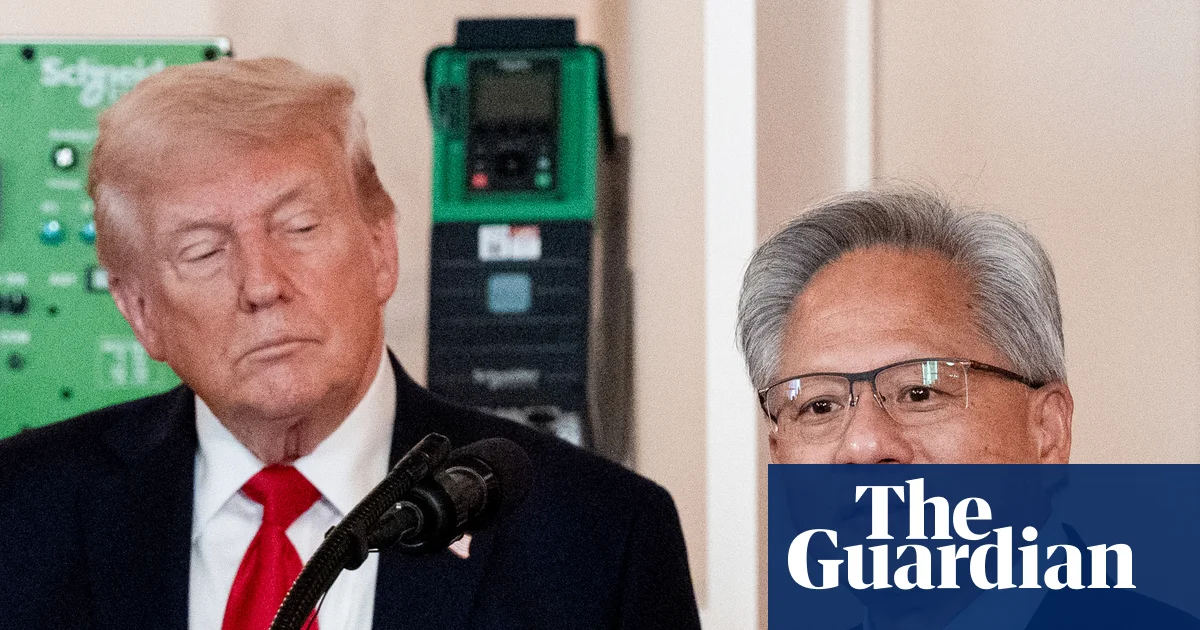
In a dramatic turn of events, former President Donald Trump has authorized Nvidia to resume sales of its advanced AI computer chips to China, breaking decades of strict export controls designed to safeguard US national security interests. This decision marks a significant divergence from previous administrations’ policies, which prioritized technological supremacy and the containment of Chinese technological ambitions. The move was announced via social media, with Trump asserting that the US would “allow NVIDIA to ship its H200 products to approved customers in China, and other Countries,” and emphasizing that the US would retain a 25% share of proceeds—more than the prior 15% agreement. Such a financial arrangement signals a strategic pivot, highlighting the evolving calculus over global technological dominance and economic leverage.

However, this shift isn’t without controversy. Congressional Democrats like Elizabeth Warren and Andy Kim voiced substantial criticism, warning that such sales could empower China’s surveillance, censorship, and military capabilities. Their concerns underscore a broader debate: does the pursuit of economic gains outweigh the risks to security and sovereignty? The reassessment of US-China relations under the shadow of new geopolitical realities is emblematic of a larger struggle—one that involves not only technology but the very fabric of international power. Although Trump’s administration claims these steps bolster US manufacturing and job creation, critics argue that they could inadvertently accelerate China’s technological independence—a development that could have long-lasting destabilizing effects on global balance of power.

Meanwhile, China has responded cautiously, with the foreign ministry noting that “China and the United States can achieve mutual benefit” through “cooperation.” Yet, behind these diplomatic words lies a complex chessboard of strategic calculations. Chinese regulators are reportedly debating whether to curtail or facilitate the import of Nvidia’s chips, an indication that the internal dynamics within Beijing itself remain unsettled. As analysts like Ma Jihua observe, years of restrictive policies have inadvertently created opportunities for China’s burgeoning domestic chip industry. The current liberalization of US exports could thus serve as a catalyst—either as a boon or a challenge. Historically, such decisions ripple across the entire geopolitical fabric—stoking fears of a new class of technological arms race.

The geopolitical impact of this development is profound. By reconfiguring the rules of engagement in AI technology—a sector many analysts call the “new frontier of military and economic power”—the United States has opened a new chapter in the competition for global dominance. The move fuels the ongoing narrative of a great power rivalry, where economic policy intertwines with national security, and technological innovation becomes the battleground for influence. As the world watches, this unfolding saga will determine whether nations can balance progress and security, or whether the chaos of uncontrolled competition will fuel conflicts that threaten the stability of the international order. The choices now being made echo through history, shaping a future where the line between cooperation and confrontation will become increasingly blurred, leaving the course of history suspended in a tense, uncertain horizon.

Tuesday Briefing: What the BBC’s Crisis Tells Us About Its Failures — and a Path Forward

The recent upheaval at BBC exemplifies the volatile state of Western democracies grappling with the tensions between political influence and institutional integrity. The resignations of Tim Davie, the director general, and Deborah Turness, head of news, unfold amid a barrage of criticism led by the right-wing press and aligned political figures, especially from Conservative-linked media outlets. This crisis is not merely about journalism; it is emblematic of the broader struggle for who controls the narrative in a society that faces mounting external and internal pressures.

Experts like Michael Savage, a seasoned media analyst, emphasize how this turmoil exposes weaknesses in the *governance* of the BBC. Amid what he describes as an environment of “weak oversight,” a small clique of board members—including Gibb, whose influence has leaned towards the politicization of the corporation—decided to appoint Prescott to a sensitive advisory role. The fallout reveals how internal decisions are increasingly weaponized, reflecting a pattern seen in other major democracies where institutional independence is compromised to suit specific political agendas. As Britain approaches the critical renewal of its public broadcasting charter in 2027, the question emerges: will this revered institution find itself subsumed into the ideological fold of a nation deeply divided?

On the international stage, the United States swiftly introduces a stark new development that has ramifications far beyond the Atlantic. The “impossible job” now facing BBC leadership is paralleled by the impending battle for influence over global narratives. As US President Donald Trump threatens to sue the BBC for over $1 billion, alleging biased coverage—an accusation echoing the broader fight for media dominance—it becomes clear that the confrontation extends beyond mere legal threats. Such threats are a reflection of how hostile the global political environment has become towards independent journalism. Analysts warn that this clash signals a shift in international power dynamics, where information is weaponized as a tool for shaping perceptions and controlling societies.

There is a rising recognition among geopolitical strategists that the battle for the soul of media is integral to national sovereignty. Countries like France confront their own crises; the recent release of former President Nicholas Sarkozy from custody is a stark reminder of how internal political conflicts can reverberate across borders, affecting diplomatic relations. Meanwhile, Brazil’s hosting of the Cop30 climate talks underlines how global consensus on climate change is fractured, with failing national policies blamed for international chaos—famine, conflicts, and the destabilization of vulnerable societies. As world leaders debate and often delay fundamental reforms, the world stands at a crossroads, with decisions made in the coming months likely to influence generations.

The tapestry of these interconnected crises culminates in a stark lesson: as history continues to unfold, the choices made by key nations and institutions will determine whether the principles of free societies persevere or collapse into new forms of authoritarianism. The BBC, a symbol of the enduring power of public service media, finds its very existence challenged by forces seeking to rewrite the narrative for their own gain. And as international tensions escalate—be it legal threats from Trump or ideological assaults on free press—one truth remains: the battle for truth and influence is the battlefield of the 21st century, where the echoes of today’s decisions will resound through the corridors of history, shaping the destiny of societies yet to come.

Reclaiming Responsibility: A Moderate Path Forward for America

As America faces an era marked by swift technological change, mounting economic challenges, and cultural polarization, the question of who bears responsibility for shaping the nation’s future becomes more urgent than ever. Critics argue that the prevailing political discourse often devolves into blame-shifting and partisan rhetoric, hampering meaningful progress. Yet, there is a growing movement calling for a moderate path forward—one rooted in pragmatic responsibility and shared accountability. This approach recognizes that America’s strengths lie not in abandoning tradition or dismissing innovation, but in harmonizing these elements to forge a resilient, cohesive society capable of confronting tomorrow’s uncertainties.

Proponents of this moderate outlook emphasize that restoring responsibility begins with acknowledging the interconnected nature of economic, social, and political spheres. For example, analysts suggest that embracing a balanced view of free enterprise and prudent regulation can foster sustainable growth without sacrificing individual freedoms. Economists like Nobel laureate Edmund Phelps have argued that responsible capitalism—which includes fair labor practices, environmental stewardship, and corporate accountability—serves as the backbone of a thriving nation. Critics also highlight the importance of civic responsibility, urging the younger generation to actively participate in democratic processes and community building, thereby reinforcing the social fabric that binds citizens together in shared purpose.

However, cultivating a culture of responsibility requires more than just policy prescriptions; it demands a cultural shift grounded in respect, accountability, and a recognition of common interests. This entails rethinking narratives that foster division and instead promoting figures who model moderation and integrity. As historian David McCullough once noted, the strength of America has historically stemmed from its ability to galvanize diverse groups around common goals, rather than succumb to factionalism. By focusing on practical solutions rooted in fact and shared values, Americans can navigate the tumult of modern politics with integrity and purpose, acknowledging that progress often arises from difficult compromises and collective effort.

Peering into the horizon, the challenge for the nation is to forge a path that isn’t swayed by extremes, yet remains dynamic enough to adapt and thrive. The weight of responsibility does not rest solely on the shoulders of leaders, but upon all who call this land home—each citizen, educator, entrepreneur, and policymaker. As this great experiment of democracy marches forward, one must ponder whether America will rise as a beacon of collective responsibility or stumble into the shadows of neglect and disunity. The choice lies in embracing a moderate, balanced, and steadfast approach—one that recognizes responsibility as an enduring pillar of hope, a guiding star amid the storm, and the very essence of what turns a nation’s destiny from fleeting dust into an enduring legacy. Forever, the soul of this country beckons us to act, to restore, and to elevate a shared responsibility—lest the annals of history record our silence as the moment when the mighty lost their way, and the promise of liberty faded into the dusk.”

Social Media Auto Publish Powered By : XYZScripts.com