
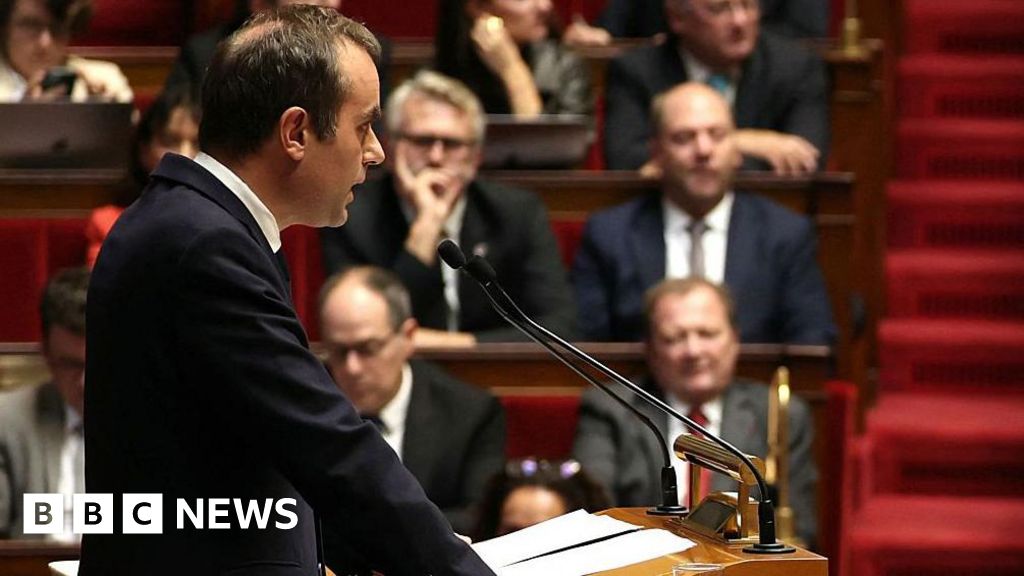

In a dramatic turn of events, France finds itself at a crossroads as Prime Minister Sébastien Lecornu signals a potential halt to the contentious 2023 pension reforms. These reforms, which sought to increase the retirement age from 62 to 64, were heralded as a cornerstone of President Emmanuel Macron’s second term, symbolizing his push for economic modernization amid staunch opposition. However, recent political instability threatens to unravel Macron’s agenda, raising questions about the future trajectory of French domestic policy and its ripple effects across Europe and beyond.
The move to suspend the reforms, announced by Lecornu amidst looming votes of no-confidence, underscores the fragile consensus within France’s political landscape. With the government’s survival hanging in the balance, opposition parties—particularly the far-left and far-right—are pressing for parliamentary elections, demanding a fundamental reset to the nation’s leadership. The Socialists, signaling a willingness to cooperate, insist that any support hinges on a *full and immediate suspension* of the pension changes—a stance that puts Macron’s reforms in direct jeopardy. As analysts highlight, this standoff is more than mere policy disagreement; it reflects a broader crisis of legitimacy and public trust, with some framing it as a symbolic ‘wound on democracy.’
This domestic turmoil occurs amidst the broader context of Europe’s economic challenges. France’s looming €3.4 trillion debt—representing roughly 114% of its GDP—positions it dangerously close to the edge of fiscal stability, with debts rivaling those of Greece and Italy. The austerity measures necessary to fund such debt are politically sensitive, especially when paired with social discontent. According to prominent European financial analysts, the potential suspension of pension reforms and the ensuing economic concessions could further strain the nation’s budget, with Lecornu estimating a €400 million deficit cost in 2026 and a staggering €1.8 billion loss in 2027. These figures underscore the delicate balancing act faced by the government and highlight the geopolitical impact of fiscal policy decisions—decisions that will define France’s stability in a multipolar world.
Beyond France’s borders, the repercussions of this political upheaval reverberate across Europe and the transatlantic alliance. European institutions, watching a key member state teeter, are concerned about the erosion of policy continuity and stability. The scenario echoes historic moments of crisis during Europe’s debt struggles, where internal political fragility threatened the cohesion of the eurozone. Meanwhile, international organizations such as the IMF and the European Central Bank have issued warnings that prolonged instability in France could hinder economic recovery and strategic cooperation. As vaunted historians and geopolitical strategists reflect, these events are a vivid illustration of how fragile the fabric of democracy can be—even in nations that see themselves as pillars of stability. With France’s future hanging in the balance, the unfolding crisis is no less than a testament to the fierce contest between tradition and reform, sovereignty and supranational influence.
Ultimately, the coming days may well be remembered as a pivotal chapter in the history of Europe, a moment when the continent’s enduring power was challenged by internal discord and external pressures. Will France emerge from this crisis with renewed resolve or succumb to the weight of its accumulated fears? As the nation grapples with its destiny, it leaves the world watching, uncertain if this is the dawn of a new era or the death knell of a proud republic in flux—an unfolding drama etched into the annals of history.





