
Matox News

Truth Over Trends, always!

Person of interest detained in Brown University shooting, officials confirm

The recent shooting at Brown University in Providence, Rhode Island, has once again cast a dark shadow over the ongoing debate about gun control and safety in the United States. Reportedly, a gunman opened fire within a classroom on Saturday afternoon, leaving two students dead and nine others injured. The incident, which unfolded at the Holley engineering building, shocked a nation already accustomed to tragic acts of violence, but it also raised urgent questions about internal security and mental health policy that many analysts argue are being neglected by policymakers.

The response from local authorities and university officials has been swift. Police detained a suspect shortly after the attack, with Police Chief Oscar Perez confirming that no additional individuals are being sought and that evidence collection is ongoing. While CCTV footage captured a male suspect dressed in black walking away from the scene, officials indicated that the firearm was not recovered immediately, complicating efforts to understand the motives behind the attack. This event underscores a troubling pattern within the U.S., where mass shootings are becoming disturbingly routine. According to experts like Harvard Law Professor Laurence Tribe, the persistence of such violence threatens to undermine the foundations of society—not just in the U.S., but as a cautionary tale to the world.

Internationally, the United Nations and various human rights organizations have lamented the apparent intractability of America’s gun epidemic, often framing it as a product of a “culture of violence” that is amplified by lax regulations. Yet domestic critics argue that the true cause is rooted in a complex mixture of societal decay, partisan politics, and the influential gun lobby, which continues to stymie meaningful reform. How nations like Japan and Australia implemented strict gun laws in the past decade, sharply reducing firearm-related incidents, provides a stark contrast to America’s ongoing struggles. Such differences reveal the geopolitical divide: nations willing to prioritize societal security versus those hamstrung by political inertia and powerful interest groups.

Beyond the immediate tragedy, the incident at Brown University serves as a harbinger of future challenges for U.S. society and global stability. While the authorities work to piece together the motives and evidence, many warn that unless there is a fundamental shift in approach—addressing mental health, gun regulation, and security—similar incidents will continue to scar communities and deepen divisions. Historians and analysts are already warning that this event will be remembered as a pivotal moment: either as the breaking point that prompts reform or as another chapter in the ongoing saga of American violence. As the city of Providence begins its long road to recovery, the question remains: how many more lives must be shattered before significant change is wrought?
Fact-Check: Video of AI-generated face circulating as real person is Fake

Fact-Checking the Claim: Is Africa Breaking Apart?

Recently, some outlets have claimed that the African continent is “gradually splitting apart” and that a new ocean may form as a result. This statement deserves a thorough, evidence-based examination. To understand the reality of Africa’s geological activity, we need to delve into plate tectonics, geological processes, and expert insights.

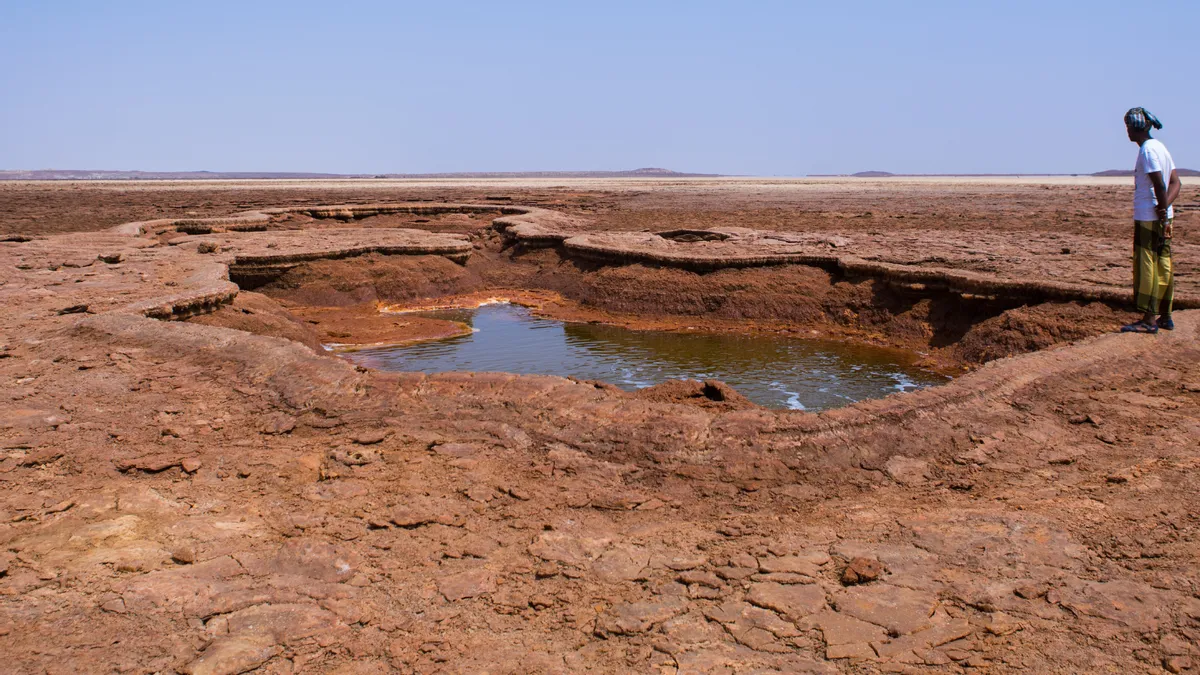
The claim that Africa is “gradually splitting apart” is based on the understanding of tectonic plate movements, particularly in the East African Rift System. This rift zone, spanning countries like Ethiopia, Kenya, and Tanzania, is an active continental plate boundary characterized by volcanic activity and seismic events. According to the United States Geological Survey (USGS), these rifts are manifestations of tectonic plates slowly pulling away from each other, similar to other well-documented divergent plate boundaries such as the Mid-Atlantic Ridge. However, this process occurs on geological timescales of millions of years and is not indicative of an imminent continental split or ocean formation.

Theoretical models suggest that if the East African Rift system continues its current activity over the next few million years, it could indeed lead to the formation of a new ocean basin. This process is comparable, albeit on a much longer timescale, to the separation of North America from Eurasia, which took hundreds of millions of years. Geologists like Dr. John Dewey of Columbia University highlight that such rifting is a natural and ongoing part of Earth’s geology but emphasizes that “a new ocean forming here will take far longer than human history.”

To substantiate the claim that the continent is “gradually splitting apart” in a manner that will rapidly create a new ocean, significant geological evidence showing rapid rifting or imminent ocean formation is lacking. Seismic activity, volcanic eruptions, and crustal movements are monitored worldwide, and experts confirm that current activity in East Africa, while noteworthy, does not predict immediate or even near-term global transformation. The African plate is indeed moving apart in some regions, but at a rate of just a few millimeters per year—far too slow for any dramatic geographic change within a human lifetime.

The scientific consensus, as provided by organizations such as the United States Geological Survey (USGS) and the African Geological Research Council, is clear: While Africa’s rifting is a fascinating and active process, it is a slow, natural feature of Earth’s tectonics that unfolds over millions of years. The idea that a new ocean will form tomorrow or even in the next few million years is misleading.

Conclusion: The Importance of Scientific Rigor

When evaluating claims about natural phenomena like tectonic movements, it is critical to rely on reputable scientific sources and understand the scale at which these events occur. The notion that Africa is “splitting” in a way that will soon reshape the continent is an oversimplification that ignores complex geological processes. Accurate information is vital for responsible citizenship and informed debate. Recognizing the difference between natural geological activity and urgent crisis helps us maintain a rational perspective and appreciate the long-term forces that continue to shape our planet.

Social Media Auto Publish Powered By : XYZScripts.com



