Matox News

Truth Over Trends, always!

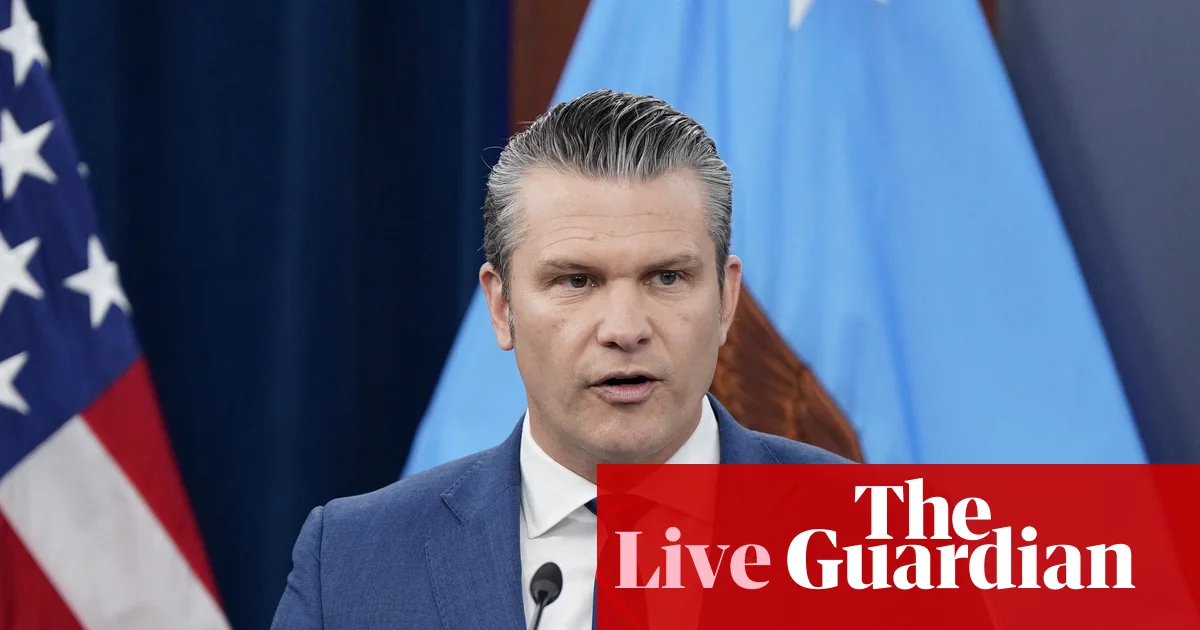
Pete Hegseth says Trump’s ‘closing’ Iran conflict as tensions escalate – US politics update

Global Escalation: The US, Iran, and the Future of World Power

In a dramatic turn of events, the United States has launched a major military operation against Iran this week, igniting a complex geopolitical crisis with potentially irreversible consequences. The operation, dubbed Operation Epic Fury, was authorized by President Donald Trump after nearly half a century of Iran’s alleged hostile actions against Western interests. As US officials publicly assert that they are “finishing” what was started long ago, the very fabric of international diplomacy and national sovereignty is being tested like never before, creating ripples that threaten to destabilize the Middle East and reshape global power balances.

From the outset, the US government has framed the conflict as a necessary response to Iran’s persistent threats—rhetoric rooted in accusations of missile proliferation, nuclear ambitions, and regional destabilization. Defense secretary Pete Hegseth has emphasized that this campaign will not be swift, describing the operation as a “big battle space” requiring patience and strategic precision. His assertion that “We didn’t start this war, but under President Trump, we are finishing it,” signals a shift toward a more aggressive posture that bucks the traditionally cautious approach of past administrations. Historically, analysts and war critics warn that such a posture risks spiraling into a regional conflagration from which even nuclear deterrence may not protect the world’s superpowers from entanglement.

The unfolding escalation has prompted urgent responses from Congress, with Democratic leaders demanding a vote under their constitutional authority to limit Trump’s military actions.

  • Top Democratic representatives, such as Gregory W. Meeks, have vowed to oppose the war effort, with some even willing to board planes to oppose what they see as an unconstitutional invasion.
  • Yet, despite these efforts, the administration maintains that it “set the terms of this war from start to finish,” signaling a federal executive branch increasingly willing to bypass Congress and consolidate military authority in a manner reminiscent of imperial overreach.

International organizations, including the United Nations, have expressed concern that the open warfare risks pushing the region into chaos, with war analyst Dr. Laura Hendrick warning that “such unilateral military actions could trigger a regional domino effect, leading to wider conflicts involving neighboring states and geopolitical rivals.” Moreover, the humanitarian fallout—particularly with reports of pregnant immigrant children moved into detention centers—raises questions about legality and human rights abuses under the guise of national security.

As the world watches with wary eyes, both America’s role as a global policeman and Iran’s resilience in the face of relentless pressure are at a critical crossroads. The death of Iran’s Supreme Leader Ali Khamenei, hailed by some U.S. hawks as a “turning point” for regime change, has further inflamed tensions, prompting Tehran to launch missile counterstrikes and hinting at an ongoing, perhaps endless, cycle of violence. Historian Prof. William Carter warns that “Decisions made in the coming weeks will determine whether this is an isolated chapter or the start of a new era characterized by prolonged regional chaos and a realignment of alliances.” The resurgence of military intervention, coupled with the use of AI-driven targeting from agencies like the Pentagon, signals a dangerous precedent—one where technology and brute force threaten diplomacy and peaceful resolution.

As the narrative of war continues to unfold, the weight of history presses down on leaders and nations alike. Will this conflict be resolved before irreversible damage is done, or are we witnessing the dawn of a new era of global instability? The choices made today in Washington and Tehran will echo through time, shaping the destiny of the world and leaving an indelible mark on history’s grand canvas. With war drums echoing across the landscapes of geopolitics, the future hangs precariously, reminding us that in the theater of international power, the stakes have never been higher.
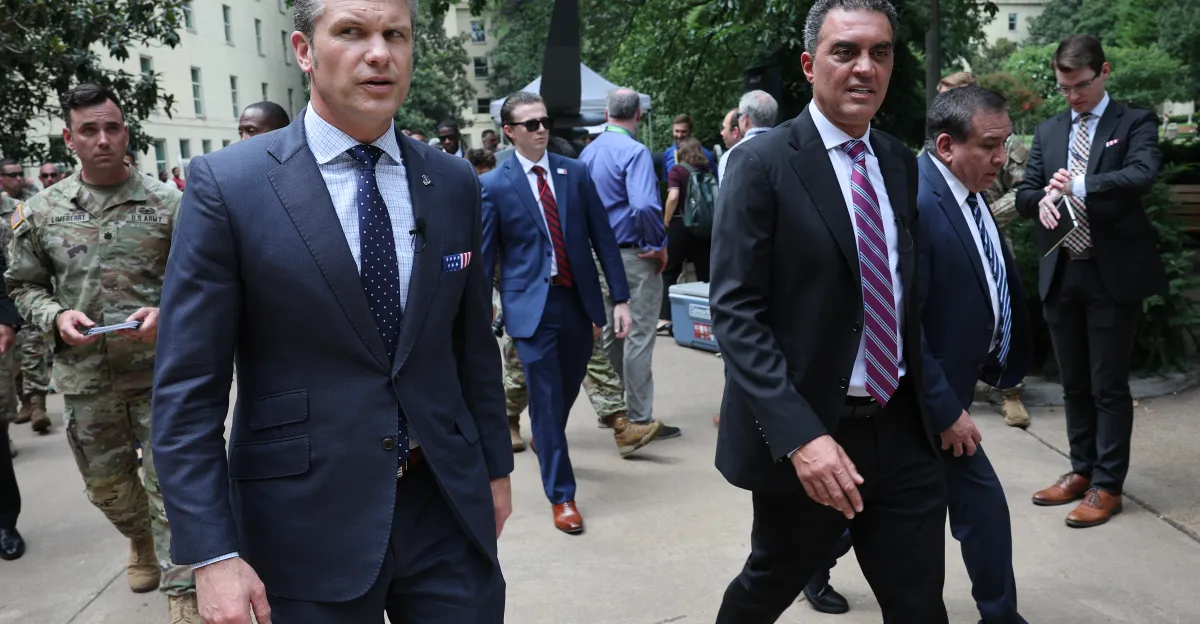
Pete Hegseth’s Pentagon AI crew: Ex-Uber exec and private equity titan join the squad

AI and Geopolitics: Pentagon’s Disruptive Move Toward Private Sector AI Dominance

In recent developments that signal a seismic shift in military-grade artificial intelligence, the Pentagon’s negotiations with leading AI developers underscore a new era of disruption and strategic vulnerability. The Department of Defense (DoD) has engaged in intense contract negotiations with Anthropic, whose advanced language model, Claude, is at the center of the controversy. This situation exemplifies how innovation-driven disruptions in AI are rapidly affecting national security frameworks—placing the traditional defense procurement model under unprecedented strain. With pent-up demands for secure, classified AI systems, the Pentagon’s push to secure multi-vendor contracts and mitigate single-supplier vulnerabilities reflect a clear adoption of best practices in tech risk management, yet reveal profound implications for the future of AI sovereignty.

The negotiations have drawn international attention, largely because of Pentagon’s urgency to establish at least two cleared AI vendors capable of handling classified data. Interestingly, despite current contracts with Google’s Gemini and xAI’s Grok, the security and capability differential among these models is stark. Google’s Gemini, considered a close competitor to Anthropic’s Claude, is on the verge of being cleared for classified deployments, while xAI’s Grok is viewed as less reliable. This “model shuffle” points to a broader industry consensus: the supply chain for classified AI models is fragile, and the risks of dependency on any single, possibly compromised, vendor could be catastrophic—especially as critics and analysts such as Gartner emphasize that “concentration risk remains the Achilles’ heel of AI deployment in high-stakes environments.”

The real business implications of this crisis are significant. Disruptive entries such as Anthropic have established themselves as indispensable—even as concerns about their morals and security practices persist. As Axios reports, Pentagon officials are explicitly aware that they are dependent on Anthropic’s AI precisely because “they are that good.” This paradox illustrates the core challenge for future defense procurement: balancing the need for cutting-edge innovation against security vulnerabilities. The negotiation process also demonstrates a broader shift where the private sector’s aggressive pursuit of AI dominance directly influences, and sometimes complicates, military strategy.

This evolving landscape foreshadows a future where the disruption of traditional defense models becomes inevitable. As the Biden administration emphasizes diversification of AI supply chains per new national security guidelines, the Pentagon’s procurement of multiple models—including discussions around the deployment of Gemini and potential exclusivity with Anthropic—emphasizes a move towards an AI-driven arms race. With tech giants and defense contractors like Emil Michael—whose controversial history at Uber signals the ruthless nature of business-driven tech innovation—now navigating a complex nexus of geopolitics and security, the industry is primed for a turbulent, hyper-competitive evolution.

Looking ahead, the implications for the broader tech ecosystem are clear: disruption is accelerating, and industry players with the most advanced models will wield outsized influence—not only in national security but also in the global power balance. The urgency surrounding diversifying AI vendors underscores the necessity of swift innovation, surgical risk management, and strategic alliances. Failure to adapt could result in catastrophic vulnerabilities, while those who lead the charge will dominate the emerging AI-augmented geopolitical landscape. As experts like Peter Thiel warn, “The future belongs to those who can manipulate the fabric of AI and national infrastructure faster than their rivals.” The question is no longer if disruption will come; it’s whether industry and government can harness it before they are overtaken by the relentless wave of technological revolution.

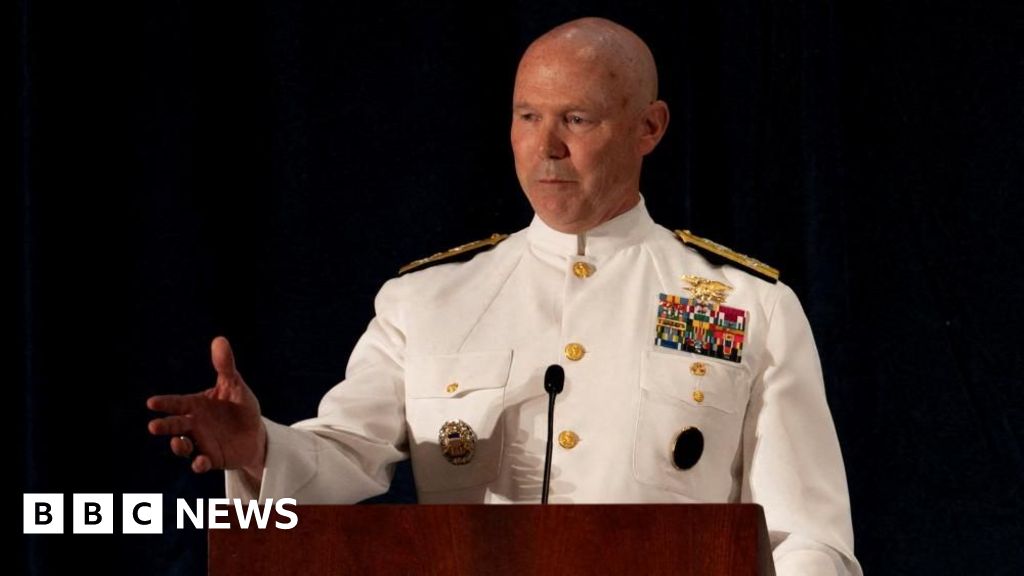
Admiral confirms Pete Hegseth didn't issue 'kill them all' order, lawmakers report
Admiral confirms Pete Hegseth didn’t issue ‘kill them all’ order, lawmakers report

Global Tensions Rise as United States Engages in Controversial Maritime Campaigns

In recent weeks, Washington has found itself under mounting scrutiny after a series of military operations in the Caribbean and Eastern Pacific regions. Allegedly aimed at dismantling drug trafficking networks, these strikes have sparked intense debate both domestically and internationally. Admitted by US military officials, the recent incident involving a second attack on a suspected drug boat has stirred controversy over the legality and morality of the use of force. A closed-door briefing before members of the House and Senate revealed testimonies from Admiral Frank Bradley that raised questions about the chain of command and the rules governing the US military’s engagement in these high-stakes operations.

During the briefing, multiple lawmakers, regardless of party affiliation, expressed concern over the decision-making process. Democratic Representative Jim Himes emphasized the respect owed to Adm Bradley but admitted that what was witnessed was “troubling.” Meanwhile, Republican Senator Tom Cotton defended the actions, asserting that the strikes aligned with the expected conduct of military personnel in such operations. The critical point in this narrative lies in the revelation that a second strike was ordered after survivors of the first had attempted to salvage the vessel—a move that legal analysts suggest could violate international law and the Geneva Conventions, which prohibit targeting wounded combatants or civilians. This raises a fundamental turning point: the legitimacy of the US’s emerging blueprint for combating narcotics in international waters versus the principles of humanitarian law.

International Reactions and the Broader Geopolitical Consequences

Venezuela, along with other regional actors such as Colombia and various Latin American nations, has condemned these operations, accusing Washington of provoking regional instability with aims extending beyond drug interdiction. The Venezuelan government explicitly contends that the US is fueling tensions to justify greater intervention, an allegation that echoes concerns from analysts about a possible shift in U.S. foreign policy towards Latin America. Experts from the International Criminal Court have noted that if such strikes are considered unlawful — especially when targeting survivors and wounded individuals — they could be classified as crimes against humanity. Such a designation would drastically impact the US’s international standing, casting a shadow over its military assertions of legality.

Furthermore, these operations signal a broader strategic recalibration for the US, which is expanding its presence in the Caribbean under the guise of fighting drug trafficking but may be sowing the seeds for long-term regional discord. The controversy is further compounded by allegations that Hegseth, the Defense Secretary, potentially ordered the second attack, an assertion quickly dismissed by the White House, which insists Adm Bradley acted within his lawful authority. These conflicting narratives reveal a multifaceted battle over accountability, with international organizations and legal experts warning that such actions threaten to undermine established norms of warfare and human rights. The unfolding debate underscores how U.S. decisions in these maritime conflicts directly impact regional stability and the rule of law.

History, Law, and the Weight of the Unfolding Crisis

As the dead toll from these operations continues to climb—over 80 lives lost and ongoing reports of survivors—historians warn of the dangerous precedent being set. The presence of survivors and the case of Colombia’s Alejandro Carranza, whose family is pursuing legal action before the Inter-American Court of Human Rights, highlight the fragile boundary between military necessity and legal morality. Critics, including former prosecutors from the ICC, argue that these strikes may constitute unjustifiable violations of international law, transforming what was purported to be a law enforcement effort into a series of covert, unaccountable acts.

In this crucible of geopolitics, justice, and law, America’s foreign policy is at a crossroads. As President Trump and his administration grapple with defining the limits of military authority, global eyes remain fixed on how the US will navigate this complex terrain. The truth, buried beneath a maelstrom of conflicting claims and classified footage, remains elusive—yet the weight of history presses heavily upon the shoulders of those in power. With each decision, the lines between legality, morality, and effective strategy blur, leaving the world to ponder: are we witnessing the dawn of a new blueprint for global conflict, or the unraveling of international norms that have held sway for generations? The story is still being written, and the pages of history are turning fast, leaving societies to confront what lies ahead in the shadows of unresolved justice and sovereignty.

Pete Hegseth vows to strike back: “We will hunt and kill them” in crackdown on drug-smuggling vessels — US politics live | US news

As the 2025 geopolitical landscape unfolds, a pattern of strategic escalation and international jockeying becomes increasingly evident, reflecting the enduring quest for dominance in a world fraught with tension and shifting alliances. From military operations against drug cartels in Central America to high-stakes diplomatic meetings involving Donald Trump and Central Asian leaders, the global stage is echoing with decisions that will shape the future of nations and societies. The American administration’s recent embrace of a ‘war on cartels’ signals an aggressive stance, equating narcotics traffickers with terrorists, and promising lethal force in operations that claim lives in the Caribbean and beyond.

Meanwhile, the United States prepares for a possible diplomatic revival in its relations with Shavkat Mirziyoyev, president of Uzbekistan, highlighting an intensified focus on Central Asia—a region rich in resources and geopolitically pivotal. The meeting between Trump and Central Asian presidents could mark a turning point in U.S. strategy, seeking to secure energy partnerships and counterbalance China’s rising influence. Experts articulate that such engagement, especially with nations like Uzbekistan, magnifies America’s push to reassert influence in a critical crossroads of Eurasia, transforming regional dynamics and complicating the strategies of rivals like Russia and China.

Notably, in a move that underscores the ongoing domestic upheaval, political figures on both ends of the spectrum are maneuvering with unorthodox moves that threaten long-standing norms. A GOP legislator is calling for the deportation of Zohran Mamdani, a New York City mayoral candidate, over allegations of naturalization fraud—an episode that exposes the ideological battle over America’s immigrant narrative and national identity. On the legal battlefield, Donald Trump is fighting to overturn his criminal conviction for business fraud, claiming that key evidence was improperly admitted, and signaling a persistent challenge to the judicial system’s authority. Such disputes are not only domestic spectacles but are emblematic of the intensifying polarization shaping American society.

The international community watches as alliances evolve and old certainties give way to confrontations that could redefine regional stability and security. As Japan’s first female Prime Minister, Sanae Takaichi, gains Trump’s praise for her military ambitions, the U.S.-Japan relationship appears poised for a recalibration, with potential investments soaring and defense commitments accelerating. Yet even as diplomacy dances on the surface, the threat of China’s assertiveness in Asia looms large, prompting Japan to pledge a swift defense spending increase and reaffirm its strategic partnership with the U.S. Despite this, critics warn that such displays of unity may mask underlying tensions that could erupt into broader conflict, as historic rivalries and geopolitical ambitions collide.

This confluence of military, diplomatic, and legal actions echoes a larger narrative, one where history’s pen is still writing the chapters of a tumultuous and transformative era. The bold moves—whether the US’s lethal crackdown on drug cartels, the high-level meetings with Asian powers, or internal political battles—are shaping a future that remains uncertain. As the world stands at this geopolitical crossroads, the echoes of these decisions will resonate through generations, reminding us that history waits for no one and that the true contest for influence is still underway, with humanity’s collective destiny hanging in the balance.

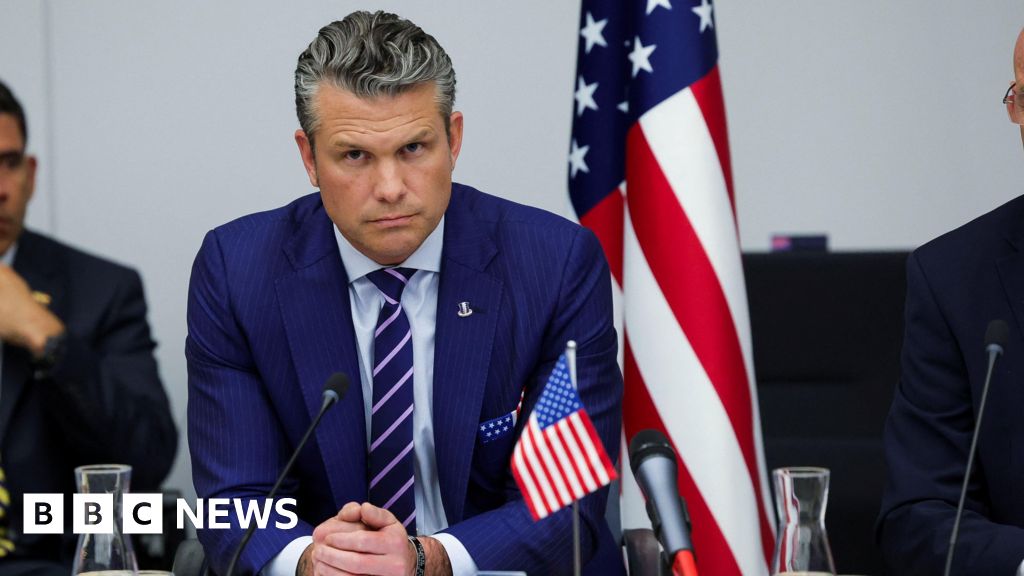
US Defense Secretary Pete Hegseth’s Flight Lands Safely in UK After Unscheduled Stop

In an unfolding incident with significant geopolitical repercussions, US Secretary of Defence Pete Hegseth’s aircraft made an unexpected emergency landing during a return flight from a NATO Defence Ministers’ meeting in Belgium. The Pentagon confirmed that the aircraft, en route back to the United States, experienced a crack in the windshield, prompting standard safety procedures and a precautionary landing in the UK. Despite the sudden turn of events, officials assured the public that all onboard, including Hegseth, are safe.

This incident underscores the increasing vulnerability of high-profile government assets during a period of heightened international tension. Tracking by BBC Verify, combined with FlightRadar24 data, revealed that the aircraft began losing altitude off the southwest coast of Ireland, before looping eastward. The aircraft’s transponder then issued a “7700 squawk code,” a universal signal among aircraft indicating a general emergency. Such protocols reveal how fragile even the most secure operations can be when hardware failures occur unexpectedly—a fact new to international observers addressing the risks of global leadership. In February, a similar crisis unfolded when a government plane carrying Secretary of State Marco Rubio was forced to turn back due to a crack in the cockpit window, illustrating a disturbingly recurring issue with safety standards in high-stakes air travel.

The international significance of these events extends beyond mere technical failures; they highlight the imperative for robust security and safety protocols amidst a rapidly evolving geopolitical landscape. The NATO defence meeting in Belgium, which was focused on security assistance for Ukraine, marks a critical phase where alliances are tested and various nations argue over support strategies. The United States, as a leader within NATO, bears the weight of maintaining both military readiness and diplomatic credibility. Analysts warn that such technical mishaps, if frequent or perceived as downgrades in preparedness, could diminish trust among allies and embolden adversarial blocs that seek to exploit perceived vulnerabilities. For many historians and security experts, these incidents serve as stark reminders: in today’s volatile world, one misstep can ripple across continents, altering the balance of power.

As the aircraft safely touched down in the UK, the incident remains a vivid emblem of today’s unpredictable global stage. The image of a top US defense official’s plane grappling with technical failure amid international crises leaves an indelible mark on the collective consciousness. With nations eyeing each other warily, and the specter of conflict lingering over fragile peace agreements, these moments become more than mere technical anomalies—they are a testament to the mounting pressures on the machinery of global security. As history continues to unfold, the question remains: how many more crises will test the resilience of our alliances, and at what point will the cracks in the global order become impossible to conceal? The answer—like the fragile windshield of Hegseth’s plane—remains unseen but undeniably imminent, waiting to shape the course of history yet to be written.

Social Media Auto Publish Powered By : XYZScripts.com