Matox News

Truth Over Trends, always!

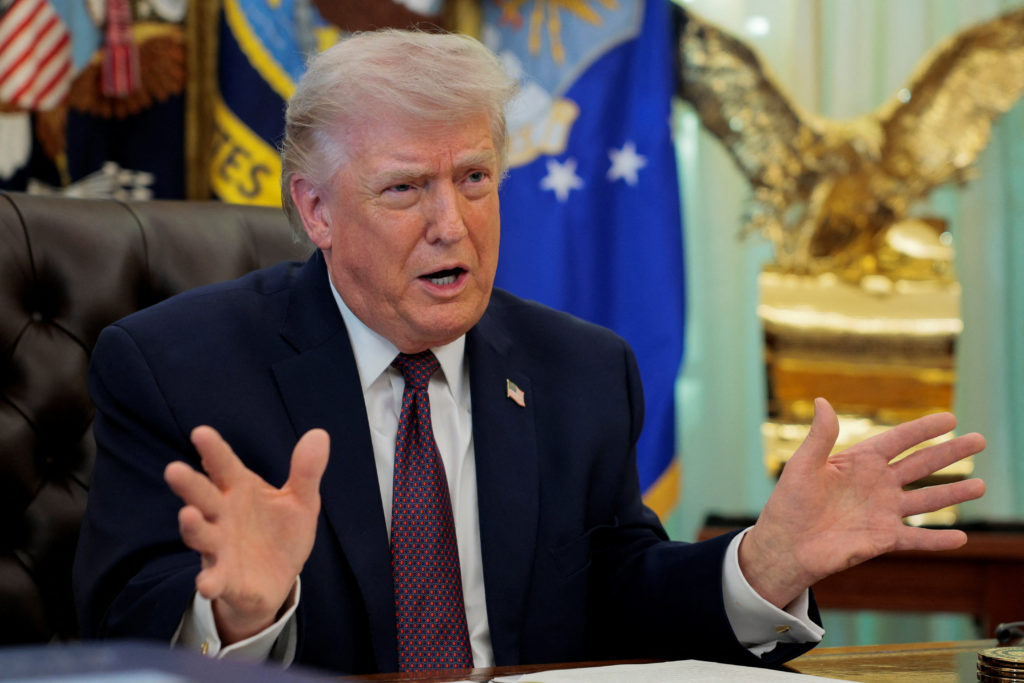
U.S. President Trump signs an executive order in the Oval Office of the White House
White House touts Trump’s pharma deals saving billions for Americans

In the relentless arena of American politics, the recent revelations concerning President Donald Trump’s negotiations with **pharmaceutical companies** underscore a critical juncture where economic policy intersects with political strategy. According to White House economists, these deals—aimed at reducing prescription drug prices to match those of other nations—could generate a staggering $529 billion in savings over the next decade. While such economic projections appeal to the public’s desire for affordability, the underlying power struggles reveal much about the conflicting forces shaping the nation’s health sector and its political landscape.

At the core of this controversy lies the tension between free-market principles and state intervention. Critics argue that the policy shift—a redefinition of conventional healthcare diplomacy— signals a bold move by the Trump administration to leverage government influence over private corporations. This approach echoes a longstanding debate among constitutional theorists who grapple with the extent of government authority. Drawing parallels with Reagan-era deregulation or Teddy Roosevelt’s trust-busting campaigns, the push for price moderation attempts to realign the balance of power in favor of consumers; yet, opponents contend that it risks undermining the very innovation that drives the pharmaceutical industry.

For many political analysts, the issue is less about healthcare and more about control. The Trump administration’s strategy demonstrates a deft understanding of how decisions made in the corridors of power ripple through the lives of ordinary Americans, influencing access to medication, economic stability, and perceptions of governmental efficacy. This is a classic example of policy choices serving as battlegrounds for influence. It’s not merely a matter of economics but a decisive move in power struggles where agencies, corporate interests, and political ideologies clash in a contest that will ultimately determine who holds sway in shaping the national future.

Significantly, these developments evoke echoes of historical parallels—such as FDR’s New Deal confrontations or the ongoing debate over the scope of presidential power. Scholars like **Leo Strauss** and **Walter Bagehot** have long observed that politics becomes the stage where destiny is written. In this context, the Trump administration’s policies redefine the boundaries of who controls healthcare. As the midterm elections loom, the political theater intensifies, encapsulating the fierce power struggle over **America’s economic sovereignty** and the rights of the people versus the influence of special interests.

In the final analysis, the battle over prescription drug pricing is emblematic of a larger, ongoing confrontation—one where the stakes are nothing less than the soul of the republic. As policymakers carve out their visions of America’s future, every decision becomes a stroke in the grand canvas of destiny, a reminder that politics is more than policy—it is the forge where history is shaped. How this controversy unfolds will determine not only healthcare but also the broader trajectory of American sovereignty and liberty, leaving an indelible mark on the fabric of the nation’s narrative.

US and UK Strike Bold Zero-Tariff Pharma Deal to Boost Future Innovation

The Future of Pharma: UK and US Seal a Historic Trade Deal

In a move that signals a new chapter in global healthcare innovation, the United Kingdom and the United States have recently forged a groundbreaking agreement designed to safeguard the vital link between pharmaceutical exports and national security. Under this pact, the UK will maintain zero tariffs on medicines exported into America for three years, even as it gradually increases its investment in healthcare and research. This strategic decision is not only a boost for the UK’s life sciences sector but also a testament to the importance of embracing the shifting landscape of global commerce.

The agreement emerges amid mounting global pressure and ongoing negotiations, with the UK’s Business Secretary Peter Kyle emphasizing that it “guarantees” that medicines worth over £5 billion annually will enter the US tariff-free. This move comes in response to previous threats by US President Donald Trump, who, in 2023, had expressed intentions to slap tariffs of up to 100% on branded drug imports — a stark warning to the UK’s robust pharmaceutical industry. The recent deal reflects a strategic balancing act: the UK will slightly increase the prices it deems acceptable for new treatments by 25%, and plan to ramp up NHS spending on medicines from 0.3% to 0.6% of GDP over the next decade, ultimately fostering an environment conducive to innovation while securing export stability.

How This Impacting the Personal and the Broader Economy

This development is more than a political maneuver—it has profound implications for individual health and national economic resilience. For the average citizen, it translates to increased access to cutting-edge medicines and therapies, ensuring that the wellness revolution continues unimpeded by tariff disputes. It underscores a collective desire for a system where progress isn’t hindered by protectionist measures, but instead propelled by collaboration and innovation. Moreover, the deal promises to bolster employment and investments, as UK-based pharmaceutical companies are freed from burdensome tariffs, paving the way for continued research breakthroughs and enhanced manufacturing capacity in the US market.

It’s worth noting that the UK government, in the face of internal budget pressures and international competition, has committed to increase its investment in research and development, signaling a shift towards fostering a **well-rounded, globally competitive biotech environment**. Experts like William Bain from the British Chambers of Commerce have welcomed the move, highlighting that it creates an “environment conducive” to ongoing investment, research, and exports, which are essential for maintaining global competitiveness in healthcare. Conversely, critics voice concerns about the potential for increased NHS spending to strain already stretched resources, urging the government to balance innovation with sustainability.

Looking Beyond Borders: A Reflection on a Connected Future

This story is a reflection of a *changing world*—one where **adaptability and strategic alliances** are paramount**. The US’s vigilant stance on safeguarding its domestic manufacturing, paired with the UK’s desire to remain a **life sciences hub**, demonstrates the importance of resilience in a **hyper-connected global economy**. As U.S. companies like Bristol Myers Squibb pledge to amplify their investments, and UK giants like AstraZeneca recalibrate their strategies, the overarching theme is clear: the future belongs to those who bridge borders with innovative trade agreements and shared visions. For the individual looking to cultivate personal wellbeing amidst this evolving landscape, the message is inspiring—

embrace change, pursue knowledge, and champion progress. When nations collaborate and prioritize innovation, the journey toward better health and prosperity becomes not just a dream but a tangible reality — one fueled by resilience, strategic foresight, and unwavering determination.

Social Media Auto Publish Powered By : XYZScripts.com



