
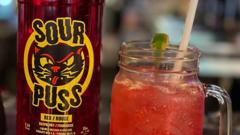

A significant US liquor trade dispute has forced one American manufacturer to undertake extraordinary measures to retain its foothold in the Canadian market. Phillips Distilling, a Minnesota-based, family-owned company, saw a staggering 70% of its Canadian business vanish almost overnight. This dramatic decline was a direct consequence of retaliatory boycotts initiated by Canadian provinces against American-made liquor, stemming from US tariffs imposed on Canada.
The situation underscores the profound challenges businesses face when caught in the crossfire of international trade tensions, compelling them to innovate or risk losing vital markets.
The Genesis of Cross-Border Economic Tensions
The ongoing trade tensions between the United States and Canada have reverberated through various sectors, with the liquor industry serving as a notable example. Since Spring 2025, Canadian provinces have implemented boycotts on American spirits. This move was a direct response to tariffs imposed by the US President against Canada, escalating an already strained economic relationship. For businesses like Phillips Distilling, which produces popular brands such as Sour Puss, the impact was immediate and severe.
The boycott targeted a significant portion of Phillips Distilling’s international revenue. Canada, notably, represents the largest consumer market for their Sour Puss brand, making the sales halt particularly damaging. CEO Andy England described the substantial loss as ‘a disaster,’ a sentiment reflecting the profound challenges faced by American enterprises operating in a globalized yet politically charged economy.
Strategic Adaptation and Market Resilience
In the face of such adversity, Phillips Distilling demonstrated a commitment to market presence and consumer loyalty. Rather than simply withdrawing, the company pursued an innovative solution to circumvent the trade barriers. This involved a strategic decision to relocate a portion of its manufacturing operations across the border.
The move to establish production capabilities within Canada allows Phillips Distilling to re-enter the market with products that are technically Canadian-made, thus bypassing the provincial boycotts. This tactical shift ensures continued availability for consumers and preserves the company’s long-term market share. It highlights the ingenuity required for businesses to navigate complex global trade environments.
- Impact: 70% loss of Canadian business for Phillips Distilling.
- Cause: Canadian provincial boycott of US liquor.
- Reason: Retaliation for US tariffs against Canada.
- Solution: Relocation of manufacturing operations to Canada.
Implications for Free Markets and Consumers
This case underscores the broader implications of protectionist policies and trade disputes on both businesses and consumers. While intended to exert political pressure, such measures often create unintended consequences, disrupting supply chains, increasing operational costs, and limiting consumer choice.
For consumers, like the 35-year-old mentioned in a recent News Desk report who expressed concern over sourcing her favorite Sour Puss, these disputes translate into uncertainty and potential scarcity. The principle of free markets, which thrives on open exchange and minimal governmental interference, is challenged when political disagreements spill over into economic sanctions. Businesses are left to absorb costs or innovate, as Phillips Distilling did, to maintain market access and protect their investments.
The loss of 70% of our Canadian business was nothing short of ‘a disaster,’ underscoring the severe impact of trade disputes on American enterprises.
The experience of Phillips Distilling serves as a stark reminder of the delicate balance in international trade relations. It illustrates how American companies, when confronted with geopolitical challenges, can adapt and innovate to protect their interests and continue serving their customers. As trade dynamics continue to evolve, the ability of businesses to strategically adjust will remain paramount for resilience and growth in the global marketplace.






