Matox News

Truth Over Trends, always!

Undercover Cop Stops IS Plot to Kill British Jews – Podcast

In a stark reminder of the ongoing threat posed by radical extremism within Western societies, the recent convictions in Great Britain have underscored the persistent danger of homegrown terrorism. Walid Saadaoui, a man with a seemingly ordinary background—once a holiday entertainer in Tunisia before relocating to the UK—harbored a deadly secret: allegiance to Islamic State. His story, now publicly condemned, exemplifies how deceptive appearances can mask dangerous intentions, challenging policymakers and security agencies alike to adapt to evolving threats.

Saadaoui, alongside accomplice Amar Hussein, was sentenced to life imprisonment after authorities uncovered a well-coordinated plot to attack Greater Manchester’s Jewish community—a demographic historically targeted by extremist factions. The plot reveals the deep layers of ISIS’s clandestine operations penetrating Western neighborhoods and exploiting communities’ vulnerabilities. An undercover police officer, known by the codename ‘Farouk’, was embedded within their network—an operation exposing the delicate and dangerous balance between civil liberties and security efforts.

Analysts from various international think tanks highlight that the geopolitical ramifications of such conspiracies extend beyond national borders. Britain, as a cornerstone of the Western alliance, faces pressure to toughen counter-terrorism strategies while grappling with questions about integration and community resilience. These trials have sparked debates about how societal divisions and radicalization enable extremist ideologies to take root even in multicultural strongholds. The conviction of Saadaoui’s brother, Bilel Saadaoui, for failing to disclose critical information, underscores the complex web of supposition and betrayal that often accompanies these plots, serving as a stark warning that extremist networks operate on multiple levels of concealment and complicity.

International institutions and security analysts warn that the fight against radical extremism is far from over. The case echoes a broader pattern identified by experts from organizations such as Interpol and Europol, which emphasize persistent threats on domestic frontiers fueled by social alienation and geopolitical conflicts elsewhere. As histories from the Middle East and North Africa continue to influence European security landscapes, the question remains: how long can nations withstand the rising tide of ideological warfare? With each thwarted attack, history inches forward, yet the risk of a devastating strike persists—an ominous reminder that in the battle for societal stability, the threats lurking in shadows are often hardest to detect, and the cost of complacency can be measured in bloodshed.
Nigerian Officers Set for Trial Over Alleged Coup Plot Against President Bola Tinubu

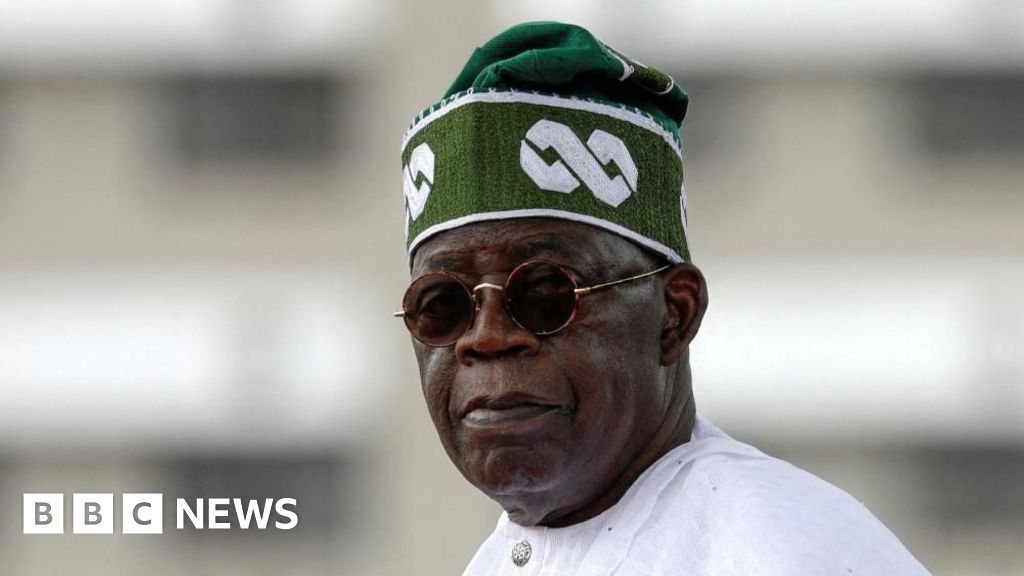
Nigeria, Africa’s most populous nation and a key regional power, is once again facing the specter of military discontent. Recent reports confirm that a group of military officers are scheduled to face trial on charges of plotting to overthrow President Bola Tinubu last year. This development underscores the fragile stability that persists within Nigeria’s armed forces, which have historically oscillated between authoritarian rule and fragile civilian governance. Although the Nigerian military initially dismissed rumors of an attempted coup, an internal investigation has revealed enough evidence for some officers to stand before a military judicial panel, signaling a potential shift in the internal dynamics of Nigeria’s security apparatus.

Historically, Nigeria has endured a turbulent political landscape marked by multiple coups spanning from 1966 to 1993, leaving scars on its national psyche and institutional stability. Today, analysts warn that allegations of coup‑plotting are especially sensitive given the country’s history. The military’s official stance emphasizes that such plots are “inconsistent with the ethics, values, and professional standards” expected of its soldiers, but the underlying tensions run deep. As violent insurgencies, political unrest, and economic frustrations continue to simmer, the armed forces find themselves under increasing operational pressure—fighting jihadist groups in the northeast, combating communal violence, and addressing widespread insecurity. These multifaceted challenges threaten to weaken discipline and cohesion within the military ranks, which many experts attribute to the rising possibility of dissident factions seeking to challenge civilian authority.

This internal crisis within Nigeria’s military must be viewed within the broader context of the current regional upheaval in West Africa. Countries such as Mali, Burkina Faso, Niger, and Guinea have experienced recent coups, prompting fears among regional policymakers and international observers. While countries like Mali and Burkina Faso continue to grapple with military takeovers, Guinea has seen a recent return to democratic rule after military-led interventions. These shifts are generating a sense of urgency and vigilance among the Ecowas regional bloc, which has historically positioned itself as a guarantor of stability in West Africa. For Nigeria, a nation often seen as the regional stabilizer, the question arises: how will its internal military unrest impact regional cohesion and security?

International analysts, including those from think tanks and organizations like the UN and Africa Union, warn that the delicate balance of power in West Africa is at risk. With Nigeria’s military asserting its loyalty to civilian rule publicly yet facing credible challenges from within, the possibility of a broader destabilization looms. The ongoing tensions reflect deeper issues—resource constraints, militant insurgencies, and internal factionalism—that threaten to unravel the progress made since Nigeria’s return to civilian rule in 1999. As these developments unfold, the shadow of history’s darker chapters looms large, reminding the world that the struggle for democracy is an ongoing battle fought not only on the streets but within the military’s own ranks.

In the unfolding narrative of Nigeria and West Africa, the current tensions serve as a stark warning—history’s lessons are not easily forgotten. The continuing saga of military influence, regional instability, and the fight to secure democratic institutions may yet rewrite the future of this pivotal region. The world watches with bated breath, understanding that the decisions made now could shape the course of history for generations to come, as the section of history still being written demands resilience and resolve in the face of jeopardy.

FBI Stops Los Angeles New Year’s Eve Terror Plot, Authorities Announce

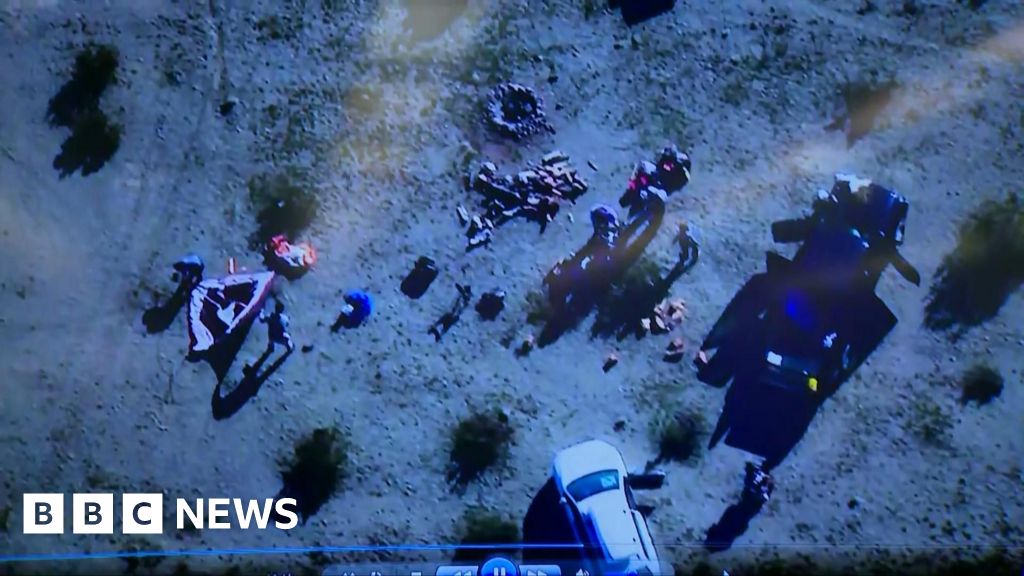
The recent disruption of a potential terror attack in Los Angeles by federal authorities underscores the fragile geopolitical landscape and the persistent threat of extremism within the United States. According to officials, four members of the Turtle Island Liberation Front, a radical offshoot of a pro-Palestinian, anti-government faction, were arrested on suspicion of plotting a coordinated bombing campaign aimed at multiple locations across southern California. The plot, believed to have been scheduled around the New Year’s Eve festivities, involved testing improvised explosive devices in the desert east of the city—a development that raises alarm on multiple levels.

This incident illustrates a broader challenge confronting America’s national security apparatus amidst an increasingly complex geopolitical matrix. The FBI’s swift intervention, which utilized surveillance assets and tactical forces, demonstrates the importance of vigilant law enforcement in countering domestic terror threats. US Attorney General Pam Bondi labeled the foiling of this plot as a preventative measure against “far-left” extremists, emphasizing that the threat comes from varied ideological spectrums. Analysts note that this event signals a shift in how domestic threats are perceived, especially as radical groups exploit social grievances and ideological fissures to mobilize and plan violence.

Significantly, researchers and international organizations have long warned of the rising proliferation of radical ideologies and their potential to destabilize societies. The United Nations and Department of Homeland Security have argued that such plots, if successful, could have devastating impacts — not only on local communities but also on international perceptions of America’s ability to maintain internal security. The suspects, whose ages range from 24 to 41, face serious charges including conspiracy and possession of unregistered destructive devices, highlighting the criminal underpinnings that threaten peace and stability. The incident also spotlights the ongoing challenge of radicalization and the necessity of resilient national security policies rooted in both intelligence and community engagement.

The broader geopolitical impact of this event extends beyond U.S. borders, fueling debates around extremism, migration policies, and the influence of global conflicts on domestic security. As China, Russia, and other geopolitical players continue to extend their influence through strategic maneuvers, the stability of the United States remains critical in maintaining global equilibrium. Analysts warn that permitting radical factions to operate unchecked threatens not only national but international stability, prompting a renewed focus on intelligence-sharing and preventative measures. The foiled plot in Los Angeles is a stark reminder that history continues to unfold on America’s streets—a saga where the lines between domestic and international threats blur beneath the weight of political and ideological turmoil.

As authorities continue to investigate potential ties and broader networks, the question remains: how prepared is the international community to confront these multifaceted threats? The incident has become a cautionary tale, illustrating how decisions made in the corridors of power and the actions of small extremist groups can leave a lasting mark on the modern geopolitical narrative. Today, history watches as an unpredictable future emerges—one where the resilience of societies, the vigilance of nations, and the resolve of global institutions will determine whether this chapter ends with tragedy or resilience. And as the world turns its gaze to the unfolding story, the true significance of this foiled attack may only be understood with hindsight, leaving society to ponder a simple but profound truth: the era of peace is never guaranteed—only defended.

Arrest Made in Pipe Bomb Plot Ahead of Capitol Riot—Justice Moves Against Threats to Democracy

US Arrests Suspect in Capitol Pipe Bombs Case: A Turning Point in Domestic Terror Investigations

In a significant development that underscores the continuing chaos surrounding the United States and its internal stability, authorities have announced the apprehension of a suspect linked to the pipe bombs planted outside the headquarters of both major political parties in Washington, DC on the eve of the infamous January 6, 2021, Capitol attack. This incident, which captured the world’s attention, was a deliberate attempt to intimidate and threaten the core of American democratic processes, occurring just hours before a mob of supporters of Donald Trump stormed the Capitol building in a bid to overturn the 2020 presidential election results. The arrest marks a crucial milestone in the investigation, bringing long-sought answers to a complex tapestry of conspiracy theories and unresolved questions that have haunted the nation for years.

Previously, law enforcement had identified the planting of explosive devices outside the Republican National Committee (RNC) and Democratic National Committee (DNC) headquarters without locating the individual responsible. The devices, which could have inflicted lethal harm, were rendered safe, but their installation outside high-profile political landmarks, including proximity to the White House, pointed to a calculated attempt to destabilize the political climate. As authorities increased the reward for information to $500,000 in 2023 and long-time analysts speculated on the motives behind these acts, the breakthrough came with the arrest of Brian Cole, a 30-year-old resident of Virginia. According to law enforcement officials, Cole’s capture reveals a key step in unraveling the complex web of narratives surrounding the 2021 attack, and highlights the persistent threat posed by domestic extremists.

Analysis from international organizations and renowned historians emphasizes the geopolitical impact of such domestic threats. Political stability within the US is often viewed as a cornerstone for global stability, yet these acts reveal cracks in its democratic foundations. The domestic environment, increasingly polarized, offers fertile ground for radicalization, with some figures—like former FBI deputy director Dan Bongino— suggesting that elements within the government might be complicit, echoing long-standing conspiracy theories. Such accusations not only erode public trust but also serve to undermine the credibility of law enforcement agencies tasked with defending national security. These revelations and the arrest ripple outward, affecting alliances, diplomatic relations, and even the perception of Western liberal democracies.

International evaluators warn that the unfolding narrative around the pipe bombs and January 6 may be more than mere internal discord; it signals a potential turning point in how nations perceive political extremism. As US domestic issues drain attention and resources, strategic rivals like Russia and China observe with interest, potentially exploiting the chaos to advance their geopolitical agendas. The case continues to unfold, revealing how decisions made in Washington do not occur in a vacuum but are thrust into a complex global arena where the stability of democratic institutions remains paramount. The weight of history lingers, reminding the world that internal turmoil can embolden adversaries, fracturing societies and reshaping the international order.

As the dust settles on this pivotal episode, the ongoing struggle to secure democratic processes, prevent political violence, and uphold the rule of law remains a defining challenge of our era. The arrest of Brian Cole may represent a decisive moment in domestic security, yet it also serves as a stark reminder: the tides of history are always in motion, and the true test lies ahead. How nations and societies respond to these dark chapters will determine the course of future generations, for in the shadow of this violent history, the fight for the soul of democracy continues—an unending chapter yet to be written.

Bolsonaro Told to Begin 27-Year Prison Term Over Coup Plot

Brazil’s Political Turmoil Shakes Global Balance

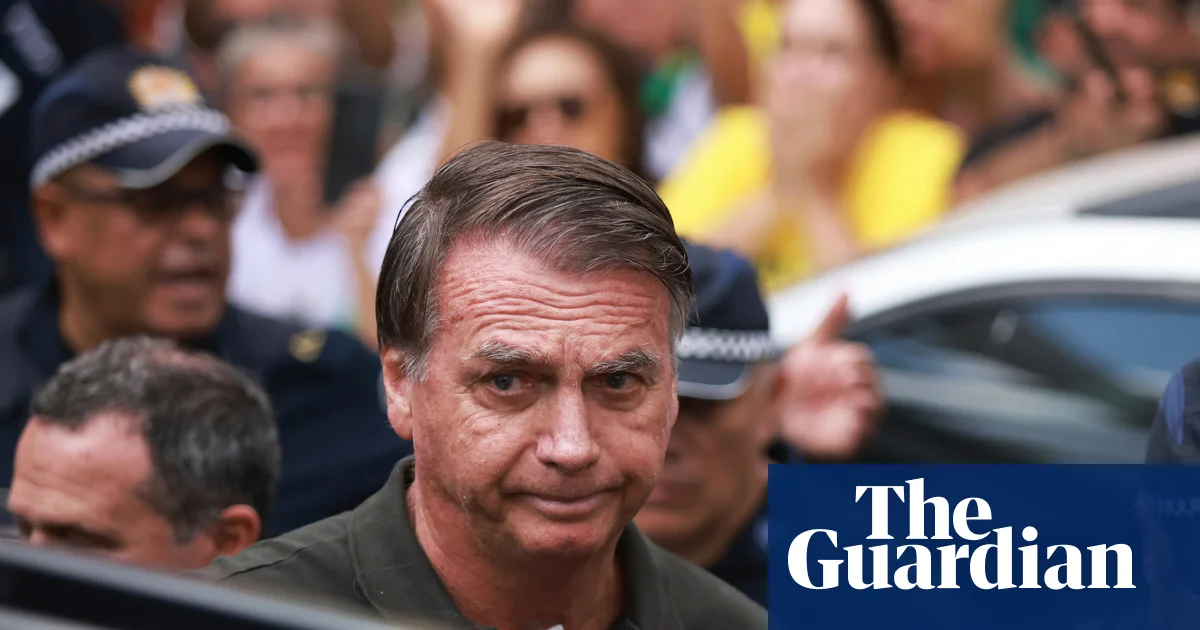
In a landmark decision that reverberates well beyond its borders, Brazil‘s Supreme Court has ordered that Jair Bolsonaro, the former president and a staunch right-wing figure, begin serving a prison sentence of 27 years and three months for allegedly orchestrating a coup conspiracy after his electoral defeat. Justice Alexandre de Moraes declared the case had reached its *final judgment*, leaving no room for appeals. This pivotal moment underscores a significant shift in Brazilian politics, signaling a firm move toward accountability amid heightened internal tensions.

The criminal proceedings stem from allegations that Bolsonaro led a conspiracy aimed at keeping him in power following his 2022 electoral loss to Luiz Inácio Lula da Silva. The former president, 70, was detained in Brasília and transferred from house detention to a federal detention center after authorities deemed him a flight risk. In a startling confession during a hearing, Bolsonaro admitted to attempting to open his ankle monitor, citing “medicine-induced paranoia” as a reason, but maintained his innocence and insisted he had no intention of fleeing. The court has ordered that Bolsonaro receive full-time medical care, highlighting concerns over his deteriorating health as seen through statements from his medical team. This development underscores how **legal and health issues intersect** in shaping Brazil’s political future—a nation at a crossroads where judicial decisions could determine the trajectory of democracy itself.

International analysts and historians have warned that Bolsonaro’s conviction marks a *turning point* in **Brazil’s** history, illustrating the state’s resolve to uphold constitutional order and prevent the rise of authoritarian elements. The trial also revealed that Bolsonaro had prior knowledge of assassination plots against Lula and other political figures, while plans to arrest and execute Supreme Court Justice Moraes were uncovered—culminating in the *failed attempt* to destabilize Brazil’s democratic institutions. Despite these *threatening developments*, the military did not support Bolsonaro’s plots, and Lula was inaugurated peacefully in January 2023, reaffirming the resilience of formal political processes.

The aftermath of the conspiracy was swift and stern: Bolsonaro and his alleged co-conspirators— including former security and defense officials— were ordered to serve sentences, effectively dismantling his influence. Furthermore, Bolsonaro has been barred from running for public office until 2060, a move seen as a decisive blow to his political resurgence. Bolsonaro dismisses the proceedings as a “witch hunt,” but the courts’ unwavering stance signals a broader message: **democratic institutions will be defended regardless of political rhetoric or influence**. As the world watches, the question remains whether this bold step will restore stability or deepen the continent’s ongoing political crisis.

History’s pen continues to inscribe an extraordinary chapter for **Brazil**, a nation grappling with the aftermath of political violence and the challenge of safeguarding democratic principles against the tides of radicalism. The narrative is still unfolding—an epic marked by courage, confrontation, and the relentless pursuit of justice. As the dust settles on Bolsonaro’s unprecedented fall from grace, nations across the globe remain alert to the *potential for ripple effects*—a warning that, in a world teetering on the edge, dedicated leaders and institutions must stand firm. The fate of **Brazil** and its place in the international order hangs in the balance, as history watches with bated breath.

Bolsonaro Ordered to Begin 27-Year Prison Term Over Brazil Coup Plot

Brazil’s Recent Verdict and Its Geopolitical Ripples

The recent sentencing of Jair Bolsonaro, Brazil’s former president, marks a significant milestone in the country’s troubled journey towards stabilizing its fragile democracy. After being convicted of conspiring to overthrow the elected government through a planned coup, Bolsonaro has been ordered to serve a 27-year prison sentence within the confines of a police base in Brasília. This development does not merely represent a judicial victory for Brazil’s judiciary, but it fundamentally alters the nation’s political landscape and signals the potential end of a populist chapter that many see as perilous for Latin America’s largest democracy.

As Brazil confronts its internal divisions, the decision by the Supreme Court, led by justice Alexandre de Moraes, to enforce Bolsonaro’s sentence follows a tumultuous period marked by conspiracy, failed assassination plots targeting Luiz Inácio Lula da Silva, and widespread political unrest. The plot—designed to eliminate Lula and his vice, Geraldo Alckmin—was thwarted with military leaders refusing to participate, reflecting the complex dynamics between civilian rule and military influence in Brazil. The court’s ruling underscores a clear message: political violence and sedition will be met with firm judicial resistance, a stance that resonates across the region, where instability remains a potent threat to democratic institutions.

How International and Domestic Forces Shape Brazil’s Future

This sentencing sends a powerful signal to both domestic and international audiences. Analysts from global organizations, such as the Inter-American Democratic Charter, warn that this development might inspire efforts to reinforce democratic norms amid populist crises across Latin America. However, Bolsonaro’s supporters continue to see him as a victim of what they label a “systematic witch-hunt,” and vow to persist despite his incarceration. Acts of defiance—small protests and social media campaigns—highlight the ongoing ideological battle that continues to shape Brazil’s political future. The decline in Bolsonaro’s popularity, as confirmed by recent polls indicating support waning to just 13%, indicates that the country might be moving away from the brink of further chaos. Yet, the deeply embedded divisions persist, with some factions still unyielding in their allegiance to his nationalist and anti-establishment rhetoric.

The international community watches with cautious interest as Brazil turns another page. In the broader context, the geopolitical impact of this event extends beyond Brazil’s borders. The election of Bolsonaro and his alignment with right-wing, populist movements had previously stirred concerns among regional allies and global powers wary of the erosion of democratic institutions. As Brazil distances itself from its populist past, the shift might signal a move toward greater stability, but also raises questions about the role of populist leaders in Latin America’s future trajectory. Historically, such moments serve as turning points—either toward renewed democratic consolidation or further exacerbation of partisan divides.

History in the Making

Despite efforts by Bolsonaro’s loyalists to rally opposition, the current landscape suggests a waning influence of his movement. The arrest and sentencing of key conspirators, coupled with the diminished enthusiasm among his base, paint a picture of a political era approaching closure. Nonetheless, the shadows of his legacy remain, alive in the memory of those who see him as a hero fighting against an unjust system. As history continues to unfold, the weight of this moment will be felt for generations as a defining chapter—an insurrection narrowly averted, and a fragile democracy still battling to find footing amidst the turbulence of populist extremism.

Social Media Auto Publish Powered By : XYZScripts.com