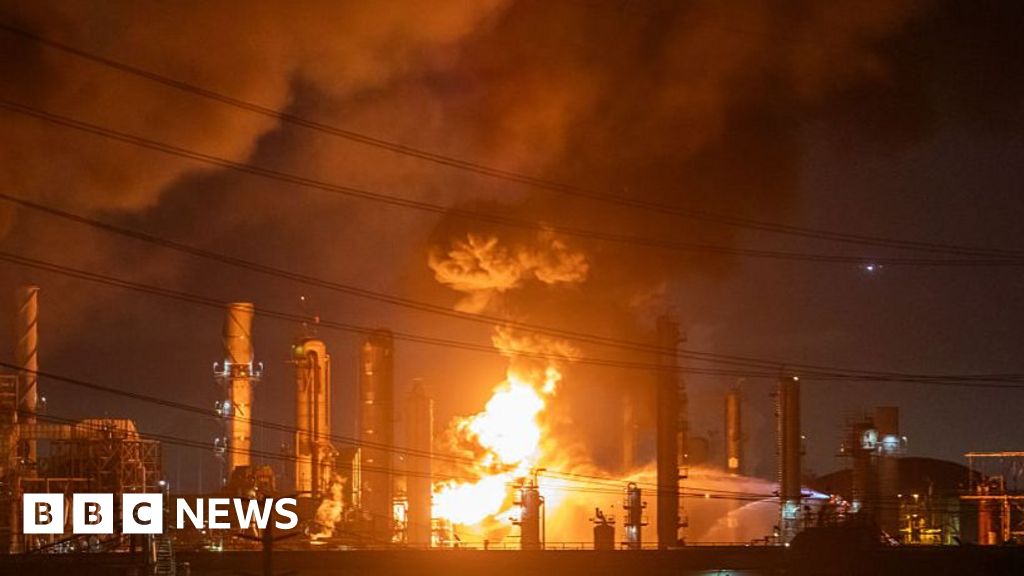

The recent fire at Chevron’s El Segundo refinery near Los Angeles has sent shockwaves through national and international energy sectors. The blaze, which broke out overnight, underscores the fragile nature of critical infrastructure in a global energy landscape fraught with uncertainty. While local authorities reported no immediate threat or evacuation orders, the incident highlights broader vulnerabilities within America’s refining capacity and draws attention to the potential for domestic crises to escalate into larger geopolitical concerns.
This refinery, built in 1911 and ranking as Chevron’s second-largest in the country, supplies roughly one-fifth of motor vehicle fuels and a staggering 40% of jet fuel in southern California. Its strategic importance cannot be overstated, especially given how tightly intertwined energy resource management is with national security and economic stability. With the fire contained but the damage still under investigation, analysts warn that such disruptions could influence gasoline prices, air travel, and regional stability. In an era where energy independence is highly contested, the incident raises questions about America’s resilience in the face of unforeseen disasters.
International organizations and security analysts have long warned that disruptions in the American energy infrastructure could have cascading effects on global markets. The International Energy Agency (IEA) has repeatedly underscored the importance of diversifying energy sources to mitigate risks from such localized but potent incidents. Meanwhile, geopolitical tensions between major powers continue to influence global energy supplies, and the possibility of targeted attacks or sabotage—particularly amidst rising geopolitical rivalries—cannot be dismissed. As historians point out, last decade’s energy crises were often precipitated by seemingly isolated incidents yet had ripple effects that reshaped alliances and economic policies worldwide.
The fire’s symbolic significance extends beyond the immediate damage. It serves as a stark reminder that how nations respond to such crises can shape their future trajectories. Cities like Los Angeles are vital nodes in the global energy web, and local disruptions may be exploited as leverage by hostile actors in an increasingly multipolar geopolitical arena. Experts warn that if these vulnerabilities are left unaddressed, they could fuel narratives of decline and dependency that are already fueling populist movements in the West. The incident also raises the threat of environmental contamination, which local officials are monitoring closely, but the broader consequences for energy security remain a pressing concern for policymakers.
As the world watches this unfolding crisis, with flames still smoldering and the specter of potential repercussions looming, history reminds us that such incidents often serve as turning points—either as catalysts for reform or as moments of vulnerability exploited by rivals. The decision of nations and corporations to fortify or neglect their critical infrastructure will define future geopolitics. With each passing day, the weight of history continues to mount, and the question remains: when calamity strikes, will the world have prepared sufficiently to withstand its toll?