Matox News

Truth Over Trends, always!

Polish PM Blames Ukraine Spies for Rail Sabotage, Ties to Russia

Poland has recently become the focal point of a mounting crisis that underscores the fragile balance of power in Eastern Europe. The Polish government, led by Prime Minister Donald Tusk, has publicly linked two suspects, both long-time operatives allegedly working for Russia, to a series of destructive acts on Poland’s railway infrastructure. These sabotage operations, classified as “unprecedented,” are not isolated incidents but are viewed as part of a broader campaign to destabilize the region and threaten NATO’s eastern flank.

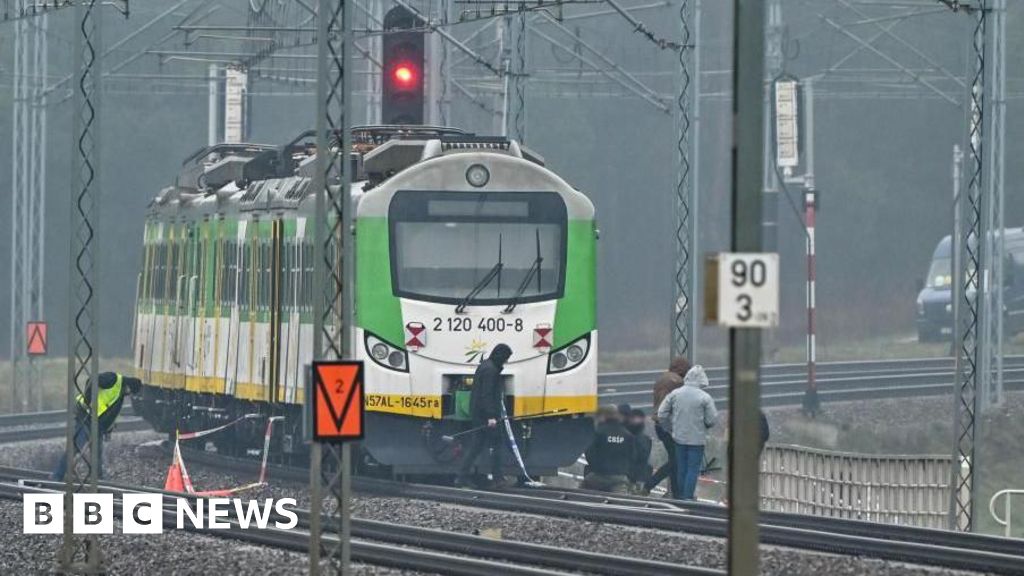
The suspects, identified as foreign agents with ties to Russian intelligence, crossed into Poland from Belarus during the autumn in a move that signals coordinated effort and strategic planning. Tusk disclosed that one of the suspects had been convicted in absentia of sabotage activities in Ukraine, hinting at a deepening infiltration into Poland’s vital transit corridors. On November 15, an explosion involving a military-grade explosive device caused minor damage near Mika, a village southeast of Warsaw, and was captured on CCTV. Despite the minimal physical impact, the event conformed to a pattern of targeted attempts to derail supply lines, which are crucial for aiding Ukraine amidst ongoing conflicts with Russia.

The broader geopolitical impact of these incidents is profound. Poland’s railway network is a lifeline connecting NATO allies to Ukraine, facilitating military support, humanitarian aid, and economic cooperation. As Poland has become a strategic gateway in the escalating proxy conflict, these acts of sabotage could be interpreted as Russia’s efforts to destabilize NATO’s eastern defenses and weaken the cohesion of the alliance. Analysts from the International Crisis Group warn that such covert operations are part of a layered strategy to erode trust and create chaos at critical logistical junctures. The *turning point* could come if similar tactics are adopted elsewhere in Central and Eastern Europe, further complicating NATO’s defensive posture.

While Russia has yet to officially comment, the international community remains watchful. Many experts believe that these acts are indicative of a broader Russian strategy to rekindle Cold War tensions, this time with an emphasis on asymmetrical warfare. The potential for escalation remains high, especially as Poland prepares to increase alert levels and enhance security protocols across its railway lines. Historically, the dangerous precedent of state-sponsored sabotage has ushered in long-term regional instability, and this current development might be the first salvo in what analysts warn could be a sustained campaign to expand Russia’s influence beyond Ukraine. The **United States** and **European Union** are closely monitoring these events, recognizing that the stakes are no longer confined to regional security but threaten the future stability of the entire European continent.

The shadowy dance of espionage, sabotage, and diplomatic posturing reminds the world that history is still being written upon the battlegrounds of Europe. Where once Cold War fears haunted east-west relations, today’s geopolitical chessboard is marked by new players and old tactics. As Poland braces for further threats, the broader question remains: how will nations respond to the relentless encroachment of influence pitted against them? The pages of history are turning rapidly, and in this unfolding chapter, the stakes are nothing short of the future of democratic stability across the continent. The world watches—and waits—for what happens next.
Polish PM condemns historic sabotage after deadly railway blast—Europe on alert

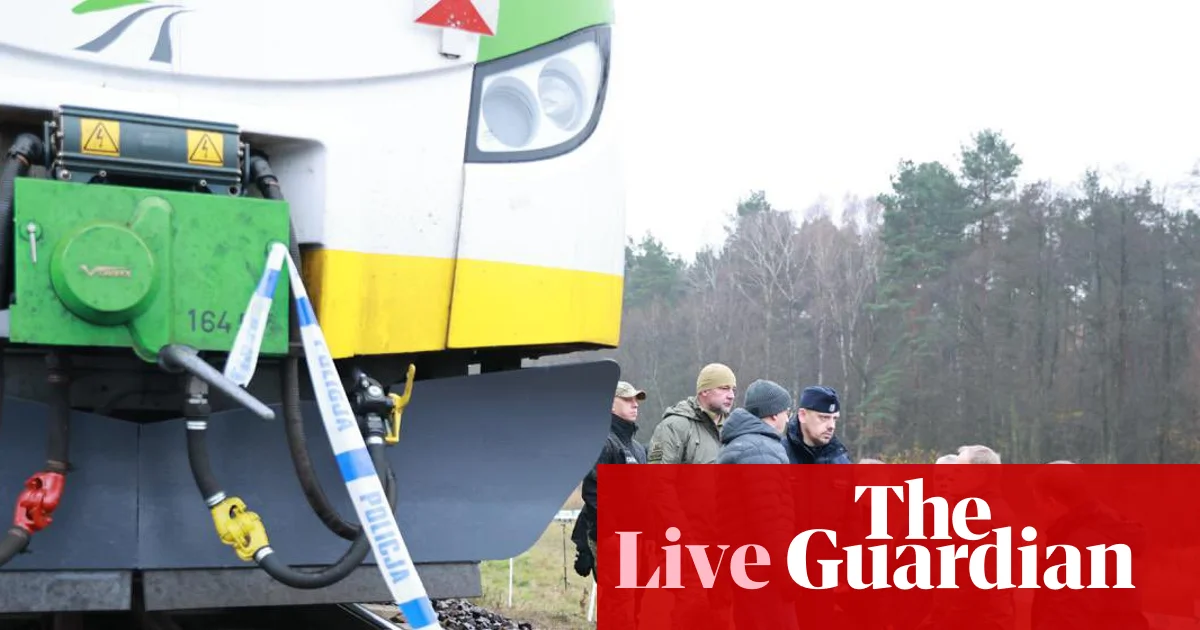
Across Europe, recent developments have thrust the continent into a precarious era of geo-strategic uncertainty. Poland, a pivotal NATO member, has become the epicenter of a marked escalation in hybrid warfare. After an unprecedented act of sabotage targeting a strategic railway route near Lublin, Polish authorities confirmed that an explosive device had been deliberately placed on the tracks, causing significant damage and prompting fears of even broader destabilization. Such incidents are not isolated but part of a broader pattern of covert operations aimed at destabilizing Eastern European nations and threatening NATO’s eastern flank.

Poland’s Prime Minister Donald Tusk described the attack as “an unprecedented act of sabotage aimed at the security of the Polish state and its citizens,” underscoring the gravity of the incident. The attack coincides with high alert due to ongoing hybrid threats from Russia and Belarus. In the wake of more than 20 drones flying into Polish airspace last September, these recent sabotage efforts are fueling fears within NATO that Russia’s military capabilities are evolving to include sophisticated drone warfare and covert sabotage operations. International security analysts warn that Russia could attempt to test NATO’s defenses within the next two to four years, potentially even launching aggressive maneuvers or attacks on Baltic states, which would trigger Article Five of NATO’s charter.

Meanwhile, European Union defense officials, including Andrius Kubilius, have voiced urgent alarms about the possibility of renewed conflict in the Baltics. Kubilius emphasized the importance of lessons learned from Ukraine’s fierce resistance against Russia, advocating for acceleration in NATO and EU defense readiness. His warning indicates a consensus among military strategists that Russia’s forces have not only grown stronger since February 2022 but are now capable of deploying millions of drones to sow chaos and conduct covert operations across Eastern Europe. As these threats loom, policymakers across the continent are under mounting pressure to strengthen alliances and fortify defenses, lest they wake up to a sudden onslaught from a battle-hardened Russian military that eagerly tests the limits of NATO’s resolve.

Adding to the mounting tensions, Poland’s authorities have pointed fingers at sabotage intent on destabilizing their infrastructure and hampering aid deliveries to Ukraine. The incident involving the destruction of a train track and damage to other critical railway sections reflect an alarming escalation in covert actions by unknown actors—most likely aligned with Russia or its proxies. With Prime Minister Tusk asserting that “we will catch the perpetrators, regardless of who their backers are,” the geopolitical implications are profound. This series of deliberate attacks signals a disturbing shift towards asymmetric warfare that directly threatens the stability of European borders and the security of NATO allies. As history continues to unfold, the continent stands at a crossroads; one path leads toward renewed peace through strengthened alliances, while the other risks plunging into chaos as adversaries exploit vulnerabilities that bitter lessons from Ukraine have failed to remedy.

Polish judge refuses extradition of Nord Stream suspect, calls it a 'just act'
Polish judge refuses extradition of Nord Stream suspect, calls it a ‘just act’

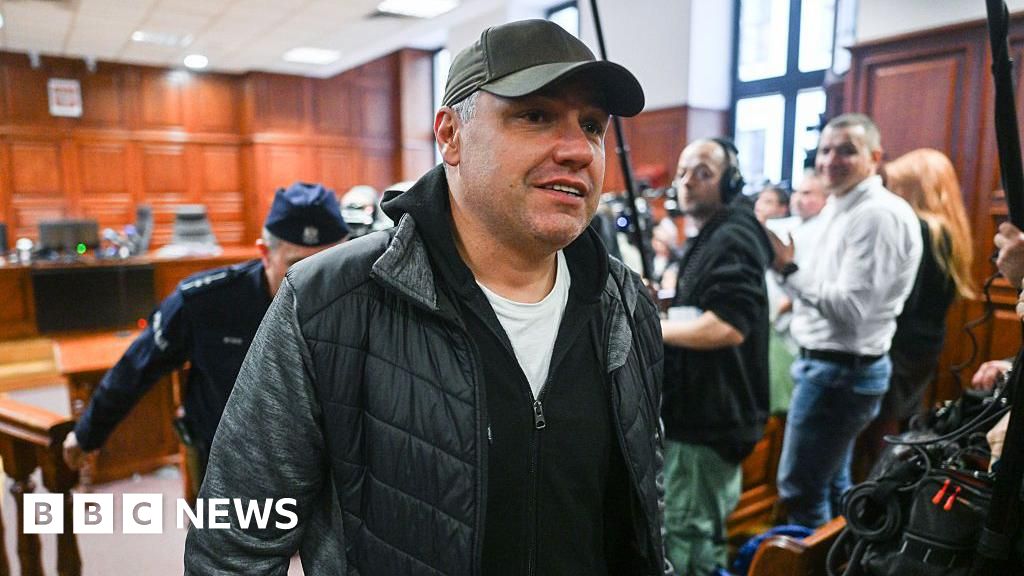
In a development that underscores the escalating geopolitical tensions surrounding energy infrastructure and national sovereignty, a Polish court recently made a highly controversial ruling regarding the suspected sabotage of the Nord Stream pipelines—an incident that has reverberated across Europe and beyond. The court refused to extradite a Ukrainian suspect, Volodymyr Zhuravlyov, accused by Germany of involvement in the September 2022 detonation. The judge’s decision has ignited fierce debates about the legality, responsibility, and geopolitical ramifications, shifting the narrative in ways that threaten to unravel the fragile balance of international diplomacy.

Initially, blame for the explosions was pinned on Russia, given its major stake in the pipelines that crisscrossed the Baltic Sea, connecting Russia to Germany. However, signs of Ukrainian involvement emerged—an assertion vehemently denied by officials in Kyiv. The case takes on added complexity considering Poland’s own stance: a vocal critic of the pipelines, especially Nord Stream 2, which Poland viewed as a geopolitical tool used by Berlin to deepen Europe’s dependence on Moscow. Polish Prime Minister Donald Tusk vocalized support for the court’s ruling, stating that the case was “closed,” fostering speculation about whether political motives are intertwining with legal adjudication. Critics and experts contend that these events could stir a storm of diplomatic retaliation, as nations grapple with the blurred lines between what constitutes acts of war and legitimate resistance in a time of conflict.

The court’s ruling, which highlights the war in Ukraine as a backdrop, sparks provocative questions about international jurisdiction and national sovereignty. Judge Dariusz Lubowski’s passionate speech framed the incident within a context of “justified” acts of defense, citing historical figures such as Aristotle and Saint Thomas Aquinas to justify what, in peacetime, might be viewed as sabotage. His assertion that Ukraine’s alleged actions were a “rational and just” response to “Russia’s bloody and genocidal attack” reveals an underlying political commentary that critics argue could set a dangerous precedent—favoring the view that acts of sabotage during wartime are morally defensible. Such a stance resonates deeply with many analysts warning that it could embolden other nations to justify targeted attacks against strategic infrastructure, risking global destabilization in the pursuit of national interests.

The geopolitical impact of this legal saga extends to Europe’s energy security and alliance structures. Germany’s halting of the Nord Stream 1 pipelines and the delayed entry of Nord Stream 2 represent more than just economic shifts—they symbolize Europe’s grappling with energy dependency and the broader contest of influence between the West, Russia, and Ukraine. The case also exposes gaps in the EU’s legal framework, with judges questioning whether Germany has jurisdiction over acts carried out in international waters, with ownership and responsibility clouded by complex legal and political layers. Analysts warn that the verdict not only complicates efforts to hold perpetrators accountable but also deepens divisions within the European Union—divisions that could be exploited by adversaries seeking to weaken Western unity in the face of ongoing conflicts.

As history turns another page, the story of the Nord Stream sabotage continues to unfold, leaving a trail of questions that threaten to define the new era of international conflict. The decision in Warsaw is more than a legal verdict; it is a snapshot of a world where lines of morality and legality are blurred amid the chaos of war and power struggles. In the shadows of courtrooms and diplomatic corridors, nations are watching as the fabric of trust and sovereignty is tested—reminding us all that in geopolitics, the stakes are nothing less than the future of freedom and stability itself. The weight of history presses down, and the question remains: who will claim the next chapter—peace, or chaos?

Social Media Auto Publish Powered By : XYZScripts.com



