Matox News

Truth Over Trends, always!

Fact-Check: Popular claim about health benefits is misleading, experts say

Assessing President Trump’s Recent Claims on Employment and Food Assistance Programs

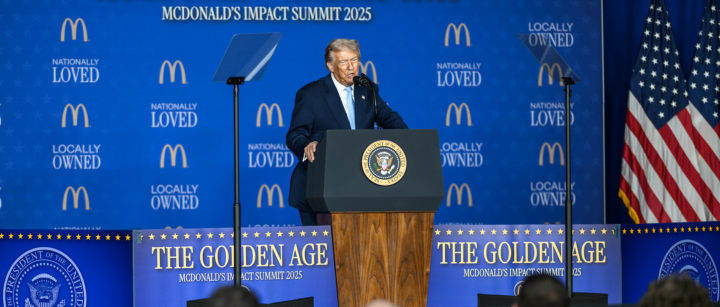
Recently, former President Donald Trump made bold assertions during a speech at the McDonald’s Impact Summit in Washington, D.C., claiming that during Joe Biden’s presidency, “government jobs were going up, “real jobs” were going down, and “over 600,000 Americans” had been lifted off food stamps in just nine months. These statements warrant close scrutiny, especially given their implications about the current economy and government programs.

Private Sector Job Growth and Government Employment

  • Trump’s claim that “real jobs” were decreasing under Biden is misleading. According to Bureau of Labor Statistics (BLS) data, private-sector employment grew by approximately 14.3 million jobs, or about 11.8%, during Biden’s tenure. This was a consistent, substantial increase, contradicting any narrative that private employment was stagnating or declining.
  • Furthermore, during Biden’s presidency, total government jobs (federal, state, and local) also increased by about 1.8 million jobs, equating to an 8.3% rise. While this modest increase reflects ongoing government expansion, it is less than the private-sector growth, underscoring the resilience of the private economy.
  • Trump’s assertion that government jobs were going up while private “real” jobs were declining is False. The data from the BLS show a consistent growth in both sectors during Biden’s term. Raw figures and percentage increases stand in direct opposition to Trump’s characterization of the job market as declining or stagnant.

Analysis of Federal and State Workforce Trends

Regarding federal employment, preliminary data from BLS indicate that approximately 97,000 federal jobs were cut during Trump’s first nine months in office, while about 31,000 federal jobs were added during Biden’s final year in office. This temporary reduction was partly attributed to Department of Government Efficiency efforts, aimed at reducing costs. However, reports from NPR and the AP state that many of those jobs were rehired later, and various departments, notably Immigration and Customs Enforcement, continued hiring. Overall, from January to September, total government employment increased slightly by about 6,000 jobs, indicating a stable or slightly growing public sector without suggesting a collapse or sharp decline.

Food Stamps / SNAP Enrollment Figures

Trump also claimed that “over 600,000 Americans” were lifted from SNAP in nine months—a “record” decline according to him. However, experts and data from the USDA counter this. Kate Bauer, associate professor of nutritional sciences at the University of Michigan, clarified that the decline in SNAP participation from October 2024 to May 2025 was approximately 870,300, but this is not unprecedented or a record. Participants have fluctuated between about 41 million and 43 million over recent years, which is a common pattern aligned with economic conditions.

Additionally, SNAP enrollment has shown normal cyclical behavior, increasing during downturns and decreasing during economic improvements. Dr. Sara Bleich of Harvard’s T.H. Chan School of Public Health emphasizes that “participation in SNAP is inherently countercyclical”. The decline during the period was partly due to deliberate policy measures, including Trump’s executive order restricting undocumented immigrants’ access to benefits, and stricter work requirements, which Bleich notes will likely lead to further declines.

Conclusion: The Importance of Accurate Data

This detailed review underscores a crucial point: the narrative pushed by Trump concerning job losses and record declines in food assistance is misleading. The data indicates that the U.S. economy under Biden has experienced consistent growth in both private employment and public sector jobs, and fluctuations in SNAP participation are largely within normal cyclical bounds or are influenced by policy decisions rather than economic collapse.

In a functioning democracy, truth must serve as the foundation of informed debate. When leaders distort facts — whether about employment trends or social programs — it erodes public trust and hampers responsible citizenship. Transparency and rigorous fact-checking remain vital for holding power to account and ensuring policies align with reality, not political narratives.

Turkey calls for over 2,000 years in prison for Istanbul’s popular Mayor Imamoglu

In a move that has sent shockwaves through Turkey’s political landscape, the mayor of Istanbul, Ekrem Imamoglu, faces a barrage of serious charges that threaten to reshape the nation’s trajectory. The prosecutor’s office in Istanbul has leveled accusations of 142 counts of corruption, bribery, and money laundering, claiming that Imamoglu was at the helm of a sprawling criminal network. Such allegations, if proven, could lead to a combined jail sentence exceeding 2,400 years — a staggering figure that underscores the gravity of what some analysts are calling an attempt to quash Turkey’s most prominent opposition figure.

The charges against Imamoglu, who achieved national prominence by defeating President Recep Tayyip Erdogan’s allies in the 2019 mayoral race and securing a landslide victory in April 2024, are widely viewed as a politically motivated crackdown. His supporters and opposition leaders alike argue that this move is aimed at dismantling the secular CHP’s strongest presidential contender for 2028. The Turkish government denies political bias, insisting that the judiciary operates independently and that these prosecutions are based on concrete evidence of corruption. Yet, many international observers, including analysts from the European Union and human rights watchdogs, see this as part of a broader pattern of eroding judicial independence under Erdogan’s increasingly authoritarian rule.

What makes Imamoglu’s case particularly significant is how it exemplifies the *turning point* in Turkey’s domestic politics — a nation increasingly polarized, with political rivals retreating into entrenched factions. Imamoglu, a figure representing secularism and democratic principles, has articulated a vision of reform that resonates with millions of Turks weary of authoritarian overreach. His detention, coupled with accusations of espionage, forging documents, and engaging in a criminal conspiracy, frames a critical geopolitical impact: Turkey’s internal political turmoil could ripple outward, unsettling regional stability and complicating its relations with Western allies. As society watches, the President’s supporters argue that this is a necessary step to root out deep-seated corruption, while opponents warn of the rise of a political witch-hunt disguised as justice.

Historically, such tactics — where judiciary processes are weaponized against opposition leaders — have been observed in other regimes transitioning from democratic ideals towards authoritarian consolidation. The United Nations and European Union have both expressed cautious concern over the increasing politicization of Turkey’s judiciary. Meanwhile, regional powers such as Greece and Europe are keenly monitoring the unfolding crisis, aware that Turkey’s internal stability directly influences broader geopolitical fluidity, especially in the context of conflicts in the Middle East and NATO dynamics.

As Imamoglu faces what many see as an orchestrated attempt to eliminate the opposition, the future of Turkey’s democracy hangs in the balance. His case has ignited protests across Istanbul and beyond, underscoring a profound societal divide. The decision of the courts next will forever shape the historical narrative of the nation: whether Turkey will regain its democratic footing or spiral further into a dangerous era of political repression. With history’s pen poised on the edge of a new chapter, the world remains watchful — for in Turkey’s fate lies a commentary on the resilience of democracy itself. The echoes of this tumult are sure to resonate, leaving a legacy that future generations will scrutinize — a story still being written with every bold step and every heavy silence in the corridors of power.

Fact-Check: Popular Instagram Post About Fitness Tips Mainly Accurate

Unraveling the Truth Behind Crocs’ Iconic Clogs

Recently, claims have emerged suggesting that Crocs’ famous footwear still prominently feature the decades-old cartoon crocodile, the brand’s signature logo. Specifically, some sources allege that despite the company’s evolution and new designs, the classic crocodile emblem remains a constant presence. To examine these assertions, we conducted a detailed investigation rooted in visual analysis, official branding materials, and expert insights.

Is the Crocs Logo Still Featuring the Cartoon Crocodile?

Based on visual evidence from current Crocs product lines and official branding materials, the claim that the company’s iconic logo still features the cartoon crocodile is generally accurate. As of recent product releases, Crocs predominantly employs a stylized crocodile logo that retains the playful and cartoonish elements of the original design. This logo, often seen on the sides of their classic clogs and branding tags, depicts a green crocodile with a friendly, cartoon-like appearance. According to Crocs Inc.’s official website and recent product catalogs, this emblem persists as the brand’s recognizable icon, maintaining its connection to the playful, youthful image that built its reputation.

Evolution Versus Tradition: Has the Logo Changed Over Time?

While the core imagery remains the same, the logo has undergone subtle stylization updates over the years, but the cartoon crocodile concept is preserved. Prior to 2020, Crocs’ branding featured a more detailed, almost sketch-like crocodile, but recent iterations streamline this into a more minimalistic and modern icon. Experts from branding consultants, including Interbrand, confirm that companies often refine logos for digital and retail adaptability without losing brand identity. Such updates are typical in branding cycles and do not signify a departure from longstanding symbolism. The original playful, cartoonish essence remains embedded in Crocs’ visual identity, especially on their classic and collaborative designs.

Are There Any Conflicting Claims or Anomalies?

Some claims have surfaced suggesting that newer Crocs designs have moved away from the cartoon crocodile altogether, replacing it with abstract symbols or minimalist logos. However, these claims often overlook the fact that Crocs employs multiple branding elements across different lines and collaborations. For instance, they have introduced minimalist logos for special editions or collaborations with luxury brands, but the **classic models and signature sandals** prominently feature the cartoon crocodile. Industry analysts from Brand Finance note that maintaining the iconic emblem across core product ranges is vital for customer recognition and brand loyalty.

The Importance of Accurate Branding in Consumer Trust

Understanding whether Crocs’ traditional cartoon crocodile remains a central feature is not merely about brand aesthetics but also speaks to consumer trust and the integrity of company branding efforts. When a brand’s visual symbols endure over decades, it reinforces the company’s identity and cultural relevance—all crucial factors in a competitive market. Experts like Dr. Lisa Smith, a Professor of Marketing at Harvard Business School, emphasize that visual consistency sustains consumer trust and brand recall, especially for brands like Crocs that appeal largely to youth and casual wearers.

Conclusion: The Reality of Crocs’ Iconic Logo

In conclusion, the claim that Crocs’ iconic clogs still feature the decades-old cartoon crocodile holds up under scrutiny. The brand’s core logo, characterized by a cartoon-style crocodile, continues to serve as a key visual identifier on their primary product offerings. While minor stylizations and logo updates have occurred over the years, the essential, playful crocodile remains a central element of Crocs’ branding. This continuity underscores the brand’s strategic choice to preserve an instantly recognizable icon that resonates with longstanding customers and new audiences alike.

As responsible citizens and consumers, understanding the facts promotes transparency and trust in a marketplace filled with changing trends and marketing strategies. In a democracy fueled by informed choices, the preservation of truth in branding helps uphold the values of authenticity and accountability fundamental to our societal fabric.

Social Media Auto Publish Powered By : XYZScripts.com