
Lenovo Unveils Innovative Yoga Book Pro 3D Concept: A Game-Changer in Creative Technology
In a bold move that exemplifies the ongoing drive toward immersive and tactile digital experiences, Lenovo has introduced the Yoga Book Pro 3D Concept—a revolutionary device aimed squarely at creative professionals and developers. Powered by the formidable Intel Core Ultra 7 processor and equipped with Nvidia’s GeForce RTX 5070, this concept reimagines the boundaries between digital and physical, blending cutting-edge hardware with innovative software to facilitate a new era of 3D asset creation. While still in the prototype stage, its disruptive potential signals a significant pivot in the industry, especially as it aims to serve creators rather than traditional gamers or consumers.
Disruptive Hardware and User Interface Innovations
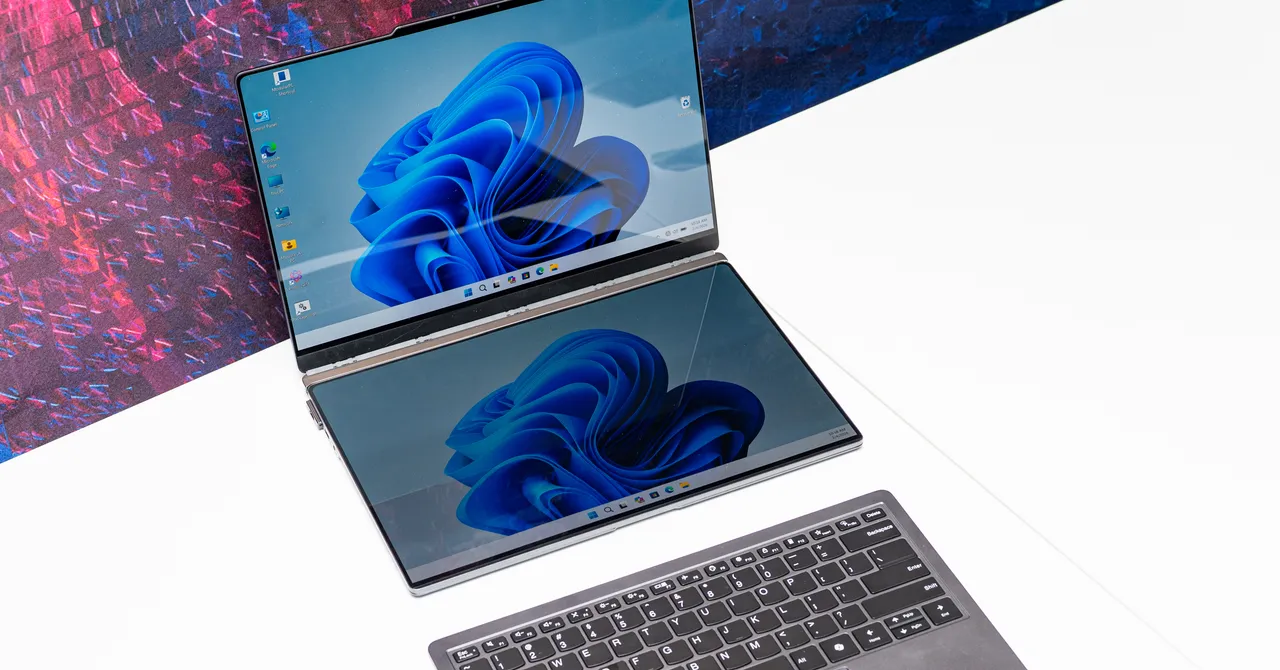
The Yoga Book Pro 3D departs sharply from conventional portable devices. It features dual 16-inch OLED displays called Lenovo PureSight Pro Tandem, which connect to form a seamless, flexible workspace—effectively replacing the traditional keyboard with a touch-enabled, customizable surface. This approach not only enhances workspace ergonomics but also pushes forward the concept of a truly mobile creative workstation. The device employs Lenovo’s proprietary AI software to support 2D to 3D conversion on demand, allowing users to manipulate digital assets effortlessly. The integration of a built-in RGB camera enables gesture-based control, allowing users to interact with 3D objects through natural hand movements, eliminating the need for a mouse or stylus—an innovation that could redefine creative workflows.
Perhaps the most groundbreaking feature is the set of magnetic snap-on pads that users can attach to the lower touchscreen. These physical accessories serve as tangible triggers for digital shortcuts, such as opening a color palette or adjusting lighting in real-time, providing a hybrid tactile-digital interface. This fusion of physical and digital interfaces aligns with the evolving expectations of a new wave of digital creators seeking immersive, intuitive tools. By bringing tactile feedback into the fold, Lenovo’s design hints at a future where user interfaces become more responsive and naturally integrated into creative processes.
Business Implications and Industry Disruption
This conceptual device signals a potential industry shift—particularly in how creative tools are designed and commercialized. If Lenovo moves beyond concept into mass production, it will introduce a fresh competitive dynamic within tech giants such as Apple, Microsoft, and Samsung, who have pursued similar 3D and AR/VR innovations. The integration of high-performance hardware with novel form factors can disrupt established workflows and challenge traditional notions of portability and interface design.
- Market potential: A niche yet expanding segment of digital artists, designers, and AR/VR developers eager for more tactile, portable solutions.
- Innovation driver: Accelerating the adoption of hybrid hardware/software interfaces to make 3D content creation more intuitive.
- Industry impact: Potentially catalyzing new hardware ecosystems centered around physical-digital interaction modes—setting a standard for next-gen professional devices.
As Elon Musk and Peter Thiel have warned about the importance of disruption and technological frontier-pushing, Lenovo’s Yoga Book Pro 3D serves as a compelling glimpse into the future of tech. If this device or its derivatives become widely available, it could accelerate the shift toward more immersive, user-centered design paradigms—a transformation that promises to reshape not only creative industries but the broader landscape of human-computer interaction. For forward-looking investors, developers, and innovators, understanding and engaging with these breakthroughs now will be crucial to maintaining a competitive edge in the rapidly evolving tech frontier.