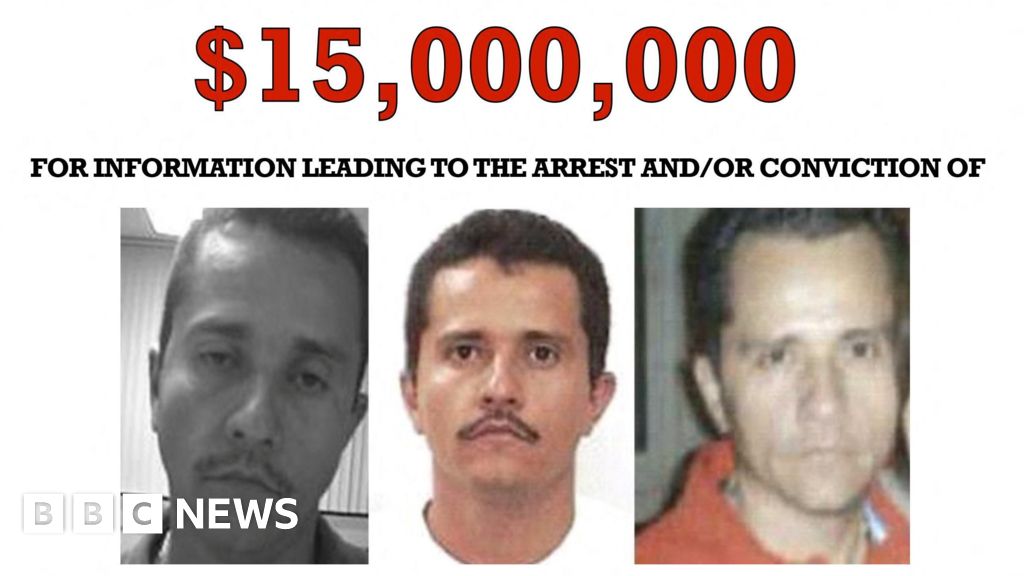

The international landscape of organized crime has once again demonstrated its profound influence on global stability, as the ascent of Nemesio Oseguera Cervantes, better known as ‘El Mencho’, underscores the complex interplay of violence, economics, and geopolitics shaping nations today. Originating from humble rural roots in the western state of Michoacán, Mexico, ‘El Mencho’ swiftly ascended the ranks of criminal dominance, leading the infamous Jalisco New Generation Cartel (CJNG)—a behemoth of brutality and strategic sophistication. His rise exemplifies how criminal organizations can extend their influence beyond borders, challenging law enforcement efforts and destabilizing entire regions.
The emergence of ‘El Mencho’ underscores a broader trend of criminal enterprises becoming de facto geopolitical players. Driven by ruthless ambition, CJNG has wrought havoc across Mexico, but its reach extends into the United States and Central America, affecting the socio-economic fabric of multiple societies. International organizations, such as the United Nations Office on Drugs and Crime (UNODC), warn that cartels like CJNG threaten the sovereignty of nations, facilitating not only drug trafficking but also corruption, violence, and destabilization. Analysts emphasize that these organizations often leverage political vulnerabilities, undermining state authority and complicating diplomatic efforts to restore peace and order.
Decisive moments, such as U.S.-Mexico security collaborations and Colombian anti-narcotics initiatives, highlight the ongoing global struggle to contain these shadow armies. Yet, despite increased efforts, figures like ‘El Mencho’ remain elusive, symbolizing the resilience and adaptability of criminal networks. Historians warn that these forces threaten to undo decades of progress in regional security, transforming local turf wars into international crises. As geopolitical analysts reflect on recent developments, they suggest that failure to address the root causes—poverty, corruption, and weak institutions—may serve only to prolong the chaos.
In this unfolding era, where drug cartels evolve from mere criminal syndicates into formidable geopolitical actors, the stakes have never been higher. Nations grapple with the reality that the decisions made today—be it increased security measures, intelligence sharing, or socioeconomic reforms—will determine the course of history. The story of ‘El Mencho’ exemplifies how a single figure, born in modest circumstances, can rise to threaten regional stability, transforming the fabric of nations into battlegrounds of influence. As the world watches and reacts, history continues to unfold, reminding us that in the shadows of crime, true power may ultimately be held by those who manipulate chaos to their advantage—and the consequences for societies will echo for generations to come.