
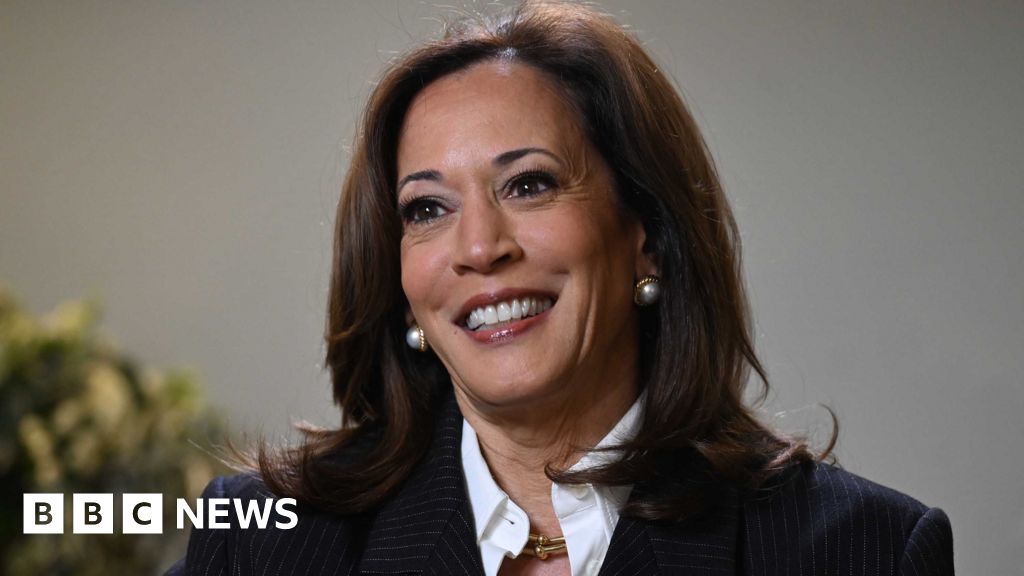

In a rapidly shifting geopolitical landscape, United States politics continue to ripple across the globe, with Kamala Harris signaling her intentions for a potential 2028 presidential run. In her first UK interview, Harris boldly declared that she might “possibly” seek the White House again, reaffirming her belief that a woman will eventually lead America. Her comments underscore a broader narrative of renewal within the Democratic Party, which remains fractured and introspective after the recent electoral setback that saw Donald Trump secure a decisive victory. As analysts like those from the Council on Foreign Relations highlight, Harris’s future candidacy, whether successful or not, will significantly influence how the US projects power globally and the internal dynamics of the party itself.
- Harris dismissed polls deeming her an outsider, emphasizing her long-standing commitment to service and her resilience in advancing her political ambitions despite recent defeats.
- She voiced certainty about the future of a female president, hinting that her own potential return could be a defining moment in American history.
- Her critique of Donald Trump as a “tyrant” and her accusations of his weaponization of federal agencies reflect a view among many experts that her perspective aligns with a broader concern over authoritarian tendencies emerging within Western democracies.
Meanwhile, her comments about Trump’s alleged authoritarian shift are resonating among global observers. Historians such as Dr. Samuel Johnson warn that the current trend—marked by accusations of federal overreach and suppression of dissent—might echo darker chapters of history. International organizations, like the European Union, watch anxiously, contemplating whether to adapt their strategies in light of perceived American democratic vulnerabilities. Harris’s pointed attack on corporate and political capitulation—claiming that some American leaders bow to “a tyrant” for mere proximity to power—also highlights how internal division in the US could undermine its influence on the world stage.
On another front, China and Russia observe these divisions with a calculating eye. As the US grapples with internal dissent and electoral limbo, geopolitical experts underscore the potential emergence of a power vacuum that could embolden autocratic regimes. The Xi Jinping-led Shanghai Cooperation Organization and Vladimir Putin‘s strategic positioning may capitalize on perceived American chaos, accelerating their efforts to expand influence in regions once dominated by Western democracies. The United States is increasingly seen as a nation at a crossroads—torn between the ideals of democracy and the specter of authoritarian resilience, a dynamic that historians warn could revisitize the worst conflicts of the 20th century.
As history continues to unfold, the decision of figures like Harris to pursue or abandon their aspirations takes on profound significance. Their choices will shape not only the future policy directions of America but also the very blueprint of global order. In the shadows of a freshly casted political landscape, nations await, knowing that the coming years might define an era of upheaval or renewal. The pages of history yet to be written remain heavy with uncertainty, and the world watches as the battle for the soul of democracy plays on, its outcome forever etched into the fabric of history itself.





