Matox News

Truth Over Trends, always!

Trump Resists Giving Up Diego Garcia Amid Rising Pushback

In recent developments that could have far-reaching geopolitical implications, international relations are once again tested by long-term lease arrangements and the strategic control they confer. Former U.S. President Donald Trump publicly voiced his skepticism regarding such deals, specifically targeting the United Kingdom’s recent decision under Prime Minister Keir Starmer. Trump asserted via Truth Social that “Leases are no good when it comes to Countries,” warning against the burgeoning trend of entering into 100-year lease agreements with foreign powers. Such statements underscore a broader geopolitical debate: whether decades-long leases serve national interests or surrender sovereignty to external influences.

Government officials and analysts worldwide are scrutinizing these long-term transactions, as they often symbolize more than simple real estate agreements. Instead, they represent a strategic shift, with one side potentially gaining disproportionate influence while the other diminishes its control over vital assets. Historians like Niall Ferguson have pointed out that long-enforced treaties and leases—once considered pragmatic—can become instruments of economic and political dependency. For instance, in China’s expansive Belt and Road Initiative, enduring lease contracts have been used as leverage, raising alarms about neo-colonial tendencies that threaten the sovereignty of recipient nations.

International organizations such as the United Nations, along with regional alliances, are now tasked with balancing economic development pursuits against the risk of losing exclusive control over strategic infrastructure. The UK, navigating post-Brexit realities, appears to be walking a tightrope: pursuing economic partnerships with long-term leases but risking accusations of handing over national assets. Critics contend that such agreements could distort the geopolitical landscape, creating dependencies that could be exploited during future crises. Conversely, supporters argue that well-structured leases can foster investment and stability—if carefully managed. Nevertheless, the turning point remains clear: nations must weigh the immediate economic benefits against potential long-term sovereignty costs.

This dynamic has attracted the attention of international security analysts, who warn that such deals might embolden adversarial actors or facilitate hostile influence. With ongoing tensions involving Russia, China, and Iran, the decision to extend or establish long-term leases could inadvertently shift regional power balances. As geopolitical experts warn, the tide of history is shifting, and what might seem a pragmatic agreement today could swiftly become a strategic vulnerability tomorrow. The unfolding narrative suggests that the choices made now will resonate through the decades, shaping the global order in ways that are difficult to predict but impossible to ignore.

As history continues its relentless march, the world watches with a mixture of caution and resolve. Decisions surrounding long-term leases are no longer mere commercial transactions; they are strategic gambits with the power to redefine alliances, influence sovereignty, and determine the fate of nations. This is a pivotal moment where the legacy of today’s leaders will be judged—and where the stakes could not be higher for future generations.
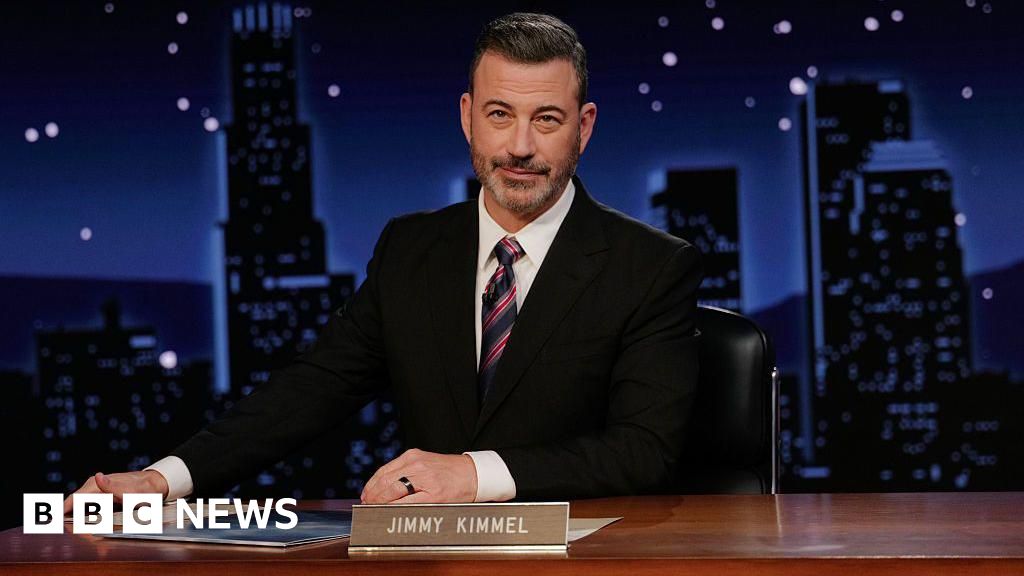

Sinclair and Nexstar Bring Back Kimmel on ABC Stations Amid Conservative Pushback

International politics is increasingly shaped by cultural conflicts and the struggle over free speech—a terrain that, in recent weeks, has erupted into a highly visible clash involving U.S. media giants, government agencies, and public figures. The controversy centers around Jimmy Kimmel’s return to ABC, after a brief suspension and removal from several affiliated stations, amid accusations of censorship and political suppression. This incident underscores a broader, global debate on how societies manage free expression in the era of digital activism and political polarization.

It began when Kimmel made controversial comments on his show about the death of Charlie Kirk, a prominent conservative figure. His remarks, which some interpreted as crossing boundaries of political decency, provoked a chain reaction that saw Sinclair Broadcast Group and Nexstar Media Group, major U.S. media conglomerates, pull his show from hundreds of local ABC affiliates. The move was justified by the companies as responses to public and advertiser feedback. However, critics, including conservative commentators and international analysts, argued that this was a clear case of cancel culture suppressing dissent and undermining First Amendment rights. The ensuing debate has rapidly spread beyond national borders, fueling protests over the erosion of media independence and free speech as the political weaponization of broadcast platforms intensifies, in line with historian Samuel Huntington’s warnings about “clash of civilizations” extending into cultural and media spheres.

The reinstatement of Kimmel’s show on all ABC channels signals an ongoing tension within the United States’ media landscape. Disney’s decision to allow Kimmel back on air, despite ongoing opposition from Sinclair and Nexstar, represents a nuanced shift—an internal conflict between corporate free expression and local broadcasters’ political sensitivities. According to international observers and global press watchdogs, such as Reporters Without Borders, these events highlight a concerning trend: how political and corporate interests influence what gets broadcast, often disproportionate to public debate’s true scope and importance.

Looking beyond America, the episode serves as a case study in the geopolitical impact of media governance. Countries worldwide grapple with similar issues—balancing state-controlled narratives against international standards of free speech. The episode hints at a shift where narrative control is shifting from traditional state censorship towards corporate censorship, which can be equally stifling, especially when media moguls align with political agendas. As analysts warn, the ongoing power struggle over media content is shaping the global information environment, influencing societal perceptions and, ultimately, international diplomacy. Just as the Cold War defined the ideological contours of the last era, it appears the battle over narrative control is becoming a defining feature of the current geopolitical order, where media outlets act as battlegrounds for ideological dominance and societal control.

The conflict remains unresolved, with history yet to be written. As nations and societies continue to navigate these turbulent waters, the outcome will determine whether free expression remains a cornerstone of democracy or becomes a casualty of political expediency. The unfolding drama surrounding Kimmel, ABC, and the broader dispute over speech censorship exemplifies a pivotal moment—an epoch where the world watches whether the ideals of free discourse can survive the relentless march of political interests, or if a new, more controlled era of information will take hold. The future of free speech, and with it the very essence of open societies, hangs precariously in the balance, as history’s next chapter begins to unfold amidst the echoes of a global struggle for truth and transparency.

Client Pushback Let me know if you’d like a different style or further adjustments!

In the wake of a tumultuous year marked by persistent inflationary pressures and geopolitical uncertainties, the world’s major economies are showing signs of resilience that could redefine the future landscape of global power. Markets across North America, Europe, and Asia are experiencing a renewed sense of confidence, driven by pivotal policy decisions, technological advancements, and strategic shifts in trade alliances. Notably, the United States and China are intensifying their economic outreach, signaling a potential new phase of competitive cooperation that could reshape the international order.

The Federal Reserve‘s recent pivot toward maintaining moderate interest rates has alleviated some fears of overheating the U.S. economy, leading to a rally in stock markets and a strengthening US dollar. Simultaneously, China’s aggressive infrastructure investments and technological innovation initiatives—particularly in 5G and green energy—are setting the stage for a shift of economic influence to the Asia-Pacific region. Economists from the International Monetary Fund and think tanks such as the Brookings Institution note that these developments could enhance global economic growth rates, potentially reaching 3.5% in 2023—a significant uptick compared to earlier forecasts.

However, uncertainty persists as inflationary pressures remain entrenched in several economies, and geopolitical tensions threaten to disrupt supply chains. The outlook for European markets remains cautiously optimistic, as policy responses to inflation vary among member states. Meanwhile, investors are carefully balancing the risks and opportunities, with some experts warning that overleveraged markets could pose systemic risks if adverse shocks materialize. The strategic policy shifts—such as the recent transatlantic trade agreements and investments in cybersecurity—are paving the way for a new economic order rooted in innovation, resilience, and strategic sovereignty.

Looking ahead, the dynamic interplay between these economic giants, driven by technological ingenuity and strategic adaptation, promises to keep the world economy on a relentless march toward future power. These shifts underscore that, despite global crises, the pulse of nations continues to beat stronger—an epic reminder that in the heart of chaos lies the forge of tomorrow’s economic dominion. The stage is set for a new era where economic strength and strategic foresight will determine the leaders of global influence.

Client Pushback Challenges Growth

The global economic landscape is once again on the cusp of a pivotal transformation, driven by a confluence of geopolitical shifts, inflationary pressures, and emerging technological opportunities. Major markets are experiencing volatility that reflects deeper structural movements, underscoring the importance for policymakers, investors, and businesses to recalibrate their strategies in this unpredictable environment. According to analysts at the International Monetary Fund, the post-pandemic recovery is stagnating in some regions while accelerating in others, setting the stage for a reconfigured global economic order.

At the heart of this turmoil lies the U.S. dollar, which continues to dominate international trade and finance, but faces mounting pressure from inflation and fiscal policy adjustments. The Federal Reserve’s aggressive rate hikes have sent ripples through the bond markets and triggered concerns about a potential slowdown in economic growth. Meanwhile, prominent economists warn that persistent inflationary pressures could hinder the pace of recovery, risking a stagflationary future that could undermine investor confidence and destabilize markets. Meanwhile, China and Europe grapple with their own challenges—ranging from supply chain disruptions to energy crises—highlighting the fragility that underpins their economic resilience.

In this precarious environment, corporate giants are recalibrating their portfolios and strategic initiatives to stay afloat. A wave of investment shifts is underway, with technology firms and commodity producers poised to capitalize on emerging opportunities. In particular, the push toward green energy and digital transformation represents not just a response to regulatory pressures but a chance to secure long-term competitive advantage. Think tanks such as the American Enterprise Institute suggest that innovative policies fostering private sector agility could stimulate growth and shield economies from shocks. Conversely, rising regulatory risks and geopolitical tensions threaten to stall progress, making it essential for nations to strike a delicate balance between market liberalization and strategic sovereignty.

The market impact of these shifts is profound. Investors are recalibrating risk models, with a focus on sectors poised for accelerated growth amid turbulence. The stock markets remain volatile, yet opportunities are emerging for those willing to navigate the storm, bolstered by a sense of *opportunity amid chaos.* As financial institutions brace for a period of economic recalibration, the importance of agile, forward-looking policy measures becomes ever clearer—measures that could either stabilize or destabilize the global financial ecosystem. The stage is set for a monumental chapter, where economic powerhouses will either adapt and thrive or falter in the face of unprecedented challenges.

Ultimately, the pulse of economies reflects the broader narrative of national resilience and global ambition. As technological innovation and strategic foresight converge, the world’s economic stage transforms into a crucible where future power is forged—not just through wealth, but through the capacity to adapt, innovate, and lead. This period of upheaval holds the potential not only to reshape markets but to redefine the very fabric of global influence, positioning certain nations as the new vanguards of economic dawn. In this epic contest, those who harness the chaos will set the tempo for the future, illustrating that the true strength of an economy lies in its ability to turn crisis into opportunity, forging a resilient path toward a formidable tomorrow.

Social Media Auto Publish Powered By : XYZScripts.com