Matox News

Truth Over Trends, always!

House Republicans block Senate deal, pushing partial government shutdown further

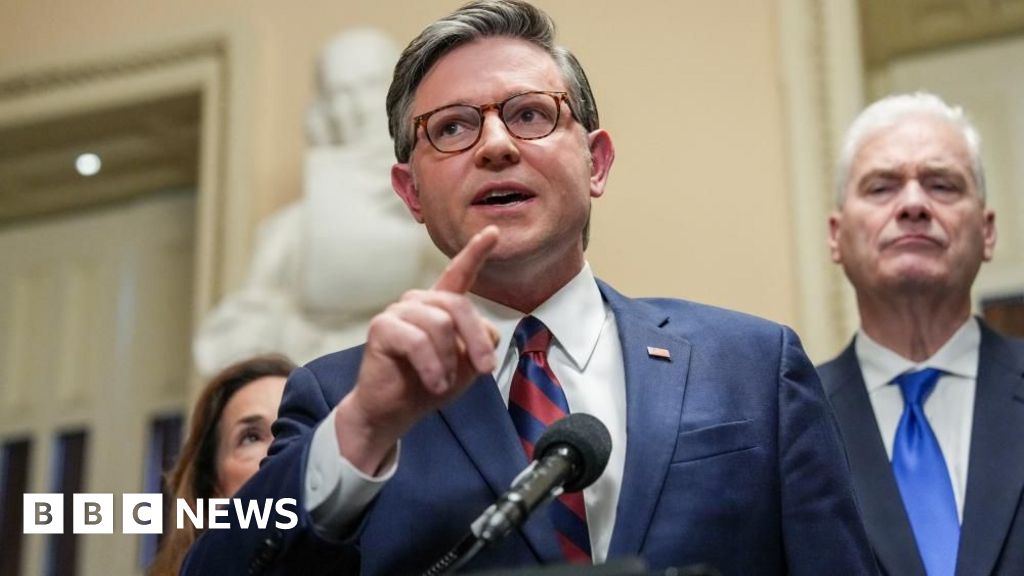
The recent failure of United States Congress to address the funding crisis has plunged the nation’s airport security system into unprecedented turmoil. With security agents going unpaid for over a month, chaos has erupted across major transportation hubs, exposing not only the immediate consequences for travelers but also underscoring deeper geopolitical concerns. This critical failure reflects mounting discord within the U.S. political establishment, potentially weakening one of the country’s most vital infrastructure components and revealing cracks in the bipartisan consensus necessary for governance in turbulent times.

The disruption stems from an ongoing budget impasse in Congress, where partisan disagreements have prevented the passage of crucial funding bills. The failure to allocate resources for airport security agents—an essential frontline element—has led to widespread understaffing, delays, and a breakdown of passenger screening procedures. Transportation Security Administration (TSA) officials warn that the integrity of airport security is compromised, jeopardizing not just domestic stability but also the broader diplomatic image of the United States. As analysts note, this crisis is a tangible manifestation of deeper political polarization that threatens to undermine public confidence in government institutions, especially amid rising concerns over security and migration.

International organizations and geopolitical analysts recognize the significance of this domestic instability on a global scale. The International Institute for Strategic Studies (IISS) emphasizes that a weakened U.S. security apparatus can have far-reaching consequences, including empowering hostile actors and encouraging regional destabilization. The disruption of travel and commerce can also ripple into economic vulnerabilities, affecting allies and trading partners who depend on stable transit routes. Some foreign governments have issued cautionary advisories, wary of the broader implications in a world where unpredictable internal conflicts can quickly escalate into diplomatic crises.

Historians and security experts warn that, far from a routine political debate, this standstill symbolizes a larger trend: the gradual erosion of American political consensus that has sustained the nation’s global dominance since the end of World War II. As key international treaties and alliances hang in the balance, the failure to fund essential operations signals a dangerous recalibration of priorities—where partisan bickering takes precedence over national security. The consequences are dire: if the U.S. cannot resolve its internal dysfunction, it risks ceding ground to adversaries who look to capitalize on American vulnerabilities, both at home and abroad.

In a world increasingly shaped by shifting alliances, rising authoritarian powers, and economic upheaval, this domestic crisis is a stark reminder of history in the making. As the day’s headlines continue to unfold, one thing remains clear: the decisions made within Washington’s hallowed halls will echo through history, shaping the future of countless nations and societies. The weight of this unfolding story leaves the global community pondering—how long can the superpower preserve its internal cohesion before the cracks become too deep to mend?

US health dept probes 13 states pushing abortion coverage mandates

US Department of Health and Human Services Launches Investigations into States Over Abortion Laws

Washington D.C. has signaled a renewed federal push to enforce its stance on abortion rights, as the US Department of Health and Human Services (HHS) announced investigations into 13 states over their mandated healthcare policies. The HHS Office for Civil Rights (OCR) contends that these states are potentially violating the federal Weldon amendment, a pivotal law enacted to prevent federal funds from supporting discrimination against healthcare entities that do not facilitate or cover abortions. This move underscores an escalating confrontation at the intersection of state sovereignty and federal authority concerning reproductive rights.

The targeted states, which include California, Colorado, Delaware, Illinois, Maine, Maryland, Massachusetts, Minnesota, New Jersey, New York, Oregon, Vermont, and Washington, are accused of contravening the Weldon amendment by requiring insurance coverage for abortion services. The investigation reflects broader tensions within the Biden administration‘s interpretation of federal laws, particularly its reevaluation of the scope of the Weldon amendment. Past administrations have differed in their understanding; while previous HHS officials limited the amendment’s reach to a narrow range of entities, current officials argue that it protects healthcare entities from state-mandated coverage that conflicts with conscience rights.

This federal action has ignited fierce debates across political lines. Critics, such as New Jersey’s governor Mikie Sherrill, dismiss the investigations as a “fishing expedition” designed to waste taxpayer funds and undermine reproductive freedoms. In contrast, proponents argue that federal law must enforce consistency and respect for conscience rights, asserting that healthcare providers should not be compelled to violate their moral beliefs. These developments illuminate a broader contest over who ultimately controls healthcare policy— the federal government or individual states.

International Ripple Effects and the Geopolitical Impact of US Domestic Policy

While this intra-American judicial and political dynamic unfolds, its geopolitical impact resonates beyond borders. International observers, including analysts from the European Union and human rights organizations, are watching closely. Certain nations argue that the US’s internal conflicts over abortion policy could weaken its moral authority on democracy and human rights principles globally. Critics on the international stage contend that sharp partisan divisions and the weaponization of legal frameworks undermine the United States’ image as a beacon of liberty and rule of law, especially when domestic policies influence America’s global standing.

Historian and geopolitical analyst Dr. Samuel Carter notes that decisions like these have long-term repercussions, shaping alliances and influence. Countries with progressive social policies see the US’s internal strife as an ideological battleground that can embolden adversaries or undermine trust with traditional allies. Meanwhile, opponents argue that the Biden administration’s approach may alienate traditional conservative allies and stir up new conflicts over moral and cultural values that extend into international diplomacy.

Looking Ahead: A Critical Juncture in America’s Political Evolution

As the investigations continue and legal battles unfold, the outcome has the potential to redefine the delicate balance between federal authority and states’ rights. The potential rollback of abortion protections in certain states could have profound societal repercussions, from shifting population movements to altering the political landscape ahead of upcoming elections. The confrontation exposes a nation torn between recognizing individual conscience and respecting legislative mandates— a conflict that echoes across political and ideological divides.

The weight of history hangs heavy as America approaches a critical crossroads. The decisions made today will determine not only the future of reproductive rights but also the scope of federal influence over state sovereignty. As international eyes remain fixed on Washington, the world watches closely, realizing that what happens within these borders could shape the global order of values, law, and power for generations to come. The pages of history are still being written, and the struggle over the soul of a nation continues— a vivid reminder that the future is forged in the crucible of present conflicts.

Trump chaos pushing more youth to seek help — society’s in flux

Across families, schools, and communities, the pervasive impact of burgeoning social and political crises cannot be overstated. As sociologists like Ann Cvetkovich and mental health professionals observe, a palpable wave of political depression is emerging, where individuals grapple not only with external chaos but also with internal despair. For many, this despair manifests as a feeling of helplessness, compounded by the notion that traditional avenues of resistance or engagement are effectively collapsing. The result is a societal disconnect that threatens to weaken the very fabric that holds communities together, undermining the hope and resilience needed to face ongoing economic disparities, cultural tensions, and government overreach.

For families and youth, these social fissures translate into a disorienting landscape where uncertainty reigns. With education systems often caught between progressive agendas and conservative backlash, young minds are left navigating a complex, often divisive moral terrain. Historians like Howard Zinn warned that societal malaise grows when civic engagement declines, and today, that warning resonates more acutely. Families report rising anxiety and frustration, with children witnessing unrest at home and in their neighborhoods. Additional stressors, such as rising crime, politicized schooling, and pervasive misinformation, threaten long-term societal stability. Amidst this chaos, the moral challenge looms: how can communities support a generation at risk of growing disillusioned and disengaged? The answer appears to lie in reclaiming community bonds and fostering a renewed sense of agency among young people.

Educational and community leaders emphasize the importance of building resilience through collective action. Initiatives like community support groups, youth activism, and artistic collaborations offer pathways for young individuals to channel their emotions into constructive endeavors. As social commentators argue, these efforts are more than just symbolic—they can forge meaningful change and rekindle faith in democratic participation. Furthermore, mental health professionals advocate for strategies that promote *engagement without burnout*, emphasizing the necessity to mobilize consciousness with care. According to Brett Ford, an associate professor of psychology, social resilience depends on maintaining a balance where individuals are informed and active, yet protected from the debilitating effects of chronic stress. The challenge lies in creating environments where young voices are not only heard but empowered to shape their societies rather than retreat from them.

Ultimately, the social issues facing our communities, families, and institutions are intertwined with broader cultural shifts and demographic transformations. Yet, amidst the turbulence, there remains a flicker of hope—through community, art, and active engagement. The stories of individuals like Rebecca McFaul and advocates like Shahem Maclaurin remind us that resistance does not always look like protests or headlines; it begins with the small acts of hope we nurture within our circles. As society stands at a crossroads, the challenge is to hold onto the belief that society’s collapse is not inevitable—that through conscious connection, education, and mutual support, a renaissance of resilience is possible. It is in our collective response to these societal wounds that we find the potential to heal, rebuild, and redefine the future—one where hope becomes the foundation for lasting change, echoing the timeless truth that even in darkness, the human spirit can ignite a brighter dawn.

JPMorgan dumps Frank founder Javice’s legal costs, pushing back on accountability

JPMorgan Legal Fight Illuminates Risks, Innovation, and Future Business Disruptions in Financial Tech

In a dramatic turn within the high-stakes world of fintech, JPMorgan Chase is entangled in a legal controversy involving the failed acquisition of Frank, a prominent startup specializing in financial aid services. The bank reports having incurred a staggering $142 million in legal fees defending Charlie Javice, founder of Frank, and her former Chief Marketing Officer, Olivier Amar. This case not only underscores the material risks associated with startup acquisitions but also shines a spotlight on the disruptive potential of rapid innovation within financial services as traditional banking giants rush to integrate cutting-edge technologies.

The bank’s $175 million acquisition of Frank in 2021 was supposed to be a strategic move to leverage tech-driven solutions and appeal to younger demographics. However, early this year, Javice and Amar were convicted of inflating user numbers, marking a rare and significant example of how unregulated innovation can lead to catastrophic business failures. While JPMorgan attempts to overturn a judge’s order to cover the legal fees, the controversy exposes the underlying vulnerabilities of reliance on startup metrics and highlights the importance for traditional finance institutions to exercise rigorous due diligence in tech acquisitions—essentially, a warning from the forefront of disruptive fintech activity.

Industry Implications: Innovation, Risk, and Ethical Pitfalls

Right now, the fintech revolution is evolving rapidly, driven by companies seeking to overthrow legacy financial systems via innovative models that leverage data, AI, and user-centric solutions. Institutions like JPMorgan are racing to keep pace, often acquiring promising startups to shortcut innovation cycles—an approach that presents both opportunities and significant risks. The case of Frank exemplifies the darker side of disruption: unscrupulous founders exploiting market weaknesses and increasing regulatory scrutiny.

Gartner and MIT analytics warn that the wave of tech-driven disruption will inevitably encounter these kinds of scandals unless firms implement stronger controls and due diligence. From a business perspective, this highlights a crucial lesson: innovation must be coupled with unwavering integrity and transparency. The implications extend beyond legal costs—large banks could face reputational damage and regulatory penalties that threaten their market dominance in a digital economy that continues to favor agility, compliance, and ethical leadership.

Forward-Looking Perspective: Innovation as a Double-Edged Sword

As Elon Musk and Peter Thiel position themselves at the forefront of technological disruption—pioneering neural interfaces, AI, and blockchain—financial institutions must prepare for an era where breakthroughs are accompanied by unprecedented risks. The JPMorgan case serves as a stark reminder that disruption often accelerates faster than regulation and governance, demanding rapid adaptation by established players. The industry must bolster internal oversight, integrate advanced compliance solutions, and cultivate a culture of accountability to harness innovation responsibly.

Moving forward, the real challenge lies in navigating this complex landscape where cutting-edge technologies can revolutionize finance but also provoke ethical dilemmas and legal upheavals. The coming years will define whether legacy institutions can evolve into truly resilient innovators—those capable of disrupting markets themselves rather than merely reacting to new entrants. For investors, regulators, and industry leaders, this is a call to act swiftly: the future belongs to those who understand that innovation must be matched with integrity and strategic foresight.

Israelis commemorate 7 October, pushing for Gaza peace talks to move forward

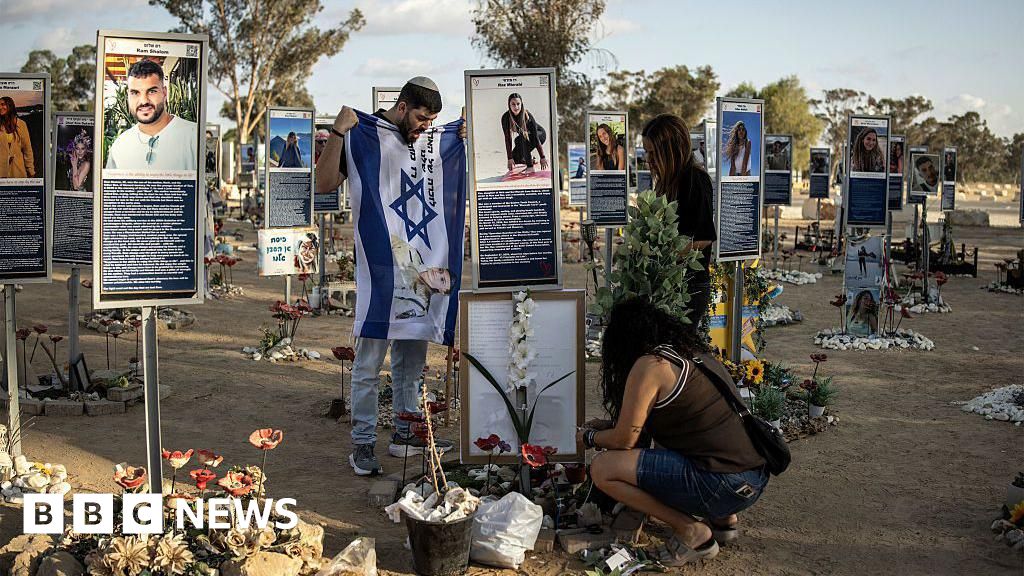
The recent anniversary of the October 7, 2023, Hamas-led attack on Israel underscores a pivotal moment in the ongoing Middle Eastern crisis, which has now entered its second year with devastating consequences. Over 1,200 lives were lost in the initial assault—marked as the deadliest day for Jews since the Holocaust—prompting an unprecedented military response by Israel. The Israeli military’s onslaught on Gaza has resulted in the deaths of more than 67,000 civilians, according to figures from Hamas-controlled health authorities, a grim statistic that echoes through international corridors and is validated by organizations like the UN. As imbued with grief and resolve, Prime Minister Benjamin Netanyahu declared that Israel’s resilience remains unbroken despite the immense pain, vowing to achieve the war’s primary aims: the return of hostages, the eradication of Hamas’s regime, and ensuring Gaza’s inability to threaten Israel again.

  • Amid ongoing bloodshed, Egyptian-mediated negotiations in Sharm el-Sheikh have been a rare glimmer of diplomatic effort, aiming to forge a ceasefire and an end to the violence. However, reports indicate that these talks are “tough” and lacking tangible breakthroughs, with disagreements centered on the Israeli withdrawal from Gaza and the guarantees Hamas seeks against renewed hostilities. The stakes reach far beyond the battlefield, as regional and global actors anxiously watch for signs of de-escalation or escalation.
  • The United Nations and international analysts emphasize the _urgent need_ for a sustainable peace plan, with Trump’s peace initiative being touted as a “historic opportunity.” Yet, the complexities of trust, security, and sovereignty render these diplomatic efforts fragile. The US‘s involvement, alongside Arab mediators and European powers, underscores how this conflict continues to threaten regional stability and influence foreign policy calculations across continents.

Official memorials in Israel were postponed to reflect on the tragedy of 2023, yet communal mourning persists. Across the country, including in Tel Aviv, families and citizens gathered to honor those lost, highlighting a society deeply scarred yet fiercely resilient. Meanwhile, in the diplomatic arena, indirect talks in Egypt reveal a divided front, as disagreements over Gaza’s future governance, the fate of hostages, and the humanitarian crisis persist. Palestinian officials report that negotiations are mired in “tough” disagreements, especially over Israeli troop withdrawals and guarantees against renewed fighting. The involvement of prominent US figures like Jared Kushner suggests a renewed American interest in facilitating a lasting peace—a goal that remains elusive yet critical given the history of broken treaties and promises.

In Gaza, the relentless Israeli bombardment persists amidst dire humanitarian conditions. Hospitals depleted, civilians displaced and desperate, the war’s toll is evident: children buried in rubble, families hiding from the deafening echoes of artillery, and a world watching with tense anticipation. The loss of life, reported by local health authorities and confirmed with difficulty by independent outlets, paints a stark tableau of suffering. As Israel continues its operations and Gaza’s hospitals reach collapse, the international community—particularly European and Arab nations—faces mounting pressure to intervene, prevent further humanitarian catastrophe, and craft an end to this cycle of violence that threatens to redraw the geopolitical map of the Middle East.

As history unfolds, the weight of this moment presses heavily upon all involved. The conflict remains a testament to the tragic consequences of unresolved grievances, failed diplomacy, and radicalized ambitions. The echoes of this harrowing chapter will reverberate through generations, a stark reminder that in the sands of Gaza and the streets of Jerusalem, the quest for peace remains a perilous pursuit—a fragile thread woven through the tapestry of history, where the next chapter is yet unwritten and the world holds its breath for what is to come.

Why is Trump pushing to send National Guard troops into American cities?

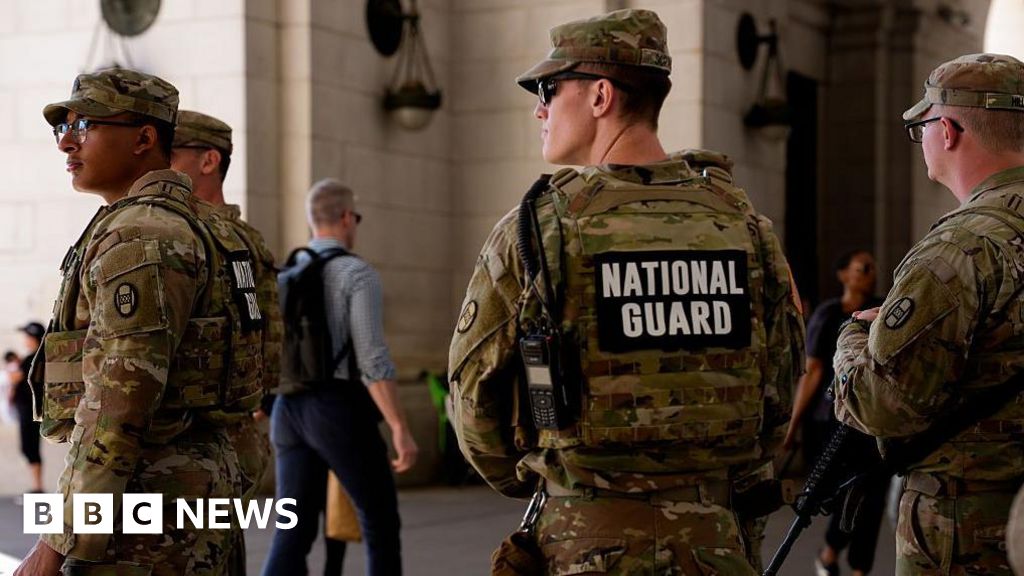
In an era marked by growing internal unrest and a contentious political landscape, the United States finds itself embroiled in a complex debate over the deployment of the National Guard. Under the leadership of President Donald Trump, federal authorities have taken unprecedented steps to involve military reserves in domestic law enforcement, primarily citing a need to quell violence and support immigration enforcement policies. As cities like Chicago, Portland, and others become flashpoints of protest, the legal and constitutional ramifications of these actions are raising alarms far beyond American borders. Prominent judicial figures, legal analysts, and international observers are scrutinizing whether these moves threaten the stability of civil liberties and the rule of law, or are a necessary assertion of federal authority in a fractured nation.

Legal Battles and Federal Powers in Question

  • The core of the controversy lies in 10 US Code § 12406, a rarely invoked clause that grants the president the authority to federalize National Guard units in cases of invasion or rebellion. President Trump has leveraged this law multiple times, deploying troops under the guise of defending national security, yet critics argue these justifications are stretched thin. California and Oregon have already filed lawsuits challenging these deployments—California’s governor, Gavin Newsom, labeling Trump’s actions as an attempt to ‘manufacture crises.’
  • Federal judges in Oregon, including Judge Karin Immergut, have temporarily blocked Trump’s efforts, ruling that such deployments amount to the imposition of martial law, which conflicts with the constitutional framework that limits military involvement in civil matters. These legal challenges underscore the delicate balance of power between the executive and judiciary, highlighted by the fact that the Posse Comitatus Act explicitly restricts military actions on American soil.

Through these court rulings, constitutional principles and legal boundaries have been thrust into the spotlight, exposing the tension between presidential authority and states’ rights. The ongoing legal saga reflects a broader geopolitical concern: how a nation handles internal dissent can ripple through international relations, especially as other nations watch a superpower at this pivotal crossroads.

Geopolitical Impact: A Nation Divided and Under Scrutiny

The unfolding crisis in the United States carries profound geopolitical implications. As the world’s leading superpower grapples with internal unrest, allies and adversaries alike are observing closely. China and Russia have seized upon the chaos, pushing narratives that portray the U.S. as increasingly unreliable and unstable—a narrative that could undermine the global influence of the West. Meanwhile, foreign leaders and international organizations warn that a fractured America risks losing its moral authority, especially when employing military force against its own citizens.

Some analysts warn that the perception of a nation willing to deploy armed forces within its borders to suppress dissent could set a dangerous precedent, emboldening authoritarian regimes worldwide. Historians specializing in American civil-military relations have noted that these actions echo past episodes of internal crisis where constitutional insurrection was met with military intervention—an epoch-shaping moment that redefines the country’s societal fabric.

The decisions made now, whether by judicial courts or the executive branch, will irrevocably influence the geopolitical landscape. Each deployment, each court ruling, and each political statement echoes in the corridors of power across continents, shaping history and the global perception of American resolve, stability, and adherence to constitutional principles.

The Unfolding Saga: A Nation in Transition

As the legal clashes continue and the National Guard remains a contentious symbol in the political arena, the weight of history presses heavily upon the present moment. With the world watching, the very essence of what it means to uphold liberty and justice is being tested. The choice of the United States—to deploy its armed forces in times of internal chaos—will echo through generations as either a reaffirmation of constitutional order or a shadowed chapter of authoritarian overreach. The story of this ongoing crisis remains unwritten, as history’s pen continues to document a pivotal chapter—a nation caught between preserving its founding principles and confronting the turbulence of its own making.

Bari Weiss’s rise to CBS News spotlights the shift pushing US media rightward

Global Media and the Shifting Geopolitical Landscape

In recent months, the United States has witnessed dramatic upheavals within its media industry, emblematic of a broader shift to the right that echoes across walls of power and influence. Paramount Skydance’s decision to appoint Bari Weiss as its new editor-in-chief and to acquire her conservative-leaning Free Press signals more than a simple corporate merger—it marks a strategic move in a rapidly evolving geopolitical chess game. Weiss, renowned for her critique of progressivism and unwavering Zionist stance, now finds herself at the helm in a media landscape that is increasingly aligned with a MAGA-driven agenda, steering narratives that favor nationalistic and conservative causes.

These developments are not isolated but form part of an accelerating trend among American media giants, who are now visibly tilting rightward to accommodate the new political realities under the second Trump administration. As analysts from the Heritage Foundation and international organizations warn, this shift impacts global perceptions of liberty, sovereignty, and national identity. It also signals a redefinition of the geopolitical impact—a media landscape that’s increasingly resistant to progressive narratives and more susceptible to Pentagon and corporate influence. The very fabric of the press, once seen as a safeguard of free discourse, now bears the marks of a systemic realignment driven by internal and external pressures.

Historical Turning Points and International Echoes

Much of the current scenario can be traced back to the ideological clashes that defined the post-2020 era. Historians like Charles Lipson and Anne Applebaum suggest that the media’s pivot mirrors the broader resurgence of nationalism and a global pushback against the liberal order established after the Cold War. The memories of 2020’s upheaval, from Black Lives Matter protests to the Capitol riot, continue to shape strategies across countries. In fact, some European nations are quietly observing how American corporations recalibrate their narratives under threat of regulation and political retribution, adjusting their coverage to exhibit less critique of the current regime.

Decisions made within U.S. boardrooms now ripple outward with profound consequences. The recent settlement of Trump’s lawsuit against CBS over a 60 Minutes interview—an instance seen as a tactical retreat—underscores how corporate interests are aligning with the so-called “MAGA” resurgence, often at the expense of journalistic independence. International organizations warn such biases could herald a new era of media manipulation and information warfare, influencing elections and political stability worldwide. Critics argue this erodes the foundational principle of free discourse, embedding partisan narratives deeper into societal fabric.

Consequences for Society and the Road Ahead

As powerful media entities adapt, the geopolitical landscape is witnessing a paradigm shift without precedent. Foreign policy experts warn that the rightward drift might embolden regimes that favor authoritarianism over democratic accountability. At the same time, the public faces increasing challenges in discerning truth from orchestrated narratives—a phenomenon recruiters at Russia Today or China’s CCTV are watching keenly. The power dynamics underneath this media realignment suggest an era where information is weaponized, and societal divisions are inflamed with relentless precision.

In a narrative that remains unwritten, the weight of history presses heavily on the present. The decisions current leaders make—how they shape media landscapes and influence international alliances—will determine whether societies fracture further or find the resilience to uphold liberty. As shadows lengthen over the unfolding future, the critical question remains: Will the giants of industry serve the principles of free discourse, or will they become pawns in a larger, more insidious geopolitical game?

Social Media Auto Publish Powered By : XYZScripts.com