Matox News

Truth Over Trends, always!

Four Years Later: Zelenskyy States Putin’s Goals Remain Unmet—Europe Updates | Ukraine

Four Years of Conflict: The Evolving Geopolitics of Russia’s Invasion of Ukraine

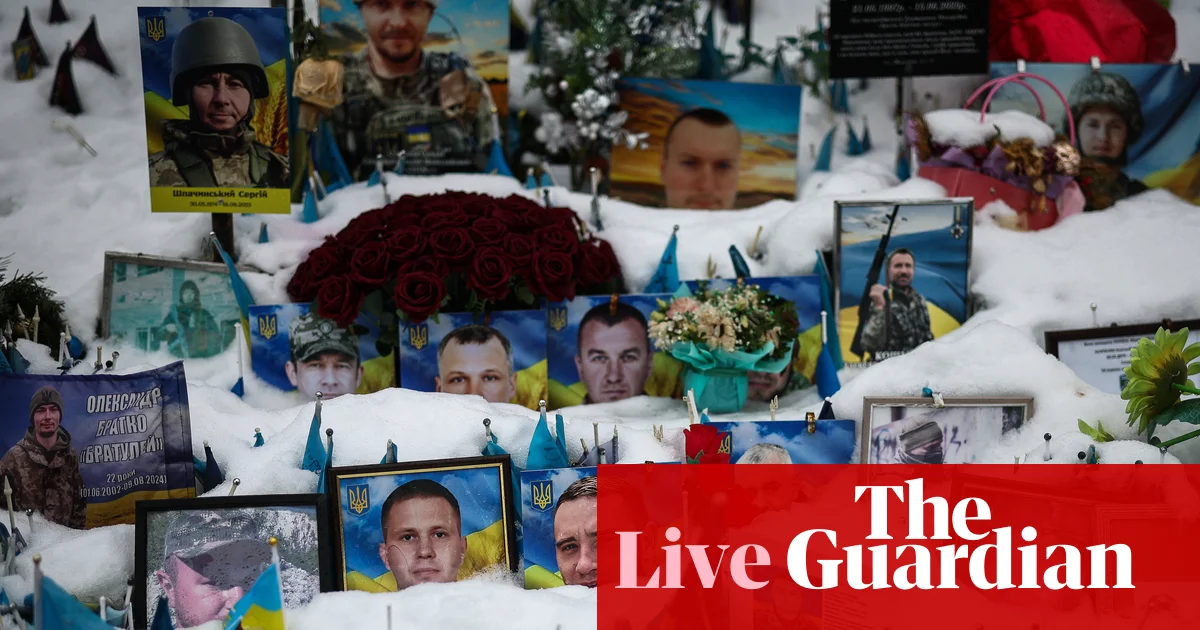
As Ukraine marks its fourth year of fierce resistance against Russia‘s full-scale invasion, the global community observes a pivotal moment in what has become the defining conflict of the 21st century. Beginning on February 24, 2022, when Russian forces sought to seize the country within mere days, the war has morphed into a protracted struggle that continues to reshape geopolitical alliances and challenge international norms. Despite efforts to rally support and impose sanctions, the conflict remains unresolved, revealing profound fissures within Western-led coalitions and exposing vulnerabilities in diplomatic strategies.

The Ukrainian people, under the steadfast leadership of Volodymyr Zelenskyy, have consistently underscored their resilience and unwavering commitment to sovereignty. In his recent address, Zelenskyy reflected on the enduring spirit of Ukraine, emphasizing that “we have defended our independence, we have not lost our statehood; Putin has not achieved his goals.” Such declarations serve as a stark reminder that, despite relentless aggression and substantial losses, Ukraine has maintained its national identity and territorial integrity. Historians and analysts underscore this narrative as a testament to the resilience of post-Cold War Europe’s most prominent democracy under siege, illustrating how a nation’s united front can withstand even the most formidable foes.

Yet, the geopolitical impact extends far beyond Ukraine’s borders. The ongoing conflict continues to test the cohesion and resolve of NATO and the European Union. Recently, Mark Rutte, NATO’s Secretary General, and Ursula von der Leyen, President of the European Commission, prepared to honor Ukraine’s bravery by convening in Kyiv and via video links. However, controversy has surfaced over the EU’s inability to present a united front: Hungary’s Viktor Orbán vetoed a new set of sanctions aimed at intensifying pressure on Russia over separate disputes involving oil transit through Ukraine. International organizations like the EU face critical scrutiny, as this political sabotage underscores internal divisions that threaten to undermine the collective effort to support Ukraine and uphold global stability.

Historical and geopolitical analysts warn that such divisions could be a turning point—that if Western alliances falter, the balance of power in Eurasia could be permanently altered. The war’s broader implications include the realignment of global influence, renewed tensions in Eastern Europe, and a warning that failure to sustain unified pressure may embolden Russia and other revisionist powers. Meanwhile, the clandestine efforts of allied intelligence agencies, notably the CIA and MI6, to intercept Putin’s plans prior to the invasion reveal a complex web of intelligence failures and miscalculations. Shaun Walker’s investigative reporting sheds light on how Western intelligence underestimated the Russian president’s intentions, highlighting the dangerous costs of complacency in an era where information wars are as critical as military ones.

As history continues to unfold, the unresolved tensions and unresolved conflicts stake their claim on the future of Europe and beyond. The voices from Kyiv, Brussels, and Washington echo with warnings of what might come if the present momentum diminishes. The city of Kyiv itself, bearing signs of resilience like the symbolic “Bravery Made in Ukraine,” stands as a testament to the unyielding human spirit amid the chaos of war—yet, the shadows of discord within Western alliances threaten to cast long-term consequences that could reshape continents. For now, the world holds its breath—watching as the pages of history are written, one day at a time, in the blood and hope of nations fighting for sovereignty and peace—and knowing full well, that this story is far from over.
Putin’s Ally or Peace Broker? The Truth About Ukraine Talks

Global Powers on the Edge: The Strategic Ascendancy of Kirill Dmitriev and Russia’s Return to Diplomatic Influence

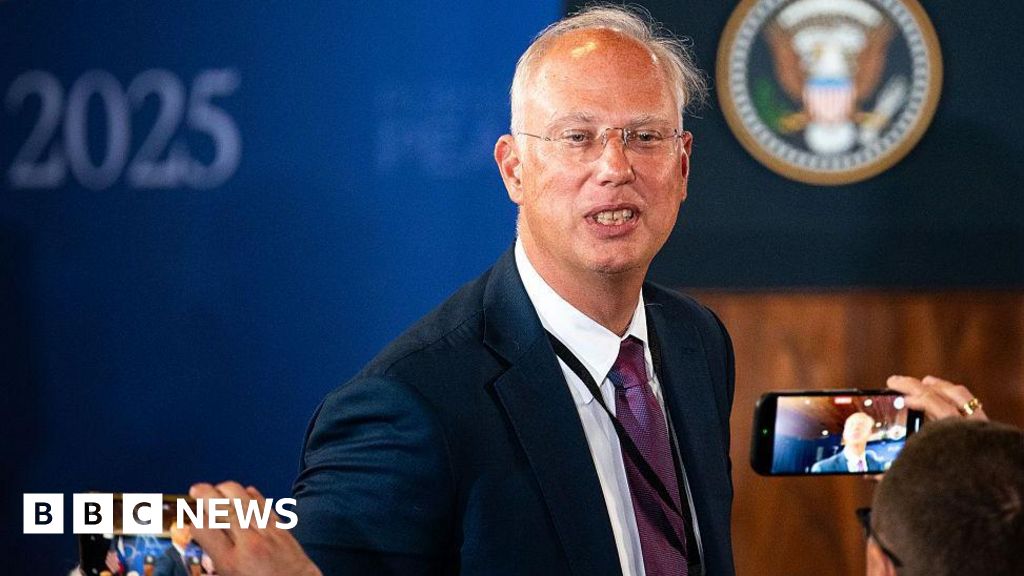
As Russia reasserts itself on the international stage, a key figure shaping its modern diplomacy has emerged in Kirill Dmitriev. With a background rooted in science, finance, and a deep understanding of international conflicts, Dmitriev’s role as head of the Russian Direct Investment Fund (RDIF) has propelled him into the spotlight. His engagement with U.S. officials during the recent negotiations over Ukraine signals a shifting landscape where selective diplomacy takes precedence over traditional adversarial posturing. Points of contact such as Miami and Saudi Arabia have demonstrated that Russia’s pragmatic approach to diplomacy, led by Dmitriev, might be reshaping geopolitical dynamics in ways previously dismissed as improbable.

Recent disclosures suggest that Dmitriev, with his unique blend of economic savvy and diplomatic agility, has played a crucial role in softening Russia’s years of diplomatic isolation. His rapport with Steve Witkoff, a U.S. envoy, exemplifies how personal relationships are increasingly pivotal in resolving issues that once seemed intractable. Analysts from organizations like the Brookings Institution and Geopolitical Watch note that Dmitriev’s deep cultural and political knowledge—specifically his Ukrainian origins and experiences in the United States—equip him with an unparalleled perspective on the multifaceted conflict in Ukraine. His advocacy for a “dignified peace,” paired with Russia’s strategic use of economic and diplomatic tools, underpins Russia’s broader objective: regain influence without provoking a full-scale confrontation, setting a dangerous precedent for the future of international diplomacy.

However, Dmitriev’s approach is not without controversy. The Biden administration and the U.S. Treasury have publicly characterized him as a “known Putin ally,” imposing sanctions that seek to diminish his influence. Critics argue that Russia’s focus on economic diplomacy—embodied by figures like Dmitriev—serves as a mask for preserving the regime’s core interests amidst Western sanctions and military confrontations. Yet, Dmitriev remains unwavering in his pursuit of a negotiated “peace process,” advocating a course that many in the West see as pragmatic, if not risky. His stance reflects a broader shift in Russia’s geopolitical posture—favoring subtle diplomacy and strategic economic partnerships over open military escalation—an approach that history’s most astute observers suggest could define the future of East-West relations.

Witnessing the unfolding chapters of this new diplomacy, historians and analysts warn that the next phase of global history hinges on whether figures like Dmitriev can successfully navigate a web of geopolitical conflicts, economic interests, and ideological divides. As the shadows of the past—such as the Cold War’s echoes—linger uneasily, the weight of history presses down. Will Russia’s calculated engagement herald a new era of coexistence, or merely a fleeting window of diplomacy before the storm of conflict reignites? The answers remain elusive, yet one truth persists: the silent march of history continues, at the convergence of old rivalries and new opportunities, with Dmitriev’s diplomacy shaping the contours of a fragile, uncertain future.

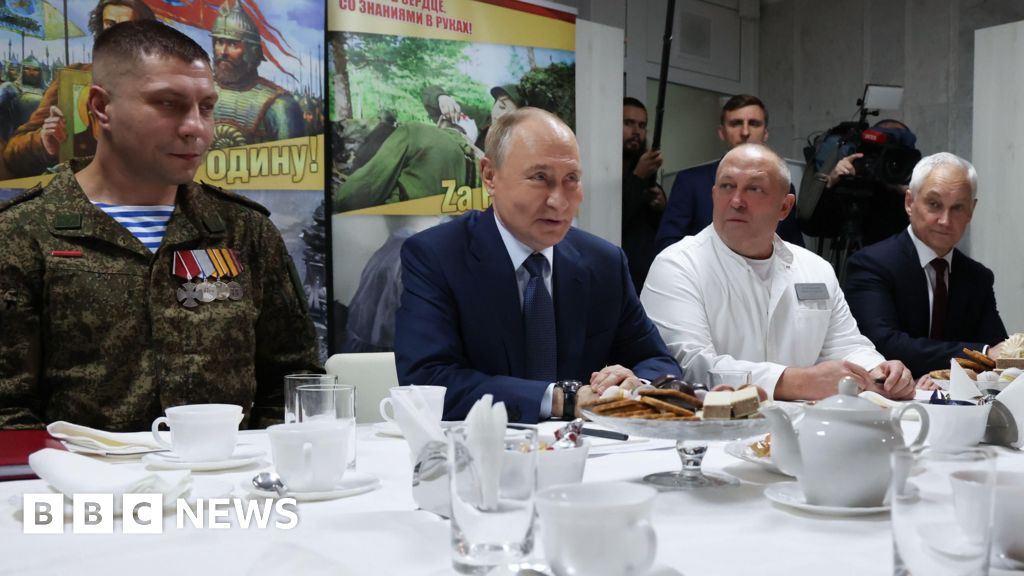
Are Russia’s new nuclear weapons real or just Putin’s bluster?

The recent series of military tests conducted by Russia signals a renewed push by Moscow to project strength amid mounting international tensions. President Vladimir Putin publicly announced the testing of advanced weaponry—namely the Poseidon underwater drone and the Burevestnik nuclear-powered cruise missile—just days apart, a move that analysts interpret as both showcasing technological prowess and strategic signaling. While Russia’s officials tout these weapons as “unmatched in the world,” experts like Mark Galeotti warn that the true military value remains uncertain. Historically, these claims dovetail with Russia’s broader doctrine of deterrence, emphasizing second-strike capabilities designed to uphold Moscow’s strategic ambiguity while testing Western resolve.

From a geopolitical impact perspective, these weapon tests come at a critical juncture. The timing—soon after tentative efforts by U.S. President Donald Trump to de-escalate the Ukraine conflict—appears deliberate. International organizations and security analysts suggest that Moscow’s gambit is meant to remind the West of Russia’s emerging military might, particularly in an era where conventional forces are under strain in Ukraine.

  • Since 2018, Russia has emphasized these weapons as “invincible,” yet their actual operational viability has been questioned, especially after catastrophic failures like the 2019 rocket engine explosion that claimed lives of nuclear engineers.

Despite claims of technological superiority, experts caution that the real capacity of these weapons remains uncertain, mirroring the ambiguity in Moscow’s broader military posture.

Meanwhile, the United States’s response has been notably restrained, with recent developments marking a strategic recalibration. The cancellation of a planned summit between President Trump and President Putin, combined with new sanctions on Russian oil giants, signals Washington’s frustration and wariness. U.S. officials have begun to, explicitly or covertly, prepare for a renewed nuclear arms race, with Trump justified resuming nuclear weapons testing as a means to maintain parity—an alarming sign of escalating tensions. On the international stage, NATO and global security think tanks warn that such displays deepen the risk of miscalculation, as Russia’s provocative tests seem designed not just for technological display but also to bluff against what it perceives as Western hesitation.

This escalation is further compounded by Russia’s strategic stance amidst a muddled battlefield in Ukraine. As David Heathcote of McKenzie Intelligence Services notes, the lackluster performance of Russian conventional forces has prompted Moscow to resort to “overexaggerated sabre rattling,” a bid to inflate its strategic importance while masking vulnerabilities. The announcements about these advanced weapons thus seem to serve a dual purpose: bolstering domestic morale and enticing international allies or adversaries into underestimating Moscow’s true military readiness. As history charts the course of nuclear proliferation, the world now stands at a critical crossroads—where each test, each declaration, shapes the fragile fabric of global security, leaving the future unsettled and the shadows of war looming larger than ever.

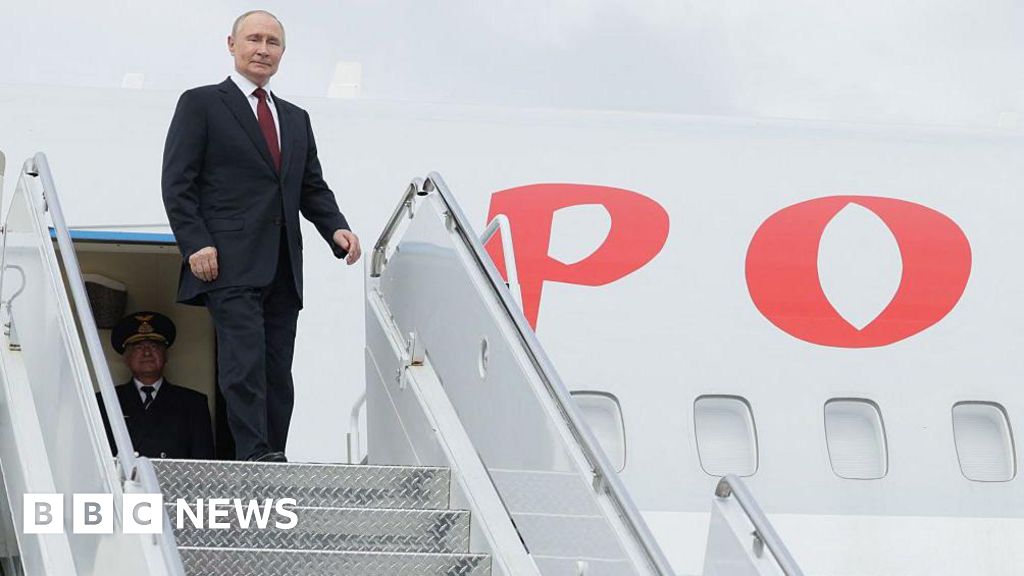
Can Putin's Flying Kremlin Pass Through EU Skies to Reach Budapest?
Can Putin’s Flying Kremlin Pass Through EU Skies to Reach Budapest?

In an era defined by evolving alliances and shifting geopolitical boundaries, Russia stands at a crossroads, with Vladimir Putin exploring possibilities that threaten to ignite further instability within the European continent and beyond. The prospect of a high-stakes summit with U.S. President Donald Trump in Budapest signals an intense phase in diplomatic chess, where decisions made in the coming weeks could either pave the way for a fragile peace or deepen the chasm of conflict. Despite the veneer of diplomatic efforts, the underlying tensions are palpable, rooted in decades of strained relations and recent aggressive moves by Moscow.

Putin’s planned visit to the Hungarian capital is encumbered by complex logistics and international restrictions. Russia’s planes are officially barred from EU and NATO airspace, meaning Putin would require emergency dispensation to bypass these restrictions—an unlikely event given the current political climate. Experts warn that even with special permissions, the likelihood of safe passage over countries such as Bulgaria and Romania remains uncertain, especially considering the ongoing NATO build-up on Europe’s eastern flank. The most straightforward route—through Serbia or Turkey—invites its own set of diplomatic challenges, as these nations are either non-EU members or official candidates, potentially serving as bridges for Putin’s flight without breaching international sanctions yet complicating the delicate balance of Western alliances. The scenario underscores a dangerous dance of sovereignty, where every move could deepen the rifts that threaten global stability.

Meanwhile, the European Union and NATO are meticulously examining the legal and strategic implications of such a summit. The EU’s executive commission has underscored that any move that advances “a just and lasting peace for Ukraine” is supported—but emphasizes that the methods of transit remain tightly regulated. The crux lies in whether member states will grant exceptions for Putin’s aircraft, risking further escalation or symbolic defiance of Western sanctions. Historians and analysts suggest that Russia’s continued defiance of international norms, including accusations by the International Criminal Court of war crimes related to Ukraine, have made genuine negotiations elusive, and such summits risk merely being tactical gestures rather than pathways to resolution.

The backdrop to this perilous moment reveals a Europe increasingly divided, with Hungary under Viktor Orban positioning itself distinctively. Orban’s close ties with Putin, combined with his outspoken skepticism of the EU’s stance on Ukraine, threaten to undermine consensus within the bloc. Orban’s overt rejection of Brussels’ pro-war rhetoric and his assertion that the EU will be “left out of peace talks” illustrates a broader pattern of internal discord and the resurgence of nationalist rhetoric that WEstern analysts associate with a potential realignment of power dynamics in Europe. This internal fracture complicates an already tense environment, as Orban’s government prepares to host Putin amidst mounting international sanctions and military build-ups. The move could be viewed as a calculated gamble by Orban, betting that good relations with Moscow may bolster Hungary’s strategic autonomy at a time when the continent faces existential threats.

The unfolding story is a stark reminder that history is still being written—each diplomatic maneuver carries the weight of nations’ future, and even the most cautious steps could lead to unforeseen consequences. As the world watchfully stares at Budapest’s horizon, the potential for a summit that could transform the geopolitical landscape remains looming. Will it be a groundbreaking step towards peace or the spark for a broader conflict? In this tense moment, history beckons us to reflect: the decision to meet or to refuse may determine the destiny of nations for generations to come, leaving us all spectators in an unpredictable saga that is far from over.

Social Media Auto Publish Powered By : XYZScripts.com