Matox News

Truth Over Trends, always!

“North Shields Rising: Transforming Rage into Community Strength”

Grassroots Movements Rekindling Faith in Community and Society

In today’s rapidly changing world, societal fractures are becoming more evident than ever, affecting families, education, and community cohesion. Despite these challenges, a rising tide of grassroots activism demonstrates that change is not only possible but essential. Organisations like Citizens UK are spearheading efforts that remind us of the power of collective action rooted in hope, compassion, and a shared sense of purpose. Their recent walk through North Shields, dubbed the “Walk of Hope,” exemplifies how local people—children, parents, teachers, and community organisers—are mobilising to confront social issues directly affecting their neighborhoods.

This movement emerges from an acknowledgement of social tensions fueled by economic disparities, immigration debates, and declining trust in democratic institutions. Sociologists like Robert Putnam have long highlighted how social capital—trust, networks, and civic engagement—can combat societal despair. Here, grassroots groups are rekindling that trust, building bridges between different communities, and creating tangible changes that uplift families.

The community’s efforts are far-reaching. For instance, local youth, such as Mish Sony, successfully engaged the authorities to address transportation affordability, ensuring students can attend school without the burden of costly fares. Such initiatives improve access to education, ultimately fostering better opportunities for future generations. Meanwhile, safety and cleanliness in public spaces, like Alexander Scott Park, have improved through community-led clean-up projects and meetings with local authorities, reaffirming that empowered citizens shape the environments they live in. These actions not only strengthen physical spaces but also nurture a sense of ownership, pride, and civic responsibility among families and children.

Addressing Underlying Divisions and Social Fractures

Yet, societal challenges extend beyond infrastructure. Recent incidents of racial tension and xenophobia, highlighted by local confrontations and graffiti, underscore the persistent demographic shifts and cultural tensions existing in places like North Shields. Economist and social critic, Dambisa Moyo, warns that these tensions stem from feelings of marginalization and lack of political voice—conditions that can spiral into confrontation if left unaddressed. For Father Chris Hughes, a religious leader active in the community, these conflicts are reflections of a deeper crisis: the erosion of faith in democracy’s ability to serve all equally. As he observes, “People are losing faith that democracy works. Unless we reimagine democracy and have people in their community at the heart, it worries me where it will lead.”

This sentiment resonates with the ambitions of community organisers, who stress that

  • inclusive dialogue
  • grassroots participation
  • listening to marginalized voices

are vital for peace and social cohesion. Their work demonstrates that fostering mutual understanding and addressing social grievances proactively can halt the cycle of division and hate. By involving youth, encouraging civic engagement, and creating spaces for dialogue, communities are cultivating resilience that can withstand social upheavals. These efforts evoke echoes of thinkers like Jane Jacobs, who believed vibrant, participatory urban life sustains social health and vitality.

Hope in Action: A Society Reimagined

In the end, the stories from North Shields reveal a societal truth: hope is not a passive feeling but an active force that springs from collective effort. When young people, families, and community leaders come together—whether reimagining public spaces, advocating for mental health, or confronting societal prejudices—they forge a resilient society committed to renewal. As they gather over tea and biscuits in community halls or rally through parks, they embody a quiet yet powerful revolution rooted in trust, empathy, and shared destiny. This resilience offers us a glimpse of society’s potential—a future where hope replaces despair, and community becomes the definitive answer to social fractures. In the end, societal transformation begins with the simple act of coming together, and in that unity, society’s greatest strength is revealed, offering a timeless reminder: no matter how cold the season, warmth and hope can be cultivated when hearts unite.”
Zambia's 'Fix-It' President Confronts Youth Rage and Stone-Throwing
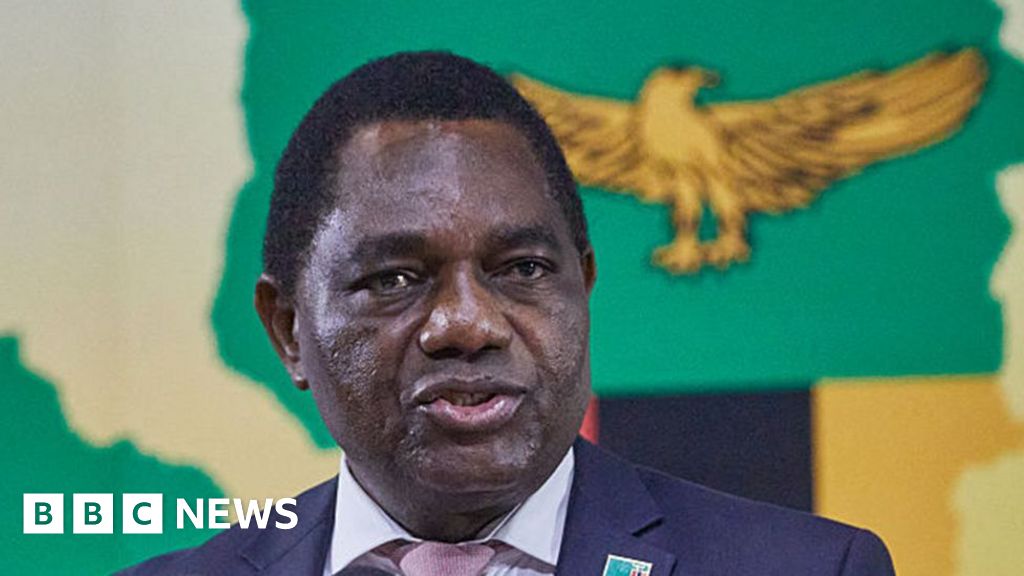
Zambia’s ‘Fix-It’ President Confronts Youth Rage and Stone-Throwing

Unfolding Crisis in Zambia: Leadership in the Crosshairs

In a nation teetering on the edge of political tumult, Zambia‘s President Hakainde Hichilema is confronting burgeoning internal unrest and a fraught diplomatic landscape. Since his victory in the 2021 elections, Hichilema has sought to steer his country toward economic stabilization, capitalizing on reforms to renegotiate debt and attract international investment. Yet, the persistent struggles of power shortages, inflation, and widespread dissatisfaction reveal that his efforts have yet to fully resonate with the average Zambian, especially as the August 2026 elections draw near. Notably, a recent incident where Hichilema was violently attacked during a rally underscored the fragility of his presidency and the deep-rooted discontent simmering within the nation.

The internal unrest has provoked concerns beyond its borders, with regional analysts warning that Zambia’s instability could ignite a broader uprising of societal discontent that spills across neighboring nations. The president’s speech defense, where he emphasized ongoing national achievements, contrasts sharply with the hardships faced by ordinary citizens, many of whom are suffering under the weight of power outages and high living costs. The power crisis deepened recently when droughts decimated hydroelectric capacity, exposing Zambia’s vulnerability to climate variability and underscoring its reliance on unstable energy sources. Experts warn that this energy crisis could hamper the country’s economic recovery, further disgruntling voters and fueling opposition sentiments.

International Reactions and the Geopolitical Ramifications

Global institutions and international analysts have started to voice concern that Zambia might devolve into political chaos if unrest escalates, potentially destabilizing the southern African region. The African Union, along with the World Bank and other diplomatic bodies, emphasize the importance of safeguarding democracy and stability in Zambia. Yet, critics argue that Hichilema’s government is increasingly becoming encumbered by accusations of using oppressive laws against opposition figures, a trend that analysts say echoes authoritarian tendencies. Historically, Zambia has been viewed as a beacon of peaceful transition in a volatile continent; however, recent violence and suppression efforts threaten that reputation, raising alarms among international watchdogs.

Meanwhile, Hichilema maintains that his government upholds the rule of law and that measures taken against critics are necessary to renew order and promote reform. His stance aligns with his broader strategy of balancing reform and control amidst mounting pressure from both political opponents and civil society. This delicate dance has drawn sharp criticism from academia and local opposition, questioning whether the regime’s focus remains solely on consolidating power rather than fostering genuine societal growth. If Zambia continues down this path, many fear the nation’s hard-won democracy could be compromised, potentially setting a dangerous precedent for the region’s future.

Legacy in the Making: The Future of Zambia’s Political Journey

As Hichilema pushes forward with controversial constitutional reforms, including plans to expand parliamentary representation, opposition voices claim he is betraying the democratic ideals he once championed. The tipping point may come when economic hardships and political repression collide, forcing citizens to choose between stability and upheaval. Zambia’s saga is emblematic of the broader struggles faced by aspiring developing nations caught in the storm of internal reform and external pressure. Will the nation’s resilience withstand the rising tide of discontent, or will its people’s aspirations be drowned in the sound of stones thrown in anger?

History continues to write itself in Zambia’s streets and council chambers, a reminder that one nation’s internal conflicts can quickly reverberate across borders and redefine regional geopolitics. The weight of this unfolding chapter remains uncertain, yet it is clear: Zambia stands at a critical crossroads — with leaders and citizens alike holding the pen that will inscribe its future into the annals of history.

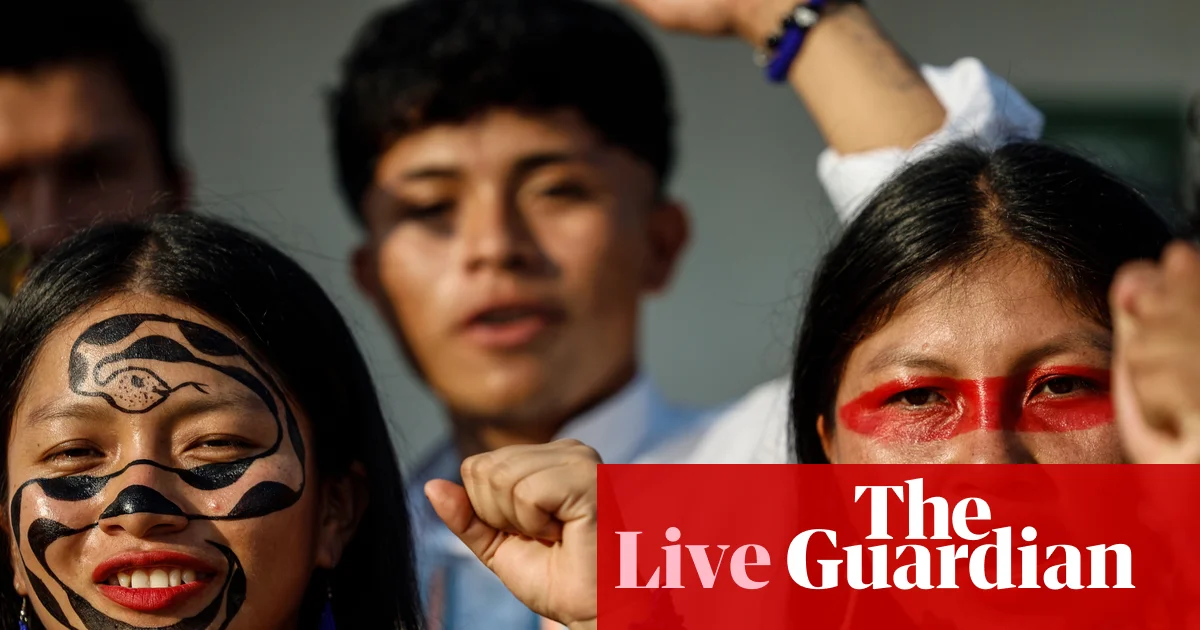
COP30 Live: US Absence Sparks Tensions as Youth Protests Rage On

Global Climate Diplomacy in Flux: The Geopolitical Impact of COP30 and Civil Society Unrest

As Brazil hosts the COP30 climate summit amidst a backdrop of upheaval, the geopolitical landscape of climate policy is experiencing a profound transformation. The absence of the United States—the world’s largest historical greenhouse gas emitter—marks a pivotal turning point in international climate negotiations. Meanwhile, civil society activists, indigenous leaders, and environmental guardians are capitalizing on the vacuum created by U.S. disengagement, mobilizing with unprecedented fervor. The arrival of a flotilla of over 100 vessels, including the Greenpeace Rainbow Warrior, symbolizes a new era of direct action that challenges traditional diplomacy and accentuates the deepening societal rifts over climate justice.

The absence of the US delegation— confirmed by research from Carbon Brief—has stoked a wide array of reactions. While former UN climate chief Christiana Figueres declares it a blessing, some analysts warn that this void might embolden petro-states like Saudi Arabia and India to push their agenda, potentially undermining international commitments. Notably, California governor Gavin Newsom has emphasized the importance of subnational efforts, asserting that “what stands in the way becomes the way.” This shifting dynamic indicates a fracture in the once-unified front of international climate diplomacy, where local and regional actors are emerging as critical players, challenging the old paradigms enforced by politician-led negotiations.

Society at the Forefront: Protests, Indigenous Resistance, and the Fight for Land and Life

Within Belém, voices of indigenous and forest communities have become the heartbeat of the summit. The **”Boats for Climate Justice Flotilla,”** representing some 5,000 activists from 60 countries, underscores a widespread awakening among marginalized groups demanding recognition of their rights and the protection of critical ecosystems like the Amazon. Maya-Lou Kayapo and Sarah Rodrigues exemplify this resistance, emphasizing that “financial support needs to go directly to the traditional peoples who protect the forest, not to extractivist industries.” As protesters sing slogans such as “Fight for the Right to Life” and “No to Soy!”, they embody an uncompromising stance that society’s future depends on respecting nature and indigenous sovereignty.

The tensions reached a crescendo when dozens of activists burst into the Blue Zone, confronting UN security—an act signaling the resurgence of civic unrest that had been suppressed in recent years. Such demonstrations mark a strategic shift toward direct action and civil disobedience, reflecting a broader social burnout with diplomatic lip service and a growing impatience for tangible change. The symbolism of the inflatable snake, “the great cobra,” underscores their call for reparative justice, emphasizing that financial and political support must flow to communities at the frontline of climate change, not multinational corporations or fossil fuel interests.

Implications for Global Policy and the Future of Climate Action

The geopolitical impact of these developments transcends mere symbolism. International organizations like the IPCC and climate analysts warn that the new landscape, marked by US absence and grassroots pressure, could either accelerate or derail global efforts to meet the Paris Agreement targets. The “entirely feasible” investment of $1.3 trillion annually by 2035, as outlined by the High-Level Expert Group on Climate Finance, hinges on effective mobilization of public and private funds — a task complicated by geopolitical fractures and societal upheaval.

Historian William K. Reilly and others caution that the ongoing crisis exposes the fundamental flaw in relying solely on international negotiations. Instead, the future hinges on bottom-up initiatives—local leadership, civil resistance, and innovative policy mechanisms. Gore’s portrayal of the climate crisis as “literally insane” underscores the urgency of shifting from brittle diplomacy to resilient societal action. As humanity teeters on the edge of climate tipping points, the unfolding narrative of COP30 reveals a world in tension—caught between the old guard’s retreat and new forces demanding a radical reimagining of our relationship with Earth. The decisions made now may well write the next chapter of history—one either of collective salvation or irreversible decline.

Social Media Auto Publish Powered By : XYZScripts.com